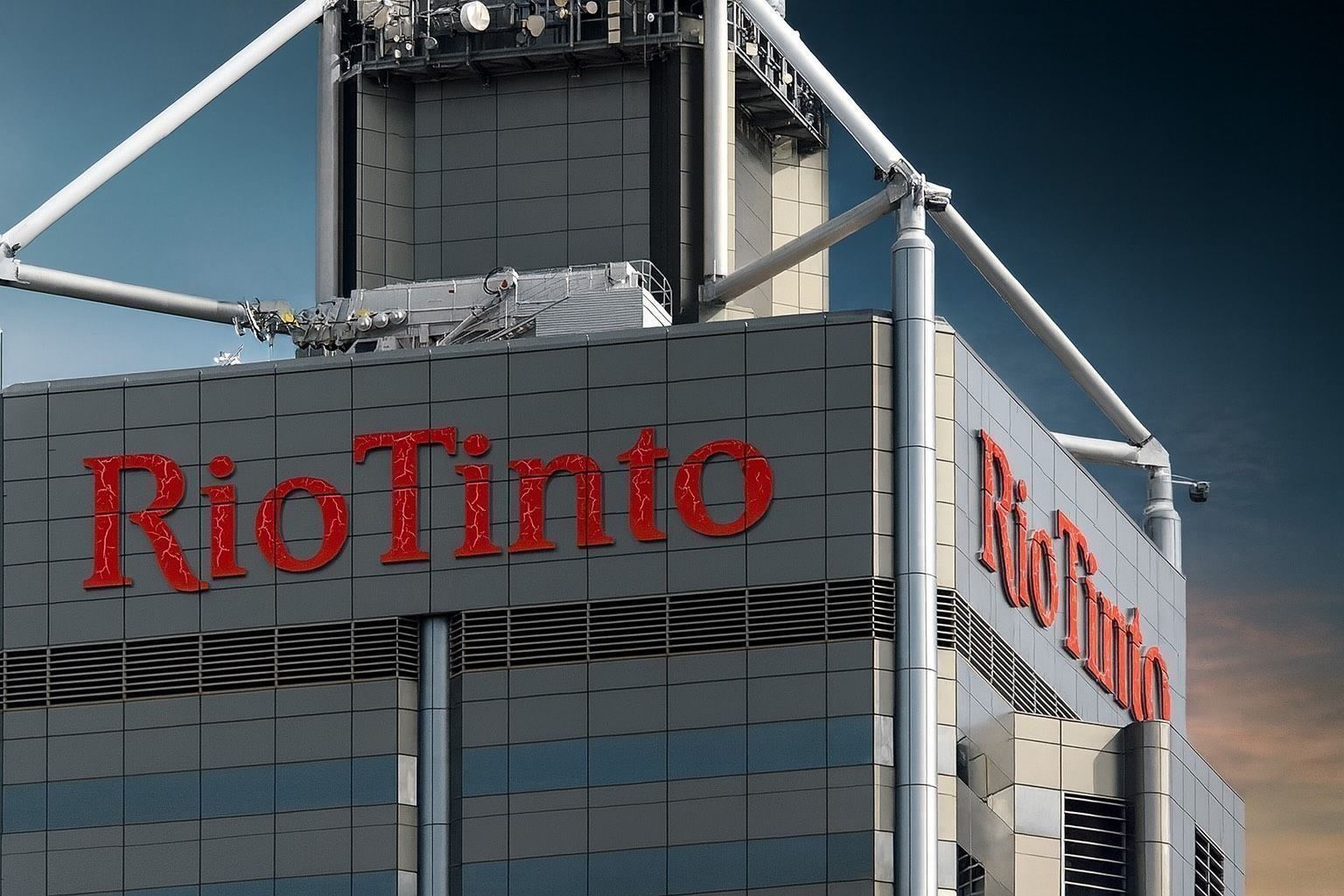
Rio Tinto Group (NYSE: RIO, LON: RIO, ASX: RIO) is finishing 2025 near its 52‑week highs, just as a new chief executive restructures the business, big institutions add to their positions and analysts update price targets and dividend forecasts. On 3 December 2025, the stock sits in that tricky zone investors love and fear: not obviously cheap, but backed by stronger operations, a fatter dividend outlook and a major strategy reset.
Where Rio Tinto’s Share Price Stands on 3 December 2025
Across its three main listings, Rio Tinto is trading close to the top of its recent ranges:
- London (LON: RIO): MarketScreener shows the London line at about 5,496p, up around 1.46% on 3 December, with the stock up roughly 16% year‑to‑date in sterling terms.MarketScreener
- New York (NYSE: RIO): MarketBeat’s forecast page uses a current price of about US$72.28, with a 52‑week range of US$51.67–US$73.76, putting RIO within touching distance of its yearly high.MarketBeat+1
- Sydney (ASX: RIO): On the Australian market, Rio Tinto Limited is trading around A$135.28, up about 14–15% year‑to‑date in 2025 and roughly 27% for the current financial year.Intelligent Investor
On fundamentals, Rio trades on a trailing P/E around 11–12 and a price‑to‑sales ratio near 2.2x, levels close to multi‑year highs, according to dividend and valuation data compiled by StocksGuide and GuruFocus.stocksguide.com+1
Despite that richer multiple, analysts remain broadly constructive, and fresh news on 3 December gives bulls some new talking points.
Fresh Headlines on 3 December 2025: JPMorgan Upgrade and Institutional Buying
JPMorgan lifts target price and reiterates “Buy”
The standout broker move on 3 December comes from JPMorgan. Analyst Dominic O’Kane reaffirmed a Buy rating on Rio Tinto and raised his target price from 6,100p to 6,950p, according to MarketScreener’s analyst recap.MarketScreener
That new target implies high‑single‑digit upside from current London levels and aligns with a wider “Outperform” consensus: the same MarketScreener page records 20 analysts covering the stock with an average target of US$75.27, about 5.3% above the last U.S. close of US$71.48.MarketScreener
American Century and Fisher Asset Management increase their stakes
New regulatory filings summarized by MarketBeat show that large asset managers have been quietly adding to Rio Tinto in 2025:
- American Century Companies Inc. increased its stake by about 14.4% in the second quarter, taking its holding to roughly 320,000 NYSE‑listed shares, valued near US$18.7 million at the time of filing.MarketBeat
- Fisher Asset Management has also been accumulating. It now owns about 18.6 million RIO shares, representing roughly 1.5% of the company and around 1.4% of Fisher’s total portfolio, after adding more than 240,000 shares in the latest reported quarter.MarketBeat
The same MarketBeat coverage notes that the stock has drifted modestly higher in recent sessions and that 12 Wall Street analysts tracked there assign Rio Tinto a “Moderate Buy” rating with an average 12‑month target of US$73, roughly in line with today’s price.MarketBeat+2MarketBeat+2
Governance and Indigenous‑relations update: new Native Title agreement
Beyond the trading screens, Rio Tinto has also announced an updated Native Title Agreement with the Karlka Nyiyaparli Aboriginal Corporation (KNAC) covering parts of its Hope Downs and Rhodes Ridge iron ore interests in Western Australia. The agreement strengthens cultural heritage protections, codifies earlier consultation on projects and aims to deliver improved employment and community outcomes for traditional owners.alcircle+1
For investors who still remember the damage from the Juukan Gorge cave destruction in 2020, incremental progress on Indigenous relationships is as much about de‑risking the social licence to operate as it is about ESG box‑ticking.
Capital structure: updated share count
Ahead of its Capital Markets Day on 4 December 2025, Rio also published a total voting rights statement. The group reports 1,256,010,228 ordinary shares issued, of which 1,717,902 are held in treasury, leaving 1,254,292,326 voting shares in circulation.TradingView+1
That figure underpins per‑share metrics, dividend calculations and the ownership percentages quoted in recent institutional‑holding disclosures.
New CEO Simon Trott’s Three‑Unit Shake‑Up
From iron ore boss to group CEO
Rio Tinto’s strategic narrative in late 2025 is dominated by Simon Trott, the former head of the iron ore division who became group CEO on 25 August 2025, replacing Jakob Stausholm.riotinto.com+1
Within days, Trott announced a sweeping reorganisation into three core business units:
- Iron Ore
- Aluminium & Lithium
- Copper
In this structure, Matthew Holcz was promoted to lead the unified iron ore division (including Pilbara, Canadian assets and eventually Simandou), while Jérôme Pécresse continues to run aluminium and now oversees lithium, and Katie Jackson remains in charge of copper.Reuters+1
According to Reuters’ coverage of the revamp, Trott’s goal is to simplify the organisation and cut costs in response to softer iron ore and lithium prices, while concentrating capital on the most profitable growth options.Reuters
Lithium strategy: higher hurdle, not abandonment
The most controversial part of the new strategy is Rio’s stance on lithium. A detailed analysis on OilPrice.com, drawing on comments Trott has made to investors and internal memos, highlights three key points:OilPrice.com+1
- Rio still views lithium demand as structurally strong, supported by growing EV and stationary‑storage markets.
- Projects will face much tougher internal competition for capital against iron ore and copper.
- The company has mothballed the US$2.4 billion Jadar lithium project in Serbia, moving it to “care and maintenance” after years of permitting challenges.
Trott has been explicit: Rio will prioritise projects with faster payback and higher risk‑adjusted returns, rather than trying to build every lithium asset at once. The message to investors is that lithium remains part of the portfolio, but it must earn its place in a capital‑constrained world.
Portfolio pruning: potential sale of boron and titanium assets
The strategic review doesn’t stop at lithium. Reuters reports that Rio Tinto has placed borates and iron & titanium under strategic review, with possible divestments on the table.Reuters
A separate analysis from GuruFocus notes that Rio is preparing to sell its boron operations in California, which supply around 30% of global boron demand via a mine and processing assets in the Mojave Desert and related facilities.GuruFocus
From a balance‑sheet perspective, GuruFocus flags robust profitability (EBITDA margin above 40%) and a healthy Altman Z‑Score, but also highlights slowing revenue growth and valuation ratios (P/E, P/S, P/B) near the top of recent ranges – a combination that calls for “cautious optimism” rather than unqualified enthusiasm.GuruFocus
Operations and Growth Projects: Q3 2025 Production Snapshot
Rio’s shift in strategy is backed by a tangible ramp‑up in output across key commodities.
In its Q3 2025 Operations Review, the company reported:riotinto.com+1
- Copper‑equivalent production up 9% year‑on‑year, reflecting broad‑based volume gains.
- Oyu Tolgoi (Mongolia) delivered back‑to‑back quarterly production records, with underground ramp‑up on track to boost copper output more than 50% in 2025.
- Pilbara iron ore shipments of 84.3 Mt, flat year‑on‑year but up 6% quarter‑on‑quarter, marking the second‑strongest Q3 since 2019 despite weather disruptions earlier in the year.
- Bauxite output up 9% year‑on‑year, prompting an upgrade to full‑year guidance from 57–59 Mt to 59–61 Mt.
- Copper production guidance reaffirmed at 780–850 kt for 2025, with management expecting results toward the top end of the range.
The review also confirmed that Simandou in Guinea has started loading first ore onto the new rail system—an important milestone on the way to first exports, expected to ramp through late 2025 and 2026.riotinto.com+1
A TradingView news brief sums up the production story succinctly: analysts expect Rio Tinto’s copper‑equivalent volumes to rise about 3% by 2025 as Oyu Tolgoi, Simandou and new lithium assets ramp, reducing the group’s dependence on iron ore.TradingView+1
Analyst Ratings, Price Targets and Earnings Forecasts
Street consensus remains positive
Different data providers paint slightly different pictures, but they all point in the same broad direction:
- MarketScreener:“Outperform” consensus from 20 analysts, average target US$75.27 vs last close of US$71.48 (about 5% upside).MarketScreener
- Investing.com:“Buy” rating based on 20 analysts; 11 classify Rio as a buy, 9 as hold, none as sell. The average 12‑month target is around 5,686p, with a high near 7,317p and a low around 4,445p, implying roughly 3–4% upside from the current London price.Investing.com
- MarketBeat:“Moderate Buy” rating from 12 analysts, with an average target of US$73—about 1% above the reference price—and no sell ratings.MarketBeat+1
- Public.com: A smaller coverage universe shows a “Strong Buy” consensus and the same US$73 target, effectively matching spot pricing on 3 December.Public
- Fintel (OTC RTNTF line): Aggregating a broader set of forecasts yields a higher average one‑year target of US$88.89, with estimates ranging from US$74.64 to US$103.92.Fintel
From a quantitative perspective, Zacks’ comparison of Rio Tinto and Vale notes that Rio’s EPS is expected to decline about 5.7% in 2025, before rebounding 13.8% in 2026 to US$7.19 per share, and that both 2025 and 2026 estimates have been revised upwards over the past two months.Nasdaq
In other words, analysts are not forecasting explosive growth, but they do expect earnings to stabilise and then grow modestly, with most seeing limited downside from current prices and some structural upside as copper and Simandou ramp.
Quant and Technical Models: Algorithmic RIO Price Predictions
For investors who like to cross‑check Wall Street with models, CoinCodex’s technical‑driven forecast currently projects that:CoinCodex
- RIO could rise 9.7% to about US$79.33 by early January 2026.
- Over the next 12 months, the model points to a target around US$81.47, roughly 12–13% above today’s price.
- By 2030, the algorithm sees a central-case price near US$97.72, about 35% higher than current levels, with scenario bands both above and below that figure.
CoinCodex also reports that all of Rio’s key weekly moving averages (21‑, 50‑, 100‑ and 200‑day) currently flash “buy” signals, reinforcing the impression of a medium‑term uptrend rather than a late‑cycle blow‑off.CoinCodex+2MarketBeat+2
As always with algorithmic predictions, these outputs should be treated as scenario tools rather than prophecy; they’re sensitive to recent price action and volatility and can swing quickly if sentiment changes.
Dividend Yield Today and the 2026 Payout Forecast
Current yield around 5–6%
Income remains one of Rio Tinto’s biggest attractions.
Dividend data compiled by StocksGuide shows that Rio paid £3.10 per share in the 2024 financial year and most recently distributed £1.09 per share in 2025. With the London share price around £54.17 at the start of December, the trailing dividend yield sits near 5.7%, with a payout ratio around 58% of earnings.stocksguide.com
Rio has been paying dividends for 25 consecutive years and typically targets a 40–60% payout of underlying earnings over the cycle, with flexibility to go above that range in particularly strong commodity environments.Discovery Alert+2stocksguide.com+2
UBS sees an 8.5% grossed‑up yield in 2026
A detailed dividend‑focused report from DiscoveryAlert, drawing on UBS research, argues that Rio Tinto’s 2026 payout could be significantly higher:Discovery Alert
- UBS forecasts FY26 dividends of US$5.15 per share, up 29.7% from a projected US$3.97 in FY25.
- At current share prices and assuming full franking, that equates to an estimated 8.5% grossed‑up yield for Australian tax residents.
- UBS assumes net profit after tax of about US$13.2 billion on US$59.1 billion of revenue in FY26, with a payout ratio around 64%, slightly above Rio’s usual range but still considered reasonable in a high‑price environment.
These forecasts rely heavily on iron ore spot prices staying above US$100/t in the near term, before sliding back toward cost‑support levels around US$90/t.Discovery Alert+1
For income investors, the takeaway is simple: if iron ore and copper stay supportive, RIO’s yield could move from “solid” to “very attractive” in 2026, especially on the Australian line where franking credits turbo‑charge after‑tax returns.
Behavioural Context: How RIO Compares With BHP in Investors’ Minds
A December 3 behavioural‑finance piece from DiscoveryAlert compares Rio Tinto with BHP not just on fundamentals, but on psychology. Several points stand out:Discovery Alert
- Performance bias: Year‑to‑date, Rio Tinto has returned about 14.2%, versus roughly 6.5% for BHP, creating a 7.7 percentage‑point outperformance that feeds “momentum preference”—investors tend to assume winners will keep winning.
- Analyst sentiment: The article notes that Rio’s analyst coverage is roughly balanced between buys and holds, with only one sell among about 15 analysts, while BHP has two sell ratings out of 19 – a small difference in absolute terms, but a big one psychologically.
- Event framing: Rio’s Q3 production beat and diversification into copper and bauxite are seen as tangible growth drivers, whereas BHP’s failed M&A moves (notably around Anglo American) have created an “execution anxiety” narrative.
Behaviourally, that puts Rio Tinto in the “comfortably optimistic” bucket: diversified, delivering on growth projects, and not currently weighed down by high‑profile missteps.
Key Risks: What Could Go Wrong From Here?
Even fans of RIO have to admit that 2025 is not a cheap entry point. Several risk factors deserve attention:
- Commodity price sensitivity: Rio’s profits are still heavily skewed to iron ore, with copper and aluminium providing diversification but not full insulation. A sharp drop in iron ore prices back toward the low‑US$80s or below would quickly compress earnings and dividends.riotinto.com+1
- Project execution: Simandou and Oyu Tolgoi are both mega‑projects with complex logistics and geopolitics. Delays, cost overruns or regulatory changes—especially in Mongolia—could undermine the bullish 2026–2030 cash‑flow story underpinning many forecasts.riotinto.com+2Discovery Alert+2
- Valuation stretch: GuruFocus’ alert notes that Rio’s P/E, P/S and P/B ratios are near their 1‑ to 3‑year highs, and its forward multiples are no longer obvious bargains compared with peers like Vale.GuruFocus+1
- Strategic uncertainty around lithium: Slowing or shelving lithium projects (such as Jadar) may prove wise in the short term given market oversupply, but could leave Rio under‑exposed to a future up‑cycle in battery metals if competitors move faster.OilPrice.com+1
- Regulatory and ESG risk: Indigenous relations, environmental standards and climate policy will remain front‑of‑mind for regulators and communities. The renewed Native Title agreement with KNAC is a positive signal, but mis‑steps in other jurisdictions could still carry heavy financial and reputational costs.alcircle+1
Given those risks, some analysts and quant screens describe Rio as a quality cyclical stock in the upper half of its valuation range, rather than a classic deep‑value play.GuruFocus+1
Is Rio Tinto Stock a Buy Right Now?
Putting it all together, Rio Tinto in early December 2025 looks like:
- A global mining major near 52‑week highs, buoyed by strong Q3 production, especially in copper and bauxite.riotinto.com+1
- A company undergoing a significant strategic reset under a new CEO, with a leaner three‑unit structure, a tougher hurdle rate for lithium projects and active portfolio pruning (boron, titanium and potentially more).Reuters+2OilPrice.com+2
- An income stock with a 5–6% trailing yield and credible sell‑side forecasts for higher dividends and an 8.5% grossed‑up yield in 2026 if commodity markets hold.stocksguide.com+1
- A name that most analysts rate Buy or Moderate Buy, with modest upside priced in by consensus, and more ambitious long‑term scenarios hinging on Simandou, copper growth and disciplined capital allocation.Nasdaq+4MarketScreener+4Investing.com+4
For short‑term traders, the risk is that expectations for the 4 December Capital Markets Day and 2026 dividend forecasts are now fairly high; any hint of slower growth or more cautious capital returns could trigger a pullback.
For long‑term investors, Rio Tinto still offers what it always has—leveraged exposure to global infrastructure, steel demand and the energy transition, wrapped in a relatively strong balance sheet and an above‑market dividend. The difference in late 2025 is that the stock is no longer obviously cheap, and the new CEO is explicitly signalling that portfolio simplification and capital discipline will take priority over empire‑building.