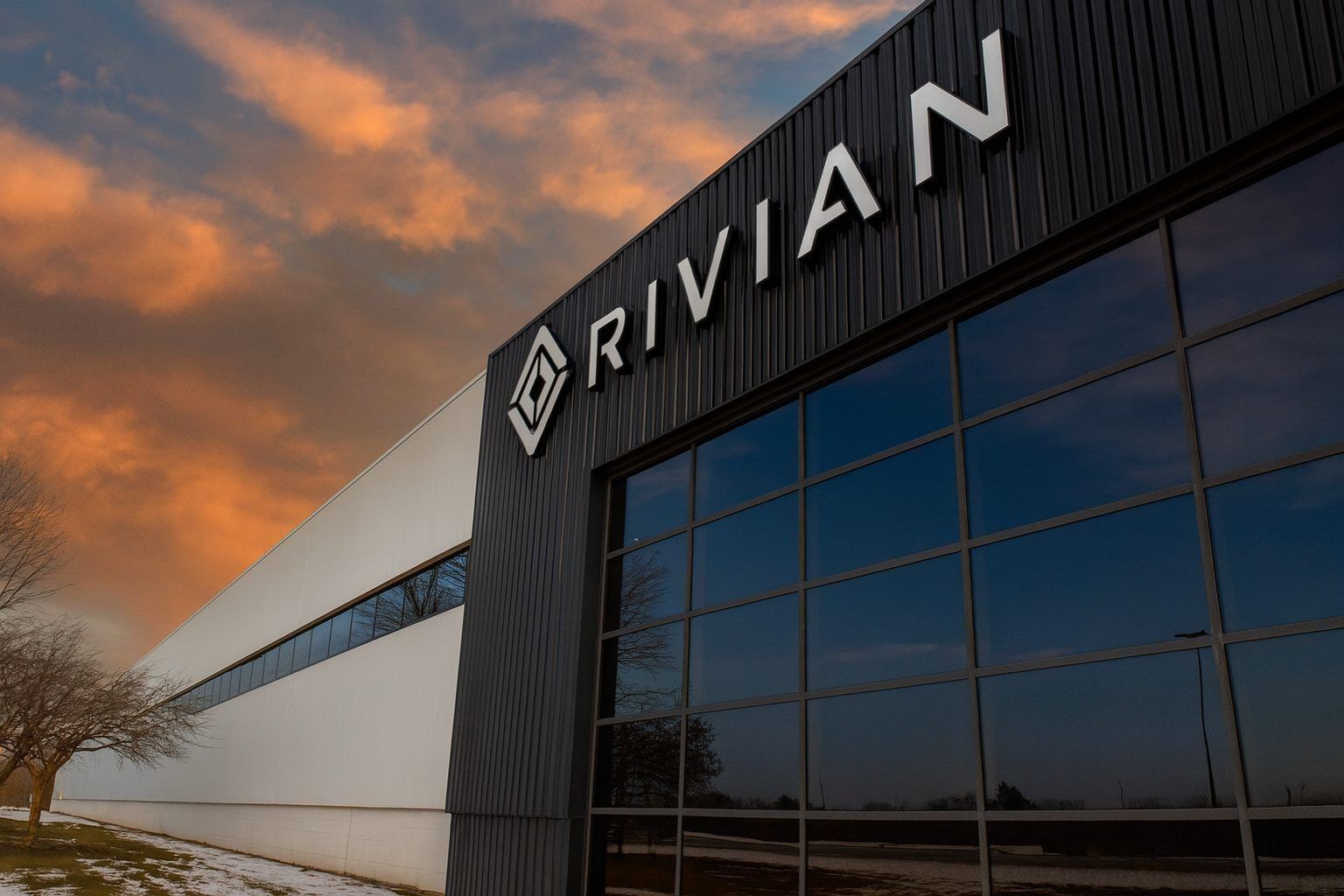
Rivian Automotive, Inc. (NASDAQ: RIVN) heads into the last month of 2025 as one of the most hotly debated EV stocks on the market. On Friday, December 5, 2025, Rivian shares are trading around $18.16, near a one‑year high after a powerful rally driven by better‑than‑expected Q3 results, a deepening software partnership with Volkswagen, and rising excitement about the company’s upcoming “Autonomy & AI Day” on December 11. Stock Invest
At the same time, Rivian is dealing with a fresh recall of nearly 35,000 delivery vans and a wide gap between bullish growth narratives and more pessimistic valuation models. Here’s a structured look at today’s Rivian stock story—price action, latest news, Wall Street forecasts, and what could move RIVN next.
Where Rivian Stock Stands on December 5, 2025
- Current price: about $18.16 per share as of Friday afternoon trading.
- Short-term momentum: RIVN closed at $18.06 on Thursday, up 3.02% on the day and rising in 9 of the last 10 sessions, gaining roughly 23% over two weeks. Stock Invest
- Market cap: roughly $22 billion, up about $650 million in the last day according to Trefis. Trefis
- Trend vs. averages: The stock trades well above its 50‑day and 200‑day simple moving averages (≈$14.52 and $13.96), and even above the average Wall Street price target of about $14–$15. MarketBeat+1
Year‑to‑date, Rivian shares are roughly 30–35% higher, and about 45% above where they were 12 months ago—still down around 90% from the post‑IPO peak, but no longer priced as a failed experiment. Investing.com+1
Today’s Biggest Rivian Headlines (December 5, 2025)
1. RBC urges caution ahead of Autonomy & AI Day
RBC Capital is the loudest “don’t get carried away” voice today.
- RBC maintains a “Sector Perform” (Hold) rating with a $14 price target, notably below the current share price. Investing.com
- In a note highlighted by TradingView and GuruFocus, analyst Tom Narayan calls Rivian “still very much a show‑me story” despite excitement around the upcoming R2 SUV and improving fundamentals. TradingView
- RBC likes Rivian’s pivot toward Level 3 autonomy and in‑sourcing its autonomous tech, arguing this could eventually become a profit center—but stresses that scaling the R2 and R3 platforms profitably matters more than any one AI event. Investing.com+1
- The firm points out Rivian’s healthy liquidity (about $7.1–7.7 billion in cash and equivalents) plus an expected $2.5 billion from the Volkswagen joint venture, but notes the company is still far from net profitability. Investing.com+2AInvest+2
RBC’s bottom line: the autonomy narrative is promising, but valuation and execution risk remain significant at today’s price.
2. Fresh bullish takes: upgrades and AI‑driven “Buy” calls
Not everyone is cautious. Several pieces published today lean outright bullish on RIVN.
Seeking Alpha upgrade
- A detailed article on Seeking Alpha upgrades Rivian to a “Strong Buy”, citing improving margins, policy support, growing services revenue, and R2 as a near‑term catalyst. Seeking Alpha+1
- The author highlights Rivian’s Q3 revenue beat (~$1.56 billion vs. ~$1.51 billion expected) and the company’s first-ever positive gross profit of $24 million, while acknowledging ongoing losses. Seeking Alpha+2Electrek+2
AInvest: “Buy before AI and R2 catalysts”
An AI‑generated but human‑reviewed analysis at AInvest frames Rivian as approaching an “inflection point”: AInvest+1
- Emphasizes Q3 2025 gross profit of $24 million on $1.56 billion in revenue (+78% YoY).
- Notes $416 million of Q3 revenue came from software and services, largely driven by the Volkswagen partnership—a 324% YoY jump. AInvest+1
- Highlights the $45,000 R2 SUV, slated for 2026, with estimated production costs roughly half those of the R1 line, aiming squarely at the mass market. AInvest+224/7 Wall St.+2
- Points to analyst price target hikes (e.g., Tigress Financial to $25, Goldman Sachs to $15) and notes that Rivian’s total liquidity of around $7.1–7.7 billion gives it runway to pursue its AI and autonomy strategy. AInvest+1
AInvest concludes that, for investors with medium‑term horizons and tolerance for volatility, the R2 launch plus AI/autonomy push can justify a Buy stance—while warning that demand and execution risks are real. AInvest
3. Valuation skeptics: Simply Wall St and long‑term models
On the other side of the argument, valuation-focused platforms are waving red flags.
Simply Wall St: “Overvalued by 560%”
- A fresh Simply Wall St piece argues that Rivian’s discounted cash flow (DCF) fair value is only about $2.65 per share, implying the stock is overvalued by roughly 560% at current levels. Simply Wall St+1
- They note Rivian trades at a price‑to‑sales ratio of ~3.7x, compared with 0.85x for the broader auto industry and about 1.1x for peers, suggesting the stock screens expensive relative to revenue. Simply Wall St
- In their “narratives” framework, bulls and bears can each build plausible cases, but their core quantitative view remains: “OVERVALUED.” Simply Wall St
24/7 Wall St: short‑term downside, long‑term upside
24/7 Wall St takes a more nuanced, multi‑year view: 24/7 Wall St.
- It cites a median one‑year Street target of $13.98, implying roughly 18% downside from current levels.
- The site’s own 12‑month price target is $11.88, implying downside of about 30%.
- Yet its 2030 target price is $44.85, implying over 160% upside from today if Rivian hits aggressive revenue and margin goals.
In other words: short‑term expectations are cautious, but long‑term models can still support a multi‑bagger outcome—assuming Rivian executes.
4. Technical forecasters: short‑term “buy” signals
Purely technical services are mostly bullish today, albeit with warnings about overbought conditions.
- StockInvest.us classifies RIVN as a “Buy candidate”, noting the price has risen in 9 of the last 10 sessions, up ~22.7% over two weeks, with strong buy signals from both short‑ and long‑term moving averages. It expects, with 90% probability, that the stock will end the next three months somewhere between $15.14 and $21.23, labeling the stock “high risk” due to ~5% average daily volatility. Stock Invest
- Intellectia.ai describes RIVN as a “Strong Buy candidate” in the very short term, with all key moving averages aligned bullishly (SMA 20 above SMA 60, etc.), but notes the RSI above 70 and several momentum indicators in overbought territory. Its algorithmic fair‑value track suggests modest gains into 2026 and a long‑term trajectory that tops out in the low‑20s per share, while a pattern-matching model even spits out a one‑month scenario with ~73% potential upside—clearly in the speculative zone. Intellectia
For traders, the message is straightforward: trend is up, but the rubber band is stretched.
Fundamentals: What Q3 2025 Revealed
Rivian’s Q3 2025 results are the backbone of today’s narrative.
Key numbers from the company’s November 4 report and subsequent coverage: WardsAuto+3Electrek+3Reuters+3
- Revenue:
- $1.56 billion consolidated revenue, up 78% year‑on‑year and ahead of Wall Street expectations around $1.5 billion. Reuters+1
- $1.14 billion from automotive sales (+47% YoY). Electrek+1
- $416 million from software and services, including the Volkswagen partnership (+324% YoY). Electrek+1
- Profitability:
- $24 million of consolidated gross profit (≈2% gross margin), Rivian’s first-ever quarter with positive gross profit, versus a gross loss of ~$392 million a year earlier. Electrek+2WardsAuto+2
- Net loss remains heavy at around $1.17 billion for Q3, underscoring how far Rivian still has to go to reach bottom‑line profitability. tradingkey.com
- Operations & demand:
- 13,201 vehicles delivered, up roughly 32% YoY, boosted by U.S. buyers rushing to lock in a $7,500 federal EV tax credit before it expired. Reuters+1
- Management acknowledged that this pull‑forward means Q4 demand will likely be softer, and slightly trimmed its full‑year delivery outlook to around 42,500 units. Reuters+1
- Liquidity & cost actions:
- Roughly $7–7.7 billion in cash, cash equivalents and short‑term investments at quarter end. AInvest+1
- Ongoing cost controls, including pausing the Georgia plant build earlier in the year and shifting initial R2 production to the existing Illinois facility to conserve capital. tradingkey.com
Rivian also launched Mind Robotics, an AI‑focused robotics spin‑off that raised about $110 million, further signaling its intent to keep AI and automation at the center of its long‑term story. MarketWatch+1
The big takeaway: Q3 shows real progress on unit economics and revenue mix, but the company is still burning over a billion dollars per quarter.
Volkswagen Partnership: Software, Cash, and Third‑Party Licensing
The Volkswagen Group joint venture (RV Tech) is increasingly central to Rivian’s investment thesis.
- VW plans to invest up to $5.8 billion in Rivian and the joint venture by 2027, with around $2 billion already committed, giving Rivian both capital and a large customer for its software‑defined vehicle platform. tradingkey.com+1
- The JV focuses on electrical architecture and vehicle software, which VW plans to use across future models. A recent VW investor update described “strong progress” one year after the JV’s formation and pointed to upcoming winter testing of the shared platform. Volkswagen Group+1
- Rivian’s Q3 results show $416 million in software and services revenue, much of it tied to VW—this has quickly become a meaningful offset to the losses in its automotive segment. Electrek+2AInvest+2
- Coverage from EV‑focused outlets suggests Rivian and VW ultimately plan to sell their jointly developed software and EV platform to other automakers, potentially creating a high‑margin licensing stream. tradingkey.com+3InsideEVs+3ev.com+3
RBC and others see this autonomy and software pivot as a credible strategic move, but stress that it only pays off if Rivian can simultaneously scale its own vehicle volumes without running out of cash. Investing.com+2TradingView+2
R2: The Mass‑Market Bet That Has to Work
Almost every analysis published this week comes back to the same lever: R2.
- R2 is a mid‑size SUV targeting a starting price around $45,000, aiming squarely at the mass‑market segment currently dominated by Tesla’s Model Y and other compact crossovers. 24/7 Wall St.+1
- Rivian expects R2’s material costs to be ~45% lower than today’s R1 line, thanks to a new platform, simplified electronics, and manufacturing efficiencies. 24/7 Wall St.+2EBC Financial Group+2
- A CBonds‑linked note summarizing third‑party analysis describes Rivian as “eyeing the mass market with the R2 SUV”, underscoring how important this vehicle is to the brand’s next phase. Cbonds
- Reuters and MarketWatch both report that Rivian remains on schedule to launch R2 in the first half of 2026, and that R2 is expected to be a key driver of volume growth after a softer 2025 as incentives roll off. Reuters+1
RBC, TradingKey and 24/7 Wall St all emphasize some version of the same point:
The real test is not the December 11 AI event; it’s whether R2 and later R3 can be built and sold profitably at scale. TradingView+2tradingkey.com+2
The 35,000‑Vehicle Recall: A Manageable Setback
Rivian’s rally is happening in spite of a sizable recall announced this week.
- Rivian is recalling 34,824 electric delivery vans (EDVs) from model years 2022–2025 in the U.S. because the driver’s seat belt pretensioner cable can be damaged if drivers repeatedly sit on a buckled belt, potentially leaving them unrestrained in a crash. Reuters+1
- The company says it is not aware of any injuries, and will ship an over‑the‑air software update to detect seat‑belt misuse, plus inspect and, if needed, replace the affected hardware free of charge. Reuters+1
- Barron’s notes that this recall affects over 20% of Rivian’s total vehicle population, yet investors have largely shrugged it off; the stock is still up about 30% in 2025 and ~45% over the past year. Barron’s+1
In the broader auto industry, recalls on this scale are not unusual. The risk here is less about immediate cost and more about reputation and regulatory scrutiny, especially as Rivian accelerates production.
What Wall Street Thinks: Ratings and Targets
Despite today’s strong price and momentum, Wall Street’s baseline view is still “Hold.”
- MarketBeat tracks 27 analysts covering RIVN:
- 6 Buy, 16 Hold, 5 Sell.
- Average price target: about $14.34. MarketBeat
- ValueInvesting.io, aggregating 36 analysts, shows:
- Consensus rating:HOLD.
- Average 12‑month target:$14.79, with a range from $10.10 to $22.05—implying ~14% downside from today’s ~$18 price at the midpoint. ValueInvesting
- RBC Capital: Sector Perform, $14 target, cautious on valuation but positive on autonomy pivot and VW tie‑up. Investing.com+1
- Tigress Financial: Buy, price target $25, citing AI/autonomy, production momentum and the R2 pipeline. Investing.com+224/7 Wall St.+2
- Stifel: raised its target to $17, as Q3 software and services revenue surprised to the upside and costs improved. Investing.com+2Yahoo Finance+2
- Mizuho: Underperform, $10 target, wary of slowing EV demand as subsidies vanish and competition intensifies. AInvest+2Reuters+2
Add in TradingKey’s estimate of an average target around $14.93 and the picture is consistent: analysts, on average, think RIVN is priced ahead of fundamentals, but a minority see considerable upside if management delivers on growth and margin promises. tradingkey.com+1
The Technical Picture: Hot, Volatile, and Overbought
Technically, Rivian looks like a textbook momentum stock right now.
- The stock sits above both the 50‑day and 200‑day moving averages, a classic bullish configuration. MarketBeat+2Intellectia+2
- StockInvest.us notes RIVN has climbed nine days in a row, with daily swings around 4–6%, and considers the current level a buying opportunity in the short term, while warning that a pullback is likely after such a strong run. Stock Invest
- Intellectia.ai flags overbought readings on multiple indicators (RSI over 70, Stochastics and CCI all elevated), alongside a short‑sale ratio of about 25.7%, suggesting not all traders are convinced the rally will stick. Intellectia
- TradingKey points out that RIVN has broken through several resistance levels, with key near‑term resistance around $17.80–18.13 (essentially where the stock is trading now) and support near $16.40–16.50. tradingkey.com
In plain terms: the trend is up, sentiment has improved dramatically, and short‑term technicals are favorable—but at the cost of higher risk and volatility.
Key Risks and What Could Move RIVN Next
Structural and macro risks
- EV demand reset: Multiple outlets highlight that Rivian’s Q3 strength was boosted by buyers rushing to claim expiring U.S. EV tax credits, and that industry‑wide EV growth has slowed amid higher interest rates and more cautious consumers. Reuters+2MarketWatch+2
- Price war & competition: Chinese manufacturers like BYD have driven down prices globally, compressing EV margins and raising the bar for price‑performance across all segments—even the premium niche in which Rivian currently operates. tradingkey.com+1
Company‑specific risks
- Ongoing losses and cash burn: Q3’s $24 million gross profit is an important milestone, but the $1.17 billion net loss and heavy capex mean Rivian will likely need to prove that R2 and software revenue can quickly move it toward break‑even, or risk future dilution or additional debt. tradingkey.com+2Electrek+2
- Execution on R2 and R3: Any delays, cost overruns, or demand disappointments around R2 (2026) and R3 (later) could seriously damage the investment case, given how central these models are to every bullish forecast. tradingkey.com+324/7 Wall St.+3MarketWatch…
- Regulatory and quality issues: The recent recall shows that as Rivian scales, quality control and safety will be under intense regulatory and investor scrutiny. More serious or repeated issues could weigh on the brand and margins. Reuters+1
Near‑term catalysts to watch
- December 11 Autonomy & AI Day: Expect detailed updates on Rivian’s Level 3 autonomy stack, AI‑enabled features, and software roadmap. Positive surprises on capability or monetization (e.g., subscription pricing) could support the “tech‑pivot” narrative; underwhelming content could trigger a “sell the news” reaction. Investing.com+2TradingView+2
- Further VW JV updates: Confirmation that VW will deploy Rivian’s platform into high‑volume models—and that third‑party licensing is gaining traction—would strengthen the high‑margin software story. ev.com+3Volkswagen Group+3InsideEVs+3
- 2026 guidance and margin targets: Investors will be watching for more concrete progress toward Rivian’s stated goals of positive adjusted EBITDA by 2027 and long‑term 25% gross margin / 10% free‑cash‑flow margin—targets that underpin many of the long‑term price forecasts. 24/7 Wall St.+2MarketWatch+2
Bottom Line: How the Market Is Pricing Rivian on December 5, 2025
As of today, Rivian is being priced like a turnaround growth story that has cleared its first big hurdle (positive gross profit) but still has to prove it can mass‑produce affordable EVs and monetize software at scale.
- Bulls focus on:
- Rapid revenue growth and the first quarter of positive gross profit.
- A deepening, cash‑rich partnership with Volkswagen.
- The upcoming R2 launch at a far lower price point and cost base.
- AI and autonomy features that could support high‑margin software revenue. MarketWatch+4Electrek+4tradingkey.com+4
- Bears and skeptics point to:
- Heavy ongoing net losses and the possibility of future capital raises.
- Valuation models that show the stock trading well above DCF‑based fair values.
- A tougher macro environment for EVs post‑incentives and ongoing recall/quality risk. tradingkey.com+3Simply Wall St+3Reuters+3
With the stock already trading above the average 12‑month analyst price target, investors are effectively paying today for successful R2 execution and meaningful software monetization in the next few years. Whether that proves justified will depend on what Rivian actually shows on December 11—and how well it delivers in 2026 and beyond.