
New York, June 13, 2026, 13:02 EDT
- Rivian shares closed at $16.76 on Friday, up 7.85%, after a volatile week around the R2 SUV launch.
- The lower-priced R2 is now reaching public customers, making its production ramp the key test for RIVN stock.
- Wall Street remains split, with analyst targets implying limited-to-moderate upside and execution risk still high.
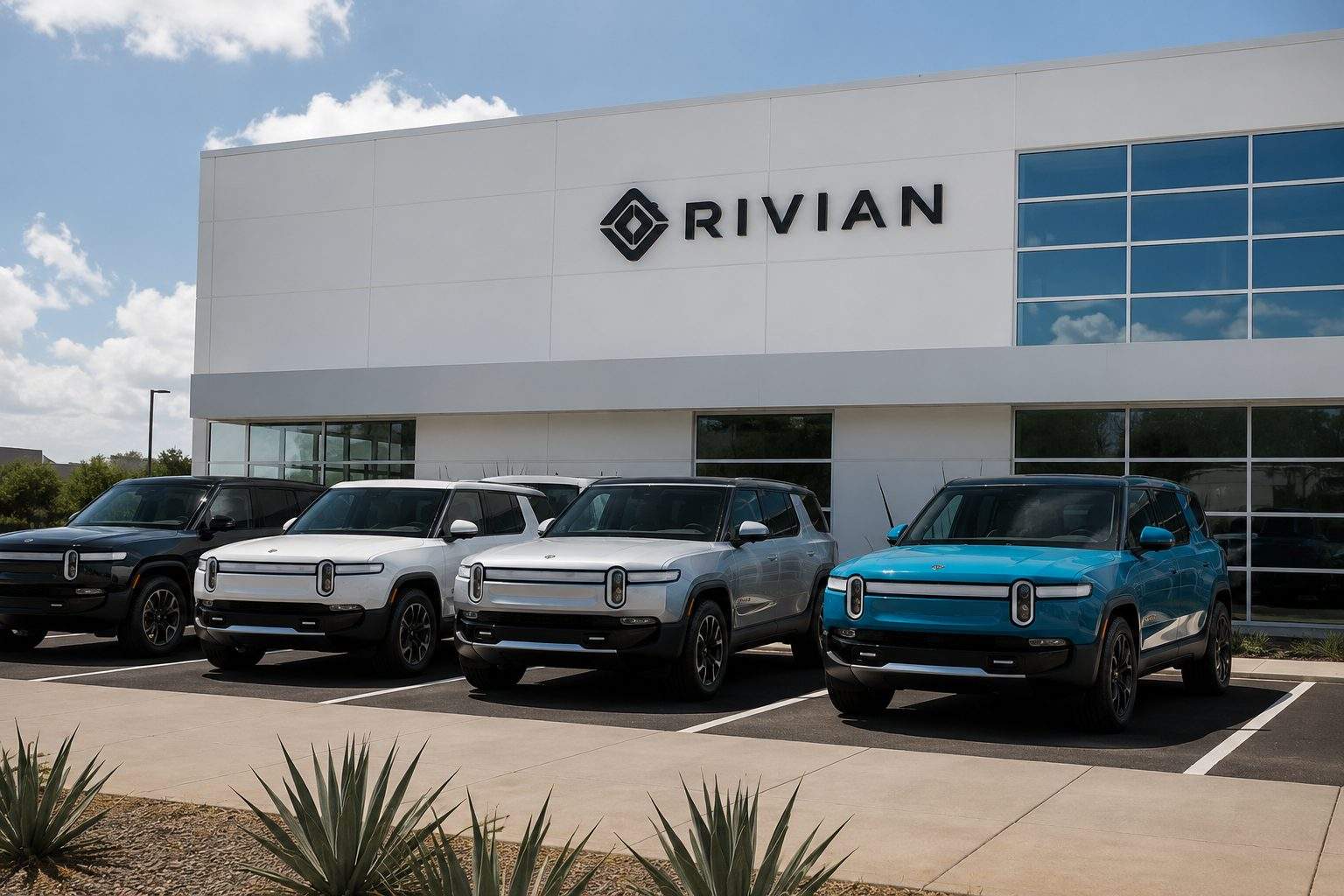
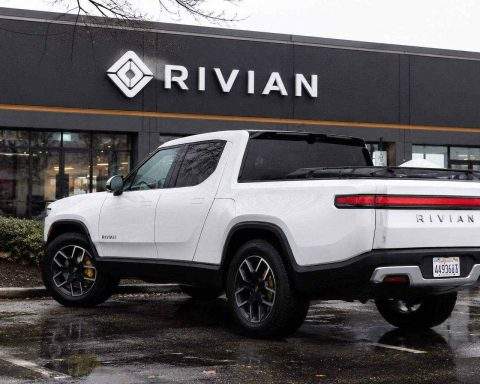
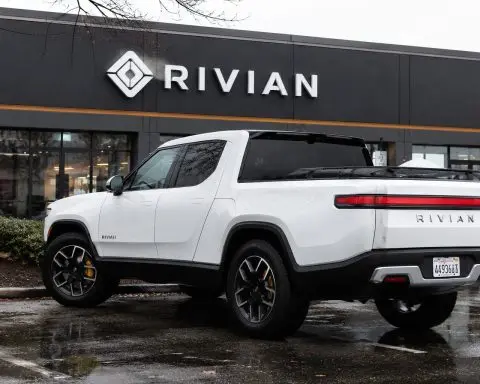
Rivian Automotive stock ended the week with a sharp rebound, closing at $16.76 on Friday, up 7.85%, with intraday trading between $15.44 and $16.785 and volume of about 31.9 million shares. The move came after a busy launch week for Rivian’s new R2 SUV, the vehicle investors are watching most closely because it is designed to move the company beyond its higher-priced R1 lineup and into a broader electric-SUV market.
The near-term story is simple but high stakes: Rivian has begun public customer deliveries of the R2, and the first version being delivered is the R2 Performance with Launch Package, starting at $57,990, according to Rivian’s own launch update. Rivian said deliveries, order invitations and demo drives began June 9, while Business Insider reported Friday that only the Performance version is being delivered now, with the $53,990 Premium expected later this year and the $44,990 Standard version starting in 2027.
That matters for the stock because Rivian’s valuation increasingly depends on whether R2 can scale without consuming too much cash. In a new Wired interview, CEO RJ Scaringe framed the risk directly, saying, “the future of the company as we’ve designed it depends on R2’s success.” Wired also noted Rivian’s heavy historical cash burn and that its stock has fallen from a peak around $130 to the mid-teens, a reminder that investors have repeatedly punished the company when growth promises ran ahead of production economics. WIRED
The bull case is that R2 expands Rivian’s addressable market at the right time. The SUV is smaller and more affordable than Rivian’s R1 vehicles, and TechCrunch reported that the company is aiming to ramp R2 production and deliveries through the second half of 2026, with a stated goal of 20,000 to 25,000 R2 deliveries by year-end. Rivian also has strategic support from Volkswagen and Uber; in its first-quarter release, the company said a Volkswagen milestone unlocked $1 billion in funding, while Uber may invest up to $1.25 billion tied to autonomous-vehicle milestones.
The bear case is that Rivian still has to prove the R2 can be built profitably at scale. In the first quarter, Rivian generated $1.381 billion in revenue and $119 million of consolidated gross profit, meaning revenue left after production and related costs, but its automotive segment still posted a $62 million gross loss. Rivian also reported a $416 million net loss and negative free cash flow of $1.075 billion; free cash flow means cash left after operating cash flow minus capital spending, and negative free cash flow signals the business is still spending more cash than it generates.
Analyst sentiment remains mixed rather than euphoric. Benzinga lists Rivian with a $17.56 consensus price target and says Needham’s June 10 rating was a Buy with a $23 target, while MarketBeat’s 27-analyst compilation shows a Hold consensus, with 12 Buy ratings, 9 Holds and 6 Sells, and an average target of $18.57. Against Friday’s $16.76 close, those averages suggest the stock is not obviously cheap after the rebound, even though the most bullish analysts see more room if R2 execution improves.
The next major catalyst is Rivian’s Q2 production and delivery update, because it should give investors the first early read on how quickly public R2 deliveries are converting into volume. After that, the next earnings event is expected but unconfirmed for August 4 after the market close, according to Wall Street Horizon. Investors will be watching whether Rivian maintains its 2026 delivery guidance of 62,000 to 67,000 vehicles and whether cash burn improves as R2 production ramps.
For now, Rivian stock looks risky rather than clearly attractive. The R2 launch gives the company a credible growth catalyst, and the latest share-price reaction shows investors are willing to reward signs of momentum. But with a negative price-to-earnings ratio — a valuation measure that compares share price with earnings per share and turns negative when a company is losing money — and a still-large cash outflow, RIVN remains an execution-heavy EV turnaround stock. The upside depends on R2 scale, margins and liquidity holding together; the downside is that any delivery miss or renewed cash-burn concern could quickly pressure the stock again.
Related articles: NASDAQ:RIVN


![UK Stock Market Today 26/08/2026 [UPDATE: 09:01 BST] [Miners Offset Oil Majors as Brent Slides Below $86]](https://ts2.tech/wp-content/uploads/2026/08/UK-market-dashboard-2026-08-26-0901-480x384.jpg "UK Stock Market Today 26/08/2026 [UPDATE: 09:01 BST] [Miners Offset Oil Majors as Brent Slides Below $86]")