
LONG BEACH, California, May 7, 2026, 13:10 PDT
- Rocket Lab posted first-quarter revenue of $200.3 million—a new record for the company and a 63.5% jump from last year. Backlog climbed as well, reaching $2.2 billion.
- RKLB dropped over 7% during the session ahead of the report but bounced higher once after-hours trading kicked in.
- A fresh confidential customer contract locks in five Neutron flights plus three Electron missions between 2026 and 2029.
Rocket Lab posted record quarterly revenue and narrowed its first-quarter loss on Thursday, putting its soaring backlog in the spotlight for investors following a sharp rally in RKLB shares.
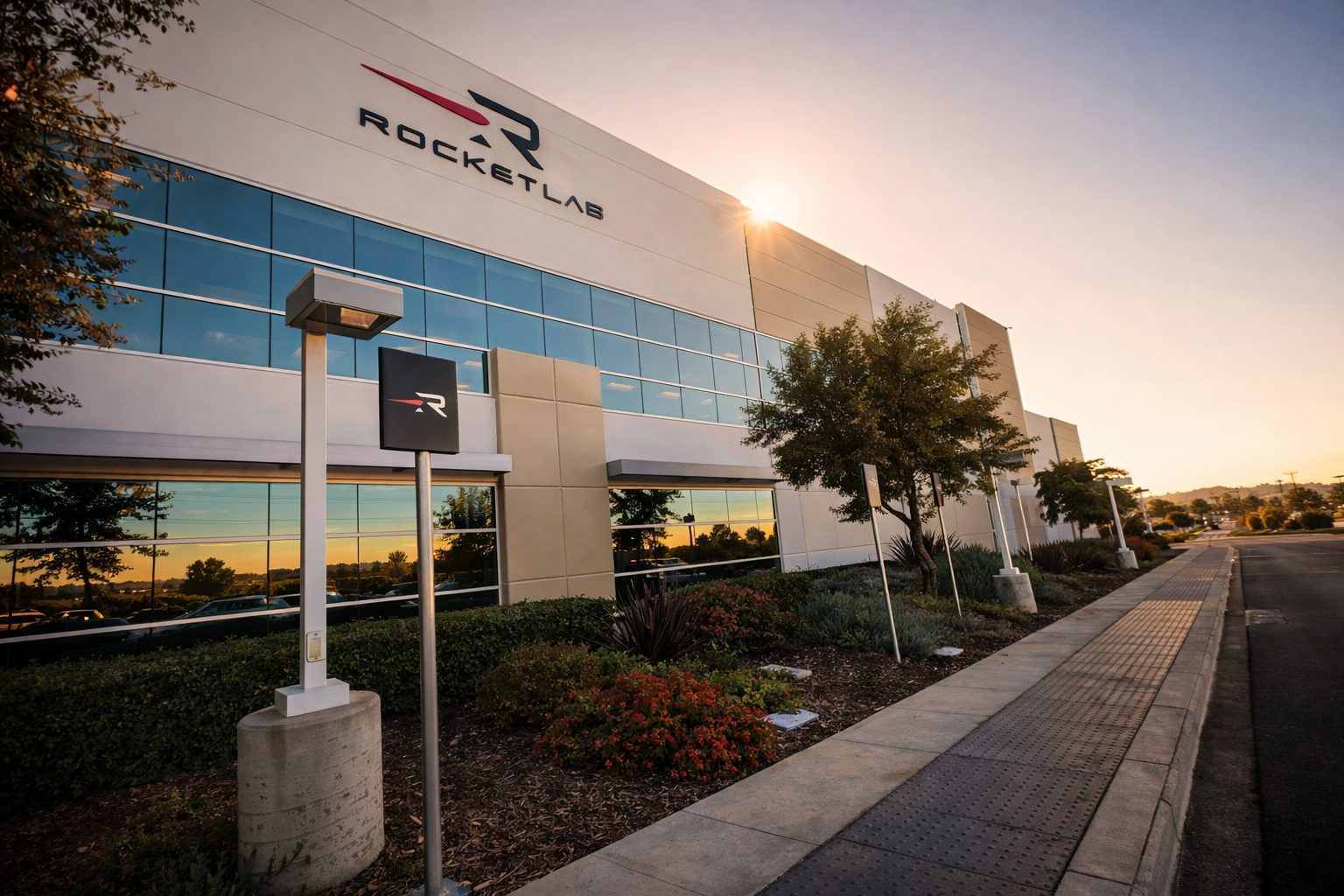
Long Beach’s Rocket Lab reported a jump in revenue to $200.3 million for the quarter ending March 31, up from $122.6 million in the same period last year. Net loss dropped to $45.0 million, or 7 cents per share, compared to $60.6 million, or 12 cents per share, a year ago.
The clock was ticking. Rocket Lab had already seen its stock slip—traders were taking profits after a big run-up in the space names, according to Benzinga. Street estimates called for a loss of 8 cents a share with revenue coming in around $189.7 million, pretty much in line with the midpoint of the company’s earlier guidance.
Backlog’s taking center stage. Rocket Lab reported it closed out the quarter with $2.2 billion in orders—a jump of 20.2% compared to the prior quarter—while liquidity topped $2 billion after wrapping up an at-the-market share sale, which allows new shares to be sold into the market gradually.
Rocket Lab announced it has secured its biggest launch deal yet—a contract with an undisclosed client for five Neutron missions and three Electron flights, all set to run from 2026 through 2029. That pushes the company’s total launch backlog to over 70, marking a record for its manifest.
Peter Beck, founder and chief executive, called the contract evidence that the industry “needs more launch capacity.” He also noted that operators are racing to establish orbital infrastructure. For Neutron, the deal adds commercial heft ahead of its crucial inaugural flight, which remains a big milestone for the company. StreetInsider.com
Rocket Lab’s Neutron, a bigger and reusable vehicle designed for heftier cargo than Electron, aims at the medium-lift market. But on Thursday, Investors Business Daily pointed out that testing setbacks have pushed back Neutron’s development. Electron, meanwhile, is still seeing rising launch demand.
Rocket Lab cited activity across its space systems business, with Beck noting the Mynaric deal is now done, Motiv Space Systems is set to join the fold, and the new Gauss electric satellite thruster has been rolled out. The company also landed a project linked to a U.S. missile-defense program, working alongside Raytheon.
Rocket Lab’s shares moved erratically. MarketBeat data had the stock finishing the session at $78.55, down 7.2%. Then, after the results hit, shares bounced to $80.62 in after-hours action. Still, that was short of the day’s peak, but a bit higher than the official close.
Competition hasn’t eased up. Rocket Lab stands out as one of the few public space names catching investor eyes, with BlackSky and Redwire both reporting results in that same 24-hour stretch. Still, private SpaceX is the standard everyone’s measuring against.
Timing and spending are the main variables here. Rocket Lab sees second-quarter revenue between $225 million and $240 million, but it’s also projecting an adjusted EBITDA loss in the $20 million to $26 million range. Remember, adjusted EBITDA excludes interest, taxes, depreciation, amortization, and certain other items—it’s not equivalent to net profit. Delays for Neutron, slower order conversion, or costs tied to integrating new acquisitions could all dampen the outlook.
Related articles: NASDAQ:RKLB