Berlin, April 27, 2026, 18:02 CEST
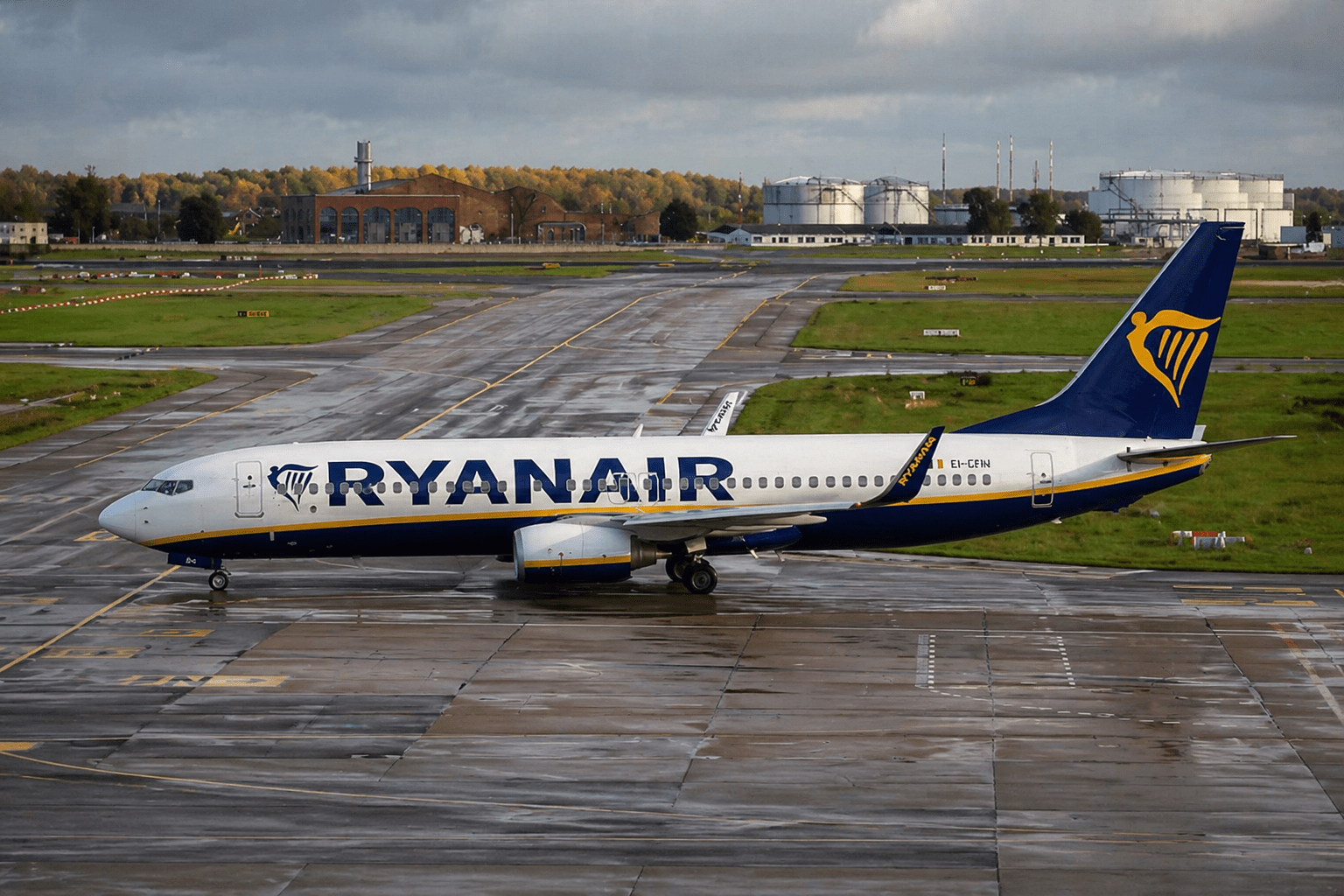
Ryanair will close its seven-aircraft operating base — the place where aircraft and crew are stationed — at Berlin Brandenburg Airport on Oct. 24, 2026 and cut flights to and from the German capital by half in its winter schedule. The Dublin-based budget carrier said it would move the aircraft to lower-cost airports in Sweden, Slovakia, Albania and Italy.
The cut matters now because Berlin’s air traffic recovery is still thin and Germany is trying to undo years of airline complaints over taxes and fees. Ryanair said its Berlin traffic would fall to 2.2 million passengers in 2027 from 4.5 million, while BER’s passenger numbers had dropped to 26 million in 2025 from 36 million in 2019.
For passengers, the risk is fewer cheap short-haul options and less schedule flexibility, even if Ryanair keeps flying to Berlin with aircraft based elsewhere. Ryanair is BER’s largest carrier by scheduled capacity, with 48,418 weekly departure seats and a 15.4% market share, ahead of easyJet Europe and Eurowings, ch-aviation reported.
Ryanair DAC Chief Executive Eddie Wilson put the blame on airport charges and Germany’s tax regime. “German aviation is broken,” he said, adding that Germany had no strategy to cut aviation taxes or high airport fees. Anadolu Ajansı
Berlin Brandenburg Airport pushed back. It said it was surprised by Ryanair’s move, was still in talks with airlines and had no plans to raise airport charges, according to Euronews.
The clash lands just after Berlin moved to cut the Luftverkehrsteuer, Germany’s air passenger tax, from July 1. The government said short-haul rates would fall to €13.03 from €15.53, medium-haul rates to €33.01 from €39.34 and long-haul rates to €59.43 from €70.83; companies decide whether passengers see the relief in fares.
The pressure on Berlin is not new. Germany’s coalition agreed last year to lower airline costs, including ticket-tax cuts, lower air traffic control fees — charges paid for navigation services — and cheaper security checks, after low-cost carriers including Ryanair and easyJet cut capacity in the country.
The labor fight could be sharper than the route fight. Verdi, the German union, said roughly 500 employees could be affected and accused Ryanair of failing to inform the local works council, a workplace representation body, in advance; Ryanair put the number at 210 and said all would get job offers at another site.
Rail may get an opening, though not an easy one. Jon Worth, a European railway policy analyst, told the Guardian there was “an opportunity for the railway industry here,” while warning that reliability and prices still need work. Berlin has direct trains to cities including Amsterdam, Warsaw, Prague, Vienna and Paris. The Guardian
The wider signal is clear: Ryanair is willing to move scarce aircraft where it sees lower costs and quicker growth. The airline has already cut or shut activity at several German airports, and this Berlin decision turns a long-running complaint over aviation taxes into a concrete capacity loss.
But the final shape could still move. BER disputes the fee claim, talks with airlines are continuing, the federal tax cut starts before Ryanair’s base-closure date, and the carrier will still serve Berlin from other bases; Aviation Week also reported that the airport pointed to growth from Eurowings and Wizz Air and said Ryanair was building a maintenance hangar at BER due to open in August.