
Published: November 7, 2025
Samsung confirms 10.7Gbps LPDDR6 (12nm, ~21% efficiency gain) and a compact Gen5 PM9E1 SSD at up to 14.8/13.4GB/s for CES 2026—what it means for AI PCs and phones.
Key takeaways
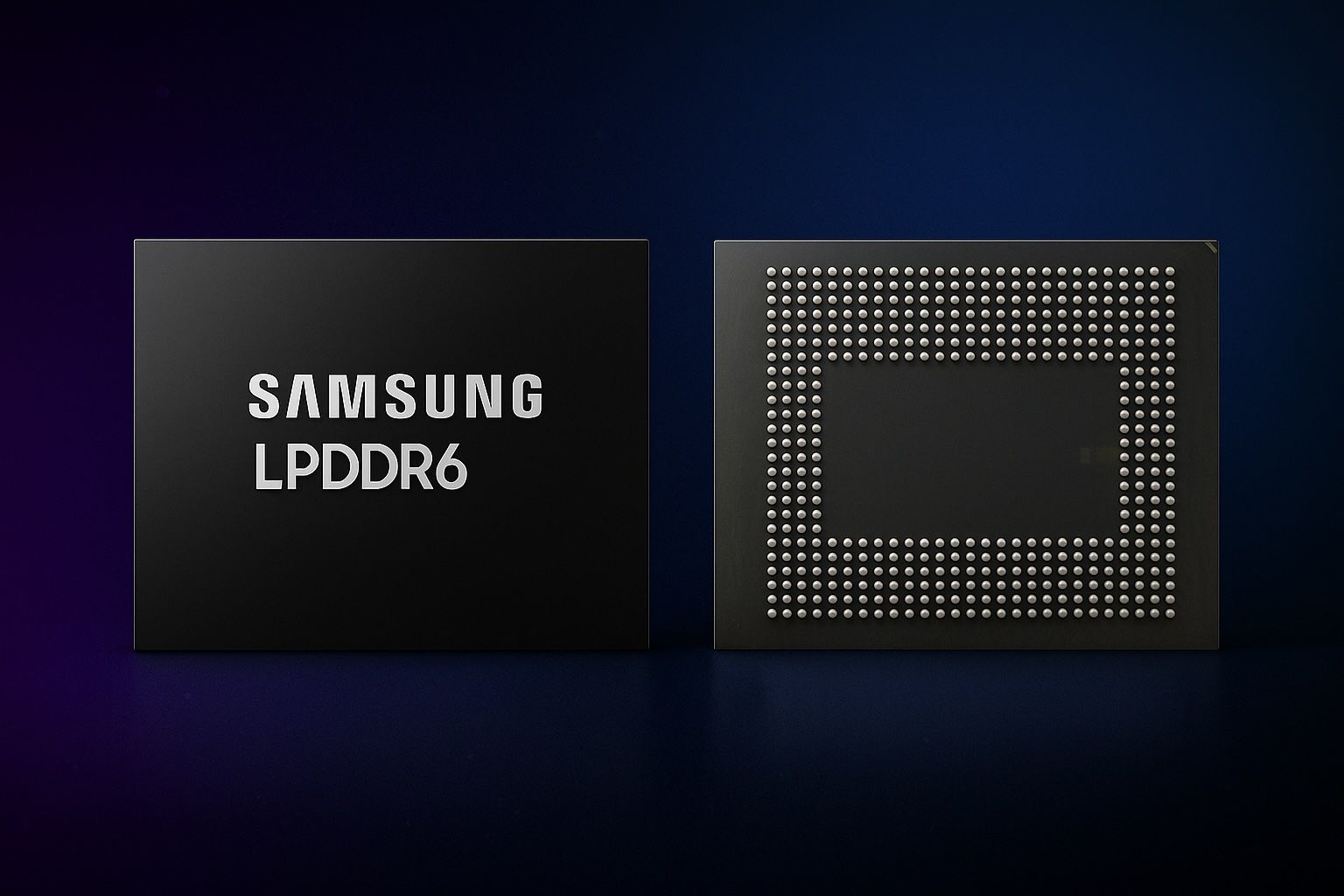
- LPDDR6: up to 10.7Gbps per pin, built on 12nm, with ~21% better energy efficiency and an expanded I/O design.
- PM9E1 Gen5 SSD (22×42): up to 14.8GB/s read and 13.4GB/s write, up to 4TB, “Presto” controller, V8 TLC V‑NAND, SPDM v1.2 security. ces.tech
- Timing: Samsung’s innovations are CES 2026 Innovation Awards honorees; CES runs Jan 6–9, 2026, Las Vegas.
What happened today (Nov 7, 2025)
Samsung’s forthcoming LPDDR6 DRAM and PM9E1 Gen5 SSD were spotlighted in fresh coverage, with outlets noting that the company plans to showcase both products at CES 2026. A Wccftech report published this morning confirms Samsung’s plan and reiterates the headline specs—10.7Gbps LPDDR6 on 12nm and a 22×42 Gen5 SSD targeting up to 14.8/13.4GB/s.
LPDDR6: the headline upgrades
On the official CES Innovation Awards page, Samsung describes LPDDR6 as built on an advanced 12nm process, rated up to 10.7Gbps, with expanded I/O for higher aggregate bandwidth and dynamic power management that improves efficiency by roughly 21% versus the prior generation. These are the first official figures from Samsung tied to the CES program.
LPDDR6 isn’t just about phones. A Semiconductor Engineering analysis this week argues the new standard is poised to move beyond mobile into data centers and edge AI, citing security additions and architectural changes that better fit high‑concurrency workloads—while also flagging integration challenges like more pins and PHY complexity.
For background, JEDEC ratified the LPDDR6 (JESD209‑6) specification in July 2025, outlining architectural updates (e.g., more, smaller sub‑channels) and power‑saving techniques such as DVFSL. The standard sets a broad data‑rate range that extends beyond today’s 10.7Gbps starting point, indicating substantial headroom for future speed bins.
How it compares to LPDDR5X
Some coverage also notes a nuance: Samsung already has 10.7Gbps LPDDR5X on 12nm, so LPDDR6’s initial speed bin doesn’t raise peak throughput yet. The near‑term advantage is the platform—more I/O, better efficiency, and security features—plus runway for higher bins later (media expect ~14Gbps parts as the ecosystem matures).
PM9E1 Gen5 SSD (22×42): compact form, flagship speeds
Samsung’s PM9E1 M.2 22×42 SSD is billed as an AI‑optimized PCIe Gen5 NVMe drive that pairs up to 14.8GB/s reads with up to 13.4GB/s writes in a short 42mm module—remarkable for mini‑PCs, handhelds, and ultrathin laptops. It uses the in‑house “Presto” controller with V8 TLC V‑NAND and supports SPDM v1.2 for device‑level authentication and firmware integrity, with capacities up to 4TB. ces.tech
Samsung’s newsroom highlights the same specs while underscoring the company’s broader slate of CES 2026 honorees, placing PM9E1 in the Computer Hardware & Components category and LPDDR6 in Mobile Devices, Accessories & Apps.
Why this matters for AI PCs, gaming handhelds, and phones
- AI PCs & handhelds: LPDDR6’s higher effective bandwidth (via expanded I/O) and lower power align with the surge in on‑device AI. The 22×42 PM9E1 brings desktop‑class Gen5 throughput to space‑constrained designs, reducing storage bottlenecks for local AI models, 4K/8K media work, and high‑speed game streaming.
- Phones & tablets: Even at an initial 10.7Gbps, the LPDDR6 platform should extend battery life under AI and camera bursts thanks to its dynamic power management—with headroom for faster bins as silicon and PHY IP mature.
- Edge & data center: As industry voices have argued this week, LPDDR6’s security features and concurrency make it viable beyond mobile where cost and efficiency trump raw HBM bandwidth.
Timelines and what to watch at CES 2026
- Showcase: Samsung’s LPDDR6 and PM9E1 are Innovation Awards honorees set to be showcased at CES 2026 (Jan 6–9, Las Vegas). Expect deeper dives on speed bins, capacities, vendor partners, and target device classes.
- Adoption: Early media expect first commercial deployments of LPDDR6 across 2026 in mobile flagships and select AI‑PC platforms, with the compact PM9E1 slotting into short‑board M.2 designs where 80mm modules won’t fit. (Inference based on spec maturity and vendor roadmaps reported today.
Today’s coverage roundup (Nov 7, 2025)
- Wccftech: Confirms Samsung will showcase LPDDR6 and PM9E1 at CES 2026; reiterates 10.7Gbps LPDDR6 on 12nm and PM9E1’s 14.8/13.4GB/s targets in the 22×42 form factor.
- NotebookCheck: Notes Samsung has announced its first LPDDR6 modules (10.7Gbps, ~21% efficiency gain) while reminding readers LPDDR5X already hits 10.7Gbps, so LPDDR6’s real near‑term gains are efficiency and platform‑level improvements.
- Overclock3D: Highlights the CES 2026 showcase plan and frames LPDDR6 as a boost for laptops and gaming handhelds constrained by bandwidth today.
- Semiconductor Engineering (Nov 3): Explains why LPDDR6 stretches into edge/data‑center use, citing security and concurrency benefits along with integration challenges.
FAQ
What are the official LPDDR6 specs Samsung is talking about today?
Up to 10.7Gbps per pin on 12nm, with expanded I/O for higher aggregate bandwidth and ~21% better efficiency than the previous generation—per Samsung’s CES Innovation Awards entry.
When will devices with LPDDR6 ship?
Samsung is showcasing LPDDR6 at CES 2026. Launch timing will vary by OEM, but today’s reporting positions 2026 as the first wave for mobile and AI‑PC designs.
How does LPDDR6 differ from LPDDR5X in practice?
Initial top speeds are similar, but LPDDR6’s platform brings greater I/O concurrency, lower power, and security features. The JEDEC spec also leaves headroom for higher future speed bins.
What makes the PM9E1 notable?
It packs Gen5 throughput (up to 14.8/13.4GB/s) and up to 4TB into a 22×42mm M.2 module, using Samsung’s Presto controller, V8 TLC V‑NAND, and SPDM v1.2 for device authentication and firmware integrity—ideal for AI PCs and compact systems.
Sources
Official CES Innovation Awards entries for LPDDR6 and PM9E1; Samsung newsroom announcement; same‑day coverage from Wccftech, NotebookCheck, and Overclock3D; and JEDEC‑context reporting on the LPDDR6 spec from Tom’s Hardware in July.
Related articles: KRX:005930