Published: December 6, 2025
High‑end Samsung Odyssey gaming monitors are having a moment. As of December 6, 2025, a new Samsung Odyssey G7 S40FG75 review from Tom’s Hardware, a record‑low Samsung Odyssey G8 deal highlighted by Mashable, and a steep Cyber Week discount on the new Odyssey OLED G50SF covered by PC Gamer all point to the same story: top‑tier ultrawide and OLED gaming displays are finally becoming reachable for more PC gamers. Tom’s Hardware+2unilink24.com+2
Below is a deep dive into what’s new today, how these three Odyssey models compare, and which one is the smarter buy in December 2025.
Samsung Odyssey G7 S40FG75: 40-inch supercurved ultrawide finally gets aggressive pricing
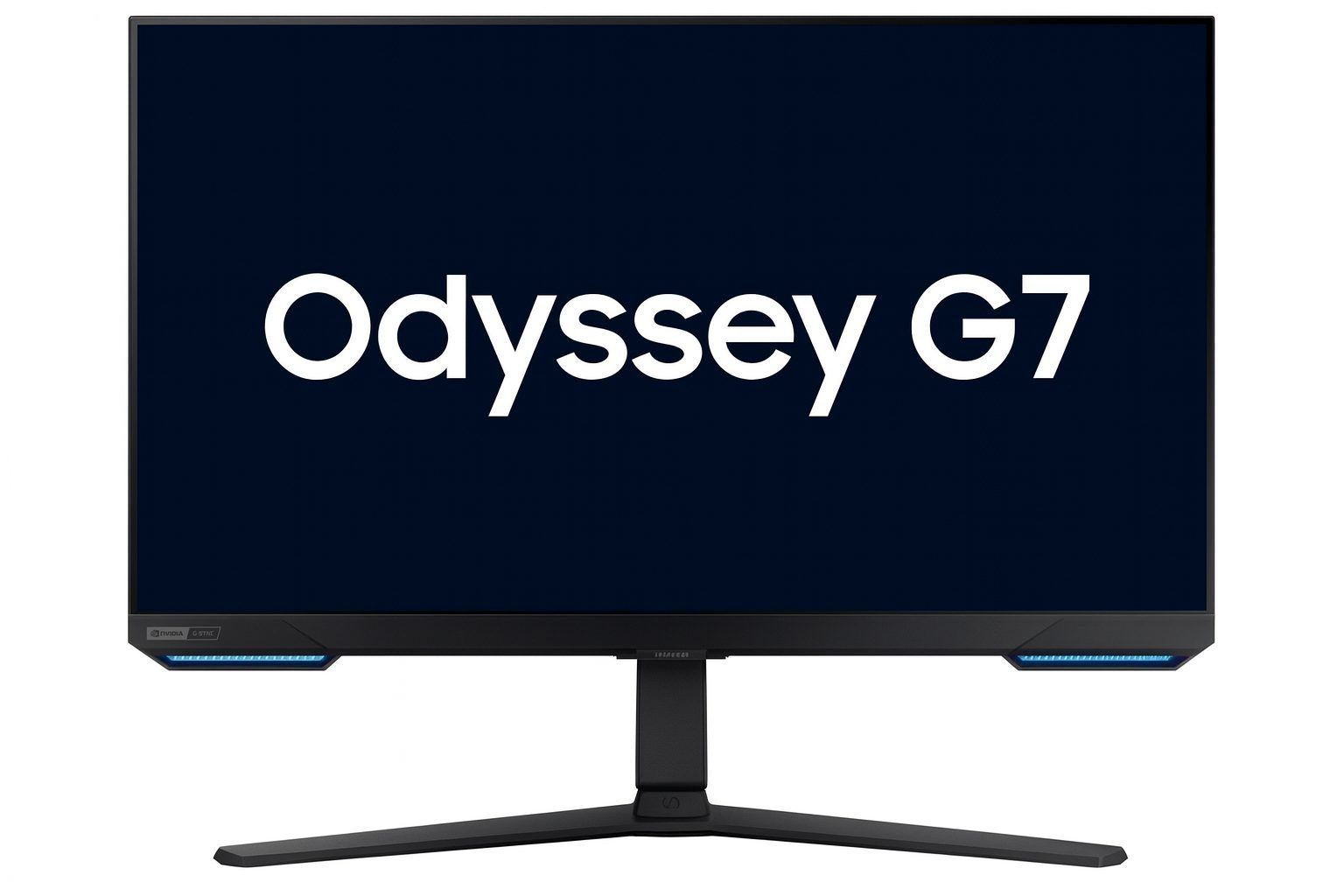
Tom’s Hardware has just published a full review of the Samsung Odyssey G7 S40FG75, a 40‑inch 21:9 ultrawide with a dramatic 1000R curve, positioning it as a serious alternative to far more expensive OLED panels. Tom’s Hardware
Key specs at a glance
According to Tom’s Hardware and Samsung’s own listings, the Odyssey G7 S40FG75 (also sold as G75F / LS40FG75) offers: Tom’s Hardware+1
- Panel type: VA with W‑LED edge backlight and 8 local dimming zones
- Size & format: 40 inches, 21:9 ultrawide, aggressive 1000R curvature
- Resolution: 5120 × 2160 (“5K2K” / WUHD)
- Refresh rate: 180 Hz
- Response time: 1 ms (GtG)
- HDR: HDR10, HDR10+ and VESA DisplayHDR 600 support
- Sync tech: AMD FreeSync, Nvidia G‑Sync compatible
- Color: 10‑bit (8‑bit + FRC) with wide DCI‑P3 gamut
- I/O: 1 × DisplayPort 1.4, 2 × HDMI 2.1, USB 3.2 hub (1 up, 2 down), 3.5 mm headphone jack
- Contrast & brightness (rated): 3,000:1, ~350 nits SDR and ~600 nits HDR
Tom’s testing notes that the monitor reaches roughly 2,600:1 measured contrast in SDR, with local dimming pushing effective contrast toward 9,000:1, bringing it closer to the depth and punch of OLED without the associated price or burn‑in worry. Tom’s Hardware+1
Review verdict: “OLED experience” for less
Tom’s Hardware’s verdict is that the G7 S40FG75 is an excellent choice for gamers who want a near‑OLED experience without crossing the $1,000 line. The review highlights: Tom’s Hardware
Pros
- Bright, sharp image with very high pixel density
- Accurate SDR and HDR color out of the box
- Pro‑grade sRGB mode for creators
- Local dimming that dramatically boosts perceived contrast
- Low input lag and solid video processing
Cons
- You cannot use overdrive and Adaptive‑Sync at the same time, forcing a choice between maximum motion clarity and variable refresh
- No built‑in speakers (you’ll need a headset or external audio)
In real use, that 40‑inch 1000R curve is described as “wraparound” and “addictive,” delivering an almost VR‑like sense of immersion in first‑person games while also being highly practical for productivity thanks to the 5K2K resolution. Tom’s Hardware+1
Price drop: from $1,199.99 launch to $749.99
When the S40FG75 first appeared in August 2025, TFTCentral reported a $1,199.99 MSRP for the 40‑inch VA ultrawide. TFTCentral
Fast‑forward to this week, and both Tom’s Hardware’s pricing box and a dedicated Windows Central deal story show it at roughly $749.99 direct from Samsung, a discount of about $450 (≈38% off) and the lowest widely‑publicized price so far. Tom’s Hardware+1
That kind of drop puts a 40‑inch, 5K2K, 180 Hz ultrawide into the same price ballpark as many 27‑ to 32‑inch high‑end IPS monitors—a huge shift for anyone eyeing an immersive “one monitor to rule them all” setup.
Samsung Odyssey OLED G8 (G81SF): 27-inch 4K QD‑OLED at a record-low $834.99
If you’d rather prioritize pure image quality over sheer size, the Samsung Odyssey OLED G8 (G81SF) is the current star of the deals pages.
Mashable’s Dec. 4 report notes that the 27‑inch Odyssey G8 is on sale at Amazon for $834.99, down from a list price of $1,299.99—a 36% discount and the lowest price on record at Amazon. unilink24.com
Best Buy’s product listing echoes this pricing and confirms the key spec sheet: a 27‑inch 4K QD‑OLED panel, 240 Hz refresh, and 0.03 ms response time, with AMD FreeSync Premium Pro and a glare‑free coating. Best Buy+1
What sets the G8 apart?
From retailer and manufacturer descriptions, plus Mashable’s coverage, the Odyssey OLED G8 offers: unilink24.com+1
- Panel: 27″ 4K QD‑OLED (3840 × 2160)
- Refresh & latency: 240 Hz, ~0.03 ms GtG
- Sync & features: FreeSync Premium Pro, G‑Sync compatible, HDR 400, glare‑free screen
- Brightness & image: Around 250 nits typical in SDR with the deep blacks and rich contrast you expect from OLED
- Burn‑in mitigation: Samsung’s dynamic cooling system and OLED‑specific thermal protections designed to reduce burn‑in risk
Mashable highlights that the G8’s high refresh rate and ultra‑fast response time make it ideal for modern AAA titles and competitive games alike, while the glare‑free panel and cooling system are specifically designed to keep the OLED panel both usable in brighter rooms and safer over the long term. unilink24.com+1
At just over $800, it’s still a premium choice—but this is a flagship‑class 4K OLED monitor that, not long ago, would have been firmly in the “well over $1,000” club.
Samsung Odyssey OLED G50SF: $399.99 for a true OLED gaming monitor
On the value side of the spectrum, Samsung’s Odyssey OLED G50SF is the headline story for budget‑conscious enthusiasts this week.
NotebookCheck first covered the G50SF in October as an “affordable” OLED gaming monitor with an unusual 27‑inch 1440p 180 Hz QD‑OLED panel, launching initially in China, Taiwan and New Zealand. Notebookcheck
PC Gamer’s Dec. 3 Cyber Week piece then spotlighted the same monitor hitting $399.99 at Amazon, down from an MSRP of $549.99—a $150 (≈27%) discount and the best price yet. PC Gamer
Specs and trade‑offs
Between NotebookCheck’s launch coverage and PC Gamer’s deal analysis, the Odyssey OLED G50SF looks like this: Notebookcheck+1
- Panel: 27‑inch QD‑OLED, 2560 × 1440
- Refresh rate: 180 Hz
- Response time: 0.03 ms GtG
- Brightness: ~200 nits SDR (lower than some competitors)
- Color: ~99% DCI‑P3 coverage
- Sync: FreeSync Premium Pro and G‑Sync compatibility
- Ports: 1 × HDMI 2.0, 1 × DisplayPort 1.2, 3.5 mm audio
- Notably missing: USB‑C, USB hub, built‑in speakers
PC Gamer frames it as one of the best‑value OLED gaming monitors available during Cyber Week, precisely because it combines a fast 1440p OLED panel, 180 Hz refresh rate and extremely low response time with that sub‑$400 sale price. The main compromises are brightness, port selection and extras, not image quality in games. PC Gamer
For anyone who doesn’t need 4K or high‑end HDR and primarily plays in a controlled‑light room, the G50SF is arguably the most important price move in Samsung’s line‑up this season.
A turning point for high-end gaming monitors in December 2025
These three models land in a broader context where OLED gaming monitors are rapidly trending downward in price.
PC Gamer has already pointed to multiple 27‑inch 1440p OLED monitors dropping to around $400 for Cyber Monday, calling it clear proof that OLED displays are “finally starting to hit a lower price point.” PC Gamer
Samsung’s latest deals fit squarely into that trend:
- The Odyssey G7 S40FG75 has slid from a $1,199.99 launch price to about $749.99, almost a mid‑range price for a halo‑tier 40‑inch ultrawide. TFTCentral+1
- The Odyssey OLED G8 is now $834.99, a record low and a $465 saving off its $1,299.99 list. unilink24.com+1
- The Odyssey OLED G50SF pushes full‑fat QD‑OLED down to $399.99 for a 27‑inch 1440p, 180 Hz panel. PC Gamer+1
Combined, those price points mean PC gamers now have three distinct ways to buy into Samsung’s high‑end Odyssey ecosystem without always facing four‑figure invoices.
How the Odyssey G7, G8, and G50SF compare
1. Panel tech: VA vs QD‑OLED
- Odyssey G7 S40FG75 – VA panel
- Higher native contrast than IPS, with local dimming pushing perceived contrast even further.
- No risk of burn‑in, generally higher peak brightness than budget OLEDs. Tom’s Hardware+1
- Odyssey OLED G8 & OLED G50SF – QD‑OLED
- Perfect or near‑perfect blacks, extremely high contrast, and vivid color.
- Faster pixel response (0.03 ms) than any LCD panel. PC Gamer+1
If your priority is cinematic image quality and instantaneous response, the G8 or G50SF will look more “wow” than the VA‑based G7. If you want high brightness, no burn‑in concerns and a more workspace‑friendly screen, the G7 is still very compelling.
2. Size, resolution and immersion
- G7 S40FG75: 40″ 21:9, 5K2K (5120×2160), 1000R curve
- Ideal for simulation, racing, and immersive single‑player games.
- Excellent as a single display for work + gaming, thanks to the wide desktop area. Tom’s Hardware+1
- G8 (G81SF): 27″ 4K (3840×2160)
- Super sharp, best for users who sit closer and want pixel‑perfect UI and content creation detail. Best Buy+1
- G50SF: 27″ 1440p (2560×1440)
- Arguably the sweet spot for many PC gamers: easier to drive at high frame rates, still very sharp at 27 inches. Notebookcheck+1
For sheer immersion and peripheral vision coverage, the G7 stands alone. For pixel density and clarity, the G8 wins. For balanced performance and GPU‑friendliness, the G50SF’s 1440p is hard to beat.
3. Refresh rate and responsiveness
- G7: 180 Hz, 1 ms VA. Very fast by LCD standards, with excellent overdrive performance. Tom’s Hardware+1
- G8: 240 Hz, 0.03 ms QD‑OLED—top‑tier for both competitive play and motion clarity. unilink24.com+1
- G50SF: 180 Hz, 0.03 ms QD‑OLED—more than fast enough for almost any game, with slightly lower bandwidth needs than 240 Hz 4K. PC Gamer+1
Competitive shooters and esports titles will feel great on any of these, but if your reflexes (or ego) demand maximum refresh and OLED response, the G8 or G50SF will feel snappier.
4. Connectivity and console support
- G7 S40FG75
- 1 × DP 1.4, 2 × HDMI 2.1, USB hub, headphone jack.
- Explicitly promoted as working well with Xbox, PlayStation and Nintendo Switch at their best supported modes via HDMI 2.1. Tom’s Hardware+1
- G8 (G81SF)
- HDMI 2.1 and DisplayPort (varies slightly by region/size), along with AMD FreeSync Premium Pro; designed for both high‑end PCs and current‑gen consoles. Amazon+1
- G50SF
- HDMI 2.0 and DP 1.2 only; no USB‑C and no USB hub. Fine for a PC setup, more limited for multi‑device battle stations. PC Gamer+1
If you want a single display for PC plus consoles, the G7 has the most flexible I/O. The G50SF is more of a pure PC gamer’s screen.
Which Samsung Odyssey monitor should you buy in December 2025?
Here’s how to decide between the three, based on how you actually play and work.
Choose the Odyssey G7 S40FG75 if…
- You want maximum immersion with a huge, curved ultrawide that can replace a dual‑monitor setup.
- You play a lot of cinematic single‑player titles, racing games or sims where the 21:9 view really shines.
- You need strong HDR, great contrast and high brightness but don’t want to worry about OLED burn‑in.
- You also value productivity space—the 5K2K resolution is excellent for editing timelines, spreadsheets and multitasking. Tom’s Hardware+1
Choose the Odyssey OLED G8 (G81SF) if…
- You want the best overall image quality: 4K QD‑OLED, deep blacks, and high color volume.
- You play both single‑player and competitive games and want 240 Hz / 0.03 ms responsiveness in a premium package. unilink24.com+1
- You care about long‑term OLED health and like the idea of dynamic cooling / OLED‑focused protections.
- Your budget stretches to the mid‑$800s and you view this as a long‑term “centerpiece” monitor. unilink24.com+1
Choose the Odyssey OLED G50SF if…
- You want the cheapest credible entry into Samsung’s OLED ecosystem.
- You mainly play in a darker room, where the lower 200‑nit SDR brightness isn’t an issue. PC Gamer+1
- You prioritize price‑to‑performance and are happy with 1440p rather than 4K.
- You don’t need USB‑C, a USB hub or built‑in speakers and mostly connect a single PC. PC Gamer+1
Price and availability notes (December 6, 2025)
- Pricing mentioned here—$749.99 for the Odyssey G7, $834.99 for the Odyssey G8, and $399.99 for the G50SF—reflects Cyber Week and post‑Cyber‑Monday deals reported between November 29 and December 6, 2025. PC Gamer+3Windows Central+3unilink24.com+3
- Discounts can disappear quickly; availability also varies by region, retailer and panel size (the G8, for example, also comes in a 32‑inch variant). Best Buy+1
Before buying, it’s worth:
- Checking Samsung’s own store plus Amazon, Best Buy and other regional retailers for up‑to‑date pricing.
- Confirming return policies—especially important for OLED if you’re sensitive to the idea of burn‑in.
- Matching the monitor’s resolution and refresh rate to your GPU’s realistic output: 5K2K @ 180 Hz is far more demanding than 1440p @ 180 Hz.
The bottom line
December 2025 looks like a watershed moment for premium gaming displays. A year ago, the idea of getting a 40‑inch 5K2K ultrawide for under $800, or a fast QD‑OLED gaming monitor for around $400, would have sounded optimistic at best. Now, those are real‑world prices on brand‑new hardware from Samsung, backed by thoroughly tested reviews and mainstream outlet coverage. Tom’s Hardware+2PC Gamer+2
If you’ve been waiting to upgrade from a tired 1080p panel or an older 60 Hz 4K screen, the Odyssey G7 S40FG75, Odyssey OLED G8, and Odyssey OLED G50SF represent three very different—but equally timely—paths into high‑refresh, high‑fidelity PC gaming for 2026 and beyond.