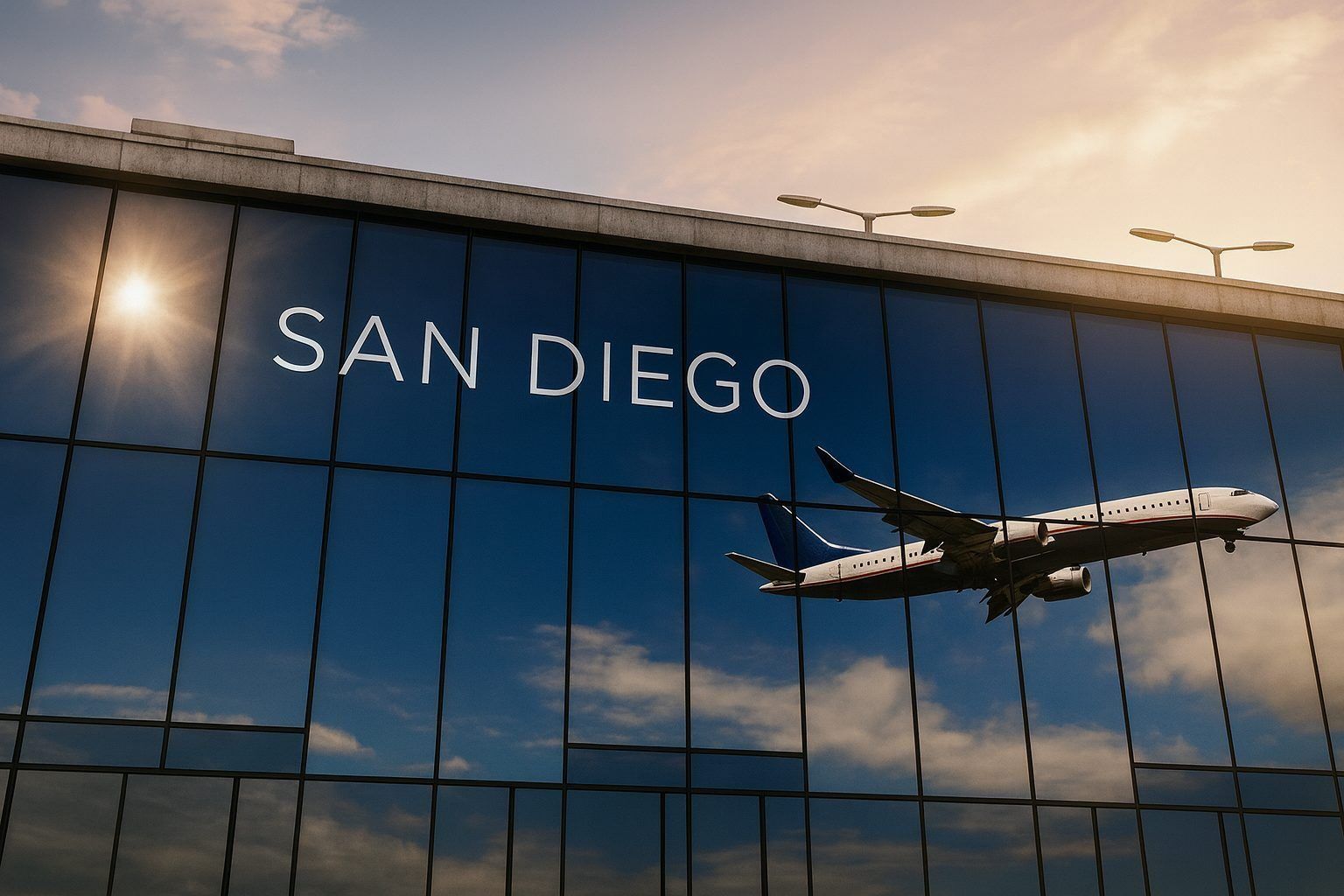
SAN DIEGO — November 30, 2025 — Travelers passing through San Diego International Airport (SAN) this holiday weekend are being hit with a one‑two punch: major runway and taxiway construction on the ground and Federal Aviation Administration (FAA) ground‑delay programs in the sky. All of it is colliding with what airport officials say will be the busiest day of the season — as many as 90,000 passengers moving through SAN on Sunday, November 30. Times of San Diego+3Patch+3Times of San Di…
Over the past 10 days, multiple waves of disruption have already rippled through the region’s main airport. On Friday, Nov. 28, more than 100 flights — mostly arrivals — were delayed as construction reduced arrival capacity, with average waits around 50 minutes and some flights pushed close to an hour and a half, according to FAA data and flight‑tracking site FlightAware, as reported by Patch, Times of San Diego and NBC‑affiliated outlets. Times of San Diego+3Patch+3On Air Parking+…
Black Friday: Ground‑Delay Program Targets Flights Into San Diego
The Friday after Thanksgiving brought a particularly painful twist: the FAA issued a ground‑delay program for flights heading into San Diego. Instead of circling near the coast, many planes were held at their departure airports across the country and released in carefully timed intervals so they wouldn’t overwhelm SAN’s reduced arrival capacity. Yahoo+1
According to the FAA summary carried by Fox 5 San Diego’s syndicated report, domestic departures bound for San Diego were facing average delays of about 50 minutes, with runway construction cited as the primary cause. Yahoo Because those aircraft and crews often continue on to other routes, a late arrival into San Diego can delay departures hours later in entirely different cities — the “domino effect” that airlines and airport officials have been warning about all week. NBC San Diego+1
A separate report noted that on the same day, a hazardous‑materials spill at the airport briefly interrupted operations, adding another layer of uncertainty for flyers already coping with construction‑related slowdowns. On Air Parking
Earlier in November: Hundreds of Flights Delayed
Black Friday wasn’t the first time construction crippled operations at SAN this month.
Mid‑November construction surge. On Friday, Nov. 21, a combination of runway/taxiway work and poor weather triggered a ground stop for departing flights through late morning. Coverage based on FAA notices and FlightAware data reported nearly 300–350 flights delayed that day, with the federal agency citing “runway construction” and the airport clarifying that ongoing taxiway work was a key contributor. NBC San Diego+2Ground News+2
Staffing‑related gridlock earlier this month. Even before the construction‑heavy Thanksgiving period, San Diego travelers endured a Sunday ground‑delay program tied to air‑traffic control staffing shortages during the recent federal government shutdown. ABC 10News’ Streamline newsletter reported that the FAA imposed a ground delay from about 3:30 p.m. to midnight, leading to more than 300 delayed flights and waits of up to an hour as passengers tried to get home. ABC 10 News San Diego KGTV+1
In a statement at the time, airport officials urged passengers to check their flight status before coming to SAN and to arrive roughly two hours early — advice that remains highly relevant this weekend. ABC 10 News San Diego KGTV+1
Why Construction Hurts So Much at San Diego’s Single‑Runway Airport
San Diego International isn’t just any mid‑sized airport. With more than 25 million passengers a year funneled onto a single strip of pavement, SAN is widely recognized as the busiest single‑runway commercial airport in the United States. Wikipedia+2Simple Flying+2
That runway — 09/27 — is about 9,401 feet long and squeezed between downtown high‑rises and the bay. Most operations use Runway 27, but marine layer clouds and certain wind patterns can force the airport to reverse operations onto Runway 9. When that happens, SAN’s already‑tight taxiway layout can back up quickly, with arriving jets and departing aircraft sharing a constrained ground path. Wikipedia+2Wikipedia+2
Now layer construction onto that picture. Ongoing runway and taxiway work related to the massive Terminal 1 modernization project temporarily reduces arrival and departure rates — essentially lowering the number of flights per hour that the airport can safely handle. Local coverage from Patch, Times of San Diego and City News Service all describe the current delays as directly tied to runway and taxiway construction. Patch+2Times of San Diego+2
On the landside, the first phase of the new Terminal 1 opened in September, bringing new gates but also major roadway changes. A new on‑airport road now feeds westbound traffic on North Harbor Drive into the terminals, and officials have repeatedly warned that construction detours and heavier holiday traffic will slow curbside drop‑offs and pick‑ups. SAN Airport+2Patch+2
Long‑Running Controller Shortage Adds to the Strain
Behind the scenes, San Diego is also wrestling with a chronic shortage of air‑traffic controllers. An Axios analysis earlier this year found a 17.9% vacancy rate in SAN’s tower — five controllers short of the FAA’s own staffing target — even before the recent government shutdown piled extra stress onto the system. Axios+1
That kind of shortfall is challenging at any airport, but particularly at a high‑volume, single‑runway facility where there’s little slack in the schedule. When controllers are stretched thin, even small hiccups — a runway inspection, a medical emergency, a sudden need to change runway direction — can ripple quickly into longer taxi times and airborne holding patterns.
FAA Flight Cuts, Then a Return to “Normal”
National policy has added yet another twist to this travel season.
Earlier in November, the FAA responded to staffing‑trigger “stress events” at towers around the country by temporarily ordering airlines to reduce flights by up to 10% at 40 high‑volume airports, including San Diego. A separate Reuters report described these as government‑mandated cuts aimed at preserving safety during the protracted federal government shutdown, which produced thousands of cancellations and more than 10,000 delays in a single Sunday. Federal Aviation Administration+2Reuters+2
On Nov. 16, the agency announced it was ending that emergency order, saying staffing levels had “snapped back into place” enough to resume normal operations nationwide as of Nov. 17. Federal Aviation Administration+1 But “normal” still includes localized staffing challenges and the massive construction program underway at SAN — meaning that while the national cap on flights is gone, San Diego’s own capacity is still constrained by work on and around the runway.
What a Ground‑Delay Program Actually Means
For passengers, “ground delay” can sound vague and frustrating. In FAA jargon, a Ground Delay Program (GDP) is a tool controllers use when an airport’s arrival capacity drops — because of weather, runway work, or other constraints. Instead of letting flights depart on schedule and then stack up in holding patterns, the FAA meters departures from their origin airports so that arrivals land at a pace the destination can safely handle. The Adept Traveler+2Federal Aviation Admin…
That’s what happened on Black Friday for flights heading to San Diego: planes were held on the ground across the country, released in intervals based on “slots” assigned by the Command Center. Travelers often don’t realize that a 45‑minute delay in, say, Denver or Chicago can actually be caused by runway work in San Diego — not by any problem at their departure airport. Yahoo+1
Today, November 30: Record Passenger Volume Meets a Fragile System
Airport and local transportation agencies have been warning all week that Sunday, Nov. 30, would be the region’s big crunch day. SAN expects up to 90,000 passengers today — far above a typical day and part of an 11‑day Thanksgiving window in which daily volume may hit 80,000 travelers, about 3% more than last year. Patch+2Times of San Diego+2
The airport authority and City News Service say the heaviest curbside traffic is expected: Patch+1
- 4:00–6:15 a.m.
- 9:30 a.m.–12:30 p.m.
- 8:00 p.m.–midnight
Those spikes line up with peak departure banks and evening arrival waves. With runway and taxiway construction still limiting throughput, any new GDP or ground stop triggered by weather, staffing, or construction issues could quickly generate 30‑ to 60‑minute delays — even if no major storm is in the forecast. Federal Aviation Administration+3Patch+3Ti…
How Travelers Can Reduce the Pain
There’s no way for passengers to avoid all disruption at a single‑runway airport under construction during record holiday travel — but there are ways to reduce the risk of missed flights and frayed nerves: Federal Aviation Administration+3Patch+3Ti…
- Arrive earlier than usual.
SAN and its partners continue to recommend getting to the terminal at least two hours before domestic flights, and even earlier if you’re traveling during one of the three curbside peak windows. - Check flight status obsessively.
Use your airline’s app and the airport’s flight‑status page. Some ground‑delay programs don’t show up as “canceled” — just rolling estimated departure times that can change quickly. - Watch for schedule changes before you leave home.
Airlines are adjusting departure times and equipment as construction‑related delays ripple through their networks. Re‑check your itinerary the night before and the morning of travel. - Plan extra time on the roads.
New roadway patterns around Terminal 1, holiday congestion on North Harbor Drive and parking‑garage backups can easily add 20–30 minutes to your trip from freeway off‑ramp to gate. Make parking reservations in advance if you plan to drive. SAN Airport+1 - Leverage transit and shuttles where possible.
The free San Diego Flyer shuttle connects the airport to Old Town Transit Center every 20–30 minutes, while local buses and rideshare drop‑offs can sometimes bypass the worst of the parking bottlenecks. Patch+1 - For tight connections, consider earlier flights.
If you still have flexibility, taking an earlier departure today reduces the risk that afternoon or evening GDPs strand you mid‑journey.
Why This Matters Beyond San Diego
The problems at SAN are not happening in isolation. Nationwide, the government shutdown and subsequent staffing crisis have already produced some of the worst disruption since the pandemic, with more than 2,800 cancellations and over 10,000 delays in a single Sunday earlier this month. Reuters
Because San Diego is both a busy origin‑and‑destination airport and a critical spoke in several domestic networks, delays here can ripple into late‑night and next‑day schedules elsewhere. A plane that arrives an hour late at SAN today might launch an hour late to Denver, Dallas, or Vancouver tomorrow, carrying the Thanksgiving hangover into early December. Wikipedia+2Wikipedia+2
What Comes Next
Long term, airport officials say the pain is meant to pave the way for smoother operations. The Terminal 1 project includes a new taxiway “A” and other airfield improvements specifically designed to reduce bottlenecks caused by the current single‑taxiway layout. Wikipedia+2Wikipedia+2
But those benefits are still years away. In the meantime, November 30, 2025 — the day SAN expected to set a new passenger record — may instead be remembered by many travelers for long lines, delayed flights and yet another reminder of how fragile America’s air‑travel system can be when construction, staffing and holiday demand all collide at once. Times of San Diego+2Axios+2