
Published: Sunday, Dec. 14, 2025 (U.S. markets closed)
Sandisk Corporation stock (NASDAQ: SNDK) heads into the Monday, Dec. 15 open with investors still digesting one of the biggest single-day drops among large-cap tech names this month—an abrupt reversal after a year defined by AI-driven enthusiasm, index inclusion, and a powerful memory-cycle rebound.
Below is a complete, publication-ready roundup of today’s key headlines and context (Dec. 14, 2025), plus the latest analyst forecasts, price targets, and what to watch next.
Sandisk stock price today: where SNDK stands on Dec. 14, 2025
Because today is Sunday, there is no regular-session trading in U.S. equities. The most important reference point is Friday’s close.
Sandisk stock last closed on Friday, Dec. 12, 2025 at $206.18, down 14.66% on the day after trading between $204.80 and $236.00. Volume was about 12.08 million shares—heavy activity that underscores how crowded (and emotional) the trade has become.
By the numbers, that move stands out even in a stock known for large swings in 2025: Sandisk’s 52-week range spans $28.27 to $284.76, highlighting just how dramatically sentiment has shifted over the past year.
What happened: why Sandisk stock sold off so hard
Two forces collided into Friday’s tape—and both still matter as of Dec. 14:
1) A company-specific downgrade: GF Securities cuts rating to “Hold”
In a widely circulated market wrap published today, Sandisk was singled out as the S&P 500’s biggest percentage decliner after GF Securities downgraded the stock to “Hold” from “Buy.” Nasdaq
MarketScreener’s analyst-recommendations roundup added the detail that made the action even more meaningful: GF Securities reduced its price target to $239 from $351 while moving to Hold.
For investors, the key takeaway isn’t just the rating change—it’s what downgrades often signal late in a momentum run: “risk/reward is getting less asymmetric,” particularly after a stock has already delivered a huge YTD move.
2) The broader “AI trade” pulled back sharply
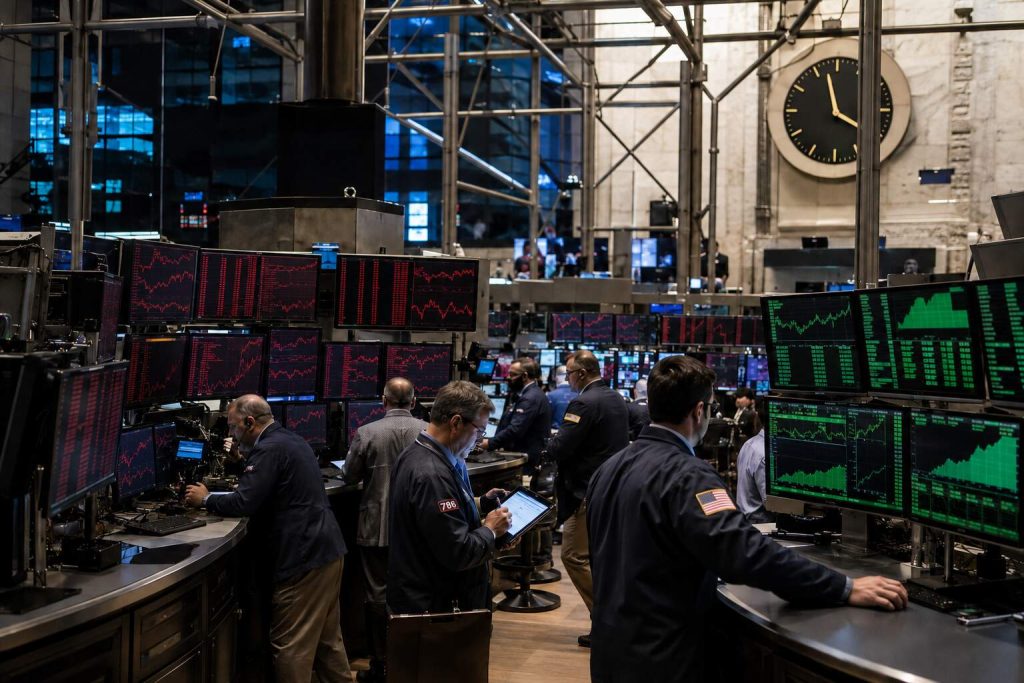
Sandisk didn’t drop in isolation. Friday’s session was characterized by a broad tech retreat tied to renewed fears that parts of the AI boom have become overextended.
Reuters reported that every stock in the Philadelphia semiconductor index fell, with the index sinking 5.1% in its weakest session since Oct. 10, while Sandisk fell 14.7% and was the S&P 500’s biggest percentage decliner.
Put simply: even without a downgrade, Friday was already the kind of market day where high-flyers and AI-adjacent names can get hit hard—especially those with valuations that assume a smooth continuation of “AI capex” spending.
Why Sandisk matters in 2025: the spin-off story and the S&P 500 catalyst
Sandisk’s 2025 narrative is unusual because the company is both “new” to public markets and instantly central to one of the market’s hottest themes.
- Sandisk completed its separation from Western Digital and began trading as an independent public company on Feb. 24, 2025, under ticker SNDK on Nasdaq.
- The company later joined the S&P 500 on Nov. 28, 2025, a move that initially boosted attention and can drive mechanical buying from index-tracking funds.
Investopedia noted that Sandisk’s stock had been among the market’s hottest in 2025—helped by AI-driven demand—and that the company’s market capitalization had risen to above $31 billion around the time of its inclusion.
That background is essential context for understanding Friday’s selloff: when a stock’s shareholder base expands rapidly (spinoff + AI enthusiasm + index inclusion), price moves can become more extreme in both directions.
Analyst forecasts and price targets: what Wall Street expects now
Despite Friday’s drop, the analyst community remains broadly constructive—but notably divided on valuation.
Consensus price targets (and why they differ)
Different data providers show different “consensus” numbers based on which analysts are included, the freshness of each estimate, and methodology.
- Investing.com lists an average 12‑month price target of ~$264.95, with a high estimate of $322 and low estimate of $135, and an overall consensus rating of Buy (14 buy recommendations, 1 sell in the dataset shown).
- MarketBeat shows a more conservative average price target of $213.33 (about 3.47% above $206.18), with a high target of $322 and a low target of $32, and a consensus rating of Moderate Buy based on 22 analysts.
The important message for readers: there is no single “right” target—but the dispersion itself is information. When low/high targets are hundreds of dollars apart, analysts are implicitly disagreeing on (a) how durable the memory upcycle will be and (b) how much of the AI storage boom Sandisk can translate into sustainable margins.
Recent analyst actions shaping the narrative
Several notable moves over the past month show how rapidly the Street has been recalibrating:
- Susquehanna maintained a Positive stance and raised its price target to $300 from $250 (Dec. 8).
- China Renaissance initiated coverage at Buy with a $322 target (Dec. 5).
- Morgan Stanley reiterated Overweight and raised Sandisk’s target to $273 from $263 (Nov. 24), citing intensifying shortages across memory markets and arguing the semiconductor selloff at the time “does not seem warranted.” Investing.com UK
- GF Securities moved the other direction, downgrading to Hold and cutting its target to $239 from $351 (Dec. 12).
That mix—big target hikes alongside a sharp downgrade—is exactly the sort of backdrop that produces volatile tape action.
The fundamental debate: memory-cycle upside vs. “AI bubble” risk
At the center of the Sandisk stock conversation is a straightforward question:
Is Sandisk’s 2025 surge the early phase of a multi-year demand step-up (AI storage), or the late phase of a cyclical upswing (NAND/flash pricing) that can reverse quickly?
Bull case: supply tightness and AI demand are real
Morgan Stanley’s note highlighted “intensifying shortages across the board” in memory markets and said suppliers were facing “sold out” conditions amid accelerating cloud demand—conditions it argued were unlikely to be resolved in the next few quarters. Investing.com UK
Industry reporting has also pointed to tightness and pricing power:
- Tom’s Hardware reported that Transcend warned of NAND flash shortages linked to supply conditions involving major vendors such as SanDisk and Samsung, and that customers could see price increases and product delays.
- TechRadar reported that SanDisk was among memory players moving toward price increases, including a cited 10% rise in certain contexts as the memory market tightened.
For bulls, the logic is simple: if AI data center build-outs keep expanding, storage and memory demand can stay stronger for longer—supporting higher average selling prices and better utilization.
Bear case: when sentiment turns, high-flyers get repriced fast
The counterargument is that Sandisk is no longer “just” a memory-cycle story—it’s become a market symbol for AI optimism. When the market starts to worry about AI valuations, a stock that has already rallied dramatically can see sudden air pockets.
Reuters captured that risk-off mood on Friday, describing fears of an AI bubble and noting Sandisk as the biggest percentage decliner in the S&P 500 during the selloff.
Even if Sandisk’s long-term fundamentals remain intact, the market can still compress the multiple investors are willing to pay—especially when rates and bond yields are rising and the broader tech complex is under pressure.
What investors are watching next (into Monday, Dec. 15)
Here are the near-term catalysts most likely to drive the next move in Sandisk stock:
- Follow-through (or stabilization) after the downgrade
- Does SNDK find support after Friday’s capitulation-style volume, or does selling continue into the open?
- Memory pricing signals
- Watch for incremental updates on NAND/SSD pricing and supplier allocation; the “tightness vs. easing” debate is central to 2026 expectations. Investing.com UK
- Broader semiconductor and AI sentiment
- If the chip sector continues to de-risk after Friday’s move, Sandisk may trade more like a high-beta AI proxy than a company-specific story.
- Analyst revisions and estimate resets
- The rapid pace of price-target changes shows that SNDK is still being actively “re-underwritten” by Wall Street. GuruFocus
Bottom line
As of Dec. 14, 2025, Sandisk stock sits at the intersection of two powerful forces: a real (and potentially lasting) AI-driven storage demand wave and the market’s equally real tendency to punish crowded trades when the mood shifts.
Friday’s drop to $206.18 makes the next week about confirmation: whether this was a sharp reset that clears the way for a more sustainable advance—or the beginning of a broader repricing as investors reassess the AI and memory-cycle narrative.