
New York, April 13, 2026, 11:37 EDT
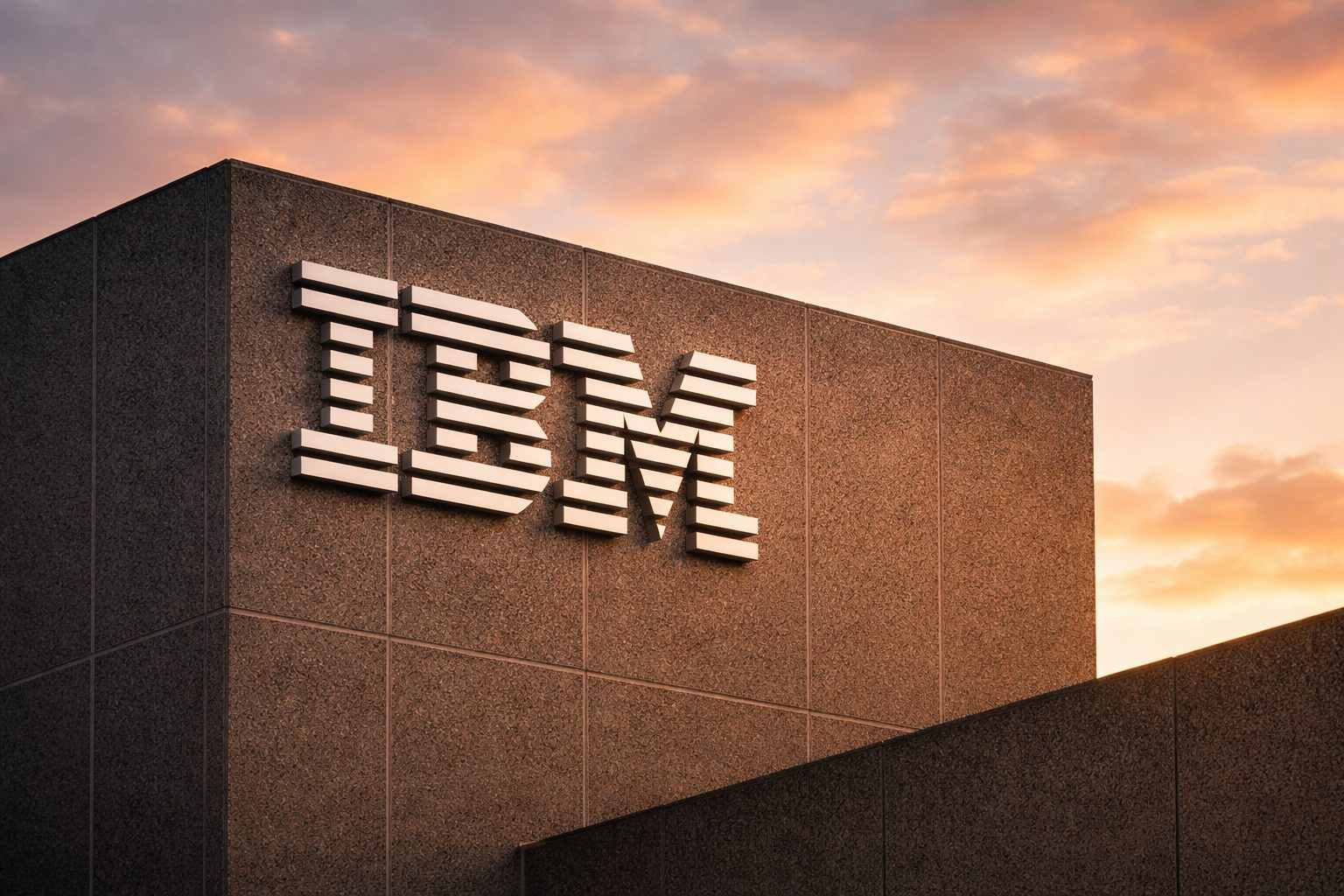
IBM ticked up Monday, gaining about 0.9% to $232.78 in late morning New York action, after Citi Research began coverage with a Buy and set a $285 target. Bank of America, on the other hand, dialed back its own target to $300 just ahead of IBM’s quarterly numbers. Despite today’s move, the stock remains down almost 22% for the year.
IBM faces a dual test here: Wall Street wants to see if enterprise AI demand translates into consistent software gains, and analysts are also sizing up the risk that next-gen AI might erode revenue from IBM’s legacy platforms. Eyes turn to April 22, when Q1 numbers hit and investors get their first look at how last month’s Confluent deal is shaking out.
Barron’s noted that Citi’s Fatima Boolani initiated coverage on IBM following its roughest yearly kickoff since 2002, highlighting the tech giant’s entrenched role in global IT and what she called “unusual” customer stickiness. Boolani, according to Barron’s, also pointed to IBM’s lighter capital requirements compared to the cloud hyperscalers, and flagged the company’s quantum roadmap—IBM claims it’s on track for a fault-tolerant quantum system by 2029. Barron’s
Wamsi Mohan at BofA opted for a cautious approach, trimming his price target on the stock to $300 from $340 but sticking with a Buy. He expects Confluent to tack on about $50 million in first-quarter revenue after the March 17 close. Still, he warned, a full quarter of acquisition dilution probably drags down second-quarter earnings per share—a key profit metric.
BofA expects IBM to stick with its 2026 outlook, while attention shifts to how Confluent integration plays out, what’s happening with Red Hat, and whether software and consulting growth holds up. The bank flagged 2026 as a quieter year, with IBM working through the acquisition and investors still uneasy about AI potentially replacing jobs done by traditional software providers.
IBM’s latest numbers give it something to talk about. Back in January, Reuters noted the company topped fourth-quarter expectations, pulling in $19.69 billion in revenue and reporting adjusted earnings of $4.52 per share—boosted by AI-driven software sales. Software revenue hit $9.03 billion. The AI business alone climbed to $12.5 billion, but IBM said it won’t be disclosing that particular figure starting with the first quarter.
The Confluent acquisition is a central plank in IBM’s strategy. After the $11 billion deal closed on March 17, software head Rob Thomas argued, “AI decisions need to happen just as fast” as the underlying transactions. Principal analyst Sanjeev Mohan put it differently, noting AI agents require “live operational signals”—not just old data. According to IBM, the platform’s role is to supply real-time data for AI models, agents, and automated workflows running across hybrid cloud environments. IBM Newsroom
The pressure hasn’t eased. Last week, Reuters noted the S&P 500 Software and Services Index has tumbled 25.5% in 2026, with Adobe, Salesforce, and Intuit all dragged down by renewed worries over AI-driven disruption. IBM got hit hard too—back in February, its shares suffered their sharpest single-day plunge since 2000 after Anthropic introduced its Claude Code tool, which it claims can overhaul COBOL—the legacy programming language still crucial to IBM mainframes used in banks and government—for “quarters instead of years.” Reuters
The stakes for April 22 are clear. IBM needs to prove that appetite for AI, data products, and consulting can outpace the drag from legacy segments and that it can take in Confluent without eroding margins. “We’re getting back to being concerned about the prior software-specific concerns stemming from AI,” Interactive Brokers’ Steve Sosnick told Reuters last week. JonesTrading’s Michael O’Rourke added that the pace of AI innovation is “exposing the weakness of the current software that’s out there.” Reuters
Despite the reduced target on Monday, BofA is sticking with $300, and Citi holds at $285—both higher than where IBM currently trades. The company is scheduled to report after the bell on April 22.
Related articles: NASDAQ:MU