Wall Street is closing out 2025 with a familiar year-end mix: record-level equity prices, thin holiday liquidity, and a growing list of “what could move markets next week” catalysts—from Federal Reserve minutes to political headlines around the next Fed chair.
After a quiet post-Christmas session on Friday, December 26, U.S. stocks finished barely changed but still near all-time highs, keeping investors focused on whether the seasonal “Santa Claus rally” can carry major indexes into the final trading days of the year. Reuters+2Reuters+2
A muted Friday masks a powerful year-end run
In the low-volume session on Dec. 26, the Dow Jones Industrial Average slipped 0.04% to 48,710.97, the S&P 500 edged down 0.03% to 6,929.94, and the Nasdaq Composite fell 0.09% to 23,593.10, according to Reuters. Despite snapping a five-session winning streak, all three indexes still logged weekly gains. Reuters
Associated Press figures put the week’s advance at about 1.4% for the S&P 500 and 1.2% for both the Dow and Nasdaq, underscoring how markets have remained resilient even as trading desks thin out for the holidays. AP News
The bigger story remains the year as a whole. With only a handful of sessions left, the S&P 500 is up about 17.8% year-to-date, the Dow is up roughly 14.5%, and the Nasdaq has gained about 22.2%, according to AP. AP News
That strength has left the benchmark S&P 500 hovering just about 1% below the psychologically powerful 7,000 mark—a round number that traders increasingly view as a plausible near-term milestone in a market that’s already closing in on record territory. Reuters+1
Record closes and the 7,000 milestone: why investors care
The S&P 500 notched a record close on Wednesday, December 24, during a shortened Christmas Eve session, with Reuters reporting the index ended at 6,932.05 while the Dow also finished at a record closing high. Reuters
In Reuters’ “Week Ahead” preview, market participants framed the push toward 7,000 as part of a broader year-end momentum trade—helped by the market shaking off earlier December turbulence tied to concerns about heavy artificial-intelligence spending and pressure in tech shares. Reuters
Paul Nolte, senior wealth adviser and market strategist at Murphy & Sylvest Wealth Management, summed up the prevailing tone in Reuters’ reporting: “Momentum is certainly on the side of the bulls.” Reuters
Market leadership is broadening beyond mega-cap tech
One of the more notable late-year developments has been a shift in leadership—at least at the margins—away from a narrow set of mega-cap winners and toward more cyclical and traditionally “value” areas.
Reuters reported that while technology has been the core driver of the multi-year bull market, the S&P 500 tech sector has fallen more than 3% since the start of November even after rebounding recently. Over the same period, financials, transports, healthcare, and small caps have posted solid gains—an emerging rotation that can make rallies feel more durable because more stocks participate. Reuters
Anthony Saglimbene, chief market strategist at Ameriprise Financial, told Reuters that the move suggests investors are leaning into areas where valuations appear more moderate, aided by confidence that the economy has held up better than many feared. Reuters
Friday’s session offered a small snapshot of that cross-current: Reuters said materials led sector gains, while consumer discretionary lagged. Reuters
Stock-specific headlines still matter in thin markets
Even in a quiet tape, company news can pop—especially when liquidity is light and incremental flows move prices more than usual.
Reuters flagged Target shares rising about 3.1% after the Financial Times reported activism pressure from hedge fund Toms Capital Investment Management, while Nvidia climbed after a deal to license chip technology from AI startup Groq and hire its CEO. Reuters+1
These types of single-stock stories tend to get amplified in late December, when many institutional participants are sidelined and short-term positioning can drive outsized moves.
The Fed minutes are the next key macro catalyst—and the date is set
The most important scheduled event on the near-term calendar is the release of minutes from the Federal Reserve’s December 9–10 meeting. Reuters highlighted the minutes as the centerpiece of the holiday-shortened week ahead, particularly because the Fed’s latest decision revealed a divided vote and a wide dispersion in policymakers’ views about the path of rates. Reuters
The Federal Reserve’s own calendar lists the FOMC minutes release for Tuesday, December 30, at 2:00 p.m. Eastern Time. Federal Reserve
Why the minutes matter now: investors are trying to “handicap” how many cuts could come in 2026—and when they might start. Michael Reynolds, vice president of investment strategy at Glenmede, told Reuters the minutes could be “illuminating” in understanding the arguments around the table. Reuters
Reuters reported the Fed lowered its benchmark rate by 75 basis points across its last three meetings of 2025, bringing the target range to 3.50%–3.75%. Reuters
Yet markets appear to be weighing a different baseline than the Fed’s projections. In Reuters’ global markets wrap, traders were described as pricing in at least two cuts over 2026, though not expecting the Fed to move before June—an example of the frequent tug-of-war between market pricing and central-bank guidance. Reuters
A political variable: the next Fed chair
Beyond the minutes, another wildcard is Washington.
Reuters reported investors are watching for President Donald Trump’s decision on nominating a Fed chair to replace Jerome Powell, whose term ends in May—an outcome that could influence expectations for the direction and speed of future easing. Reuters+1
Even without a formal announcement, speculation alone can ripple through rate markets and, by extension, equity valuations—particularly at a time of year when liquidity is thin.
Santa Claus rally: seasonal tailwind—or just a liquidity illusion?
The market is also entering one of the most closely watched seasonal windows in finance: the “Santa Claus rally.”
Reuters defines the period as the last five trading days of the year and the first two trading days of the new year—this year’s window beginning on December 24 and running through January 5. Reuters
Investopedia notes that since 1950, the S&P 500 has gained an average of about 1.3% during this seven-trading-day stretch and has been positive 79% of the time—statistics that help explain why the concept remains a perennial headline even in an era dominated by algorithms and passive flows. Investopedia
Market technicians also emphasize that seasonality is not destiny. In a December 23 note, LPL Financial’s chief technical strategist Adam Turnquist wrote that while the Santa Claus rally has historically been strong, it reflects tendencies—not guarantees—and doesn’t incorporate fundamentals such as earnings and policy shifts. LPL Financial
Still, the seasonal setup can influence behavior. Ryan Detrick, chief market strategist at Carson Group, told Reuters that the Santa Claus rally period had only just begun and that he expected “a little more upward bias” heading into early January. Reuters
Gold and silver are stealing the spotlight with record highs
While equities hover near records, precious metals have delivered the most eye-catching late-December move.
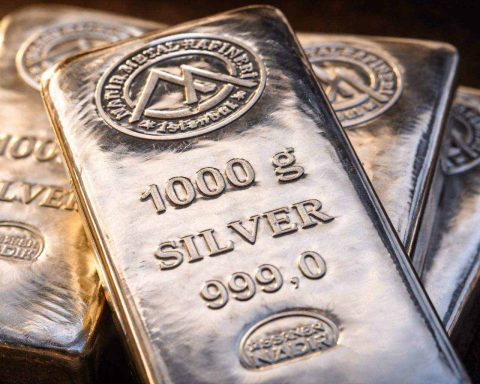
Reuters reported that silver breached $77 per ounce for the first time on Friday, touching an all-time high of $77.40 and jumping about 7.5% on the day. Gold also hit a record $4,549.71 per ounce, supported by expectations of Fed cuts and safe-haven demand amid geopolitical tensions. Reuters+1
The magnitude of 2025’s metals move is even more striking: Reuters cited silver up roughly 167% year-to-date versus gold’s 72% gain, with platinum also surging (up about 169% YTD) and palladium reaching a three-year peak. Reuters
In a note cited by Reuters, Soojin Kim, a commodities analyst at MUFG, pointed to ongoing support from physical demand and persistent geopolitical and monetary uncertainty—conditions that often favor metals when investors are hedging macro risk. Reuters
Peter Grant, vice president and senior metals strategist at Zaner Metals, told Reuters that “thin markets” can amplify volatility at year-end, though he added the trend remained strong even with profit-taking risk. Reuters
The Wall Street Journal, covering the same late-week surge, reported front-month silver futures jumping about 7.7% to roughly $76.49 per troy ounce, with gold futures up about 1.1% to around $4,529.10. The Wall Street Journal
Global markets: holiday closures, a softer dollar, and shifting rate expectations
Internationally, the holiday calendar shaped price action as much as any macro release.
Reuters reported that public holidays kept markets closed in Australia, Hong Kong, and much of Europe, while markets that were open pushed toward finishing the year in positive territory. Reuters
The U.S. dollar has also been a key cross-asset input. Reuters described the dollar as “under pressure” as investors contemplated the rate path, even as the dollar index edged slightly higher on Friday’s session. Reuters
Oil, meanwhile, moved in the opposite direction of metals: Reuters reported crude settled more than 2% lower, weighed by supply and geopolitics-driven narratives that can shift quickly at year-end. Reuters+1
What to watch in the final trading days of 2025
With the market’s attention split between seasonality, policy, and positioning, the final stretch of 2025 has a few practical factors worth tracking:
Holiday trading schedule and liquidity. Investopedia reports that the stock market will have a full trading day on New Year’s Eve (Wednesday, December 31), while bond trading closes early at 2 p.m. that day. Both stock and bond markets are closed on New Year’s Day (Thursday, January 1, 2026). Investopedia+1
Fed minutes on December 30. The minutes arrive in the middle of this low-liquidity period—an environment where even modest surprises can travel further through asset prices. Federal Reserve+1
Year-end portfolio moves. Reuters noted that year-end portfolio adjustments can add volatility when volumes are light, potentially exaggerating market moves in either direction. Reuters
Rotation and breadth. Investors will be watching whether the late-year broadening beyond mega-cap tech persists—especially if it coincides with the market pressing toward 7,000. Reuters
The bottom line
Stocks are ending 2025 at or near record highs, with the S&P 500 within striking distance of 7,000 and the Dow and Nasdaq capping another year of double-digit gains. Reuters+2AP News+2
But the late-December tape is being shaped by more than equity momentum: Fed minutes, expectations for 2026 rate cuts, the looming decision on the next Fed chair, and a historic surge in gold and silver are all competing to define the final narrative of the year—and set the tone for the first trading week of 2026. Federal Reserve+3Reuters+3Reuters+3