
Ottawa, May 5, 2026, 08:04 EDT
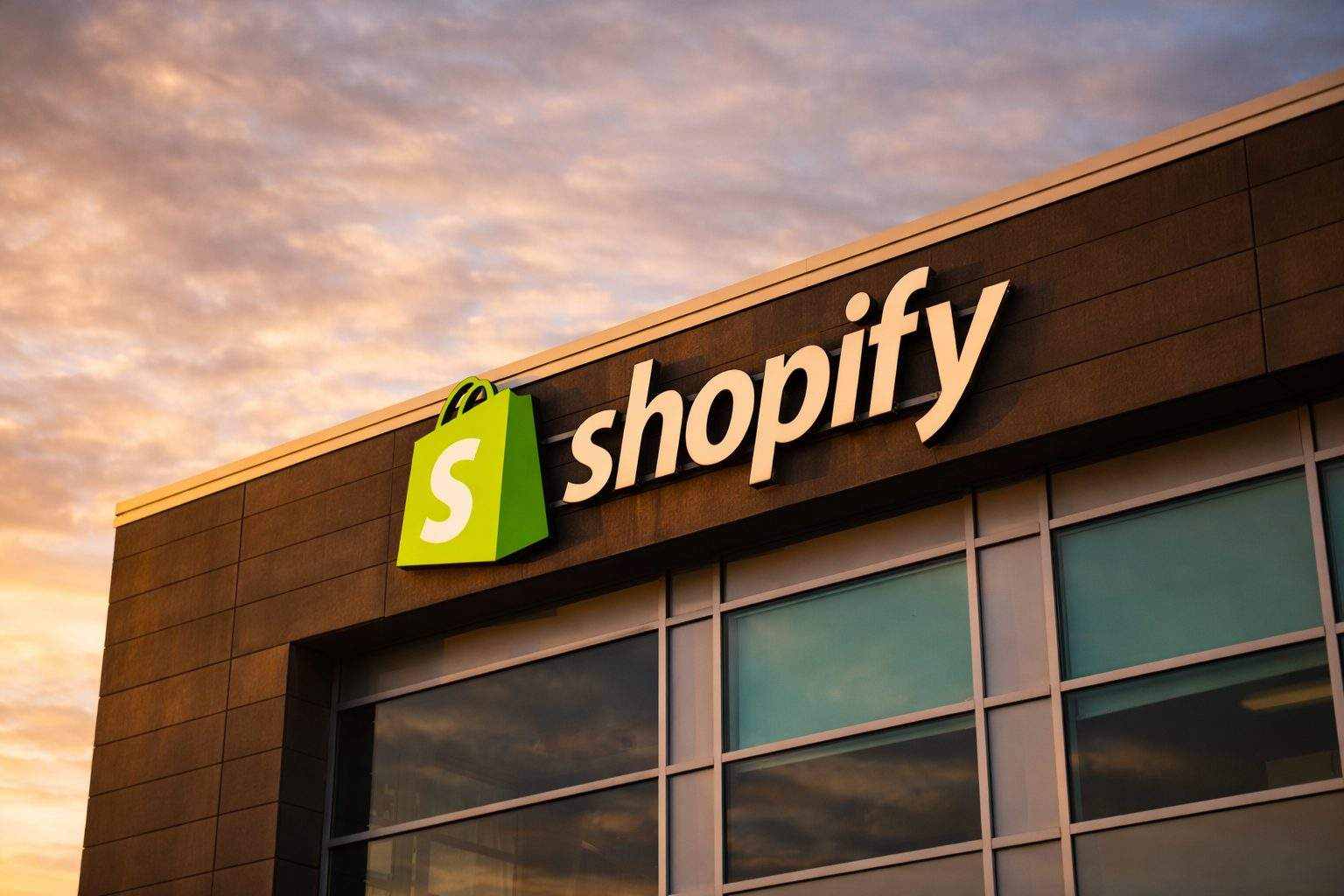
Shopify’s U.S. shares slipped in early trading Tuesday. The Canadian commerce software firm issued a second-quarter forecast mostly in line with Wall Street’s expectations, muting the effect of a first-quarter milestone as merchant sales on its platform topped $100 billion.
This move reflects not just the results but what people were bracing for. Going in, investors wanted to see revenue up by low-30%, payments getting more traction, and clear signs Shopify’s AI tools could boost its edge—without squeezing margins. Simply Wall St flagged the “biggest immediate risk” on Monday: a steep valuation that didn’t leave much slack for any letdown. Simply Wall St
Shopify posted a 34% jump in first-quarter revenue, reaching $3.17 billion. Gross merchandise volume climbed even higher, up 35% to $100.74 billion, reflecting the total value of transactions processed before Shopify’s share. The company reported a free cash flow margin at 15%.
President Harley Finkelstein declared in the company’s release that “Shopify has entered the AI era with a clear edge.” Chief Financial Officer Jeff Hoffmeister pointed to wide-based growth—“geographies, merchant sizes, and channels,” he said—and called out the more than $100 billion in GMV in a single quarter as evidence of “the platform compounding.” Shopify
Shopify is looking for second-quarter revenue to climb in the high-twenties percent, with gross profit dollars also set to rise in the mid-twenties. Operating expenses are pegged at 35% to 36% of revenue. Analysts surveyed by LSEG were eyeing 26.8% revenue growth and a 24.6% bump in gross profit, Reuters noted, so the company’s guidance lands pretty much in line with those forecasts—not much shock there.
Here’s where things got sticky: Investor’s Business Daily noted Shopify posted operating income of $382 million—an 88% jump from last year, but still shy of the $420 million analysts had penciled in. The stock tumbled almost 7%, landing near $119 ahead of the open.
Core operations stayed solid. Subscription solutions pulled in $750 million, up 21%. Merchant solutions—which covers payments, lending, shipping, ads, and other merchant-linked services—jumped 39% to $2.42 billion. Monthly recurring revenue hit $212 million, up from $182 million a year earlier.
Payments are carrying more weight for Shopify. The company reported its payments penetration hit 67% this quarter, with Shopify Payments processing $67.1 billion in GMV. A year ago, penetration stood at 64%, with $47.5 billion flowing through the platform. Higher merchant sales drive revenue higher—but they’re also racking up bigger payment-processing costs.
Shopify booked a net loss of $581 million, improving from the $682 million loss it recorded in the same period last year. The red ink stems from a $1.08 billion charge related to equity and equity-method investments. Strip that mark-to-market swing out, and Shopify actually turned a net profit of $360 million.
Shopify is back in the buyback game. According to a recent filing, the board cleared as much as $2 billion for Class A share repurchases in the first quarter, kicking off the program on February 17. So far, about 4.21 million shares have been bought for $514 million, which leaves $1.49 billion still untouched.
Competition keeps ramping up. Shopify is advancing its efforts with enterprise merchants and expanding in Europe and physical retail, according to Investor’s Business Daily. The company’s also collaborating with AI firms on shopping experiences. Pressure isn’t limited to Shopify—merchant software, storefront building, and checkout are seeing moves from Amazon, Wix.com, Commerce.com, and others.
The downside’s pretty clear. Should consumers rein in spending or if merchants get squeezed by tariffs, rising fuel, inflation, or fresh geopolitical jolts, Shopify’s transaction-driven revenue might lose steam. The company has also flagged that increased AI usage is pushing up cloud and software expenses, and that a greater tilt toward lower-margin merchant solutions could drag on gross margin.
Management had a slot on the calendar for an 8:30 a.m. EDT call to go over the numbers. Expect the focus to stick to a handful of topics: the velocity of payments growth, AI’s price tag, the future cadence of buybacks, and why hitting $100 billion in GMV for the quarter didn’t prevent the stock from sliding.
Related articles: E-Commerce









![Asia Stock Market Today 29/08/2026 [UPDATE: 00:55 SGT] [PayPal and Nvidia Sink as KASE Global Nears Weekend Close]](https://ts2.tech/wp-content/uploads/2026/08/Asia-market-dashboard-2026-08-29-0053-480x384.jpg "Asia Stock Market Today 29/08/2026 [UPDATE: 00:55 SGT] [PayPal and Nvidia Sink as KASE Global Nears Weekend Close]")