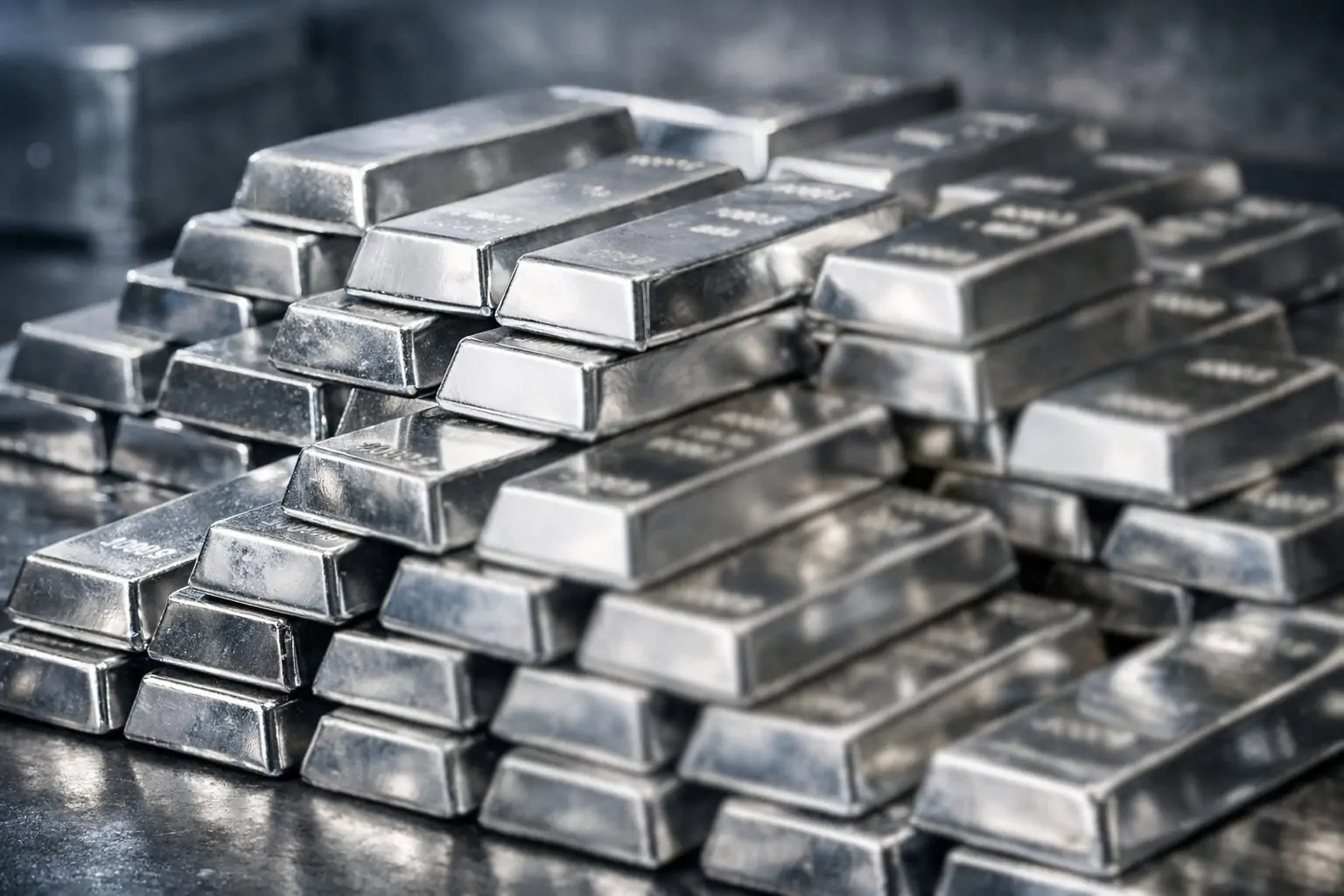
Silver has pushed into territory that would have sounded far-fetched just a year ago. On Friday, December 26, spot silver surged through the $75-per-ounce threshold—an all-time high in nominal terms—before stretching higher in a powerful end-of-year rally that’s also lifted gold and platinum to fresh records. Reuters+1
While gold’s breakout has grabbed headlines for months, silver is increasingly becoming the market’s “tell”: a metal that behaves like a safe haven in risk-off moments, but also trades like a scarce industrial input when supply chains tighten. And in late 2025, both forces are hitting at once—especially in China, where local prices and physical-market signals have flashed extraordinary tightness during the holiday period. Yahoo Finance+1
Silver breaks $75—and then keeps running
Reuters reported spot silver hit a record high of $75.14/oz on December 26, capping a year in which the metal is up roughly 158% year to date—outpacing gold’s already huge gains. Reuters+1
Other major outlets tracking the move noted silver didn’t just tag $75—it kept pressing higher amid thin holiday liquidity. Bloomberg said silver for immediate delivery climbed as much as 7.6% and crossed $77/oz, underscoring how quickly price discovery can move when liquidity is light and momentum accelerates. Bloomberg.com+1
That “thin market” dynamic matters. In smaller markets like silver (relative to gold), big reallocations and large physical flows can translate into abrupt price jumps—especially when investors are also rotating into “the next trade” after gold’s extended run. Reuters+1
Gold and platinum join the party—pushing the whole complex higher
Silver’s breakout didn’t happen in isolation. It came as gold and platinum also printed new highs:
- Gold neared or set fresh records around $4,530/oz as expectations for U.S. rate cuts, U.S. dollar weakness, and geopolitical risk boosted demand for non-yielding safe-haven assets. Reuters+1
- Platinum rallied sharply and hit an all-time high near $2,448/oz, with Reuters pointing to a mix of tight supply, rotation flows, and shifting expectations around demand (including the auto market). Reuters+1
This synchronized surge across precious metals is a classic late-cycle “macro + momentum” setup: the same catalysts—rate-cut expectations, a softer dollar, and geopolitical tension—can lift all the metals at once, and then momentum traders amplify the move. Reuters+1
The biggest driver behind silver: a multi-year supply deficit that won’t go away
To understand why silver can leap $5, $10, or more in a compressed timeframe, it helps to look past daily headlines and focus on the metal’s structural backdrop.
The Silver Institute (drawing on research and analysis from Metals Focus) has been warning for months that silver is in a prolonged imbalance—demand running ahead of supply—even as high prices encourage “thrifting” (using less silver per unit in industrial applications) and recycling. The Silver Institute
Key numbers from the Silver Institute’s latest 2025 outlook:
- Global silver demand is expected to come in around 1.12 billion ounces in 2025 (down ~4% year over year). The Silver Institute
- Industrial demand is projected at about 665 million ounces in 2025 (down ~2%), reflecting economic uncertainty, geopolitics, and faster thrifting at higher prices. The Silver Institute
- Even with softer demand, the market is still expected to post a 2025 deficit of ~95 million ounces—the fifth consecutive year in deficit—with a cumulative 2021–2025 deficit near 820 million ounces. The Silver Institute
That cumulative shortfall helps explain why the market can feel “fine” for months—until it suddenly doesn’t. When above-ground stocks tighten and new supply can’t respond quickly, price becomes the rationing mechanism.
Two of the Silver Institute’s featured experts—Philip Newman (Managing Director, Metals Focus) and Sarah Tomlinson (Director of Mine Supply, Metals Focus)—have emphasized that the 2025 market remains fundamentally tight even after volatility and corrections. The Silver Institute
Why silver is uniquely sensitive: it’s both a precious metal and an industrial workhorse
Gold is mostly an investment and reserve-asset story. Silver is different: it’s a precious metal and a critical industrial input used across electrification and computing infrastructure.
A recent Silver Institute report produced by Oxford Economics highlights how demand growth is increasingly tied to three major technology themes:
- Solar photovoltaics (PV): PV grew from 11% of industrial silver demand in 2014 to 29% in 2024, according to the Silver Institute. The Silver Institute
- Electric vehicles (EVs) and charging infrastructure: The report estimates EVs can use materially more silver than internal combustion vehicles, citing ~25–50 grams per EV as an average range. The Silver Institute
- Data centers and AI: The Silver Institute/Oxford Economics report links the buildout of data centers and computing hardware to rising demand for silver-containing components, noting enormous growth in global IT power capacity over time. The Silver Institute
This combination—industrial necessity plus monetary appeal—is why silver can rally with gold during macro stress, and then keep rallying when industrial users are also chasing supply.
China becomes the pressure point: record local prices, tight physical supply, and “backwardation” signals
One of the most important storylines behind the late-December move is China’s physical market, where local dynamics appear to have intensified global tightness.
Yahoo Finance reported that silver hit record prices in China on Christmas Day as physical supply tightened, while Bitcoin traded flat—a divergence that sharpened the “safe haven vs. speculative asset” debate during thin holiday trading. Yahoo Finance
Meanwhile, the Shanghai Gold Exchange’s own daily reporting shows just how violent the local move was in the key domestic silver contract:
- On December 24, Shanghai’s Ag(T+D) contract closed at 17,714 yuan/kg, up 7.95% on the session. Shanghai Gold Exchange
That kind of jump is notable on its own—but what traders watched even more closely was the structure of pricing. When spot prices trade above futures (a condition often called backwardation), it can indicate immediate physical tightness: buyers are willing to pay more now rather than wait for later delivery.
Bloomberg captured the speculative intensity as well, reporting that China’s only pure-play silver fund—UBS SDIC Silver Futures Fund LOF—hit its maximum daily drop (10%) after a “frenzied bull run,” following warnings from the fund’s manager that gains were “unsustainable.” Bloomberg.com
Taken together, these China-linked signals point to a market where:
- physical availability matters again,
- price discovery is increasingly regional, and
- volatility risk rises as retail and speculative activity ramps up.
Momentum, rate cuts, and geopolitics: what strategists are saying
While structural deficits provide the long runway, day-to-day price explosions usually need a spark. This week’s spark came from a familiar trio: momentum, Fed-cut expectations, and geopolitical risk.
In Reuters coverage syndicated by Investing.com, Kelvin Wong, Senior Market Analyst at OANDA, said momentum-driven and speculative players have powered the rally since early December, helped by thin year-end liquidity, a weaker dollar, rate-cut expectations, and geopolitical flare-ups. Investing.com
Other strategists see broader “rotation” dynamics at work. Barron’s, for example, highlighted the idea that investors who missed gold’s move may be moving down the precious-metals ladder—into silver—while also questioning whether other popular hedges have delivered. Barron’s cited Victoria Greene of G Squared Private Wealth discussing the market’s shifting view of what does (and doesn’t) act as an inflation hedge. Barron’s
A quick reality check: silver can move fast in both directions
It’s tempting to view a record as a new “floor,” but silver has a long history of sharp reversals. That’s partly because it sits at the intersection of:
- macro hedging flows (like gold),
- cyclical industrial demand (like copper), and
- smaller, thinner liquidity than gold (meaning bigger percentage swings). Reuters+1
In other words: the same factors that can propel silver toward $78 can also produce sudden multi-dollar pullbacks if positioning becomes crowded or if liquidity returns and volatility normalizes.
How silver is traded—and why that matters now
One more reason this rally is so complex: silver isn’t “one market.”
Reuters notes that major price formation happens across several channels:
- London OTC market (the biggest physical marketplace), underpinned by bullion held in bank vaults; Reuters cited 27,187 tons of silver held in London vaults as of end-November 2025. Reuters
- Futures markets like COMEX (New York) and the Shanghai Futures Exchange, where traders can take leveraged exposure and roll contracts. Reuters
- ETFs/ETPs, including the iShares Silver Trust; Reuters cited roughly 529 million ounces held by that fund, worth about $39 billion at then-current prices. Reuters
- Physical coins and bars, where retail demand can surge during headlines—and where shortages can cause local premiums to detach from “paper” prices. Reuters
In a rally like this, dislocations between these venues can become the story: regional shortages, fund flows, and exchange inventories can all tug the price in different directions, then reconcile suddenly in a sharp move.
What happens next: the 3 signals markets will watch into early 2026
No single factor will decide whether silver consolidates, corrects, or keeps melting up. But based on what’s driving the market right now, three signals look especially important:
- U.S. rate-cut expectations and the dollar
If rate-cut pricing holds and the dollar stays under pressure, that’s typically supportive for precious metals. Reuters+1 - Physical tightness indicators (especially China)
Watch for continued premiums, backwardation-style conditions, and any policy or fund-management actions intended to cool speculative excess. Shanghai Gold Exchange+1 - Evidence that deficits persist despite thrifting
Even with less silver used per solar panel or device, demand growth in PV, EVs, and data centers can keep the market tight if supply doesn’t respond. The Silver Institute+1
For now, the takeaway is simple: silver isn’t just tagging records—it’s doing it amid unusually tight fundamentals and unusually jumpy liquidity conditions. That combination is why the “white metal” is suddenly behaving like the headline act.