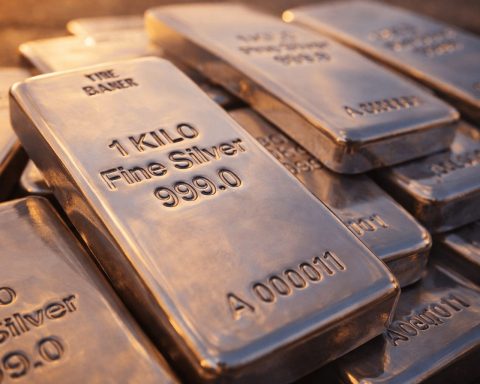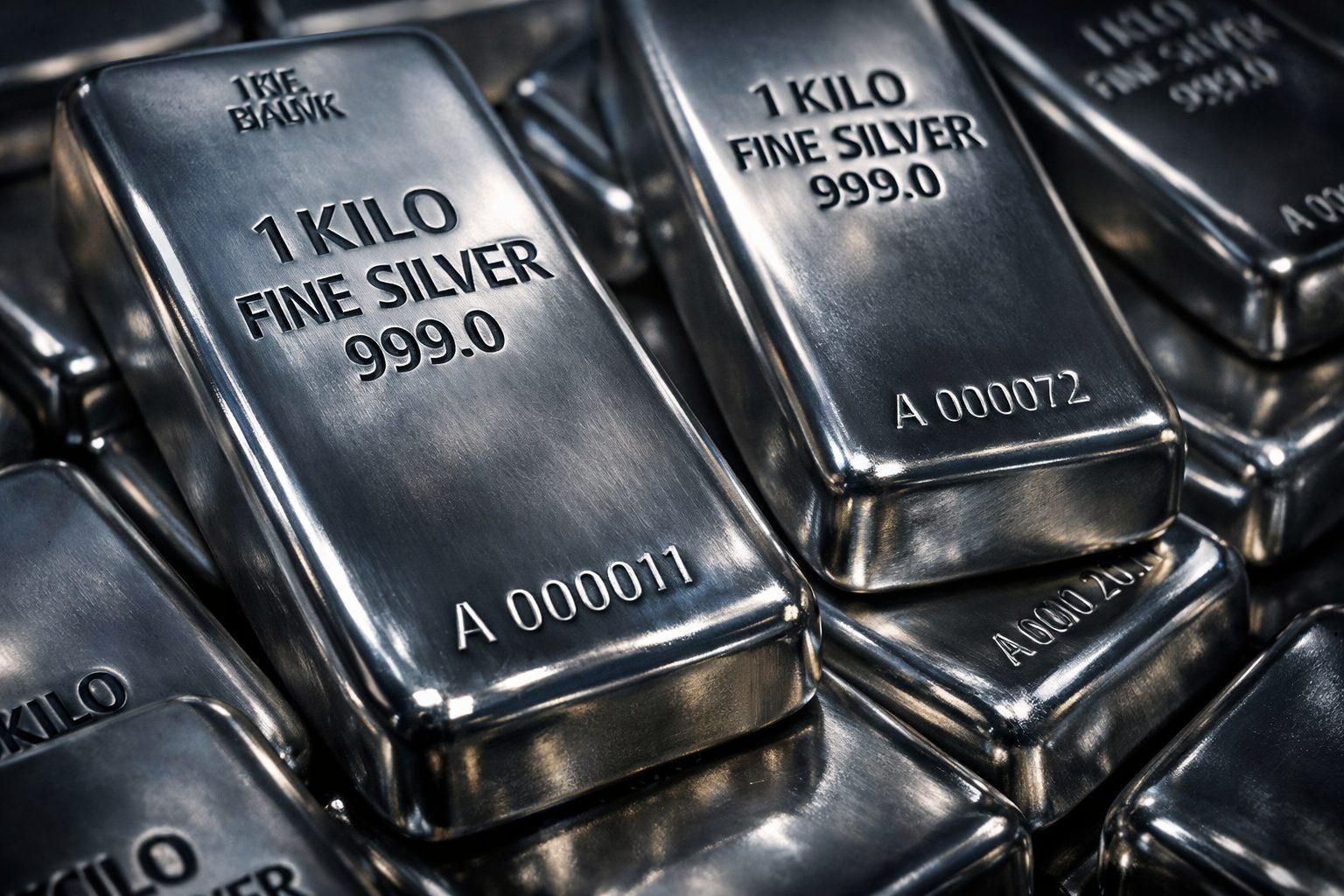
Silver’s surge to the mid-$70s has turned into one of the most dramatic commodity moves of 2025—and it’s not happening in isolation. On Friday, December 26, spot silver jumped to a new all-time high around $77.40 per troy ounce, pushing year-to-date gains to roughly 167% and putting the metal within striking distance of the $78 level that traders have been watching closely. Reuters+1
The rally is sweeping across the precious-metals complex. Gold set another record, briefly touching about $4,549.71/oz before easing, while platinum surged to a new high above $2,454/oz amid tightening supply and shifting investor flows. Reuters+1
Behind the headlines is a mix of macro catalysts—rate-cut expectations, a softer dollar, and geopolitical risk—colliding with a structurally tighter silver market increasingly tied to industrial demand from the energy transition and high-tech manufacturing. Even veteran metals analysts are emphasizing that the move is happening in thin year-end liquidity, which can amplify swings in both directions. Reuters+1
Silver’s record: what happened on December 26
Spot silver extended a run that began earlier in the day when it first broke $75/oz, then accelerated into the high-$70s as momentum buying met limited liquidity. Reuters reported spot silver up roughly 7.5% on the day at one point, trading around $77.30 after printing a record $77.40. Reuters+1
That jump caps a year in which silver has outpaced almost everything else in mainstream markets. Even within precious metals—where gold has posted its strongest annual gain in decades—silver has been the standout. Reuters pegged gold up about 72% in 2025, while silver rose about 167% and platinum about 169%. Reuters
Analysts caution that when price action gets this steep, the market can turn “two-way” quickly—especially as traders rebalance books before year-end. Reuters
The macro spark: rate-cut bets, a weaker dollar, and “thin markets”
Part of silver’s move is classic precious-metals macro.
Reuters quoted Peter Grant, vice president and senior metals strategist at Zaner Metals, saying expectations for further Federal Reserve easing in 2026, a weaker U.S. dollar, and heightened geopolitical tensions are driving volatility in thin markets—with some risk of profit-taking, but a strong underlying trend. Reuters
Those rate expectations matter because gold and silver don’t pay interest. When investors believe policy rates are headed lower, the “opportunity cost” of holding non-yielding assets falls—often improving the appeal of precious metals. Reuters also reported markets were anticipating two U.S. rate cuts in 2026, with the first potentially around mid-year, alongside speculation about a more dovish Fed leadership path. Reuters+1
Meanwhile, the dollar’s weekly decline has been another tailwind. A softer dollar makes dollar-priced commodities cheaper for non-U.S. buyers, supporting demand at the margin. Reuters
The structural fuel: supply deficits and industrial demand
Macro explains the timing, but many analysts argue silver’s magnitude is tied to fundamentals.
The Silver Institute, whose market research is produced with consultancy Metals Focus, reported that global silver demand exceeded supply for the fourth consecutive year in 2024, resulting in a structural market deficit of 148.9 million ounces. It also cited a combined deficit of 678 million ounces from 2021–2024, roughly equivalent to 10 months of global mine supply in 2024. The Silver Institute
Industrial use is the cornerstone. The Silver Institute said industrial demand rose 4% in 2024 to a record 680.5 million ounces, driven by green-economy applications (including electrification and photovoltaics) and AI-related end uses in electronics. The Silver Institute
And silver’s role in clean energy is becoming more central. In a December 2025 report researched by Oxford Economics, the Silver Institute noted that solar photovoltaics consumed 29% of silver industrial demand in 2024, up from 11% in 2014—a dramatic shift in the demand mix. The Silver Institute
This matters because industrial demand can be “sticky”: once silver is embedded in products—from electronics to EV power systems—it doesn’t behave like purely investment-driven demand that can reverse overnight.
“Critical mineral” status: a new policy tailwind for silver
One of the most distinctive 2025 developments is that silver has effectively been re-framed—at least in U.S. policy—less as a “luxury precious metal” and more as a strategic input for technology and manufacturing.
On November 7, 2025, the U.S. Department of the Interior announced the final 2025 List of Critical Minerals, adding 10 new minerals, including silver, and expanding the list to 60 minerals in total. U.S. Department of the Interior
Interior Secretary Doug Burgum said the updated list offers a “data-driven roadmap” to reduce dependence on vulnerable supply chains and expand domestic production, while USGS Director Ned Mamula called it a comprehensive, science-based assessment of minerals the U.S. relies on. U.S. Department of the Interior
The designation doesn’t automatically change supply overnight—but it can influence permitting, investment incentives, and the political priority placed on domestic sourcing over time. The methodology and update process were also formally published in the Federal Register, documenting how the list was updated and how minerals (including silver) were evaluated. Federal Register
Market participants have already linked the “critical mineral” shift to 2025’s silver volatility. A Financial Times report noted that silver’s addition helped spark turbulence earlier, with concerns about possible tariffs contributing to stockpile and location dislocations between the U.S. and London. Financial Times
Gold hits new records, too—driven by central banks and geopolitics
Silver may be leading the scoreboard, but gold has been doing its own historic sprint.
On December 26, Reuters reported spot gold rose to another all-time high around $4,549.71/oz, with U.S. futures also settling at record territory. Reuters
Gold’s rally has been supported by:
- expectations of easier Fed policy,
- safe-haven flows tied to geopolitical uncertainty,
- and ongoing discussion of de-dollarization trends and central bank activity. Reuters+1
Earlier in the week, Reuters highlighted how geopolitics can act as an accelerant—pointing to safe-haven flows during rising tensions and renewed momentum in lower-volume holiday markets. Reuters
Platinum’s breakout: supply tightness and policy headlines
Platinum has also caught fire, and the move has been notably sharp.
Reuters reported spot platinum rising near $2,437.72/oz on December 26 after hitting a record around $2,454.12/oz. Reuters
In a separate Reuters report, the platinum surge was tied to tight supply conditions and an unexpected EU policy U-turn narrative around the 2035 combustion-engine ban—an example of how policy signals can rapidly reprice a smaller market. Reuters
The retail angle: coins, bars, and “amateur investors” getting swept in
A notable theme in recent coverage is how the rally is expanding beyond institutional desks.
The Wall Street Journal reported that silver’s outsized run in 2025 has pulled in a wave of amateur investors, including individuals buying physical coins and bars influenced by online content and a desire for tangible “store of value” assets. It cited examples such as a trucking manager who shifted into physical silver, and a retailer reporting record sales activity. Wall Street Journal
This matters because retail behavior can intensify trends at turning points—either by accelerating momentum on the way up, or by rushing for liquidity if prices reverse.
At the same time, professionals emphasize that silver’s history includes sudden air pockets. Even bullish investors often describe silver as a market that can “overshoot” in both directions due to its smaller size and thinner liquidity relative to gold.
How investors access silver—and why the route matters
One reason this rally is spreading quickly is that silver is now easy to buy in many formats, each with different risk dynamics.
Reuters outlined several major pathways: Reuters
- Over-the-counter (OTC) bullion in London, the largest physical marketplace, supported by bank vaults. Reuters reported London vaults held about 27,187 tons of silver as of the end of November 2025. Reuters
- Futures contracts on major exchanges like COMEX (CME Group) and the Shanghai Futures Exchange, which allow leveraged exposure through margin (amplifying gains and losses). Reuters
- Exchange-traded funds (ETFs) backed by physical metal. Reuters noted the largest is iShares Silver Trust (BlackRock), with around 529 million ounces of silver worth roughly $39 billion at current prices. Reuters
- Bars and coins, where investors own the metal outright but face premiums, storage, and resale spreads. Reuters
- Silver miners, whose shares can be leveraged plays on silver—but also depend on costs, operational risk, and management execution. Reuters
The “best” vehicle depends on the investor’s goals—liquidity, leverage, long-term holding, or physical possession—but each comes with trade-offs that become more important during high-volatility episodes.
Volatility warning: “Silver moves 2x… or 2.5x” gold
Several analysts have stressed that silver’s gains are impressive—but the same mechanics can make downturns brutal.
In a Reuters report earlier this month, Rhona O’Connell, head of market analysis at StoneX, said the rally looked “very much investment-driven” even with a solid fundamental backdrop—and warned that silver often amplifies gold’s moves because it’s a smaller, more volatile market. She described a rule of thumb: if gold moves by x%, silver might move by 2x% or 2.5x%. Reuters
That doesn’t predict an imminent drop. But it does explain why silver rallies tend to draw in short-term traders and why price swings can feel extreme compared with gold.
What to watch next: the 2026 setup for silver, gold, and platinum
With prices at record levels, the next phase may hinge on whether catalysts keep reinforcing each other—or start to conflict.
Key signposts investors are watching include:
- Federal Reserve policy expectations: If rate-cut timelines shift, precious metals can reprice quickly. Reuters+1
- Dollar direction: Continued weakness supports metal prices; a sudden dollar rebound can pressure them. Reuters
- Physical tightness vs. paper momentum: Silver’s structural deficit and industrial pull (solar, EVs, data centers) provide a fundamental floor—but speculative flows can overwhelm that in the short run. The Silver Institute+1
- Policy developments: The U.S. “critical minerals” framework can keep attention on supply security and domestic sourcing, even if the real-world impact takes years. U.S. Department of the Interior+1
- Year-end liquidity and positioning: Thin trading conditions can magnify both breakouts and corrections—especially if profit-taking accelerates. Reuters
For now, silver’s story is a rare blend of old and new: a classic safe-haven and inflation-hedge narrative layered on top of modern industrial demand tied to electrification and computing—and now reinforced by a strategic-policy label that effectively says the U.S. considers silver more essential than before.
If that combination persists into 2026, the rally may have more chapters left. If it breaks—via policy surprises, a stronger dollar, or a shift in risk sentiment—silver’s reputation for volatility could reassert itself just as quickly.