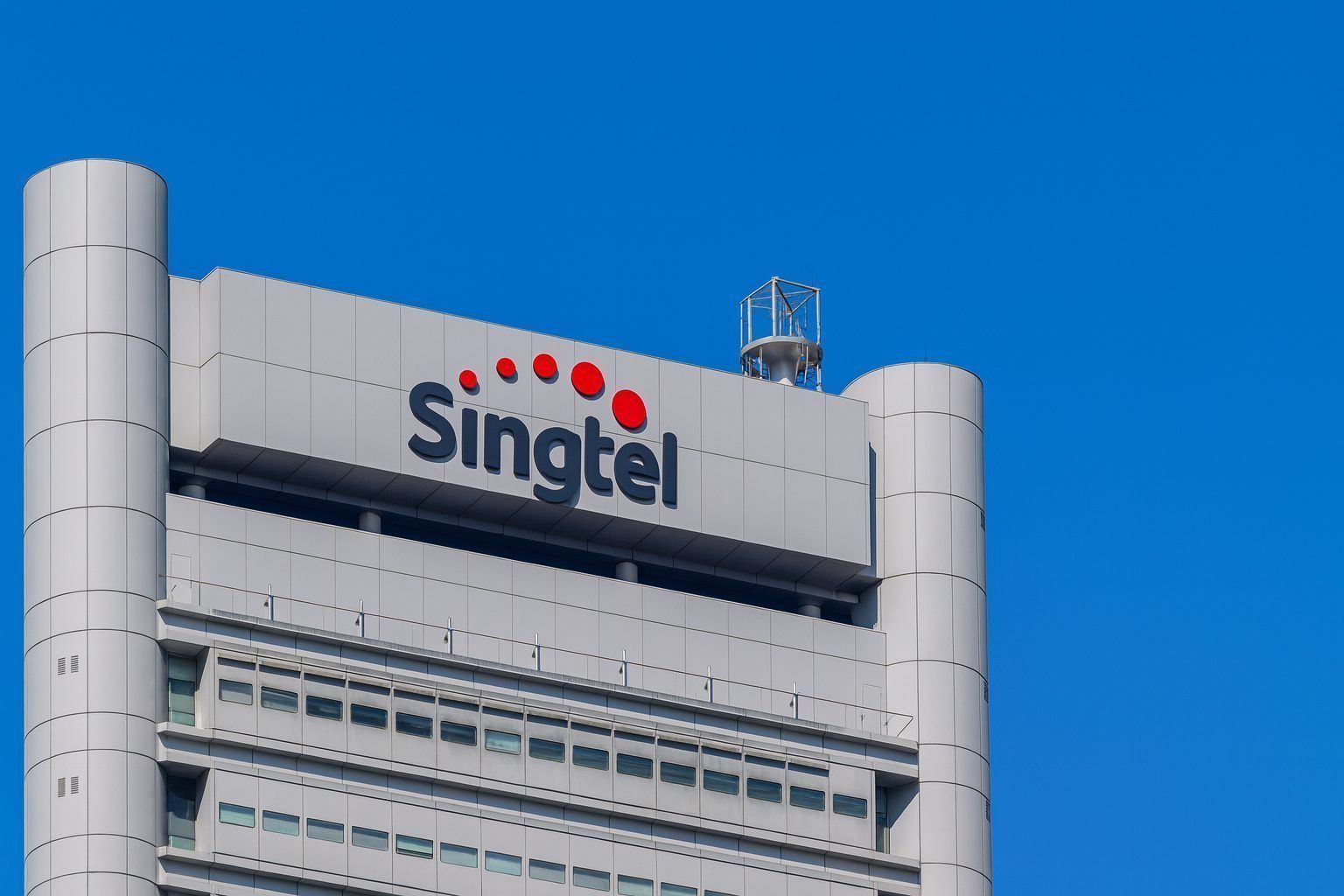
Singapore Telecommunications Limited (Singtel) is having one of those “quiet-but-not-really” moments that long-time telco investors will recognise: the share price isn’t behaving like a meme stock, but the newsflow is anything but dull. As of the last market close (19 December), Singtel stock was at S$4.54, with investors weighing a mix of Optus operational headlines, capital returns (dividends + buybacks), and Singtel’s longer-range push into digital infrastructure and data centres. Beansprout+2SG Investors+2
Below is a full roundup of the most material, currently circulating news, forecasts and analyses available as of 21 December 2025, plus the catalysts that could matter most for Singtel shares into early 2026.
What’s driving Singtel shares right now: Optus is back in the spotlight
The most immediate “why now?” factor for Singtel stock is straightforward: Optus, Singtel’s Australian unit, is once again dominating headlines due to network reliability and emergency-call related scrutiny.
1) Independent review into September’s emergency-call outage (published 18 December)
A Reuters report this week detailed findings from an inquiry into a major Optus outage tied to emergency calls. According to Reuters, the review linked the disruption to failures during a firewall upgrade, described gaps in change-management and incident response, and issued 21 recommendations. Reuters also reported that Optus accepted the recommendations and that the board indicated it would pursue accountability measures that could include financial penalties or termination in appropriate cases. Reuters+1
Australian public broadcaster ABC similarly reported the outage lasted nearly 14 hours and said about 75% of Triple Zero calls failed during the incident, citing the review. ABC
Why this matters for Singtel investors: Optus is not just “another subsidiary.” It’s a meaningful earnings contributor—and it’s also a reputational and regulatory risk vector. Any mandated remediation spending, penalties, customer churn, or tighter operating constraints can influence how the market values Singtel’s Australian exposure.
2) A separate Brisbane/Queensland broadband outage (4 December)
Reuters also reported that Optus restored National Broadband Network (nbn) services after an outage that affected about 95,000 customers in Brisbane and parts of Queensland, attributed to a network server failure. Optus said emergency “000” call services and the mobile network were not impacted in that incident. Reuters
3) A Melbourne-area service outage affecting ~14,000 users (reported 27 November)
In another Reuters report, Optus said it suffered an outage near Melbourne impacting around 14,000 users; Reuters added that Singtel told Reuters investigations indicated the outage was caused by vandals cutting a fibre cable in the Mornington Peninsula. Reuters
Taken together, these incidents reinforce why the market keeps returning to the same question: Is Optus stabilising operationally—or still in a “fix-it” cycle that could drag on earnings and sentiment?
Singtel’s latest financial picture: strong underlying profit, inflated headline profit
While Optus headlines are loud, Singtel’s own fundamentals have been the quieter support beam under the stock.
In its H1 FY26 results (half year ended 30 September 2025), Singtel reported:
- Underlying net profit of S$1.35 billion, up 14% year-on-year
- Net profit of S$3.40 billion, boosted by a net exceptional gain of S$2.05 billion (including the sale of a partial stake in Airtel and the Intouch–Gulf merger effects)
- Interim dividend (core + value realisation) of 8.2 cents per share, up 17% Singtel Digital
The appendix of the same release also showed these H1 FY26 highlights:
- Group revenue: S$6.91 billion
- EBITDA: S$1.982 billion
- Operating company EBIT (OpCo EBIT): S$830 million
- Free cash flow: S$1.446 billion Singtel Digital
Two important investor takeaways often get missed in casual market chatter:
- The “real operating” performance is better captured by underlying profit (which Singtel explicitly links to the core dividend basis), while headline net profit can swing hard due to exceptional items. Singtel Digital+1
- Singtel’s structure—telco operations plus large associate stakes—means earnings can be driven by a diversified portfolio rather than only Singapore mobile competition.
Segment notes investors keep watching: Optus, Singtel SG, and the growth engines
Singtel’s investor presentation for the same half-year period gives a quick “dashboard” view of the core telco units:
- Optus (H1 FY26): Revenue A$4,090m (+2% YoY), EBIT A$283m (+27% YoY)
- Singtel Singapore (H1 FY26): Revenue S$1,860m (stable YoY), EBIT S$440m (stable YoY) cdn2.singteldigital.com
This matters because it frames the current narrative tension:
- Optus had been showing EBIT improvement—but higher operating costs in H2 FY26 were flagged as a headwind following the Triple Zero outage, even in Singtel’s own materials. cdn2.singteldigital.com+1
- Singtel Singapore looks stable at the EBIT line, but the company has also described the market as highly competitive in prior disclosures. Singtel Digital
Meanwhile, Singtel continues positioning NCS (IT services) and Nxera (data centres / digital infra) as “growth engines”—the parts of the business that can change the company’s long-term growth profile.
FY2026 outlook: upgraded EBIT guidance, big capex—but targeted
In the H1 FY26 news release, Singtel said it revised its earlier guidance and now expects OpCo EBIT for FY2026 to grow between high single digits and low double digits, reflecting strong first-half growth and uncertainties in Australia stemming from the outage. Singtel Digital+1
It also reiterated/planned:
- Dividends from regional associates expected to be S$1.1 billion (up from S$1.0 billion)
- Total capex around S$2.5 billion (core capex around S$1.7 billion; plus additional investments including data centres/AI/digitalisation/satellites)
- Cost savings of ~S$200 million across Singtel Singapore and Optus (before inflation impact) Singtel Digital
If you’re trying to translate that into “stock language,” it’s basically: cash generation + disciplined reinvestment + capital returns, with Australia as the swing factor.
Dividends and buybacks: Singtel’s capital-return story is still central
Dividends: what’s known versus what’s forecast
Singtel’s interim ordinary dividend for H1 FY26 was 8.2 cents per share, comprising 6.4 cents core plus 1.8 cents value realisation. Singtel Digital+1
On Singtel’s investor relations dividend table (financial year ended 31 March), FY2025 total dividends were 17.0 cents, and FY2026 currently reflects the declared interim figure (8.2 cents) with the final component not yet shown on that table. Singtel
On the market-forecast side, Growbeansprout’s consensus-based page (as of 21 Dec 2025) suggests Singtel is expected to pay about S$0.186 dividend per share in FY2026 (forecast), implying a forward yield around the low-single digits depending on entry price. Treat this as consensus expectation rather than a promise—dividends are board decisions and can change with conditions. Beansprout+1
Buybacks: the other lever
Singtel has also leaned into buybacks as part of active capital management:
- Reuters reported earlier (May 2025) that Singtel announced a S$2 billion share buyback plan over the next three years and increased its asset recycling goal, alongside reporting a rise in annual underlying net profit. Reuters
- The Business Times later reported that over five sessions from Nov 21 to 27, Singtel bought back 10,870,400 shares at an average price of S$4.75 (in that period), leading SGX buyback consideration totals for that window. The Business Times
For valuation-minded investors, buybacks matter most when they’re (a) sizeable, (b) sustained, and (c) executed at prices perceived as below intrinsic value—though that last part is always the argument at the pub.
Asset recycling and “digital infra”: Airtel stake sale, data-centre expansion, and deal chatter
Two of the biggest strategic themes around Singtel stock in late 2025 have been:
- Turning stakes into cash (asset recycling)
- Re-deploying capital into digital infrastructure / data centres
Bharti Airtel stake sale (November)
Reuters reported that Singtel sold a 0.8% stake in Bharti Airtel, raising S$1.5 billion, and estimated an S$1.1 billion gain, framing it as part of Singtel’s ongoing asset restructuring strategy. Reuters
Singtel’s own H1 FY26 news release also pointed to exceptional gains tied largely to the partial Airtel stake sale, reinforcing how meaningful these portfolio moves have been to headline earnings and capital flexibility. Singtel Digital
ST Telemedia Global Data Centres (STT GDC) deal talks (reported by Reuters)
A separate Reuters deal report said KKR and Singtel were in advanced talks to acquire more than 80% of STT GDC for over S$5 billion, which would give them full ownership. Reuters also reported Singtel said in a stock exchange filing that it was in discussions as part of a consortium, but cautioned there was no certainty talks would lead to a binding agreement. Reuters
If this deal (or something like it) materialises, it would deepen Singtel’s footprint in the data-centre value chain—potentially attractive in an AI-driven demand environment, but also capital-intensive and execution-heavy.
Financing the next wave: DC Tuas green loan
Reuters reported earlier in 2025 that Singtel secured a S$643 million green loan to finance development of a 58-megawatt data centre in Singapore, designed for high-density AI workloads and expected to commence operations in 2026. Reuters
Analyst forecasts and valuation views as of 21 December 2025
Consensus price targets: what the aggregators show
On the “what do analysts think?” front, two widely-circulated local aggregation pages provide a snapshot as of 21 December 2025:
- Growbeansprout shows a consensus target price of S$5.21 (as of 21 Dec 2025), implying upside versus S$4.54. Beansprout
- SGinvestors indicates recent targets ranging from S$4.86 to S$5.75, with a median of S$5.14 and average of S$5.223 (as of 21 Dec 2025, based on reports within the past three months). SG Investors
These numbers are useful as sentiment barometers—not crystal balls. They can also lag fast-moving risk events (like Optus operational developments) if those events occur after a research cut.
Valuation-style analysis: “undervalued” cases come with execution caveats
A Simply Wall St valuation piece in mid-December argues Singtel’s multiple looks modest versus broader telecom comps and states its own DCF model implied a fair value around S$6.31 per share (with the explicit caveat that this depends on cash flows growing as modelled). It also flags execution risk around data-centre ambitions and competitive/regulatory pressures. Simply Wall St
Meanwhile, the broader Simply Wall St stock page reports Singtel’s 1-year shareholder return around 45.5%, indicating the market has already repriced the story meaningfully over the past year. Simply Wall St
The key risks Singtel investors keep circling (because markets love suspense)
Here are the risks that most directly connect today’s headlines to tomorrow’s earnings and valuation:
- Optus operational/regulatory risk: Multiple outages, emergency-call scrutiny, and remediation requirements can translate into higher costs, tighter oversight, and reputational damage. ABC+3Reuters+3Reuters+3
- Execution risk in data centres/digital infra: Data centres can be great businesses, but the path is capex-heavy and operationally unforgiving. External valuation models explicitly warn that upside cases depend on delivery. Simply Wall St+1
- Earnings optics versus “true” run-rate: Exceptional gains can juice headline profit; the market typically focuses harder on underlying profit and cash flow for dividend sustainability. Singtel Digital+1
- FX and macro sensitivity: Singtel itself has noted currency effects (e.g., reporting revenue down in SGD terms but up in constant currency). Singtel Digital
What to watch next for Singtel stock
As 2025 closes and FY2026 progresses, Singtel investors are likely to focus on four near-term question marks:
- Optus follow-through: How quickly recommendations are implemented, whether regulators take further action, and whether outage frequency drops meaningfully. Reuters+2Reuters+2
- Capital management pace: استمرار (continued) buybacks and how aggressively Singtel deploys recycling proceeds into returns versus reinvestment. Reuters+1
- Deal clarity in data centres: Any confirmation, revision, or abandonment of the STT GDC talks, and what that implies for Singtel’s balance sheet and Nxera strategy. Reuters
- Dividend visibility: Investors will look for what FY2026 total dividends ultimately become relative to FY2025, with the IR table showing Singtel’s dividends by financial year (ended 31 March). Singtel+1
Singtel stock’s late-2025 setup is almost a textbook “two-story” equity: stable core telco cashflows + higher-beta digital infrastructure ambitions, with Optus execution risk sitting right in the middle like a plot twist the market refuses to skip.