
STOCKHOLM, May 3, 2026, 18:06 CEST
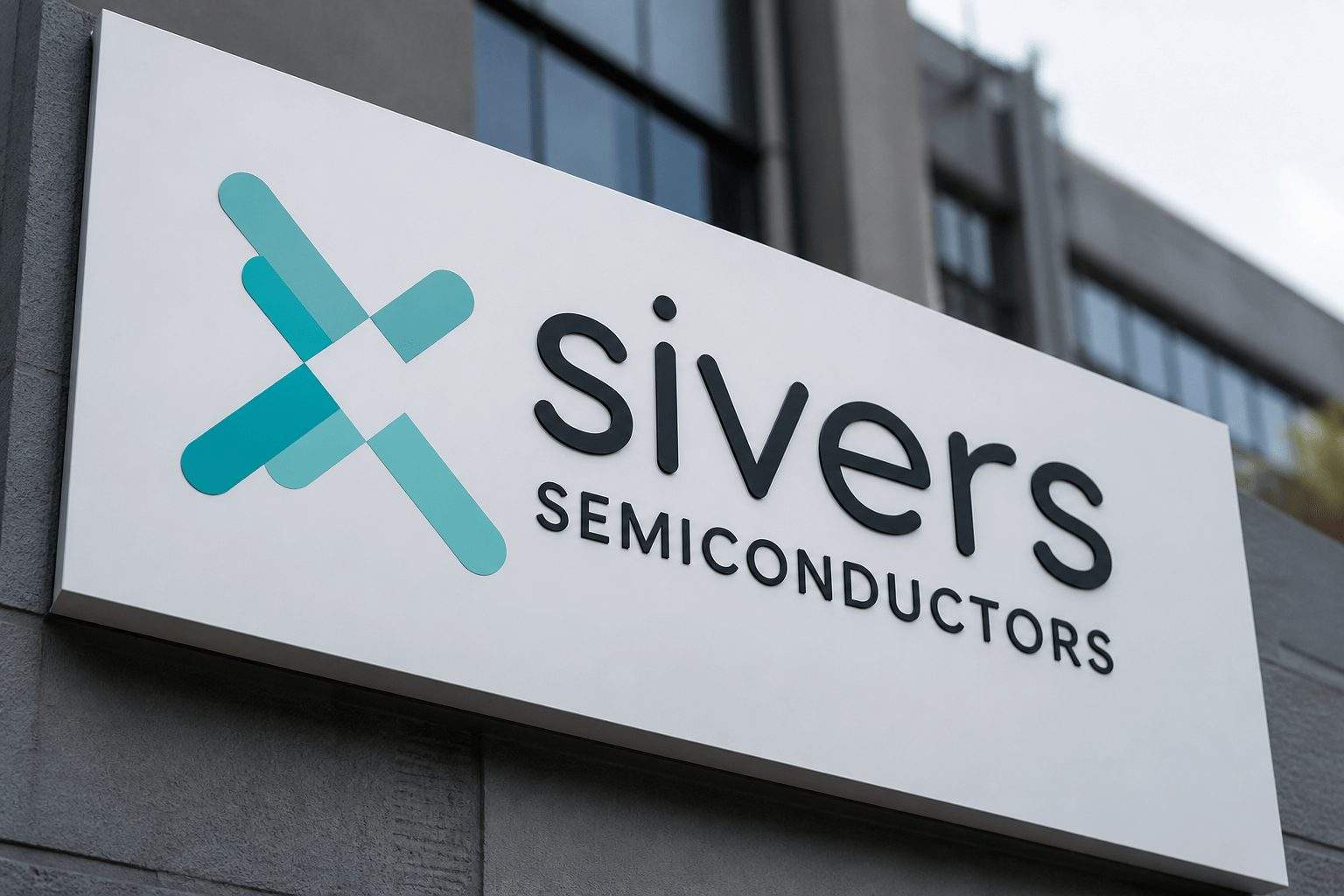
Sivers Semiconductors AB (publ) is staring down a tight week: shareholders must respond to a notice by May 5, ahead of a May 11 vote on the chipmaker’s planned 125 million Swedish crown directed share issue at an extraordinary meeting. The Kista-based company has also delayed its 2025 annual report, shifting attention to its U.S. audit work and a potential Nasdaq New York dual listing.
The schedule is getting complicated: the share vote, the annual report delay, and the U.S. listing review are now interconnected. Sivers explained the annual report will come out May 15 instead of April 27, citing the need for an “audit uplift”—essentially extra work to bring its 2024 and 2025 consolidated accounts up to U.S. Public Company Accounting Oversight Board standards, which are required for U.S. public market filings. Sivers Semiconductors
The move comes on the heels of a big rally in the stock. With Nasdaq Stockholm shuttered for Labour Day on May 1, Sivers’ last close was 38.00 crowns on April 30, according to MarketScreener—down 4.71% that session, but still showing an eye-popping 814.78% gain year-to-date.
Sivers is looking to raise roughly 125 million crowns before expenses with a proposed share issue of 8.62 million ordinary shares, each priced at 14.50 crowns, according to the company. Investors lined up for the deal include DNB Disruptive Opportunities, DNB Nordic Small Cap, and Storebrand Sverigefond. If shareholders sign off, Sivers estimates dilution will land at about 2.5% on a fully diluted basis.
Chief Executive Vickram Vathulya said the company secured a “strong focused group” of institutional investors. The cash, he added, is set to speed up Sivers’ product development and scaling for important customers, while also bolstering sales and shoring up the balance sheet. Cision News
Sivers announced on April 16 that it’s weighing a possible dual listing on Nasdaq New York, though its headquarters would stay in Sweden. Management said the move is meant to widen the company’s reach in U.S. tech capital markets. The ongoing audit, Sivers added, might trigger some accounting changes—things like shifting revenue between periods, adjusting inventory values, or updating share option costs. Still, the company doesn’t expect any of these to have a material impact on its results or balance sheet.
Sivers is pushing to convert more customer work into higher product sales. For 2025, the company posted net sales of 304.1 million crowns, up 25%. Adjusted EBITDA came in at negative 10.8 million crowns, while the loss after tax totaled 186.5 million crowns. Back in February, Vathulya pointed to a 64% jump in the opportunity pipeline, which reached $453 million for 2025.
AI data-centre optics have become a hot commercial angle. Back in April, Sivers and Jabil said they’re teaming up: Jabil is looking to develop a 1.6T linear receive optical transceiver, using Sivers’ distributed feedback lasers—these are narrow-wavelength lasers, key for shifting data down optical links. “A hard requirement,” is how Alex McCann, Sivers’ Photonics managing director, put the need for energy efficiency. Jabil’s Jason Wildt sees the push from customers for “more bandwidth without increasing power consumption.” Cision News
Sivers finds itself in a crowded, suddenly surging market. Nvidia announced in March plans to pour $2 billion apiece into bigger photonics players Lumentum and Coherent, aiming to lock down optical tech for speedier AI data center chips. The hefty investments highlight just how much money is flowing into optical interconnects—and underscore the heavyweight competition Sivers faces on all sides.
Still, not everyone’s buying the hype. MarketScreener, via EFN, flagged skepticism from Richard Schatz, a photonics researcher who said he couldn’t see why Sivers was “so hyped.” Peter Andrekson, a professor at Chalmers, pointed out that co-packaged optics—CPO—has been around for “five to six years,” with Sivers far from the only name in a field filled with much bigger players. Dagens industri, meanwhile, urged investors to sell after the stock’s 600% run over three months, pointing to shaky profitability, frequent share issues, and heavyweight rivals. MarketScreener
What comes next isn’t a splashy debut—it’s a string of filings, votes, deadline watches. Participation notice lands May 5. The share-issue vote follows on May 11. Sivers still owes investors the annual report, now pushed to May 15, and the Q1 numbers hit May 20. Investors are trading Sivers for the story, but the company still needs to deliver the paperwork and show growth is real.