
Key Facts
- Geomagnetic Storm Watch: NOAA space weather forecasters predict a G2 (moderate) geomagnetic storm on Oct 1, with auroras likely at high latitudes spaceweather.gov spaceweather.com. By Oct 2 conditions subside to mostly quiet/unsettled services.swpc.noaa.gov. Radio-blackout risk is modest (R1–R2 minor with a slight R3 chance services.swpc.noaa.gov).
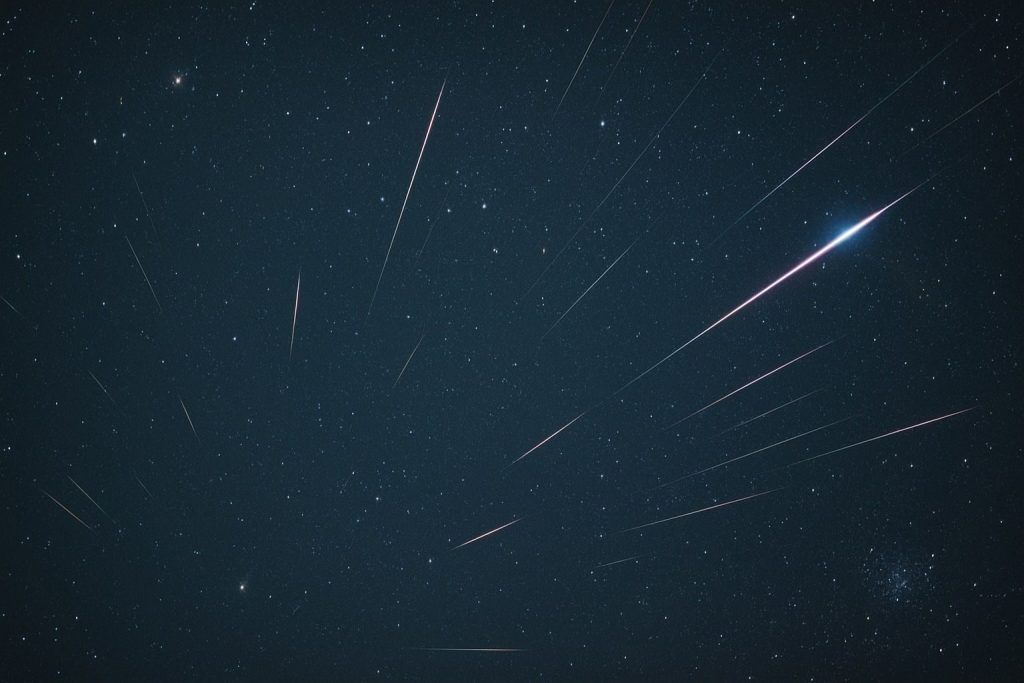
- Meteor Showers: The Orionids (debris from Halley’s Comet) activate on Oct 2 (peak Oct 20–21), expected ~10–20 meteors/hr at peak science.nasa.gov amsmeteors.org. Southern Taurids are active (Sept–Nov; peak mid-Oct) and rich in fireballs amsmeteors.org. (The Draconids peak ~Oct 8, but bright Moonlight may drown out their faint meteors science.nasa.gov.)
- Planets & Moon:Venus blazes in the predawn sky all October, Jupiter rises in early morning, Saturn dominates early evenings, and Mars glows low after sunset planetary.org. On Oct 2, Mercury (mag ≈–0.5) sits near the star Spica starwalk.space. The Moon is a bright waxing gibbous (~78% on Oct 2 in-the-sky.org), so nights will be moonlit.
- Special Events: The dwarf planet Ceres reaches opposition (closest approach) on Oct 2 (mag ~7.6 in Cetus) starwalk.space. No solar or lunar eclipses occur on these dates. (A “Harvest” supermoon follows on Oct 6 science.nasa.gov, outside our window.)
- Satellites in View: The International Space Station (ISS) will make several bright passes (see NASA’s Spot The Station forecasts). Starlink satellites often appear as trains of lights after a launch; Skywatchers can use tracking tools (Heavens-Above, N2YO, the Sky Tonight app, etc.) to predict flares and flyovers starwalk.space.
Meteor Showers & Comets
Early October brings two modest meteor showers. The Orionids, active Sept 26–Nov 7, begin in earnest on Oct 2 amsmeteors.org starwalk.space. NASA notes the Orionids arise from “debris trailing behind Halley’s Comet” and typically yield ~10–20 meteors/hr at peak science.nasa.gov. (Peak viewing is mid-Oct, but with the New Moon on Oct 21–22 the sky will be dark.) Meanwhile, the Southern Taurids (active Sept 20–Nov 20) are underway; these slow meteors from Comet 2P/Encke are rich in bright fireballs amsmeteors.org. Note the sky will be fairly bright around Oct 1–2 (Moon ~¾ full in-the-sky.org), so expect only the brightest meteors. NASA’s skywatch tips remind us that the weak Draconids peak Oct 8 (50% waning gibbous Moon), so those are better seen after dark Oct 6–9 science.nasa.gov if at all.
“The Draconid meteor shower comes from debris trailing the comet 21P/Giacobini–Zinner burning up in Earth’s atmosphere,” NASA explains science.nasa.gov. Draconids are generally few (≈10/hr) and erratic. By contrast, Orionids offer a steadier display; NASA notes these “shoot about 20 meteors per hour” under ideal dark skies science.nasa.gov. (Experienced amateurs often use astronomy apps or meteor-alert services to catch such showers.)
Auroras & Space Weather
Geomagnetic storms: Space weather analysts warn that Oct 1–2, 2025 brings unsettled conditions. NOAA SWPC has issued a Moderate (G2) geomagnetic storm watch for Oct 1 spaceweather.gov. As Spaceweather.com reports, “NOAA forecasters say G2-class geomagnetic storms are possible on Oct. 1st with continued auroras at high latitudes” spaceweather.com. Indeed, solar wind from a coronal hole and lingering CME influence are expected to drive Kp indices into the G1–G2 range during Oct 1 (NOAA’s 3-day forecast shows Kp up to ~6 on Oct 1) services.swpc.noaa.gov. By Oct 2 the forecast drops to minor (quiet to unsettled) geomagnetic levels services.swpc.noaa.gov spaceweatherlive.com. In practical terms, high-latitude aurora hunters should watch for activity Oct 1 evening into Oct 2, but mid-latitude displays will be brief if any.
Solar flares: Solar activity in early Oct is expected to be moderate. NOAA forecasters say there’s a “slight chance for an X-class flare” on Oct 1–3 spaceweatherlive.com. Even minor flares (R1–R2 levels) are likely on Oct 1–2, so HF radio users and satellite operators should be aware.
“Solar activity is likely to be moderate with a slight chance for an X-class flare” over Oct 1–3, NOAA’s analysis shows spaceweatherlive.com. In this period, radio blackout probability is ≈60% for R1–R2 level events services.swpc.noaa.gov.
No near-Earth asteroids or novae are expected to cause unusual activity on Oct 1–2. (Auroral phenomenon STEVE and SAR arcs were seen during a strong storm just before Oct 1 spaceweather.com, but that was a transient event on Sept 29–30.)
Planetary Sights & the Moon
Bright planets dominate the sky: Venus is a brilliant morning star rising ~1.5 h before sunrise each day planetary.org. Jupiter climbs in the eastern sky by midnight, and Saturn sits high in the early evening (near the Moon on Oct 5 planetary.org). Mars remains a modest red dot low in the southwest after sunset, quickly setting. Of special note on Oct 2, Mercury (mag ~–0.5) will lie just northeast of the star Spica starwalk.space; a low western horizon and twilight make this challenging, but keen observers with binoculars may catch it about 30–45 minutes after sunset. Asteroid/dwarf planet Ceres will be at opposition (closest and brightest) on Oct 2 in Cetus starwalk.space, shining around mag 7.6 (visible in good binoculars).
The Moon is a nearly full waxing gibbous around Oct 1–2 (about 78% illuminated on Oct 2 in-the-sky.org), rising before sunset and setting after midnight. Its bright light means faint deep-sky objects and minor meteors will be hard to see. (The next New Moon is Oct 21, which favors the Orionids peak later in the month.)
Visible Satellites & Passes
The International Space Station (ISS) makes regular flyovers. For example, at mid-northern latitudes there will be multiple visible passes each night (bright magnitude –2 to –3). Skywatchers should check tools like NASA’s Spot the Station or websites such as Heavens-Above for exact times from their location.
Starlink satellites (SpaceX’s internet constellation) often appear as moving “trains” of lights a few minutes after a launch. (A Starlink launch is scheduled on Oct 3, so look in the western sky 1–2 days after for long, bright trails shortly after sunset or before sunrise.) Apps like Sky Tonight or Satellite Tracker can show the next passes of Starlink groups in real time. As one expert guide notes, “On the Heavens-Above website, you can get predictions about Starlinks’ passes… Or look for Starlink satellites through the ‘Satellite Database’” starwalk.space. Other notable satellites (weather, Iridium, Tiangong, etc.) may also be visible; again, use a tracker tool for schedules.
Skywatch Tip: Try using free tools like NASA’s Spot the Station (for ISS) or Heavens-Above (satellites) to set alerts. Many mobile apps (e.g. Sky Tonight, N2YO) can notify you when bright satellites enter your sky starwalk.space.
Forecasts and Resources
For live updates, check the NOAA Space Weather Prediction Center (SWPC) website and SpaceWeather.com. SWPC’s 3-day and 27-day forecasts (and alerts) give expected Kp indices and flare probabilities services.swpc.noaa.gov forecast.weather.gov. For aurora forecasts, NOAA’s Ovation map and apps like Aurora or My Aurora Forecast are recommended. NASA’s What’s Up skywatching blog and The Planetary Society’s monthly guide offer seasonal context science.nasa.gov planetary.org.
Amateur astronomers should also make use of online star charts (Stellarium), tracking software, and local observatory alerts. Key resources include:
- Heavens-Above – predicts visible passes of satellites (ISS, Starlinks, etc.).
- NASA Spot The Station – official ISS pass alerts.
- Meteor Shower Forecasts – e.g. the American Meteor Society (amsmeteors.org) calendar and EarthSky’s shower guides.
- SpaceWeather.com – community hub with alerts, aurora alerts, and news.
By consulting these tools and monitoring space weather updates, skywatchers worldwide can catch the highlights of Oct 1–2’s skies. The combination of a geomagnetic storm watch, active meteor streams, and bright planets makes these dates especially interesting.
Sources: Weather and skywatch data from NOAA SWPC and SpaceWeather.com spaceweather.gov spaceweather.com services.swpc.noaa.gov; astronomy guides from NASA and meteor societies science.nasa.gov planetary.org starwalk.space; satellite-tracking resources starwalk.space.