
Washington, April 30, 2026, 11:30 EDT
A 64-year-old retiree’s assertion that his Social Security payroll taxes might have grown into a $4 million S&P 500 stake is dragging a familiar U.S. retirement debate back into the spotlight—should the system play it safe, or pursue stock market gains? According to MarketWatch on Thursday, the retiree calculated that employee and employer payments, if routed into the S&P 500, would have swelled past $4 million; just the employee portion, he figures, would be close to $3.7 million.
This isn’t a hypothetical anymore—the countdown is on. According to the Social Security Administration, the Old-Age and Survivors Insurance Trust Fund (OASI), which handles retirement and survivor payouts, is on track to run dry in 2033. Once that happens, incoming revenue would only be enough to fund 77% of scheduled benefits. The Congressional Budget Office’s estimate is even starker, pointing to fiscal 2032 for the OASI exhaustion date.
The debut arrives in a jittery market stretch. U.S. stock-index futures wobbled on Thursday, with traders picking through a mix of heavyweight tech earnings and the Federal Reserve’s call to leave interest rates steady, according to Seeking Alpha. The Fed kept its target range at 3.5% to 3.75%, citing persistent inflation—driven in part by pricier global energy. Unrest in the Middle East, the central bank noted, is injecting another layer of uncertainty.
Unlike a 401(k), Social Security gets its money mostly from payroll taxes — that’s 12.4% on earnings up to $184,500 in 2026, split evenly between employees and employers, according to CBO. The OASI and Disability Insurance trust funds operate separately by law. If those balances were combined, CBO projects both funds run dry in 2033.
The trust funds steer clear of the S&P 500. Instead, trustees put surplus cash into interest-bearing U.S. government securities—especially those special non-marketable Treasuries. It’s a cautious setup, more insurance than investment portfolio. The compromise? Expected returns stay low, but exposure to market swings is sharply limited.
The 1935 law aimed squarely at that. According to the Social Security Administration’s own history, the act rolled out federal old-age benefits and old-age assistance, pitching the worker benefit as lifelong income—something people could count on after years on the job. It wasn’t presented like an equity portfolio.
The risk swings in both directions here. When markets are up, private retirement vehicles—401(k)s, employer pensions, brokerage accounts—have the potential to boost wealth. Social Security, on the other hand, acts as a backstop. Mark Zandi, Moody’s Analytics chief economist, flagged the catch: government-sponsored market plans mean fees. “Wall Street is going to want a fee,” he said, arguing the system ought to stay “rock solid.” Money
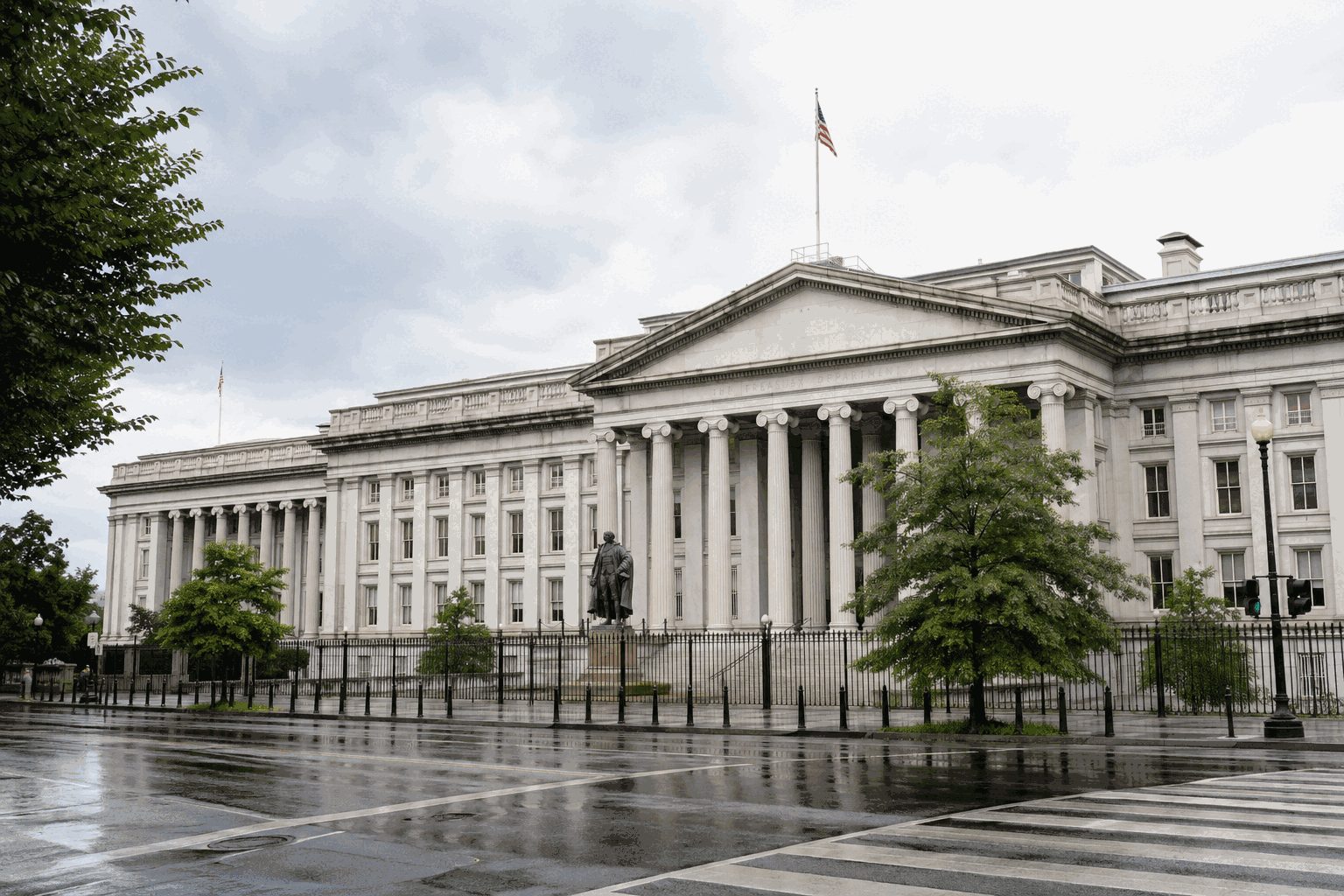
The debate, officials insist, isn’t about portfolio choices—it’s about keeping the program solvent. Treasury Secretary Scott Bessent flagged the urgency after last year’s trustees report, urging lawmakers to intervene. Social Security Commissioner Frank Bisignano echoed that, calling on Congress and the agency to “protect and strengthen the trust funds” for both current and future recipients. U.S. Department of the Treasury
The numbers aren’t pretty. The CBO pegs the federal deficit at $1.9 trillion for fiscal 2026, and warns debt held by the public could hit 120% of GDP by 2036. That’s fueled in large part by bigger bills for Social Security and Medicare, plus mounting interest payments, the agency said.
Alicia H. Munnell, a senior adviser with the Center for Retirement Research at Boston College, argued this week that acting quickly on Social Security would preserve flexibility, distribute the cost more fairly across age groups, and shore up public faith in the system. She described restoring Social Security’s finances as the “first, most realistic step” to address the federal primary deficit. Center for Retirement Research
That $4 million figure is probably just venting, not a comprehensive system check. The real issue looms: does Congress act before the 2032-2033 deadline, or allow an entitlement designed for stability to face an automatic reduction?