Ticker: LUV – Coverage date: December 7, 2025
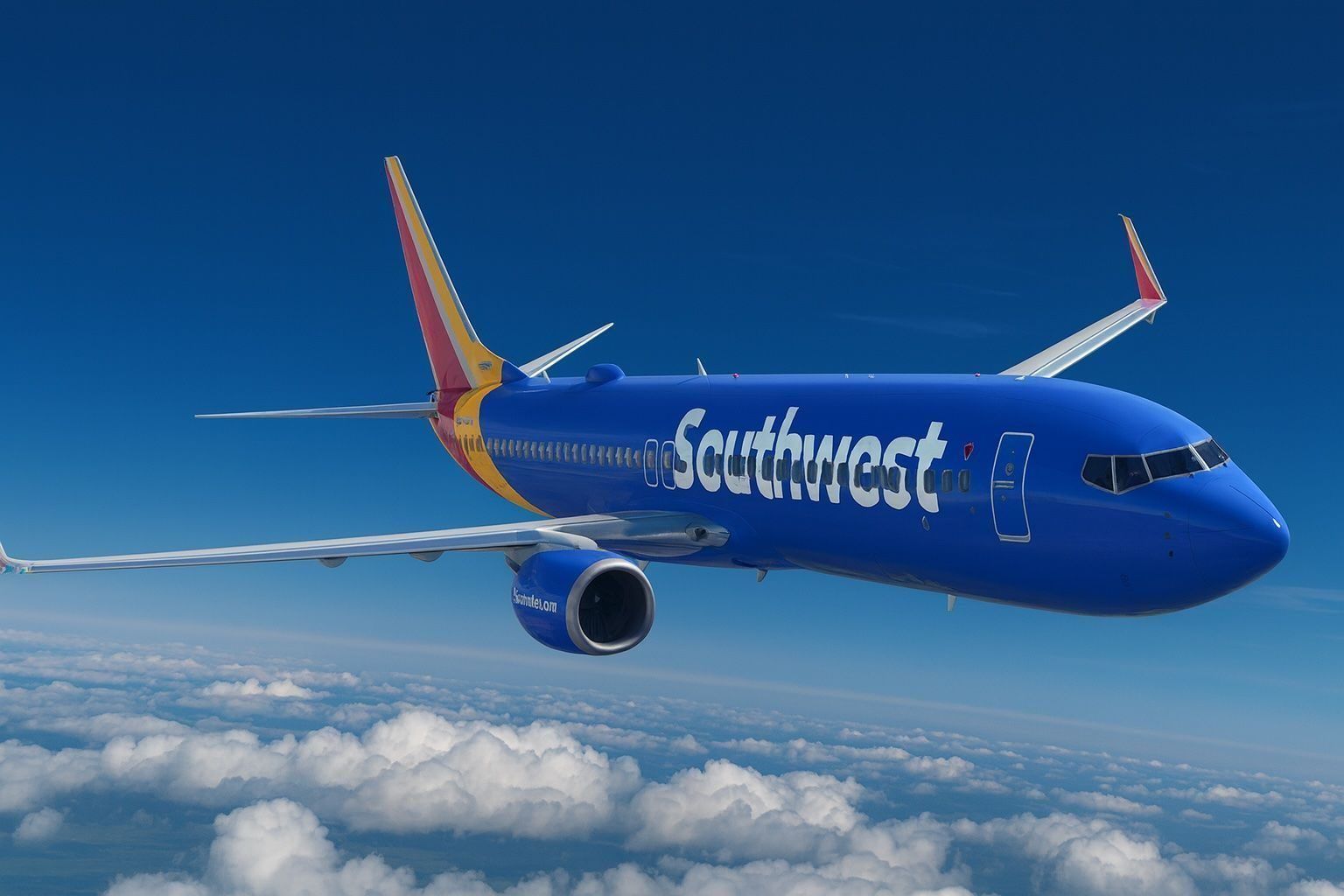
Southwest Airlines stock is back in the spotlight. As of the close on Friday, December 5, 2025, shares of Southwest Airlines Co. (NYSE: LUV) finished just under $38, near a new 52‑week high, after rallying roughly 20% over the past month and about 12–13% year to date.MarketBeat+1
The catch: this surge comes right after the airline cut its 2025 profit outlook because of a 43‑day U.S. government shutdown and higher fuel costs—and just as U.S. regulators waive an $11 million fine tied to Southwest’s infamous 2022 holiday meltdown.Reuters+1
Here’s a detailed look at the latest news, analyst forecasts, and what the current valuation may be telling investors about LUV stock as of December 7, 2025.
1. Southwest Airlines stock today: price, performance and valuation snapshot
According to MarketBeat and other market data providers, Southwest closed around $37.85–$37.87 on December 5, 2025, up about 5.7% on the day, with a market capitalization near $19.6 billion.MarketBeat+1
Key performance metrics over recent periods:MarketBeat+1
- 5‑day performance: roughly +9%
- 1‑month performance: about +20%
- 3‑month performance: about +21%
- Year‑to‑date (2025): about +12–13%
- 1‑year performance: about +11%
- 5‑year performance: still down roughly 20%, reflecting the difficult post‑pandemic and post‑meltdown years
MarketBeat’s recent coverage and 13F‑filing summaries also show a 52‑week range of roughly $23.8 to just under $38, with LUV now trading essentially at its high for the year.MarketBeat+1
On valuation, different data providers show slightly different trailing multiples, but they all point in the same direction:
- Trailing P/E: around 50–60x earnings, versus a single‑digit to low‑teens average for the airline industry
- PEG ratio (price/earnings‑to‑growth): around 0.6–0.7 based on long‑term growth assumptions
- Dividend: quarterly dividend about $0.18 per share, or ~$0.72–$0.78 annually, implying a dividend yield around 2% at today’s price and a payout ratio around or above 90–100% of trailing earnings.MarketBeat+2Simply Wall St+2
So the stock is priced like a high‑expectations recovery story, not a distressed turnaround. Whether that makes sense depends on how you read the latest headlines.
2. Latest headlines moving LUV: fine waiver and 2025 guidance cut
2.1 Fine from the 2022 meltdown largely waived
On December 6, 2025, the U.S. Department of Transportation (USDOT), under the Trump administration, announced it will waive an $11 million balance of a fine linked to Southwest’s catastrophic December 2022 holiday meltdown.Reuters+1
Key points from the USDOT decision and prior settlement:
- In December 2023, Southwest agreed to a $140 million settlement, including a $35 million cash penalty and $90 million in travel vouchers to passengers impacted by the 2022 disruption, which canceled nearly 17,000 flights and stranded more than 2 million travelers.Reuters+1
- The airline has already paid most of the cash penalty; the remaining $11 million, originally due by January 31, 2026, is now being waived.The Wall Street Journal
- USDOT justified the waiver by pointing to more than $1 billion in investments Southwest says it has made to upgrade technology and operations since the meltdown and argued that encouraging such investment is in the public interest.Reuters+1
Regulatory context also matters: the same USDOT has been rolling back several Biden‑era consumer protection efforts, including a proposal to require cash compensation for airline‑caused delays and a lawsuit over alleged chronically delayed flights.Reuters+1
For Southwest shareholders, this is modestly positive:
- It removes a small financial overhang ($11 million is tiny relative to Southwest’s revenue and market cap).
- More importantly, it signals a friendlier regulatory climate, at least in the near term, for U.S. carriers.
2.2 2025 EBIT outlook cut to about $500 million
The bullish spin on regulation contrasts with a more sobering development on fundamentals. On December 5, 2025, Southwest filed an 8‑K and updated investors that it is cutting its 2025 earnings before interest and taxes (EBIT) outlook.Southwest Airlines Co.+2RTTNews+2
Details from the company and news coverage:
- New 2025 EBIT (ex‑special items) guidance: around $500 million
- Previous range: $600–$800 million
- Management blamed:
- Lower revenue and weaker demand during a 43‑day U.S. government shutdown, the longest in U.S. history
- Higher jet fuel prices putting pressure on margins
- The FAA temporarily required airlines to reduce flights at around 40 major airports during the shutdown due to staffing constraints, hitting Southwest’s schedule and bookings.Reuters
- Southwest emphasizes that bookings have since returned to prior expectations, suggesting the hit is largely one‑off, but the profit hole is real.Southwest Airlines Co.+1
Reuters and RTT News reported that the guidance cut initially pushed LUV shares down in pre‑market trading on December 5, but the stock later rebounded sharply, with GuruFocus noting a roughly 2.9% intraday rise despite the lower forecast and MarketBeat recording a 5.7% gain on the session as the stock set a fresh 52‑week high.MarketBeat+3Reuters+3GuruFocus+3
In short: Southwest has less profit coming in 2025 than previously promised, but the market seems focused on the longer‑term recovery story instead of the near‑term hit.
3. How Wall Street sees LUV: “Hold” with mid‑$30s targets
Across multiple data platforms, analyst sentiment on Southwest Airlines is remarkably consistent: cautious but not bearish.
- Consensus rating:
- StockAnalysis reports that 13 analysts covering LUV assign a “Hold” rating.StockAnalysis
- Public.com likewise notes a Hold consensus from 12 analysts as of December 7, 2025.Public
- 12‑month price targets:
- StockAnalysis shows an average target of about $34.31, implying downside of roughly 9% from current prices, with a range of $23–$42.StockAnalysis
- Public.com cites a 2025 price prediction of about $35.25, effectively flat to slightly below where LUV trades now.Public
- MarketBeat’s recent piece on LUV’s 52‑week high references a consensus target near $35, with coverage split roughly into 4 Buy, 11 Hold and 3 Sell ratings.MarketBeat
On earnings expectations:
- Zacks Research recently raised its Q4 2025 EPS estimate for Southwest from $0.58 to $0.68, while noting that the consensus full‑year 2025 EPS forecast is around $1.55 per share.Longbridge SG+1
- Simply Wall St’s aggregated analyst models show forecast earnings growth of about 37.7% per year and EPS growth of about 40.5% per year over the next few years, with revenue growth expected near 6.2% annually and return on equity projected around 24.5% in three years.Simply Wall St
Put together, the message from Wall Street is:
- Profit growth is expected to accelerate in the medium term as Southwest’s turnaround progresses and shutdown‑related noise fades.
- But at today’s price, analysts mostly see limited upside and some potential downside over the next 12 months.
4. Is Southwest Airlines stock overvalued after the rally?
Valuation is where opinions really diverge—and where LUV is attracting fresh analysis right now.
4.1 Simply Wall St: “Overvalued” on multiple metrics
A December 6, 2025 note from Simply Wall St explicitly asks whether the recent rally in Southwest shares is justified. Their answer, using their own models, is blunt: “OVERVALUED.”Simply Wall St
Highlights from that analysis:
- Dividend Discount Model (DDM):
- Uses an annual dividend of roughly $0.78 per share and a modest assumed dividend growth rate.
- Produces an estimated intrinsic value around $8.06 per share.
- Versus the current price near $37.85, this implies the stock could be overvalued by roughly 370% on that conservative dividend‑driven lens.Simply Wall St
- Price‑to‑Earnings comparison:
- Southwest trades at about 51.6x earnings in their data set.
- That compares with an airlines industry average near 9x and a peer group average around 10.8x.
- Simply Wall St’s proprietary “Fair PE” for Southwest, based on its growth and risk profile, is around 28.8x—well below today’s multiple.Simply Wall St
From this vantage point, LUV looks like a stock that investors are paying up for, relative to what its current earnings and dividends justify.
4.2 MarketBeat: rich multiple, thin margins, generous dividend
MarketBeat’s 52‑week‑high note paints a similar picture using more traditional metrics:MarketBeat+1
- Market cap: ~$19.6 billion
- P/E ratio: about 58x
- Net margin: roughly 1–1.5% on recent results
- Return on equity: ~6%
- Dividend:$0.18 quarterly, or around $0.72 annually, for a yield near 2%
- Dividend payout ratio: around 110% of trailing earnings
In other words, Southwest is:
- Still operating with single‑digit margins,
- Paying out almost all of its earnings as dividends,
- And yet being valued like a high‑growth, high‑quality compounder.
For investors who care primarily about current valuation, those numbers invite caution.
4.3 Why the market is willing to pay up
So why are investors bidding LUV up anyway?
Several plausible narratives are at work:
- Recovery and growth story
- The airline has moved from a loss‑making post‑meltdown period toward positive earnings and improving guidance, even after the recent EBIT trim.
- Analyst models point to rapid EPS growth over the next 3–5 years if margins normalize and capacity grows.Simply Wall St+1
- Structural revenue changes
- Southwest is abandoning some of its most generous customer policies—two free checked bags and purely open seating—in favor of bag fees, basic fares, and premium seating products, bringing it closer to legacy carriers on monetization.Southwest Airlines+3University of Colorado…
- Those changes have the potential to lift unit revenue and ancillary income over time.
- Activist‑driven discipline
- Activist investor Elliott Investment Management has pushed hard for a more profitable, less sentimental Southwest—leading to board changes, cost cuts, and strategic shifts.Wikipedia+2MarketWatch+2
- The first‑ever corporate layoffs and a sharper focus on returns are part of this agenda, and some investors are betting those moves will unlock long‑term margin improvement.
Viewed this way, LUV’s current price is less about where Southwest is today and more about where investors think it might be by 2027–2028.
5. Business model overhaul: from “bags fly free” to basic fares and assigned seating
One of the biggest shifts in Southwest’s story—and a key input to any forecast for LUV—is the transformation of its commercial model.
5.1 Bag fees and Basic fares
On May 28, 2025, Southwest effectively ended its famous “bags fly free” promise for most customers:
- For bookings made or changed on or after that date, checked baggage fees now apply to Basic, Wanna Get Away Plus/Choice, and Anytime/Choice Preferred‑type fares.
- Typical fees are $35 for the first checked bag and $45 for the second, unless you’re in a premium fare bucket or hold elite status or certain co‑branded credit cards.University of Colorado+2Fingate+2
At the same time, Southwest launched a highly restrictive Basic fare, replacing Wanna Get Away in many cases:
- Basic fares are non‑refundable,
- Have limited or no change flexibility,
- Earn fewer Rapid Rewards points,
- And flight credits typically expire in six months, versus up to a year or no expiry for some other fares.Southwest Airlines+2University of Colorado…
Universities and corporate travel programs have already started discouraging or banning Basic for business travel because of the risk of forfeited funds and inflexibility.University of Colorado+1
5.2 New fare bundles and assigned seating
Later in 2025 and into early 2026, Southwest is rolling out a four‑tier fare structure—Basic, Choice, Choice Preferred, and Choice Extra—alongside assigned and premium seating:10xTravel+3Fingate+3Southwest Airlines+3
- Choice Extra (today’s Business Select):
- Assigned extra‑legroom seats, earliest boarding groups, two free checked bags, fully refundable.
- Choice Preferred (today’s Anytime):
- Assigned preferred seats near the front, earlier boarding, refundable tickets.
- Choice (today’s Wanna Get Away Plus):
- Assigned standard seats, transferable flight credits, limited same‑day changes.
- Basic:
- Seat assigned at check‑in, last boarding group, non‑refundable, restrictive credits, lowest points earning.
Assigned seating for travel starting January 27, 2026 is already being configured, with fare pages on Southwest.com describing board‑by‑group boarding and seat selection at booking for most non‑Basic fares.Southwest Airlines+1
For investors, all of this points to a higher‑yield, more segmented revenue model:
- More levers to charge for bags, seats, and flexibility
- Closer alignment with Delta, United, and American on ancillary fees
- Potential risk to Southwest’s historical brand differentiation as the “friendly, simple, no‑gotchas” carrier
Critically, these changes were rolled out amid pressure from Elliott and in the wake of the 2022 meltdown, which weakened management’s room to resist monetization moves.Wikipedia+2Investopedia+2
6. Cost cuts, activist pressure and operational risks
6.1 First‑ever layoffs and leadership reshuffling
In early 2025, Southwest announced its first large‑scale layoffs in company history, cutting about 15% of its corporate workforce—around 1,750 jobs—to save an estimated $210 million in 2025 and $300 million in 2026.AP News
Associated developments include:
- Elimination of around 15% of senior management roles
- Ongoing restructuring of corporate functions to make the airline “leaner, faster, and more agile”
- Continued negotiations and re‑alignment with activist investor Elliott, including a revised agreement allowing Elliott to own up to 19.9% of Southwest’s shares.Reuters+2Wikipedia+2
For the stock, this signals a more aggressive focus on profitability, but also raises questions about morale, culture, and execution at a company that long prided itself on employee‑friendly policies.
6.2 Boeing dependence and fleet constraints
Southwest remains a pure Boeing 737 operator. That strategy has historically simplified maintenance and training, but it also creates single‑supplier risk:
- The airline has hundreds of additional 737 MAX 8 and MAX 7 aircraft on order—roughly 471 on order according to fleet‑size analyses.Simple Flying
- Certification of the 737 MAX 7 has been repeatedly delayed; Southwest now expects certification in 2026 with deliveries by the end of that year.Simple Flying+1
- A Boeing production ramp is underway, with regulators recently allowing 737 output to rise to 42 jets per month, but the manufacturer still trails Airbus on deliveries.Reuters
Earlier reporting noted concerns that labor actions and production issues at Boeing could reduce Southwest’s 2025 deliveries versus prior plans, potentially constraining growth and forcing more intensive utilization of the existing fleet.Supply Chain Brain+1
From an investor perspective:
- Capacity growth and cost per available seat mile (CASM) depend heavily on Boeing delivering on time.
- Any new safety, quality or labor disruptions at Boeing could quickly feed through into Southwest’s capex plans and pricing power.
7. Technical picture: a breakout near resistance
On the technical side, Southwest is starting to look like a classic breakout chart:
- Investor’s Business Daily recently noted that Southwest’s Relative Strength (RS) Rating—a metric ranking stocks by 12‑month performance—has climbed into the low‑70s on a 1–99 scale, indicating improving momentum though not yet top‑tier.Investors
- The same analysis suggested LUV is working on a “cup without handle” base with a potential breakout level around $37.96, a level the stock is now testing as it pushes to new 52‑week highs.Investors+1
Short‑term traders may treat that zone as a key technical battleground. Longer‑term investors will likely care more about the earnings trajectory and structural changes described above, but this kind of price action helps explain why LUV has caught the eye of momentum‑oriented funds.
8. Key catalysts and risks to watch after December 7, 2025
Going forward, several factors are likely to drive LUV’s performance more than any one headline.
8.1 Upcoming earnings and guidance
- Southwest is expected to report full‑year 2025 earnings in January 2026, with consensus pointing to EPS around $1.5–1.6 and EBIT about $500 million after the recent guidance cut.Southwest Airlines Co.+2MarketWatch+2
- Investors will focus on:
- Whether shutdown‑related weakness truly looks temporary,
- How much margin recovery management bakes into 2026 and 2027 guidance,
- And whether the dividend level is sustainable given the high payout ratio and capex needs.
8.2 Execution on fare changes and brand perception
The shift from “bags fly free and pick any seat” to bag fees, Basic fares and assigned seating is a major cultural shock for Southwest’s loyal customers.
Key questions:
- Do new fees and premium seating generate enough incremental revenue to offset potential brand erosion?
- Does Southwest maintain its operational reliability gains (after investing over $1 billion post‑meltdown) as it simultaneously upgauges aircraft, adjusts turn times, and manages more complex boarding and seating patterns?Reuters+2AirInsight+2
8.3 Activist pressure and corporate strategy
Elliott’s ongoing involvement ensures that capital allocation and profitability will stay in the spotlight:
- Further cost cuts, asset sales, or strategic shifts (for example, more red‑eye flying, expanded partnerships, or changes in route mix) remain on the table.Wikipedia+1
- At the same time, labor relations and regulatory scrutiny could flare up if cost cutting is perceived as undermining safety or service quality.
8.4 Macro and fuel
Like all airlines, Southwest remains exposed to:
- Jet fuel price volatility, which already contributed to the 2025 EBIT guidance cut.Reuters+1
- Consumer demand for leisure and business travel, which could soften if the economy slows or tighten if capacity remains constrained.
- Potential future government shutdowns or air‑traffic disruptions, which the 2025 episode showed can quickly become a major earnings swing factor.
9. Bottom line on Southwest Airlines stock as of December 7, 2025
As of today, Southwest Airlines stock sits at an interesting crossroads:
- Price action and sentiment are clearly positive: LUV is near a new 52‑week high, with double‑digit gains over the past month and solid year‑to‑date returns.MarketBeat
- Fundamentals are improving but still fragile: margins remain low, 2025 profit guidance has just been cut, and dividend payouts are consuming most of current earnings.Southwest Airlines Co.+2MarketBeat+2
- Valuation is demanding: multiple independent analyses show Southwest trading at many times the earnings multiple of its peers, and some discounted‑cash‑flow / dividend models suggest the stock is significantly overvalued at current levels.Simply Wall St+2MarketBeat+2
- Strategic change is profound: the airline is in the midst of a multi‑year shift in how it prices, seats, and monetizes customers—under pressure from both regulators and activist investors.Reuters+3University of Colorado+3Fingate+3
For readers following Southwest Airlines stock on December 7, 2025, the core tension is this:
Can Southwest execute on its fee‑heavy, activist‑influenced turnaround fast enough to justify a valuation that already assumes years of strong earnings growth?