CAPE CANAVERAL, Florida, Jan 9, 2026, 19:27 EST
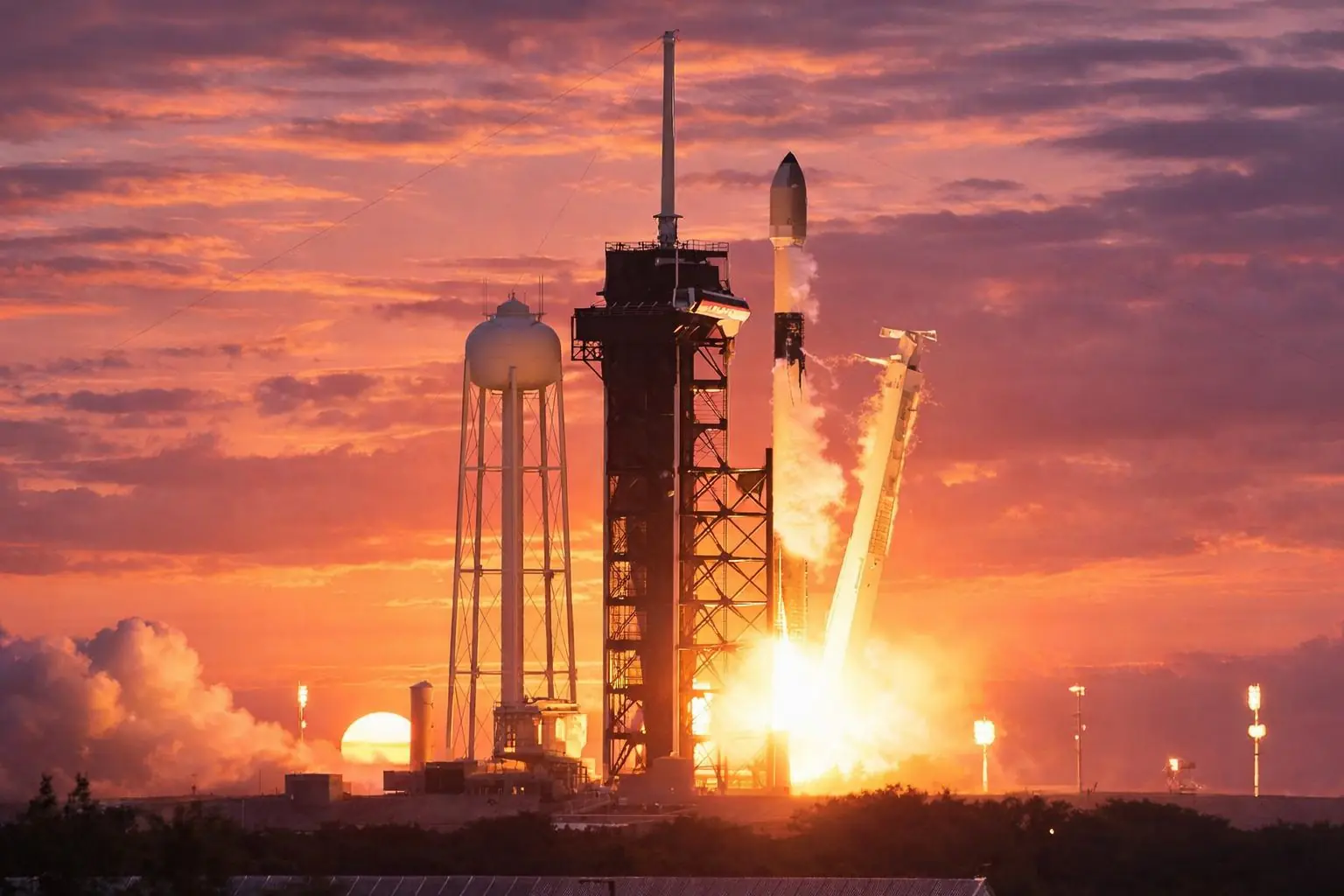
- SpaceX launched a Falcon 9 at 4:41 p.m. EST from Cape Canaveral carrying 29 Starlink satellites.
- The reused booster flew for a 29th time and landed on the droneship A Shortfall of Gravitas.
- U.S. regulators approved 7,500 more second-generation Starlink satellites, lifting the total authorized to 15,000.
SpaceX launched 29 Starlink internet satellites into orbit on Friday on a Falcon 9 rocket from Cape Canaveral, Florida. The first-stage booster landed at sea on the droneship A Shortfall of Gravitas after stage separation, and SpaceX later confirmed the satellites were deployed. https://spaceflightnow.com/2026/01/08/live…
The flight came as U.S. regulators moved to widen SpaceX’s room to grow Starlink, its low-Earth-orbit network that beams broadband from a few hundred miles above Earth. The Federal Communications Commission approved SpaceX’s plan to deploy an additional 7,500 second-generation satellites, bringing the authorized total to 15,000, and said the expansion will support “direct-to-cell” service — links that can connect standard phones via satellite. https://www.reuters.com/business/media-tel…
“This FCC authorization is a game-changer for enabling next-generation services,” FCC Chair Brendan Carr said in a statement. The agency said SpaceX can upgrade satellites and operate across five frequencies, but it held back approval for the rest of SpaceX’s request to deploy nearly 30,000 satellites, leaving that for later review.
Friday’s mission, dubbed Starlink Group 6-96, lifted off at 21:41 GMT (4:41 p.m. EST) from Space Launch Complex 40, and carried a batch of “v2-mini” satellites — a smaller Starlink design sized for Falcon 9. The flight used booster B1069 on its 29th trip to space, underscoring how much SpaceX leans on reusability to keep launches moving. https://nextspaceflight.com/launches/detai…
SpaceX had aimed for earlier in the afternoon, with a four-hour launch window opening at 1:03 p.m. local time. The Space Force’s weather squadron forecast a 95% chance of acceptable conditions, and the mission slipped a day from an initial Thursday target without a stated reason, according to an Orlando Sentinel report. https://www.arcamax.com/knowledge/sciencea…
A local Space Coast launch schedule already lists more Starlink flights from Florida in the next week, including missions on Jan. 12 and Jan. 14, plus another just after midnight on Jan. 18. Those targets often move, sometimes by hours. https://www.visitspacecoast.com/launches/
But the push to pack more spacecraft into low Earth orbit has sharpened concerns about debris and collision risk as traffic rises. Starlink said in December that one of its satellites suffered an anomaly that created a “small” amount of debris, and SpaceX plans to lower thousands of Starlink satellites from about 550 km to 480 km in 2026 to make failed satellites fall out of orbit faster, Reuters reported. “Lowering the satellites results in condensing Starlink orbits, and will increase space safety in several ways,” Starlink engineering vice president Michael Nicolls said. https://www.reuters.com/business/aerospace…
The FCC approval also comes with deadlines. The agency said SpaceX must have 50% of its authorized Gen2 satellites launched, placed in assigned orbits and operating by Dec. 1, 2028, with the rest due by 2031 — a timetable that will test how long SpaceX can keep Falcon 9 flights routine. Even at this week’s load of 29 satellites a mission, fielding 7,500 satellites works out to roughly 260 launches, a rough cut that shows why Starlink has become SpaceX’s steady cadence.