Over just three days, December 5–7, 2025, SpaceX has dominated business, tech and space headlines: investors are debating a potential $800 billion valuation and a late‑2026 IPO, regulators have cleared a new Starship launch complex in Florida, Starlink has logged yet another high‑cadence launch streak, and a Russian cosmonaut has been pulled from a future SpaceX crew mission over an alleged security breach.
Below is a structured look at what actually happened, why it matters, and what analysts are forecasting next for Elon Musk’s launch-and-satellite giant.
Key takeaways
- IPO timeline: SpaceX has told investors it is aiming for an IPO in the second half of 2026, potentially listing the entire company, including Starlink. Reuters
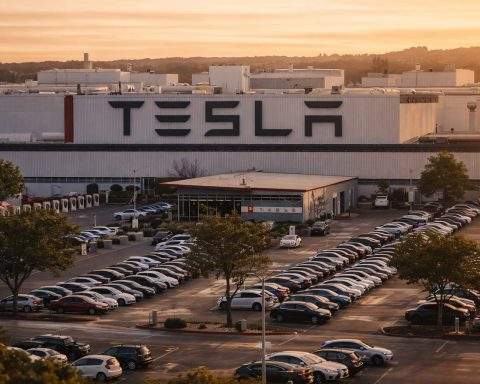
- Valuation debate: A planned secondary share sale could value SpaceX at up to $800 billion, more than half of Tesla’s market cap despite generating roughly one‑sixth of Tesla’s revenue. MarketWatch+1
- Musk pushes back: Elon Musk has publicly denied that SpaceX is currently raising money at an $800 billion valuation, saying the company is cash‑flow positive and relies on twice‑yearly stock buybacks for liquidity. Reuters+1
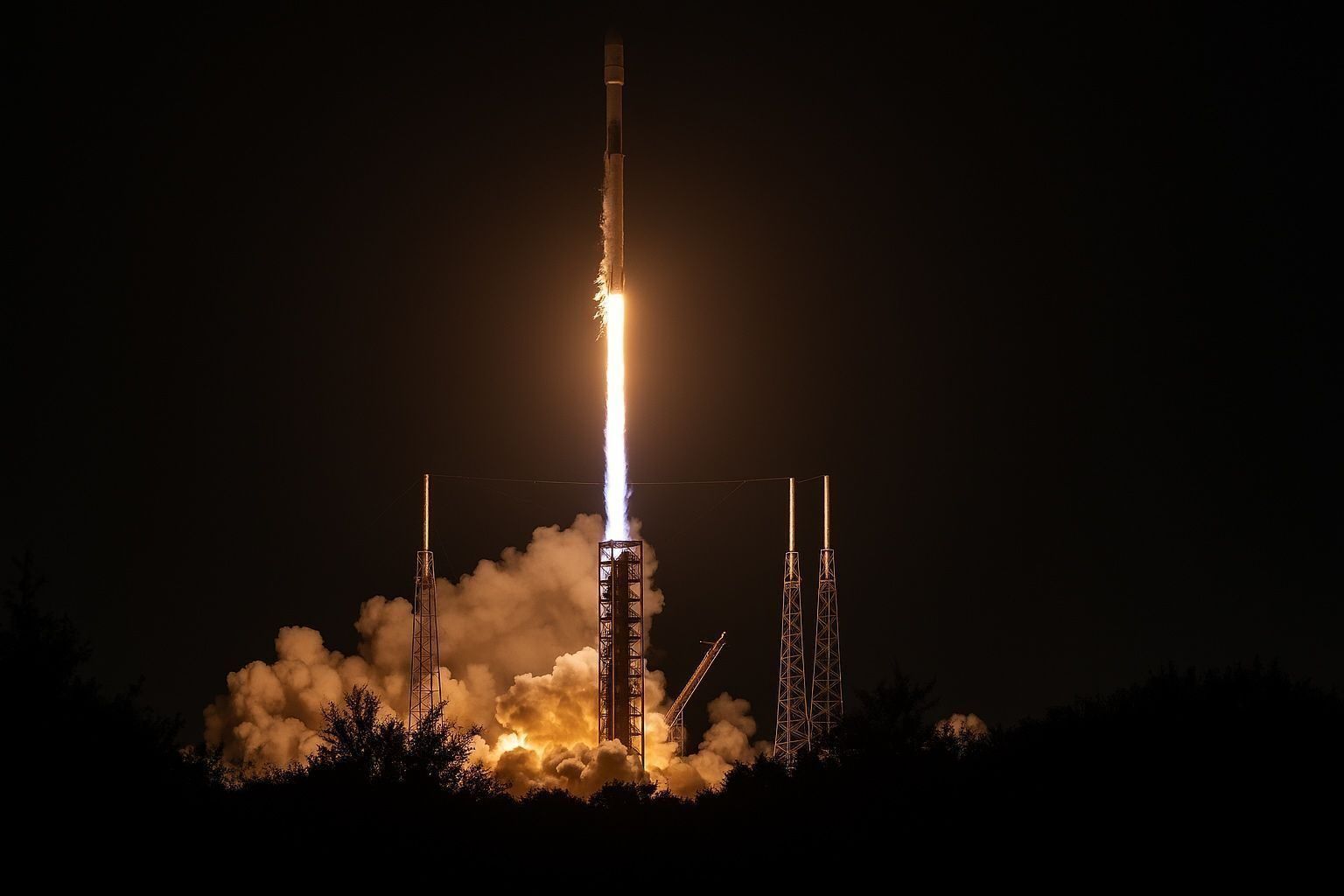
- Launch tempo: SpaceX has already flown 156 Falcon 9 missions in 2025, more than 70% of them for Starlink, with multiple additional launches clustered between December 7 and 10. Space+2Spaceflight Now+2
- Starship & Artemis pressure: The U.S. Air Force has approved a new Starship launch complex at Cape Canaveral, even as a late‑November Starship booster anomaly fuels concern that Blue Origin could gain an edge for NASA’s Artemis 3 lunar landing. KeepTrack+1
- Security scare: Veteran Russian cosmonaut Oleg Artemyev has been removed from SpaceX Crew‑12 after allegedly photographing sensitive SpaceX hardware, underscoring the security sensitivities around commercial crew partnerships. New York Post+2Space+2
1. IPO in 2026? What SpaceX has actually told investors
On December 5, Reuters reported that SpaceX has informed investors and financial institutions it plans to pursue an initial public offering in the second half of 2026, according to a report from The Information. Reuters
Crucially:
- The listing under discussion is not just Starlink, but a potential IPO of the entire company, bundling launch, Starlink and other businesses. Reuters
- The IPO chatter is tied to a new secondary share sale — a tender offer that would let employees and early investors sell shares to new or existing backers. This tender is where the eye‑catching valuation numbers come from. Reuters+1
This “tender first, IPO later” playbook is familiar: SpaceX has been running semi‑annual secondary offerings for several years, a pattern that gives it a way to reward employees and refresh its cap table without going public or issuing new shares. Financial Times
Why an IPO now?
Analysts point to three main drivers behind the 2026 timeline being floated this week:
- Scale and dominance
- MarketWatch, citing Wall Street Journal data and analyst estimates, notes that SpaceX could handle around 90% of the world’s space payload to orbit in 2025, thanks largely to Falcon 9’s unmatched cadence and Starlink launches. MarketWatch+2Spaceflight Now+2
- Revenue ramp
- SpaceX revenue is projected at roughly $15.5 billion in 2025, up from about $13.1 billion in 2024, with Starlink contributing around $8.2 billion this year. MarketWatch
- Investor pressure to crystallize gains
- The company’s valuation has reportedly leapt from about $36 billion in 2020 to hundreds of billions today, compressing a decade of private‑market appreciation into under six years. MarketWatch+1
- For large crossover investors and late‑stage funds, a 2026 IPO would convert paper gains into liquid stock.
Still, even in this week’s coverage, it’s clear the IPO plan is not locked in. Reports stress that the timing and structure could change based on employee and investor demand and broader market conditions. Outlook Business+1
2. The $800 Billion Question: How real is the valuation?
What the reports say
Several outlets — including The Wall Street Journal, the Financial Times, MarketWatch and Outlook Business — report that the new insider share sale is being discussed at a valuation of up to $800 billion, double the roughly $400 billionlevel attached to a recent secondary sale earlier in 2025. Reuters+2Financial Times+2
Bloomberg, however, has flagged that some insider shares might be priced closer to $300 per share, implying a more modest valuation around $560 billion rather than a full $800 billion. Reuters
Meanwhile, MarketWatch and other analyst notes frame the $800 billion figure in context:
- At $800 billion, SpaceX would be worth more than half of Tesla’s roughly $1.43 trillion market cap, even though its expected 2025 revenue is only about one‑sixth of Tesla’s (around $15.5 billion vs. Tesla’s estimated $95.2 billion). MarketWatch+1
- It would also overtake OpenAI, currently pegged at about $500 billion, as the most valuable private company in the United States. Reuters+1
Outlook Business goes further, noting that if SpaceX did eventually list at something near that valuation, it could rank among the 20 largest public companies in the world, and selling just 5% of the company could raise roughly $40 billion, surpassing Saudi Aramco’s record‑setting IPO proceeds. Outlook Business
Musk’s response: “Not accurate”
On December 6, Elon Musk took to X to push back on the headlines. According to Reuters, he called stories about SpaceX “raising funds at an $800 billion valuation” “inaccurate,” and reiterated that: Reuters+1
- SpaceX has been cash‑flow positive for many years; and
- The company relies on twice‑yearly stock buybacks to provide liquidity for employees and early investors, rather than raising new primary capital.
That nuance matters. The current tender offer, as described in media reports, still appears likely to set an implied valuation — but it’s existing holders selling to other private investors, not SpaceX issuing new shares. Reuters+1
Analyst view: a “Musk premium”
Across this week’s coverage, analysts repeatedly invoke a “Musk premium”:
- Longbridge and MarketWatch highlight that investors may be paying far richer valuation multiples for SpaceX than typical for a $15–16 billion‑revenue company, largely because it dominates the launch market and controls a near‑monopoly Starlink network. MarketWatch+2Longbridge SG+2
In other words: the $800 billion figure looks less like a conventional discounted‑cash‑flow result and more like a scarcity valuation on a company that is simultaneously:
- the world’s leading orbital launch provider, and
- a fast‑growing global broadband operator with high switching costs.
3. Falcon 9 keeps flying: Starlink launch cadence in early December
Behind the valuation drama, SpaceX has quietly kept its 2025 launch machine running at full tilt.
Launches just before and during the period
- On December 1, a Falcon 9 from Kennedy Space Center flew the Starlink 6‑86 mission. By that flight, SpaceX had already launched 152 Falcon 9 rockets in 2025, with 110 flights dedicated to Starlink. Spaceflight Now
- On December 4, another Falcon 9 lifted off from Vandenberg Space Force Base carrying 28 Starlink satelliteson the Starlink 11‑25 mission. Space.com notes that this was the 156th Falcon 9 launch of the year, and Spaceflight Now records it as the fourth Starlink mission just in December and the 114th Starlink‑specific launch of 2025. Space+1
By that point, SpaceX had:
- Launched 2,915 Starlink satellites across 113 missions in 2025 alone, and
- Achieved at least 544 booster landings overall, with 167 of those on the drone ship Of Course I Still Love You used for the Dec. 4 Vandenberg mission. Spaceflight Now+2Space+2
What’s next from December 7 onward
Within the December 5–7 window, attention turned to a cluster of upcoming launches: Spaceflight Now+2Reddit+2
- Starlink 6‑92
- Targeted for the evening of December 7 (21:40–00:40 UTC launch window) from LC‑39A, Kennedy Space Center.
- Falcon 9 booster B1067 is set to make its 32nd flight, with a planned droneship landing on Just Read The Instructions. Reddit+1
- Kennedy Space Center visitor information lists this mission as “Starlink 6‑92” with launch no earlier than December 8 local time, reflecting typical small schedule uncertainties. Kennedy Space Center Visitor Complex
- NROL‑77 (National Reconnaissance Office)
- A classified Falcon 9 mission, currently scheduled for around December 9–10 from Cape Canaveral; Spaceflight Now highlights it as the next non‑Starlink payload in SpaceX’s queue. Spaceflight Now+1
With several more Starlink missions penciled in before year‑end, SpaceX is on track to push its already record‑breaking 2025 launch tally even higher — a key input into the bullish revenue and valuation forecasts surfacing this week. Space+1
4. Starship’s Florida foothold – and growing Artemis anxiety
On December 7, space‑tracking outlet KeepTrack summarized a major regulatory milestone: the U.S. Department of the Air Force has approved SpaceX’s plan to convert a former Delta IV launch site at Cape Canaveral into a dedicated Starship launch complex. KeepTrack
Why the new Starship pad matters
According to the report and underlying SpaceNews coverage: KeepTrack
- The new complex will give SpaceX a second major Starship launch site in the U.S., complementing its Starbase facility in Boca Chica, Texas.
- It’s expected to boost Starship launch frequency and add redundancy, which is critical as the vehicle transitions from experimental flights to operational missions for deep‑space cargo and, eventually, crew.
- Strategically, it strengthens SpaceX’s position for NASA’s Artemis program, which relies on a customized Starship variant as one of the Human Landing Systems (HLS) intended to land astronauts on the Moon.
A Starship mishap and Blue Origin’s opening
The good news on the Cape Canaveral pad comes just as another Starship setback made headlines. In late November, during an ambient pressure test, Booster 18 — the first “Starship V3” booster — suffered an anomaly that tore open part of the vehicle, forcing SpaceX to scrap it and pivot to Booster 19 for the planned Flight 12. Space Explored
Space Explored’s analysis, published December 6, argues that this is more than a routine hiccup: Space Explored+1
- SpaceX still aims for a Q1 2026 Starship Flight 12, but delays have accumulated.
- NASA’s acting administrator has opened the Artemis 3 landing contract to additional competitors, notably Blue Origin, as Congress pressures the agency to beat China’s planned 2030 lunar landing.
- Blue Origin’s New Glenn rocket has now flown twice and landed an orbital‑class booster on a droneship, while its Blue Moon Mark 1 lunar lander is nearing readiness for a potential early‑2026 Moon landing demo.
The comparison is stark: while SpaceX leads in orbital refueling tests — critical for both Starship and Blue Moon’s eventual operations — Blue Origin may be closer to an actual lunar landing in the near term, at least according to this week’s commentary. Space Explored+1
For investors, the signal is mixed:
- The Cape Canaveral Starship pad approval underlines long‑term confidence from U.S. defense authorities in SpaceX’s heavy‑lift roadmap. KeepTrack
- But the development pace and reliability of Starship remain a central risk to SpaceX’s ability to capture Artemis milestones — and thus the full upside embedded in the loftiest valuation forecasts. Space Explored
5. Starlink’s dominance – and user frustration
Away from launch and valuation headlines, a deeply reported column at The Verge published this week captures what Starlink now means on the ground — and why some users are uneasy. The Verge
From “beta” to near‑ubiquity
Key data points from the piece and recent filings: The Verge+2Space+2
- Since its first operational launches in 2019, Starlink has grown into by far the largest satellite constellation ever assembled:
- Over 10,000 satellites launched, with about 9,000 operational as of late 2025.
- Starlink now offers high‑bandwidth, low‑latency internet almost anywhere: latency in the 20–50 ms range and download speeds between 100–400 Mbps, with upload speeds generally 10–40 Mbps, depending on plan and location.
- Constellation density is now high enough that user terminals in the U.S. can see “tens of satellites” at once, constantly switching between them to maintain a stable link even with partial obstructions from trees or buildings.
SpaceX itself has stated that Starlink has millions of subscribers globally, and TechCrunch this week put that figure at over 8 million customers. TechCrunch+1
For remote workers, rural households and ships or planes far from fiber backbones, the service can be transformative. The Verge columnist describes working months at a time from remote beaches and forests, connected only through Starlink. The Verge
Pricing power and monopoly worries
But the same article underscores growing friction between users and the company: The Verge
- Prices have risen in several markets, including the U.S., where demand is strongest.
- SpaceX has removed a once‑popular “pause” feature that allowed seasonal users to temporarily suspend service without cancelling; they must now cancel and hope capacity is available later.
- With rival low‑Earth‑orbit constellations still far behind — Amazon’s Leo (formerly Project Kuiper) has only about 153 satellites in orbit and is running an enterprise‑only preview, with broader services not expected until 2026 — Starlink effectively enjoys a near‑monopoly on high‑performance global satellite broadband for the next couple of years. The Verge
This combination of market dominance, rising prices and Musk’s polarizing public persona is driving what the Verge writer calls an “ethical offset,” i.e. donating to causes Musk opposes as a way to feel better about paying Starlink each month. The Verge
From an investor’s perspective, this week’s Starlink coverage reinforces the logic behind the rich valuation multiples:
- Recurring subscription revenue with high switching costs;
- Global addressable market of underserved broadband customers; and
- A competitor (Amazon) that is still several years and thousands of satellites behind in building comparable coverage. The Verge+1
6. Human spaceflight and security: Cosmonaut pulled from Crew‑12
On the human spaceflight side, a more unsettling story broke just ahead of this news window and continued to develop through December 5–7:
- Veteran Russian cosmonaut Oleg Artemyev has been removed from the SpaceX Crew‑12 mission to the International Space Station, scheduled for no earlier than February 15, 2026. New York Post+2Space+2
Multiple outlets, including Space.com, UPI, Euronews and others, cite investigative reporting from Russian outlet The Insider and industry sources alleging that: euronews+2Space+2
- Artemyev allegedly photographed sensitive SpaceX engine components and internal documents during training at SpaceX’s Hawthorne, California facility.
- The actions may have violated U.S. International Traffic in Arms Regulations (ITAR), which tightly restrict the sharing of aerospace technologies.
Roscosmos officially described Artemyev’s reassignment as related to his “transition to another job,” but did not comment on the espionage allegations. He is being replaced on Crew‑12 by fellow cosmonaut Andrey Fedyaev, who previously flew to the ISS with SpaceX in 2023. New York Post+2Meduza+2
SatNews and other space‑industry outlets point out that while the seat swap preserves the U.S.–Russian crew exchange arrangement — ensuring there is still a Russian on the SpaceX flight — the incident heightens political and security tensions around an already fragile partnership. news.satnews.com+1
In the background, Boeing’s Starliner capsule continues to struggle. AP reporting this week indicates NASA will fly Starliner’s next mission without crew, turning it into a cargo‑only test after significant technical problems on its first crewed flight. NASA has also cut the number of planned Starliner crew missions. AP News
Taken together, these stories underscore how dependent NASA has become on SpaceX for human access to the ISS, while simultaneously highlighting the security sensitivities that now surround commercial crew cooperation with Russia.
7. Forecasts and scenarios: From sober valuations to “outrageous” IPO predictions
Mainstream forecasts emerging this week
From December 5–7, the dominant analytical narrative looks something like this: KeepTrack+4MarketWatch+4Outlook Business+4
- Revenue and launch cadence can support very high — though not necessarily $800B — valuations.
- If SpaceX hits roughly $15.5 billion in 2025 revenue with strong growth into 2026, a $500–600 billion private valuation (as implied by some tender pricing) still represents a very rich multiple — but one somewhat anchored in fundamentals.
- A full‑company IPO in 2026 is plausible but far from guaranteed.
- Internal communications described by Reuters and others frame IPO timing as an aim, not a commitment.
- Musk’s denial of the $800B funding figure and his emphasis on cash‑flow positivity suggest he is not in a hurry to raise primary capital, which could delay or reshape any listing.
- Execution risk is concentrated in Starship and Artemis.
- The new Cape Canaveral Starship complex approval speaks to long‑term confidence in the architecture.
- But the recent Booster 18 anomaly and ongoing schedule pressure for Artemis 3 give competitors such as Blue Origin a clearer opening than they’ve had in years, potentially affecting SpaceX’s share of future NASA contracts.
- Starlink’s quasi‑monopoly is both a strength and a regulatory risk.
- Analysts this week lean heavily on Starlink’s contribution to revenue and valuation, but also note user frustrations and the potential for future antitrust or regulatory scrutiny as competition slowly emerges from Amazon and state‑backed constellations in Europe and China. The Verge+2Space+2
The “outrageous” scenario: A trillion‑dollar IPO and space economy boom
On the more speculative end, Saxo Bank’s annual “Outrageous Predictions” report, released December 2, imagines a world in which: Saxo Bank
- Additional successful Starship flights prove rapid reuse,
- SpaceX announces an IPO at well over $1 trillion,
- Starship launches increase global payload capacity by two orders of magnitude, and
- New industries — from in‑orbit manufacturing to lunar real estate — spark a full‑blown extraterrestrial economy.
The scenario is explicitly labeled low‑probability, high‑impact, but it captures how some corners of the market are beginning to think about SpaceX: not just as a launch company, but as a potential backbone for entire new economic zones in orbit and beyond.
8. What to watch after December 7
Looking beyond this intense three‑day news burst, here are the key SpaceX milestones and themes to track:
- The outcome and pricing of the current secondary share sale
- Where the tender actually clears — closer to $560 billion or toward the full $800 billion — will be the strongest real‑world signal of how investors are valuing SpaceX going into 2026. Reuters+2Financial Times+2
- Starlink growth vs. competition
- Subscriber growth, ARPU trends and any renewed flexibility in consumer plans will reveal how aggressively SpaceX intends to monetize its de‑facto monopoly while Amazon’s Leo and Europe’s IRIS² inch closer to service. The Verge+1
- Starship test flights and Artemis decision points
- Will SpaceX hit its Q1 2026 target for Starship Flight 12 and demonstrate capabilities that reassure NASA and Congress? Or will Blue Origin’s lunar lander and New Glenn flights recalibrate expectations for Artemis 3? Space Explored+1
- Regulatory and security environment
- Fallout from the Artemyev incident — including any changes in training protocols or ITAR enforcement posture — could shape how NASA, SpaceX and Roscosmos cooperate in the final years of ISS operations. New York Post+2Space+2
- IPO structuring choices
- Whether SpaceX opts for a traditional IPO, a direct listing, or some hybrid structure — and whether Starlink is fully integrated or partially spun off — will significantly affect both valuation and investor base. Reuters+1
For now, the period December 5–7, 2025 will be remembered as the point when SpaceX’s private‑market story — secondary tenders, valuation whispers, and Starlink’s rapid expansion — collided with public‑market expectations of a 2026 listing, all while the company continued to push the boundaries of reusable rocketry and global satellite internet.