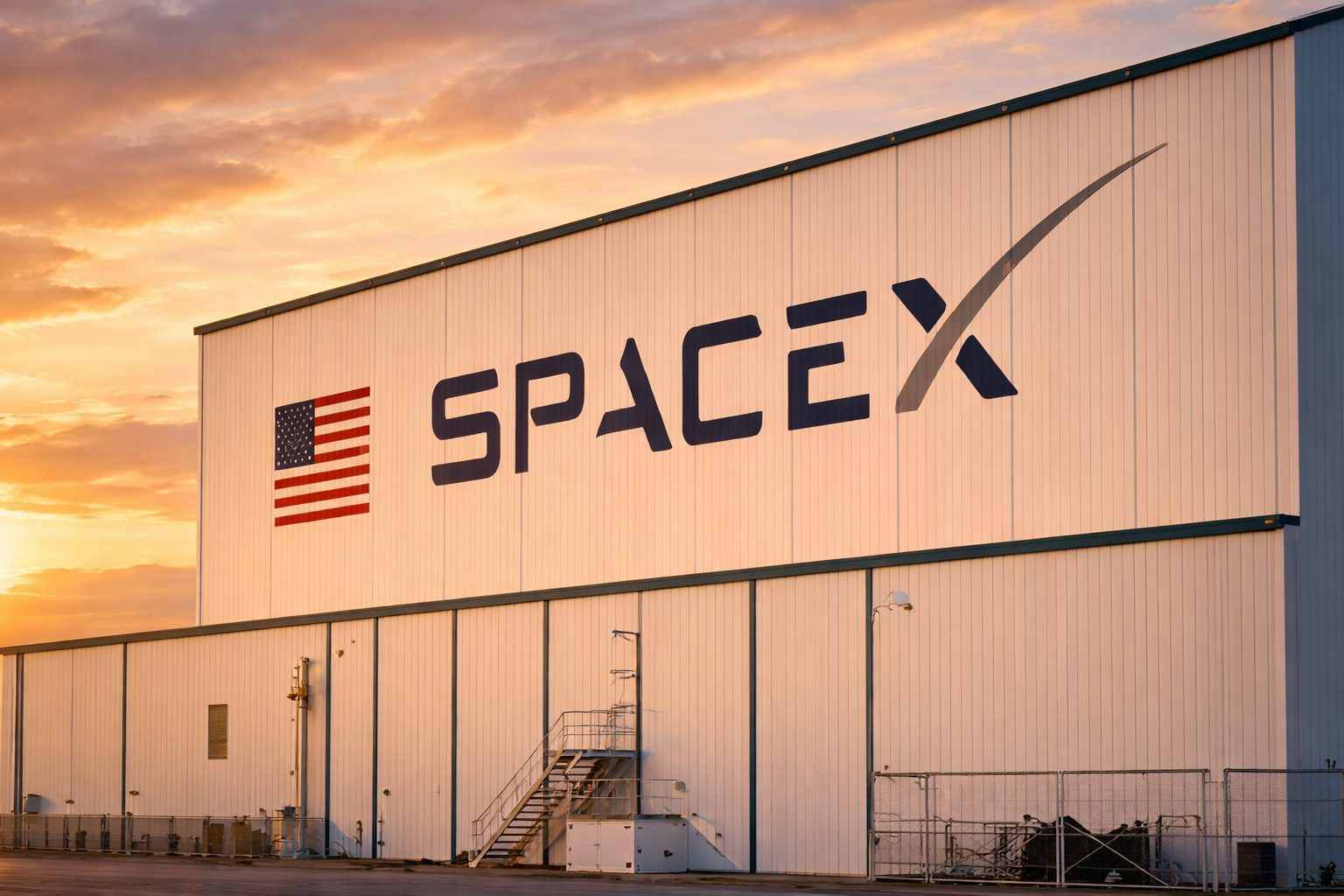

UPDATE April 15, 2026, 10:00 UTC – Amazon’s $11.6 billion acquisition of Globalstar has intensified competition with SpaceX just as its long-anticipated IPO approaches, highlighting the strategic value of satellite spectrum and direct-to-device connectivity. The deal strengthens Amazon’s push into satellite broadband and mobile services but also underscores how far it still trails SpaceX’s Starlink network in scale and launch capacity. Analysts say the move raises the stakes for SpaceX’s potential $1.5–$2 trillion debut, as investors reassess the size and competitiveness of the space internet market.
NEW YORK, April 15, 2026, 05:11 EDT
Amazon’s $11.57 billion buyout of Globalstar is drawing sharper scrutiny to SpaceX’s upcoming market debut, with Elon Musk’s firm still pushing for a $1.75 trillion valuation. The move hands Amazon new direct-to-device, or D2D, satellite capabilities—phones that talk to satellites, no ground towers needed—just as SpaceX edges closer to what may become the largest IPO ever.
Timing is key here. SpaceX isn’t just another rocket manufacturer on the block. Bankers and investors are sizing up whether the company’s grip on Starlink, its lead in launches, and those xAI data center plans warrant tech-sector valuations—a call that could ripple out to influence how other major private listings are treated later this year.
Sources told Reuters that SpaceX is lining up its IPO roadshow for the week of June 8, following an analyst day scheduled for April 21 and a June 11 event targeting roughly 1,500 retail investors. CFO Bret Johnsen told bankers that retail participation would play a “critical part” in the offering. Reuters previously reported that Musk is weighing an allocation of up to 30% of shares for individual investors — a notable jump from the typical 5% to 10% seen in most IPOs. Reuters
Starlink is basically the core of the bull thesis. According to Reuters, the satellite internet arm pulls in somewhere between 50% and 80% of SpaceX’s total revenue, has over 9 million subscribers, and is powered by a constellation of more than 9,500 satellites. Shay Boloor at Futurum Equities didn’t mince words to Reuters: “Starlink is the only reason” that $1.75 trillion valuation comes into play. Reuters
This thinking has some investors lining up SpaceX with Palantir rather than Boeing, seeing it as an infrastructure platform—one they expect to keep expanding for years, not just another aerospace firm. Reuters noted SpaceX, at a $1.75 trillion valuation, would fetch around 110 times its projected 2025 revenue. NYU’s Aswath Damodaran called the price “messy,” citing the fact that nobody else can launch satellites at the scale or price SpaceX can. Buyers are tacking on what PitchBook’s Franco Granda calls a “platform premium.” Reuters
SpaceX is broadening its focus beyond just rockets. According to Reuters, analysts have received invitations to a live session on April 21, along with the option to check out xAI’s Macrohard data center site in Memphis on April 23. The Information mentioned that several prominent Wall Street fund managers are also planning to visit SpaceX and xAI facilities, with trips scheduled for both south Texas and Memphis. Reuters added that SpaceX is now installing gear at a Texas chip-packaging facility as it aims to internalize some Starlink radio-frequency chip production before the year wraps up.
The numbers start to sting once the merger gets factored in. According to The Information, and picked up by Reuters, SpaceX logged a loss approaching $5 billion on 2025 revenue topping $18.5 billion—a total that folds in xAI after the February deal. Reuters wasn’t able to independently confirm those figures and previously cited SpaceX with operating profit around $8 billion on $15 billion to $16 billion revenue for 2025, before xAI entered the mix.
More uncertainty comes from the revolving door at the top. Reuters flagged that Anthony Armstrong, who took on the CFO role at xAI last October, exited this month—just one of several key executives leaving. For potential investors sizing up not just launch services but the bigger Musk platform, that kind of turnover stands out.
Getting in before the listing isn’t straightforward either. According to Reuters, plenty of pre-IPO investors go through special-purpose vehicles—these pooled setups secure rights to shares, not actual stock, which can pile on extra fees and obscure who really owns what. Jay Ritter, an IPO researcher at the University of Florida, cautioned that paying too much and dealing with stacked fees can chew into returns before trading even starts.
Amazon’s partnership with Globalstar highlights why bankers working with SpaceX are confident the company can stay on the front foot—competitors have to spend big to even come close to Starlink’s position. Armand Musey at Summit Ridge Group pointed out the deal lets Amazon gain ground in D2D spectrum. Still, Bond University’s Gregory Radisic described the main gap as “structural, not just numerical,” with Amazon’s pace of launches still trailing. SpaceX’s argument faces its next major test on April 21, as analysts gather to hear directly from the company. Reuters
Related articles: NASDAQ:AMZN


![Australia Stock Market Today 26/08/2026 [UPDATE: 12:44 AEST] [Hot Core Inflation Tests ASX Advance as Hike Odds Rise]](https://ts2.tech/wp-content/uploads/2026/08/AU-market-dashboard-2026-08-26-1239-480x384.jpg "Australia Stock Market Today 26/08/2026 [UPDATE: 12:44 AEST] [Hot Core Inflation Tests ASX Advance as Hike Odds Rise]")