CAPE CANAVERAL, Fla. — SpaceX opened Monday with another late-night-to-early-morning Starlink push, lofting 29 internet satellites into low Earth orbit from Florida’s Space Coast just hours after a separate Starlink mission out of California marked a major milestone in booster reusability.
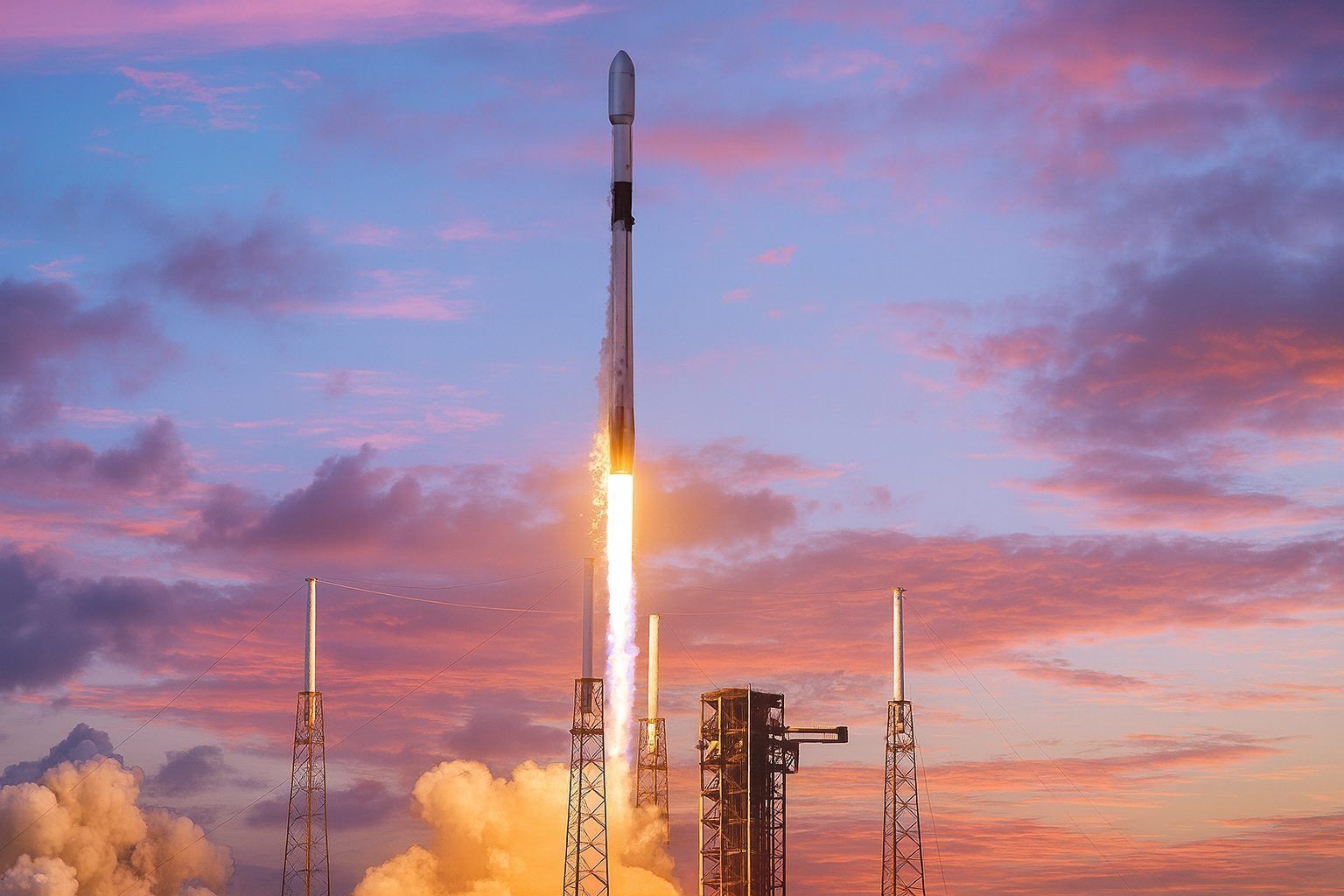
At 12:25 a.m. EST (0525 GMT) on Dec. 15, a Falcon 9 rocket rose from Space Launch Complex 40 (SLC-40) at Cape Canaveral Space Force Station, threading a narrow weather needle after forecasts warned of strong winds and cloud-rule constraints. The first stage returned to the Atlantic for a droneship landing, keeping SpaceX’s rapid-fire launch cadence intact as the company closes out a record-setting year for its workhorse rocket.
The Florida mission followed a Starlink launch from Vandenberg Space Force Base, California, where SpaceX notched its 550th successful Falcon booster landing — a headline-grabbing reminder of how routine rocket recovery has become for the company nearly a decade after its first historic touchdown.
Starlink 6-82 launch recap: 29 satellites lifted off from Florida at 12:25 a.m.
SpaceX’s Florida flight — Starlink Group 6-82 — delivered 29 Starlink satellites toward orbit from Cape Canaveral just after midnight local time. The mission launched amid concerns about low-level winds and cumulus cloud rules, with forecasters earlier giving only a 30% chance of favorable weather during the window.
Once airborne, Falcon 9 reached space in roughly 8 minutes and 40 seconds, after which the upper stage was set to begin the sequence to deploy the Starlink spacecraft about one hour into the mission following a coast phase and a second engine burn.
Starlink 6-82 at a glance
- Liftoff: 12:25 a.m. EST (0525 GMT), Monday, Dec. 15, 2025
- Launch site: SLC-40, Cape Canaveral Space Force Station, Florida
- Payload: 29 Starlink satellites (Group 6-82)
- Booster:B1092, flying for the 9th time
- Landing: Droneship “A Shortfall of Gravitas” in the Atlantic Ocean Space+1
SpaceX successfully recovered the first stage on the droneship — a routine-sounding line that still captures the engineering trick at the heart of Falcon 9: separation, boostback maneuvers, reentry burns, and a precision landing on a moving platform downrange.
The day-before milestone: Vandenberg Starlink mission delivered SpaceX’s 550th booster landing
Just one day earlier (or, depending on time zone, just hours before Florida’s launch), SpaceX flew Starlink Group 15-12 from Space Launch Complex 4 East at Vandenberg Space Force Base in California. The mission lifted off at 12:49 a.m. EST (0549 GMT) on Dec. 14 — which was 9:49 p.m. PST on Dec. 13 at the launch site — carrying 27 Starlink satellites.
That flight mattered for more than just the satellites it delivered: it culminated in SpaceX’s 550th successful Falcon booster landing, a milestone that Space.com noted comes almost 10 years after the company’s first recovered booster in late 2015.
Starlink 15-12 at a glance
- Liftoff: 12:49 a.m. EST (0549 GMT) Sunday, Dec. 14, 2025 / 9:49 p.m. PST Saturday, Dec. 13
- Launch site: SLC-4E, Vandenberg Space Force Base, California
- Payload: 27 Starlink satellites (Group 15-12)
- Booster:B1093, flying for the 9th time
- Landing: Droneship “Of Course I Still Love You” in the Pacific Ocean Space+1
Spaceflight Now reported the landing on “Of Course I Still Love You” was the 170th for that particular droneship and the 451st droneship landing for SpaceX — numbers that underline just how far recovery operations have scaled from “experimental” to “operational baseline.” Spaceflight Now
Why Dec. 15 matters: back-to-back Starlink launches show SpaceX’s end-of-year pace
The Dec. 15 Florida mission wasn’t just another Starlink flight — it was part of a tight sequence that highlights SpaceX’s ability to run launch pads, boosters, ships, and crews as an integrated system.
Space.com described the Cape Canaveral flight as SpaceX’s 163rd Falcon 9 launch of 2025, coming right after the California Starlink mission the day before.
For Starlink itself, each batch is another incremental expansion of a network that has grown into the dominant broadband constellation in orbit. After the Vandenberg deployment, Space.com put Starlink at more than 9,300 active satellites, with more than 10,000 launched since 2019.
That scale is central to how Starlink works in practice: more satellites means denser coverage, more available capacity per region, and more resilience as traffic demand rises — especially as Starlink expands beyond residential service into mobility markets like aviation and maritime connectivity.
What’s next: another Florida Starlink mission is now NET Dec. 16 after weather concerns
Even as Falcon 9 flew successfully early Monday, SpaceX’s next Starlink attempt from Florida is dealing with the same constraint that shaped the weekend’s timing: weather.
Spaceflight Now’s launch schedule lists Starlink 6-99 as NET (no earlier than) Tuesday, Dec. 16, with a window opening at 7:45 a.m. EST (1245 UTC) from Launch Complex 39A at Kennedy Space Center.
The Kennedy Space Center Visitor Complex also lists the mission as NET Tuesday, Dec. 16 at 7:45 a.m., and notes an important detail for would-be spectators: the launch window begins before the visitor complex opens, meaning official on-site viewing options depend on whether the attempt slips later into operating hours.
Spaceflight Now previously reported the mission had been put on hold amid concerns about liftoff winds and recovery conditions, and the updated schedule reflects the ongoing push-pull between launch cadence and Florida’s winter fronts.
Starlink 6-99 (next up from Florida)
- Status: NET Dec. 16 (delayed)
- Launch site: LC-39A, Kennedy Space Center, Florida
- Payload: 29 Starlink V2 Mini satellites
- Planned booster:B1094 (6th flight)
- Planned landing: Droneship “Just Read the Instructions” in the Atlantic Spaceflight Now+1
The bigger picture: reusable boosters + offshore landings keep Starlink launches on a metronome
To casual viewers, Starlink launches can blur together — another Falcon 9, another batch of satellites, another booster landing at sea. But the consistency is the story.
Both of the boosters featured in the Dec. 14–15 sequence — B1093 (California) and B1092 (Florida) — flew their ninth missions. That’s not a special-case demonstration; it’s routine operations.
And droneship recoveries remain the quiet enabler. Instead of requiring a return-to-launch-site landing (which imposes performance penalties and limits orbit options), SpaceX positions its droneships downrange — “A Shortfall of Gravitas” in the Atlantic for Florida missions and “Of Course I Still Love You” in the Pacific for Vandenberg flights — allowing Falcon 9 to push more mass to orbit while still bringing the booster back for refurbishment and reuse. Space+1
The milestone numbers — 550 successful booster landings — aren’t just a bragging-rights counter. They represent accumulated proof that recovery is reliable enough to build a business model around frequent launches, fast turnaround, and steady Starlink deployment.
As of Dec. 15, 2025, the takeaway is clear: SpaceX is keeping Starlink expansion on schedule even as weather squeezes Florida launch windows. A successful overnight flight from Cape Canaveral, paired with a milestone-making Vandenberg recovery the day before, underscores how the company’s two-coast launch system is designed for exactly this kind of high-tempo finish to the year.