December 5, 2025
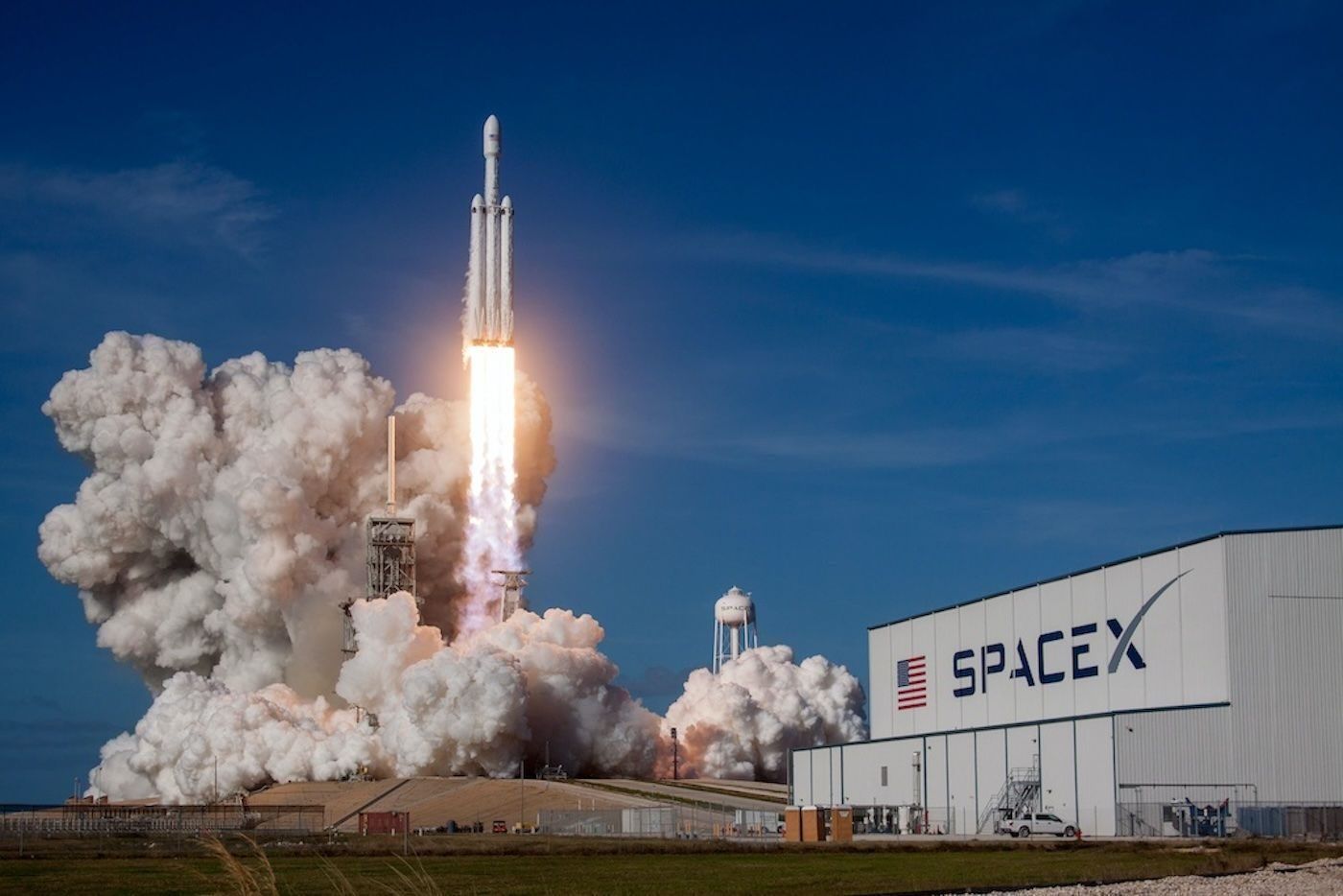
Elon Musk’s SpaceX is reportedly preparing another insider share sale that would value the rocket and satellite company at roughly $800 billion, a move that would more than double its last reported valuation and likely restore its status as the world’s most valuable private company.
According to multiple reports citing people familiar with the talks, SpaceX Chief Financial Officer Bret Johnsen has informed investors in recent days that the company plans a new secondary share sale—a tender offer in which existing shareholders, such as employees and early backers, sell stock to outside investors. SpaceX itself has not publicly commented.
If completed at the mooted price, the deal would mark a dramatic jump from SpaceX’s roughly $400 billion valuation in a similar insider sale earlier this year and would put the company ahead of OpenAI, which was valued at about $500 billion in an employee share sale in October.
What This New SpaceX Share Sale Actually Is
Crucially, the proposed transaction is not a traditional venture funding round in which SpaceX issues new stock to raise fresh capital. Instead, it is described as a secondary share sale (also called a tender offer), where outside investors buy existing shares from insiders.
Tender offers have become a hallmark of SpaceX’s capital strategy. Over the last several years, the company has repeatedly used these insider sales to:
- Give employees and early investors a way to cash out without an initial public offering (IPO).
- Refresh the company’s implied valuation based on private-market demand.
- Avoid the regulatory scrutiny and quarterly reporting that come with being public.
In a 2024 tender-offer cycle, Elon Musk emphasized that SpaceX had “no need for additional capital” and was even buying back shares, underscoring that these deals are primarily about liquidity and price discovery, not plugging a funding gap.Reuters
This latest deal appears to follow the same playbook. Reports so far suggest:
- Counterparties: Primarily existing institutional investors and select new backers.
- Use of proceeds: Cash goes to selling shareholders, not to SpaceX’s balance sheet.
- Status: Discussions are ongoing; terms and final valuation could still change before a formal tender launch.
From $210 Billion to a Potential $800 Billion: SpaceX’s Valuation Lift-Off
Even by Silicon Valley standards, SpaceX’s valuation trajectory over the past two years has been extraordinary. Private-market deals and tender offers reported since 2023 show a steep climb:
- Mid‑2024: An internal tender reportedly valued SpaceX at around $210 billion at a share price near $112.
- Late 2024: Media reports described discussions for a share sale at roughly $255 billion.
- December 2024: A large tender offer at $185 per share implied a valuation of about $350 billion, at the time making SpaceX the world’s most valuable startup.
- July 2025: Another insider sale at roughly $212 per share pushed the valuation to around $400 billion.
Now, just a few months later, SpaceX is said to be circling an $800 billion figure—essentially doubling its paper value again.
To put that into perspective, Elon Musk has projected about $15.5 billion in revenue for 2025. An $800 billion valuation implies a revenue multiple north of 50×, a level more commonly associated with hyper‑growth software giants at the peak of a bull market than with an aerospace and defense contractor with heavy capital needs.
Why Investors Are Willing to Pay Up for SpaceX
Despite the eye-watering multiple, there are several reasons investors remain eager to buy SpaceX stock in private markets.
1. Starlink: A Satellite Internet Cash Engine
The single biggest driver of SpaceX’s valuation is Starlink, its global satellite internet business.
Analyst and industry estimates suggest that:
- Starlink generated over $8 billion in revenue in 2024.
- It could reach $11–12 billion in revenue in 2025.
- The service now counts millions of users worldwide, with some estimates in the 5–6 million range across more than 100 countries.
Starlink’s structural advantages—global coverage, first‑mover scale, and embedded use in defense and maritime markets—lead some investors to treat it almost as a standalone Big Tech platform nested inside SpaceX. Long‑term bulls see:
- A recurring‑revenue telecom business with strong network effects.
- Additional upside from premium enterprise, aviation, and defense packages.
- Potential spin‑off or IPO value if Starlink is ever separated from SpaceX.
2. Dominance in Launch Services
On the launch side, SpaceX continues to rewrite industry record books:
- The company conducted 134 orbital Falcon launches in 2024 and is targeting well over 150–170 launches in 2025, according to public statements and industry tracking.
- Reusable Falcon 9 and Falcon Heavy rockets have driven launch costs down and allowed SpaceX to capture the majority of the commercial launch market.
This cadence does more than just generate revenue; it reinforces SpaceX’s reputation as the default provider for both commercial and government payloads, including sensitive national security missions.
3. Multi‑Billion‑Dollar Government Contracts
SpaceX’s pipeline of government work adds another layer of support to the bullish thesis:
- NASA’s Artemis program awarded SpaceX a multi‑billion‑dollar contract—now valued around $4.4 billion—for a Starship‑based lunar lander, although schedule concerns have prompted the agency to reopen parts of the competition.
- The U.S. Space Force and Pentagon have awarded SpaceX launch contracts worth several billion dollars, including a share of up to $13.5 billion in National Security Space Launch missions through 2029, plus separate contracts of around $733 million for additional launches.
For private investors, this combination of recurring Starlink income and long‑dated government contracts paints SpaceX as a rare blend of infrastructure asset, telecom operator, and defense prime contractor.
Beating OpenAI: The New Peak of Private Valuations
Until recently, OpenAI held the title of the world’s most valuable private company. In October, it completed a $6.6 billion secondary share sale at a $500 billion valuation, giving employees and early shareholders the chance to cash out and pushing its paper worth above SpaceX’s last recorded value.
Now, if SpaceX’s $800 billion tender offer is fully subscribed at the indicated price, it would reclaim that crown:
- Investing.com notes that the proposed valuation would “more than double” SpaceX’s previous $400 billion mark and “overtake OpenAI” in the private‑company league tables.Investing.com UK
- Bloomberg and other outlets similarly frame the deal as restoring SpaceX’s status as the world’s most valuable startup.
The rivalry is more symbolic than operational—SpaceX and OpenAI operate in very different industries—but it highlights how AI and space have become the two marquee themes commanding mega‑valuations in private markets.
Other high‑profile AI firms, such as Anthropic, are reportedly being valued in the low‑hundreds of billions and already weighing IPO options, underscoring how concentrated private‑market capital has become at the very top end of the tech stack.
Risks Behind a Stratospheric Valuation
An $800 billion sticker price doesn’t come without caveats. Even enthusiastic investors acknowledge several key risks.
1. Starship Delays and Execution Risk
Starship, SpaceX’s fully reusable super‑heavy rocket, is central to the company’s long‑term plans: launching larger batches of Starlink satellites, supporting Artemis moon landings, and ultimately attempting Mars missions.
But Starship’s development has been bumpy:
- Multiple integrated test flights in 2024 and 2025 ended in partial failures or vehicle loss during re‑entry.
- NASA has openly expressed concern about delays, to the point of reopening competition for parts of the Artemis lunar lander contract.
If Starship slips significantly on schedule—or runs into cost overruns—that could weigh on both future revenue and investor confidence in the most ambitious parts of the SpaceX story.
2. Regulatory and Geopolitical Exposure
SpaceX sits at the intersection of telecom, defense, and critical infrastructure, which exposes it to:
- Export controls and national security reviews around satellite services.
- Heightened scrutiny of Starlink’s role in conflict zones and military operations.
- Dependency on long‑term U.S. government policy and budgets.
Musk’s other ventures—including social platform X and AI company xAI—also create reputational and political noise that, while not directly tied to SpaceX’s operations, can influence how regulators and governments view his companies as a group.
3. Private-Market Illiquidity and Pricing Power
Finally, it’s important to remember that private valuations are not the same as public market caps:
- Tender offers are typically limited in size and buyer pool, which means a relatively small amount of capital can set a very high headline price.
- There is no continuous market to test that valuation against broader investor sentiment.
- If growth or profitability disappoints, future tenders could clear at lower prices, effectively “marking down” existing shareholders.
For employees or small investors getting access via secondary platforms, these are non‑trivial risks that sit behind the big, round valuation numbers.
What This Means for a Potential SpaceX IPO
Does an $800 billion private valuation bring SpaceX closer to going public—or push an IPO even further away?
So far, the evidence points to “stay private, use tenders”:
- Reporting and company statements over the past few years emphasize that SpaceX has regularly run tender offersroughly every six to twelve months to provide employee liquidity, while signaling no immediate IPO timetable.
- For Starlink specifically, Musk has previously suggested that an IPO might be several years away and likely contingent on the business reaching stable, predictable cash flow.
An $800 billion valuation doesn’t resolve that tension. On one hand, it sets an eye‑popping reference price that could make a future IPO one of the largest in history. On the other, it raises the bar: public‑market investors would need to buy into that level—or something close to it—for existing shareholders to avoid a painful down‑round.
In the meantime, tender offers let SpaceX:
- Keep tight control over who owns its stock.
- Limit disclosure about financials and operations.
- Continue investing heavily in capital-intensive projects like Starship while avoiding the quarterly earnings treadmill.
The Bottom Line
SpaceX’s reported plan to launch a new secondary share sale at an $800 billion valuation is a watershed moment for private markets. It reflects:
- Confidence in Starlink’s rapidly scaling revenue.
- SpaceX’s dominance in launch services and its growing portfolio of government contracts.
- Investor willingness to pay a “mega‑tech” multiple for a company that straddles space infrastructure, defense, and global connectivity.
At the same time, the move amplifies questions about whether private valuations at this altitude can be sustained, especially with Starship still in development and public markets showing more selectivity on growth-at-any-price stories.
For now, though, one thing is clear: if the deal goes through at the rumored price, SpaceX will once again sit atop the global startup leaderboard—comfortably ahead of OpenAI and the rest of the AI and space economy pack.