Browse Tag

Earth

NASA Confirms Earth’s “Secret Second Moon” – Tiny Asteroid 2025 PN7 Will Orbit with Us Until 2083

NASA Confirms Earth’s “Secret Second Moon” – Tiny Asteroid 2025 PN7 Will Orbit with Us Until 2083

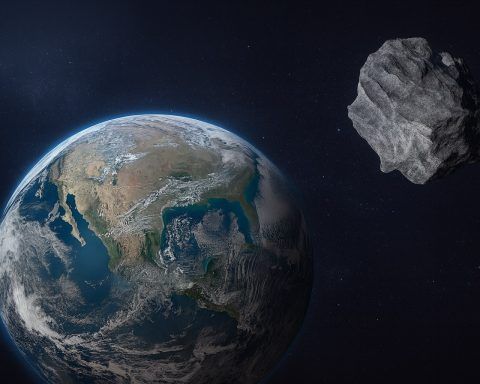
NASA Announces New “Quasi-Moon” Discovery On Oct 22, 2025, space agencies worldwide celebrated the announcement that Earth has a new celestial companion. A team from the University of Hawaii’s Pan-STARRS survey discovered a tiny asteroid – designated 2025 PN7 – on Aug. 2, 2025, and subsequent orbit analysis showed it has been silently trailing Earth for roughly 60 years chron.com. NASA confirmed in a press report that this 62-foot-wide rock is Earth’s newest “quasi-moon,” meaning it is not a bound satellite but a co-orbital asteroid ts2.tech hindustantimes.com. As one global space news outlet noted, astronomers “confirmed a tiny ‘quasi-moon’ –
22 October 2025
SHOCKING: Asteroid Discovered Just Days Ago Will Buzz Earth TODAY (Closer Than the Moon) – What Experts and Investors Are Saying

SHOCKING: Asteroid Discovered Just Days Ago Will Buzz Earth TODAY (Closer Than the Moon) – What Experts and Investors Are Saying

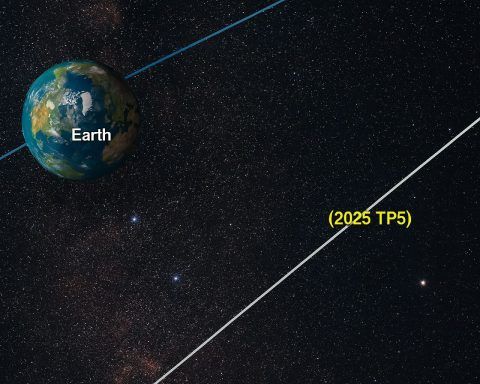
Close Call with Asteroid 2025 TP5 Astronomers have identified Asteroid 2025 TP5 as a very close but safe Earth flyby. According to NASA’s Jet Propulsion Lab data, 2025 TP5 will swoop by at 4:09 p.m. EDT (2009 UTC) on Oct. 15, 2025, at ~60,328 miles (97,089 km) from Earth’s center space.com. By comparison, the Moon orbits ~238,855 miles away. After the Earth flyby, JPL reports that 2025 TP5 will come as close as 74,616 miles to the Moon on Oct. 16 space.com. At an estimated 54 ft (16 m) diameter space.com, it is a medium-sized near-Earth asteroid. Notably, 2025 TP5 was undetected until Oct. 13,
16 October 2025
Skyscraper-Size Asteroid Once Feared to Hit Earth Zooms Past This Week – How to Watch Live

Skyscraper-Size Asteroid Once Feared to Hit Earth Zooms Past This Week – How to Watch Live

An asteroid the size of a skyscraper, once briefly feared to pose an impact risk decades from now, is about to make a close (but safe) flyby of Earth on Thursday, September 18, 2025. This near-Earth asteroid, officially designated 2025 FA22, will whiz by at ~24,000 mph in the early hours of Thursday, coming within about 520,000 miles (835,000 km) of our planet – roughly 2.2 times the distance of the Moon livescience.com. Discovered only in March 2025, the giant space rock made headlines when initial calculations suggested a slim chance of an Earth impact in the year 2089, briefly
16 September 2025
Watch Earth Live from Space – Your Ultimate Guide to Real-Time Satellite Imagery

Watch Earth Live from Space – Your Ultimate Guide to Real-Time Satellite Imagery

Near-real-time satellite imagery is common: Landsat 8 images can appear within seconds of downlink, NASA Worldview layers update within about 3 hours, and geostationary weather satellites refresh every 5–15 minutes. The ISS HD Earth Viewing Experiment streams live video of Earth from about 400 km up with roughly 1-second latency, and the view shifts as the station orbits about 16 times per day. NOAA’s Earth in Real-Time weather map updates GOES-East and GOES-West every 5 minutes for cloud imagery, with full-hemisphere views about every 15 minutes and resolutions around 0.5–2 km. NASA Worldview offers more than 1,000 imagery layers updated
6 August 2025
Umbrella in Orbit: ESA’s BIOMASS Satellite Lifts Earth’s Green Veil, Revealing Hidden Carbon Stores and Jaw‑Dropping First Images

Umbrella in Orbit: ESA’s BIOMASS Satellite Lifts Earth’s Green Veil, Revealing Hidden Carbon Stores and Jaw‑Dropping First Images

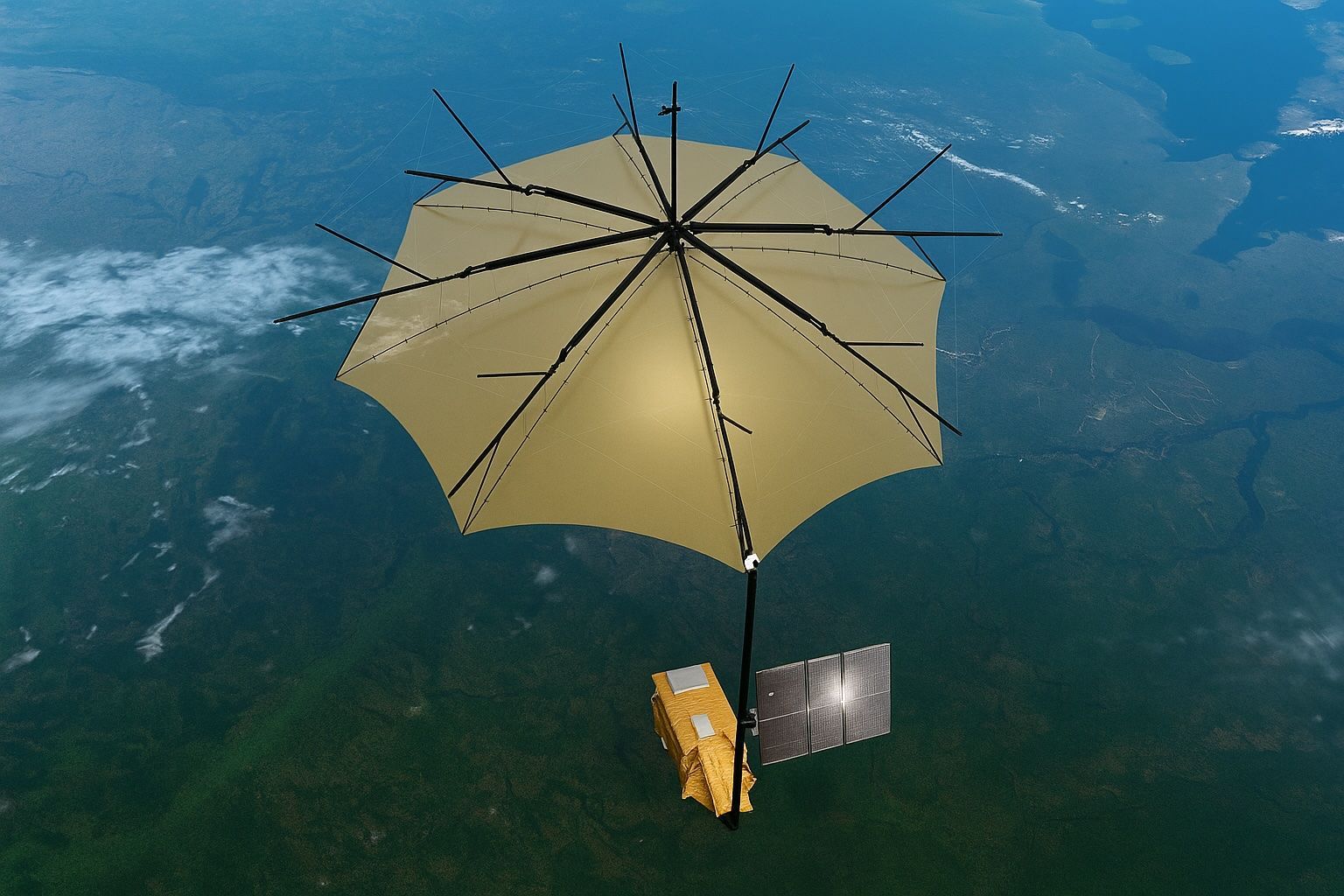
BIOMASS uses a fully polarimetric P-band SAR with a 70 cm wavelength to pierce through canopies and measure woody trunks where most forest carbon is stored. The 12-meter deployable reflector, shaped like an umbrella and built by L3Harris, directs radar pulses back to the sensor. The 1.25-tonne spacecraft was launched on 29 April 2025 aboard a Vega-C rocket from Kourou into a 666 km sun-synchronous orbit (flight VV26). The gold-colored reflector unfurled in orbit on 7 May 2025, marking a key commissioning milestone. First images show colour-coded maps of the Amazon, Indonesia, and the bedrock of the Sahara. By combining
24 June 2025
Mind-Blowing: Nearly 15,000 Satellites Are Whizzing Around Earth Right Now—Find Out Why It Matters

Mind-Blowing: Nearly 15,000 Satellites Are Whizzing Around Earth Right Now—Find Out Why It Matters

As of March 2025, approximately 14,900 total satellites were in orbit, with about 11,000–12,000 active and 3,000–4,000 inactive or defunct. SpaceX’s Starlink has about 7,000–7,500 active satellites in orbit as of 2025, accounting for over 60% of all operational satellites and a goal of 42,000 total. OneWeb deployed 648 satellites with roughly 652 operational by late 2024, helping the UK become the third-largest operator with around 700 registered satellites. Amazon’s Project Kuiper plans a constellation of about 3,200 satellites, with test satellites launched in 2023–24 and large-scale deployment expected to begin in 2024. China is planning megaconstellations named Guowang or
Space-Weather Satellites: Earth’s Cosmic Early Warning System

Space-Weather Satellites: Earth’s Cosmic Early Warning System

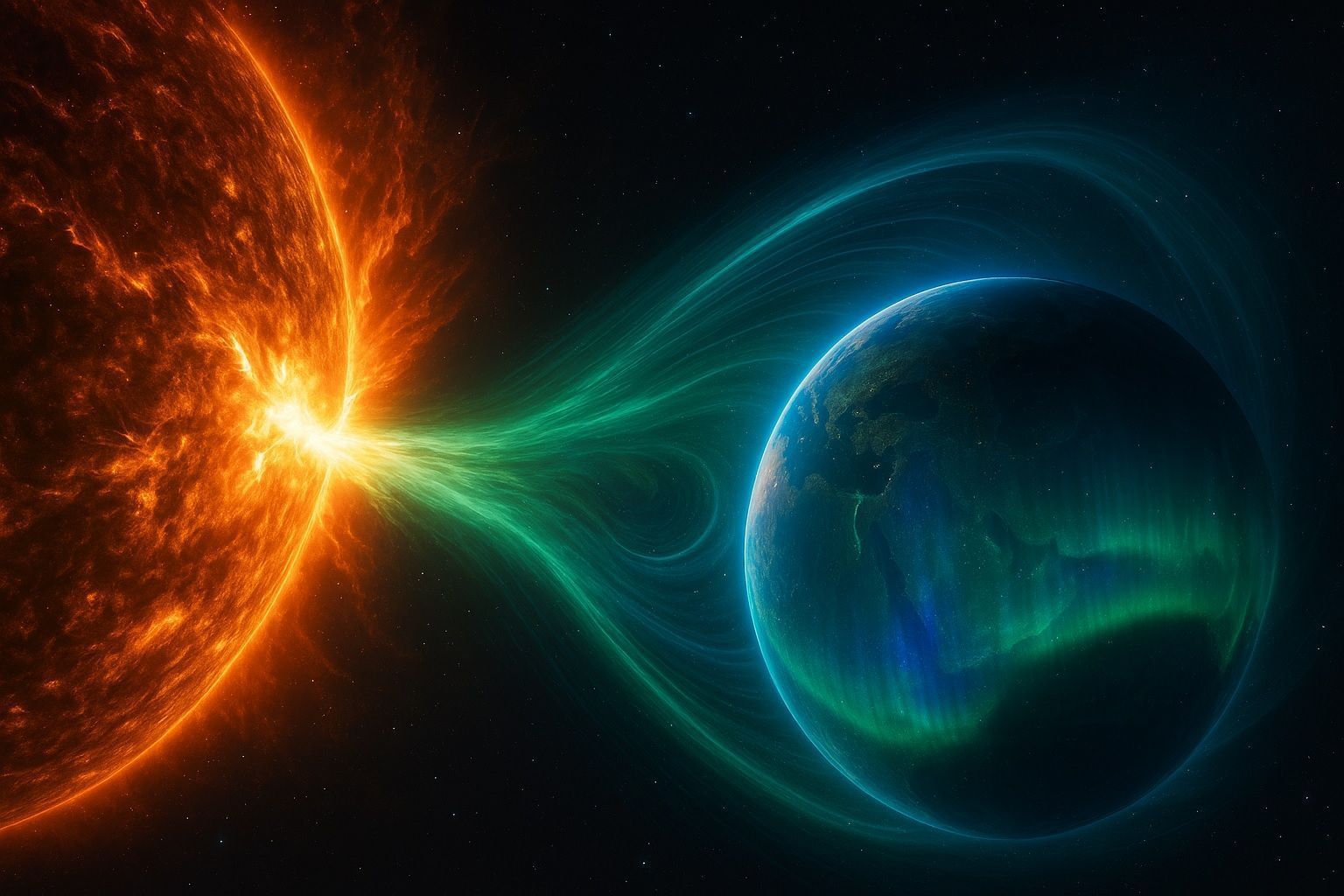
SOHO (Solar and Heliospheric Observatory), launched in 1995, became the first satellite to continuously observe the Sun from the Sun–Earth L1 point and carries the LASCO coronagraph, enabling CME tracking and the discovery of more than 5,000 comets. ACE (Advanced Composition Explorer), launched in 1997, and NOAA’s DSCOVR (Deep Space Climate Observatory), launched in 2015, sit at the Sun–Earth L1 to sample the solar wind and provide roughly 15 minutes to 60 minutes of advance warning of approaching CMEs. STEREO, launched in 2006, consists of two spacecraft, STEREO-A ahead of Earth and STEREO-B behind, providing stereoscopic views of solar activity;
8 June 2025
Go toTop