
May 3, 2026, 15:03 EDT — NORTH READING, Massachusetts
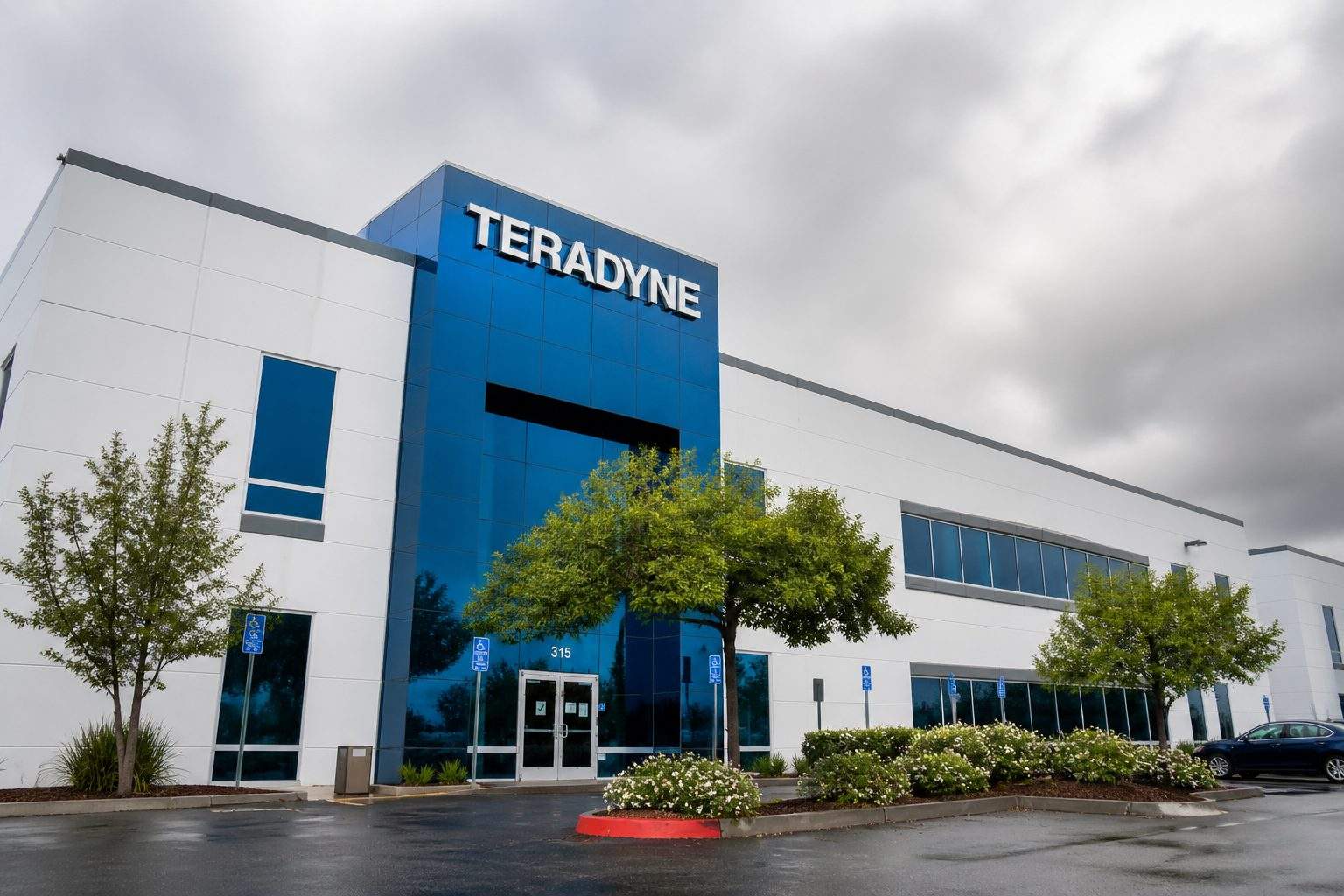
Teradyne Inc. revealed a striking jump in its latest quarter, with revenue for the first three months almost doubling as demand swelled for its chip-testing gear—key systems used for data center compute chips. The company’s Form 10-Q, posted Friday, delivers the most up-to-date details for investors tracking whether the AI-driven surge in test equipment sales has more room to run.
The problem boils down to this: Teradyne shares most recently traded at $345.42, gaining 0.55% from the previous session and putting the company’s market cap near $54.5 billion. Still, management is warning about shaky second-half visibility and uncertain order timing in those same AI-linked programs that fueled this quarter.
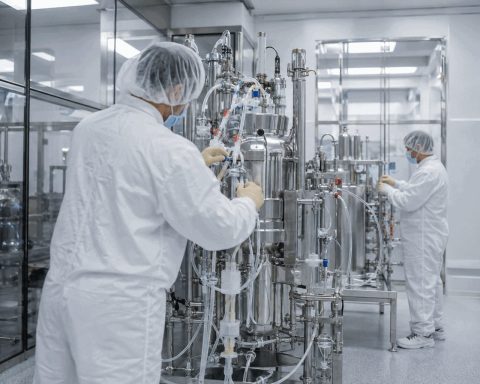
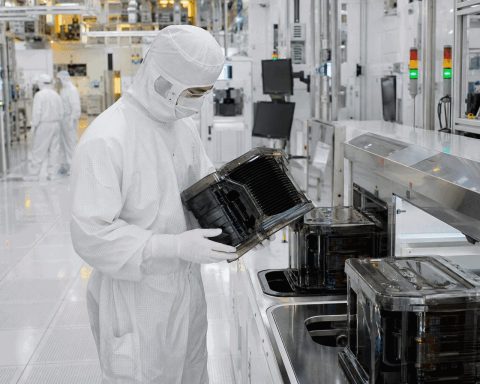
Teradyne turned in first-quarter revenue of $1.282 billion, a substantial jump from $685.7 million the prior year. The company’s main segment—Semiconductor Test—surged past the billion mark, landing at $1.11 billion. Robotics contributed $91.3 million, while Product Test reached $80.4 million, according to the filing. Semiconductor test equipment is used to verify chip functionality before installation in devices like phones, servers, or cars.
The company credited the Semiconductor Test surge to stronger compute sales linked with artificial intelligence. Taiwan’s share of total revenue climbed to 41%, compared to 28% this time last year. Korea increased as well, hitting 19%. Meanwhile, China dropped to 11%, down from 19%.
Teradyne notched “a new record high” in first-quarter results, according to Chief Executive Gregory Smith, who pointed out that about 70% of the company’s revenue was driven by AI-related demand. For the second quarter, Teradyne is targeting revenue between $1.15 billion and $1.25 billion, and expects non-GAAP earnings in the $1.86 to $2.15 per share range. Non-GAAP numbers strip out items like acquired intangible amortization and restructuring. Teradyne, Inc.
Smith told analysts that in the quarter, Teradyne landed its first multi-system production test orders for merchant GPUs. The company expects shipment, installation, and production start for those systems in the second quarter. Merchant GPUs—graphics processors widely sold into the market—sit at the heart of AI server investment.
First-quarter sales reached $1.282 billion, with non-GAAP earnings of $2.56 per share, both topping Teradyne’s own guidance, finance chief Michelle Turner said. She credited “all things AI” for the strength across the company’s three business groups. Turner also flagged that revenue concentration has intensified: two customers specifying and one buying accounted for more than 10% of revenue each. Investing.com
Margins stayed resilient. Gross profit came in at $780.9 million, with gross margin ticking up to 60.9%—an increase of 0.3 percentage point from last year, driven chiefly by stronger Semiconductor Test volume. Engineering and development expenses climbed $17.4 million to $135.6 million, as Teradyne funneled more resources into Semiconductor Test.
Teradyne’s activity in the AI data-center test space includes both acquisitions and partnerships. According to the filing, the company acquired a 75% stake in MultiLane Test Products for roughly $157.8 million and picked up TestInsight for $29 million. Teradyne put the total outlay for these two deals at $166.7 million in April.
Competition’s fierce. Teradyne counts Advantest, SPEA, and Cohu as rivals in Semiconductor Test, and for years its filings have pointed out that test-product sales are heavily concentrated—just a handful of big customers. The AI cycle could amplify those swings, since just a couple device programs are enough to move the needle on demand.
But that kind of concentration isn’t all upside. Smith pointed out that relying on a few big customers and a handful of major ASIC and commercial device projects can mean bottlenecks and what he called “lumpy growth.” Turner added that scheduling snags in AI data-center construction might move revenue between quarters or even push it across year-ends. Investing.com
Policy risks are also in play. Teradyne pointed out it faces exposure to U.S. and foreign regulations on tariffs, sanctions, embargoes, trade barriers, export controls, and tech-transfer limits, warning that government moves could hit its business. The bigger question now: Can AI orders hold up through the back half of the year, or was the first quarter’s record just a one-off? SEC

![UK Stock Market Today 28/08/2026 [UPDATE: 08:45 BST] [3i and Miners Lift FTSE Ahead of Warsh Speech]](https://ts2.tech/wp-content/uploads/2026/08/UK-market-dashboard-2026-08-28-0842-480x384.jpg "UK Stock Market Today 28/08/2026 [UPDATE: 08:45 BST] [3i and Miners Lift FTSE Ahead of Warsh Speech]")