
TeraWulf Inc. NASDAQ:WULF has become one of the market’s most closely watched “power + compute” stories—part bitcoin miner, part next-generation data center landlord for high‑performance computing (HPC) and AI workloads. On December 15, 2025, the stock is hovering around $14.33, a level that reflects just how fast sentiment can swing in this name when financing headlines, contract announcements, and capital structure changes collide. StockAnalysis
Below is what’s driving TeraWulf stock right now, what today’s most important headlines imply for the company’s 2026 outlook, and how analyst forecasts are shaping the bull-and-bear debate.
TeraWulf stock today: Why WULF remains a volatility magnet
WULF’s recent tape is a reminder that this is not a “set it and forget it” utility stock—it’s a high-beta infrastructure builder tied to two hypersensitive markets: bitcoin economics and AI data center demand.
The most recent major move: on Friday, Dec. 12, WULF closed at $14.33, after trading as high as $16.75 and as low as $14.27 during the session, with volume around 44 million shares.
That kind of intraday range isn’t “noise.” It’s the market loudly pricing uncertainty around (1) dilution mechanics, (2) leverage and funding strategy, and (3) execution risk on an aggressive buildout timeline.
Capital structure catalyst: Series A preferred stock mandatory conversion is now front and center
One of the most concrete, near-term fundamentals affecting TeraWulf Inc. stock is the company’s decision to trigger a mandatory conversion of its Series A Convertible Preferred Stock.
In a company announcement, TeraWulf said each preferred share would convert into 141.9483 shares of common stock on Dec. 9, 2025 (with settlement scheduled for Dec. 11, 2025). The trigger condition was met after the common stock traded above 130% of the $10.00 conversion price on at least five trading days during Nov. 4–Nov. 24, 2025.
A related SEC filing summary indicates the conversion equates to roughly 1.215 million new common shares.
Why this matters to WULF shareholders
This conversion is a “clean-up the chessboard” event:
- Pro: Simplifies the capital structure (preferred dividends stop after the conversion date, and investors can model the equity more cleanly).
- Con: The market often trades ahead of conversion/settlement events because participants anticipate incremental selling pressure or changes in the shareholder base—especially in a stock with heavy short interest and active options flow.
In plain English: even if the long-term story is AI infrastructure, the near-term stock can still get yanked around by mechanical flows.
Insider activity: A director’s purchase adds a signal (but not a guarantee)
Another headline in the current news cycle: a TeraWulf director bought shares, according to a market report summarizing the disclosed transaction.
Insider buys can matter because they communicate how leadership views valuation versus opportunity. But they’re not magic spells—insiders can be early, wrong, or simply expressing confidence while acknowledging risk.
Still, in a stock where the narrative is “big pivot, big funding, big execution,” the market tends to notice when insiders step in near turbulent periods.
Short interest remains elevated—fuel for squeeze risk and sharp drawdowns
TeraWulf has also been trading under the gravitational pull of high short interest, which can amplify both rallies and selloffs.
- MarketBeat data showed that as of Nov. 14, 2025, WULF had about 105.43 million shares sold short, roughly 32.27% of the public float, with about 2.3 days to cover based on average volume.
- Another dataset pegged short interest at roughly 102.13 million shares (about 34.07%) as of Nov. 28, 2025.
High short interest doesn’t automatically mean “squeeze incoming.” It does mean the stock can behave like a physics experiment where the variables are crowding + leverage + headlines.
The big thesis: TeraWulf’s shift from bitcoin mining to AI/HPC infrastructure
The reason WULF keeps showing up in Google Discover feeds is the same reason it keeps showing up on institutional screens: TeraWulf is pitching itself as a sustainable, large-scale compute infrastructure platform, not “just” a bitcoin miner.
In its Q3 2025 update, TeraWulf described the quarter as transformational, highlighting that it had begun generating recurring HPC lease revenue, signed more than $17 billion in long-term, credit-enhanced customer contracts, and completed over $5 billion in long-term financings to scale its platform.
What TeraWulf says it has built (so far)
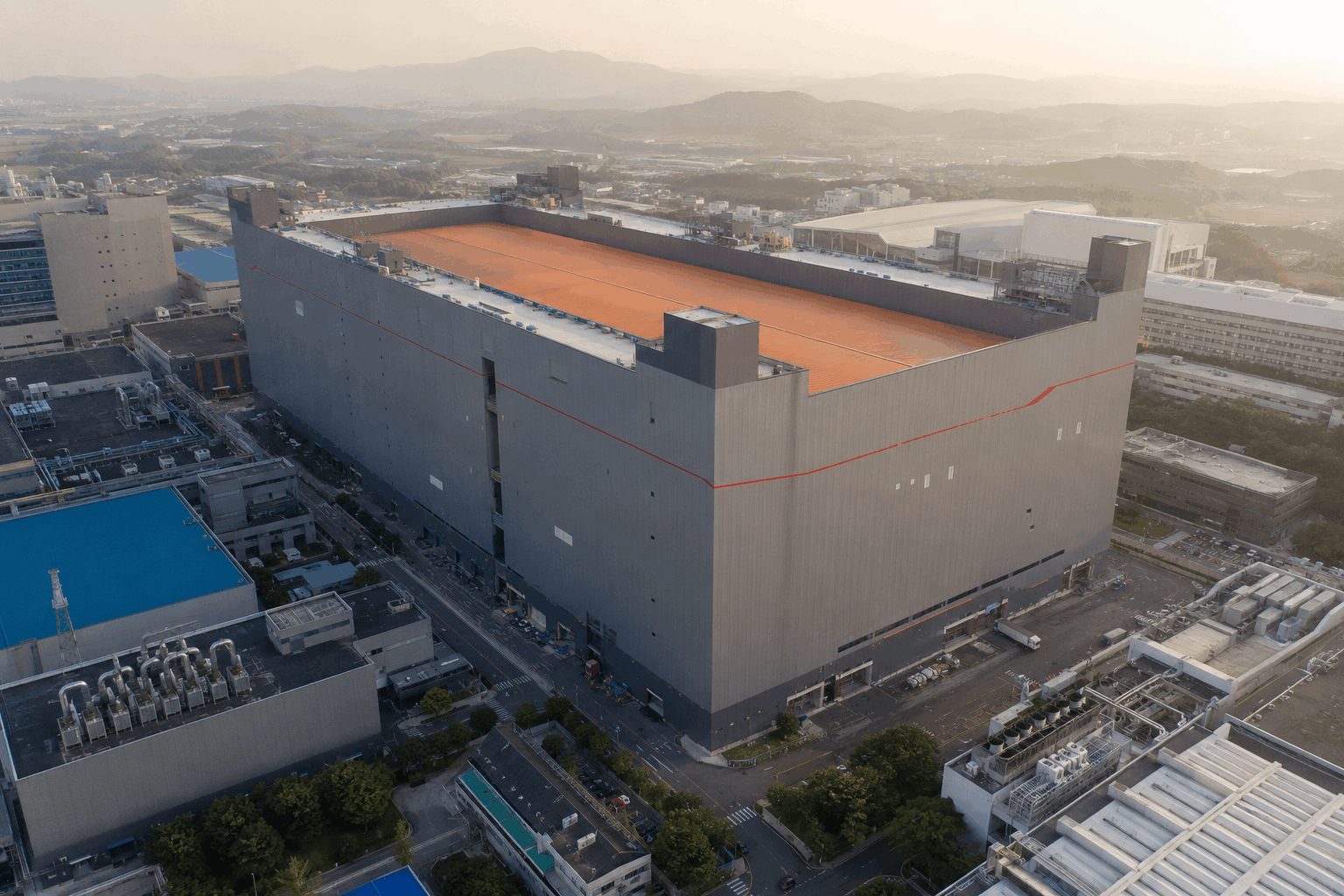
At its Lake Mariner campus in New York, TeraWulf reported (as of Sept. 30, 2025) it had energized:
- 245 MW of bitcoin mining capacity
- 22.5 MW of HPC capacity TeraWulf Inc.
The contracts investors keep circling
TeraWulf also laid out the contracted HPC picture:
- Core42 leases: planned delivery of 72.5 MW of GPU-optimized capacity, with about $1.1 billion in contracted revenue over ten years.
- Fluidstack leases (Google-backed): three ten-year leases totaling 450 MW and about $6.7 billion in contracted revenue, with delivery expected in phases through 2026 and with Google credit enhancement described as supporting durable, infrastructure-style cash flows.
This is the heart of the re-rating argument: long-dated contracted revenue streams can justify a very different valuation framework than pure bitcoin mining.
Financing and leverage: The “build it big” plan comes with real balance-sheet teeth
TeraWulf’s aggressive infrastructure buildout is being funded with equally aggressive capital markets activity—some of it explicitly tied to the AI hosting narrative.
The $3.2 billion senior secured notes (due 2030)
In October, the company announced that its subsidiary WULF Compute priced a $3.2 billion offering of 7.750% senior secured notes due 2030, priced at par, with proceeds aimed at funding Lake Mariner expansion.
A key detail that stood out to markets: the notes and guarantees were described as secured by first-priority liens on substantially all assets of WULF Compute and guarantors, plus additional security features including a designated lockbox account tied to Fluidstack and—before completion of the data center expansion—a pledge by Google LLC of warrants to purchase TeraWulf common stock.
Media coverage framed the financing as part of a broader “AI infrastructure land grab,” with Google’s support positioned as a material credit backstop mechanism in the broader arrangement. Barron’s
The $1.025 billion 0% convertible notes (due 2032)
TeraWulf also announced it closed a $1.025 billion offering of 0.00% Convertible Senior Notes due 2032, with net proceeds of about $999.7 million, which the company said it intended to use to fund a portion of the cost of construction of a data center campus in Abernathy, Texas, and for general corporate purposes.
In the pricing details for the deal (before the final upsized close), the company described an initial conversion price around $19.9375 per share (a 37.5% conversion premium to the referenced closing price at the time).
Why debt matters so much for the WULF story
The bullish interpretation: long-term, credit-enhanced leases can support infrastructure-style financing, letting TeraWulf scale faster than competitors.
The bearish interpretation: leverage is still leverage, and data center builds have a long history of “schedule slips + cost creep + refinancing risk.” TeraWulf itself notes execution, power availability, and financing conditions as key risk variables. TeraWulf Inc.+1
Local headline risk on Dec. 15: the Lansing (Cayuga) zoning fight is heating up
Today’s most time-specific headline isn’t from Wall Street—it’s from local governance.
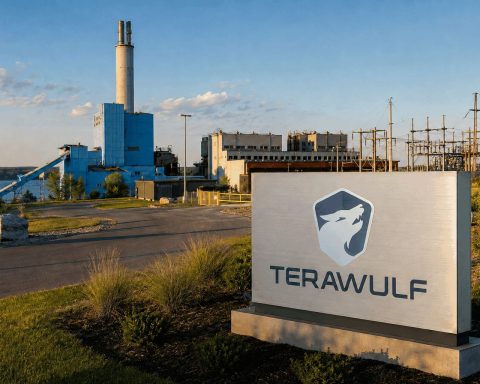
TeraWulf’s Cayuga site in Lansing, New York (the former Cayuga Power Plant / Milliken Station area) has become a flashpoint for community debate. Local reporting on Dec. 15, 2025 described rising tension ahead of a zoning-related hearing tied to the proposed AI data center project.
The Town of Lansing posted an official notice for a Zoning Board of Appeals public hearing on Tuesday, Dec. 16, 2025 at 6:30 PM, connected to the Cayuga Drive site.
Another local outlet reported that the appeals involve TeraWulf seeking zoning interpretation changes that would allow an AI data center to proceed as a permitted use.
Why Google Discover readers should care about a town meeting
Because “AI infrastructure” is not only a financial story—it’s a permitting story.
TeraWulf has already disclosed an 80-year ground lease at the Cayuga site that could unlock up to 400 MW of infrastructure capacity, with 138 MW expected to be ready for service in 2026 (and broader deployment beginning later).
But leases and renderings don’t eliminate the risk of local opposition, zoning friction, and environmental scrutiny, which can slow timelines and shift capex assumptions.
Forecasts for TeraWulf stock: Analyst price targets, ratings, and what they imply
Forecasting WULF is tricky because the company is effectively in the middle of becoming a different business. That said, Wall Street has been unusually active on the name.
Consensus view
MarketBeat’s compiled analyst data (as of early December) showed:
- Consensus rating: “Moderate Buy”
- Number of analysts: 15
- Average 12‑month price target: $18.42
- Price target range: $4.00 (low) to $24.00 (high) MarketBeat+1
Recent notable calls
- An Investing.com analyst note reported Roth/MKM raised its price target to $26 (while maintaining a Buy rating), citing an expanded power pipeline.
- Coverage around late October highlighted Oppenheimer initiating with an Outperform rating and a $20 target, emphasizing the AI pivot narrative.
These targets should be treated like what they are: scenario-weighted opinions built on assumptions about delivery schedules, financing costs, utilization, and contract economics.
Options market snapshot: implied volatility stays elevated into mid‑December
Options activity is another reason WULF frequently trends.
As of Dec. 15, 2025, one options analytics feed put WULF’s options implied volatility around 97.82%, with heavy contract volume.
Separately, Fintel listed a forward-looking open-interest put/call ratio around 0.54, which can be interpreted as relatively call‑heavy positioning (though options positioning is notoriously context-dependent).
This lines up with what shareholders already know: WULF trades like a battleground stock. Options can act as gasoline—sometimes on rallies, sometimes on selloffs.
The bull case vs. bear case for TeraWulf stock in 2026
Here’s the cleanest way to frame the debate without the usual meme-stock fog machine.
The bull case
- TeraWulf is locking in multi‑year contracted revenue for AI/HPC hosting, including Google‑enhanced credit structures.
- The company claims a pipeline and strategy targeting 250–500 MW of new contracted capacity annually, signaling an ambition to scale like an infrastructure platform.
- Financing activity (secured notes + convertible notes) extends runway to build.
The bear case
- Large builds + leverage create a narrow path: execution must stay on track, refinancing windows must remain open, and customer timelines must hold.
- Capital structure complexity isn’t gone—convertibles and warrants can still create dilution overhangs and valuation noise.
- Local permitting/zoning conflict at the Cayuga site underscores that data center expansion is also a political and regulatory story, not just an engineering story.
What to watch next for WULF stock
For readers tracking TeraWulf Inc. stock into year-end and early 2026, the likely catalysts cluster into four buckets:
- HPC delivery milestones through 2026 at Lake Mariner (and progress updates tied to customer deployments).
- Financing updates and any changes to covenants, collateral, or buildout budgets tied to the secured notes framework.
- Local approvals and permitting at Cayuga/Lansing following the Dec. 16 hearing and any subsequent votes.
- Bitcoin mining economics as a still-meaningful component of current operations (even as HPC grows).
Related articles: NASDAQ:WULF


![Australia Stock Market Today 26/08/2026 [UPDATE: 10:37 AEST] [Woolworths and Lovisa Lift ASX Before CPI]](https://ts2.tech/wp-content/uploads/2026/08/AU-market-dashboard-2026-08-26-1037-480x384.jpg "Australia Stock Market Today 26/08/2026 [UPDATE: 10:37 AEST] [Woolworths and Lovisa Lift ASX Before CPI]")