
NEW YORK, June 22, 2026, 18:01 (EDT)
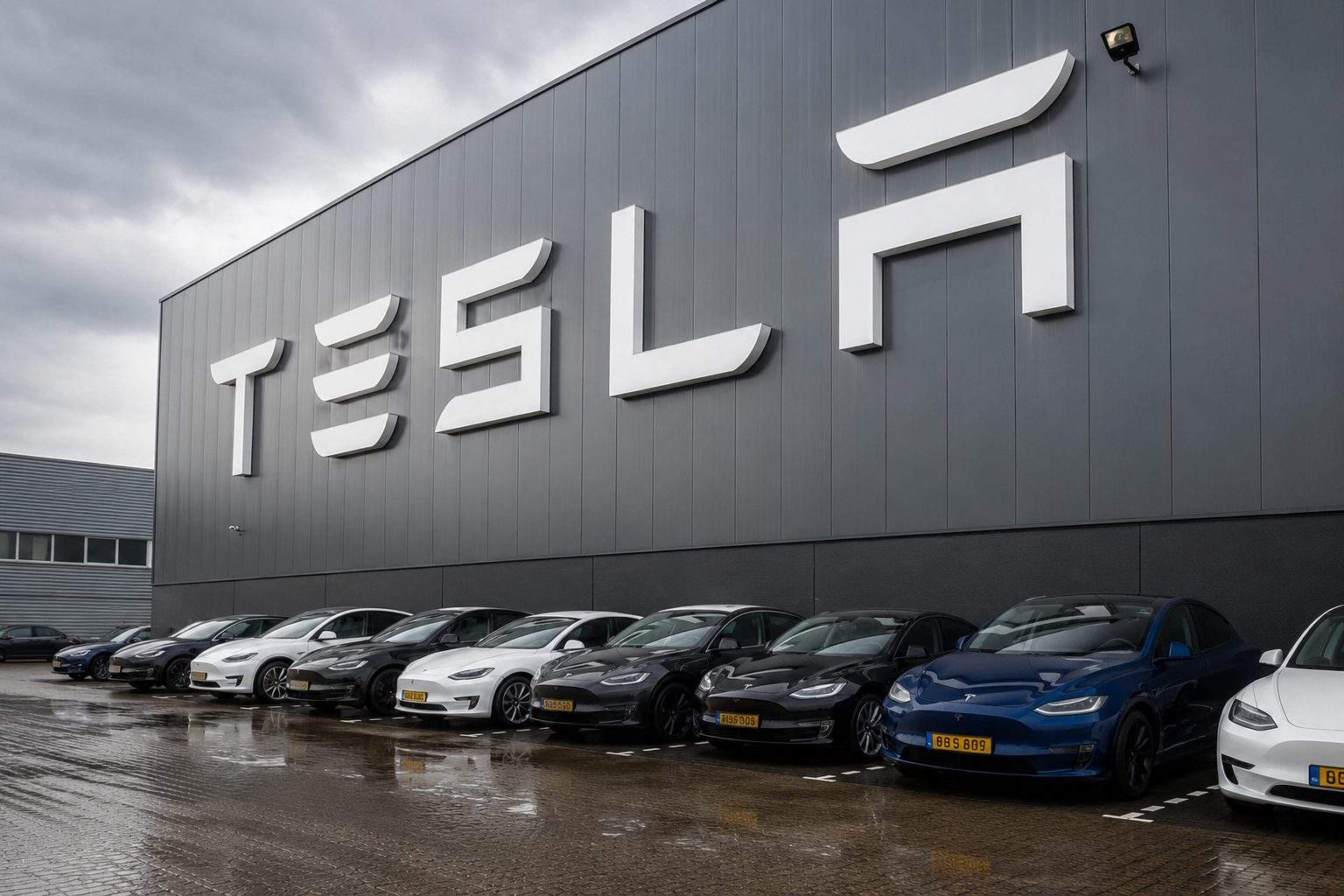
Tesla shares gained Monday while the Nasdaq slipped, as the market stuck with the story around the EV maker’s robotaxi strategy and the talk over whether Elon Musk’s companies are getting more closely linked.
Tesla finished regular trading at $405.05, up 1.14% for the day. The stock moved between $394.40 and $414.75. After the bell, shares eased back 0.19% to $404.29 by 5:40 p.m. EDT. At the same time, the Nasdaq Composite lost 1.32%, the S&P 500 dropped 0.37%, and the Dow added 0.29%.
Tesla’s stock move is key here. The shares aren’t just reacting to how many cars are selling right now. Investors have bets on future business from software, robotaxis, and robots, not just sales of the Model Y and Model 3.
Monday brought the first normal U.S. stock session since Friday’s Juneteenth holiday. Nasdaq marks June 19 as a closed date for 2026. Normal trading is 9:30 a.m. to 4 p.m. ET. After-hours runs until 8 p.m.
Jefferies lifted its Tesla price target to $375 from $350 and kept its Hold rating, sticking with a neutral view. Analyst Philippe Houchois said in the note that traditional valuation yardsticks didn’t matter here, and said he’d favor a merger with newly listed SpaceX, according to dpa-AFX.
The target is still under where Tesla finished Monday. This isn’t so much a buy signal as it is a nod that investors are trading Tesla more as an AI and space play tied to Musk right now.
Wedbush analyst Dan Ives, known as one of Tesla’s most bullish voices on Wall Street, is more direct. “We believe over the next year that Tesla and SpaceX [will] ultimately merge because I think that’s part of the broader plan, specifically when it comes to AI data and all under that Musk ecosystem associated from a control perspective,” Ives said. He added, “Anyone who’s owning SpaceX, you’re buying it for the Musk factor.” Barchart.com
SpaceX shares lost 16.4% Monday, logging their steepest drop yet. The move dragged on the Nasdaq. Reuters said SpaceX launched its first debt deal and reported about $100.8 billion in cash and equivalents as of June 19.
Tesla’s self-driving robotaxi push is still the main reason bulls give the stock a tech valuation over an auto valuation. Earlier this month Reuters said Tesla launched an unsupervised robotaxi service in Austin. City officials counted about 50 Teslas in the area on robotaxi duty. Alphabet’s Waymo, Tesla’s main competitor in this space, has more than 250 cars running similar rides in Austin.
Why it matters: It’s not just about a launch. Tesla’s profit picture could change if robotaxis reach scale and prove safe. Reuters reported that Tesla is banking on more people using its full self-driving software, which powers the planned robotaxi service, after Musk pushed the company toward AI and robotics.
The risk is real. The U.S. National Highway Traffic Safety Administration has launched a special crash investigation into a June 19 fatal Tesla Model 3 accident in Katy, Texas. The car hit a house and was reportedly using an advanced driver assistance system, which can handle some driving but doesn’t make the car autonomous. Since 2016, the agency has opened over three dozen Tesla probes involving possible use of these systems, with 20 crash deaths counted.
Broader market conditions don’t look supportive. Reuters reported investors are focused on Thursday’s Personal Consumption Expenditures data, which is the Federal Reserve’s preferred inflation reading. After a hawkish Fed sent Treasury yields up, Bill Northey, senior investment director at US Bank, said tech is “a very sentiment-driven sector” that usually trades as a group each day. Reuters
Monday’s close saw buyers shrug off a weak Nasdaq. The question now is if Tesla keeps its premium if safety probes ramp up, SpaceX swings bleed into trading, or the robotaxi plan moves slower than the market is pricing in.
Related articles: NASDAQ:TSLA