
Texas Instruments Incorporated NASDAQ:TXN ended Wednesday, December 17, 2025, lower in regular trading—but the stock ticked higher in after-hours trading as investors weighed a major U.S. manufacturing milestone alongside a broader tech-led market pullback.
As of late evening trading, TXN was quoted at $175.51 in after-hours, up about 0.58%, after closing the regular session at $174.49 (-1.73%).
Below is what happened, what’s driving the narrative tonight, and what investors should keep an eye on before the market opens Thursday, December 18.
TXN recap: A down day in a weak tape, then a modest after-hours bounce
During Wednesday’s regular session, TXN traded in a relatively wide range—roughly $173.69 to $179.64—before settling at $174.49. Volume was about 8.74 million shares.
That decline came as U.S. stocks closed sharply lower, with tech pressure returning amid renewed “AI bubble” concerns in parts of the market. Investopedia reported the Nasdaq Composite fell about 1.8%, the S&P 500 about 1.2%, and the Dow about 0.5%. Investopedia
Market data coverage also flagged that TXN’s slide marked a fourth consecutive down session and left the shares well below their 52-week high (not a new development tonight, but an important context point for momentum-focused traders).
After the closing bell, however, TXN nudged upward in extended trading—a move that can be influenced by thinner liquidity, but often reflects immediate digestion of corporate headlines.
The headline news today: TI starts production at its new 300mm fab in Sherman, Texas
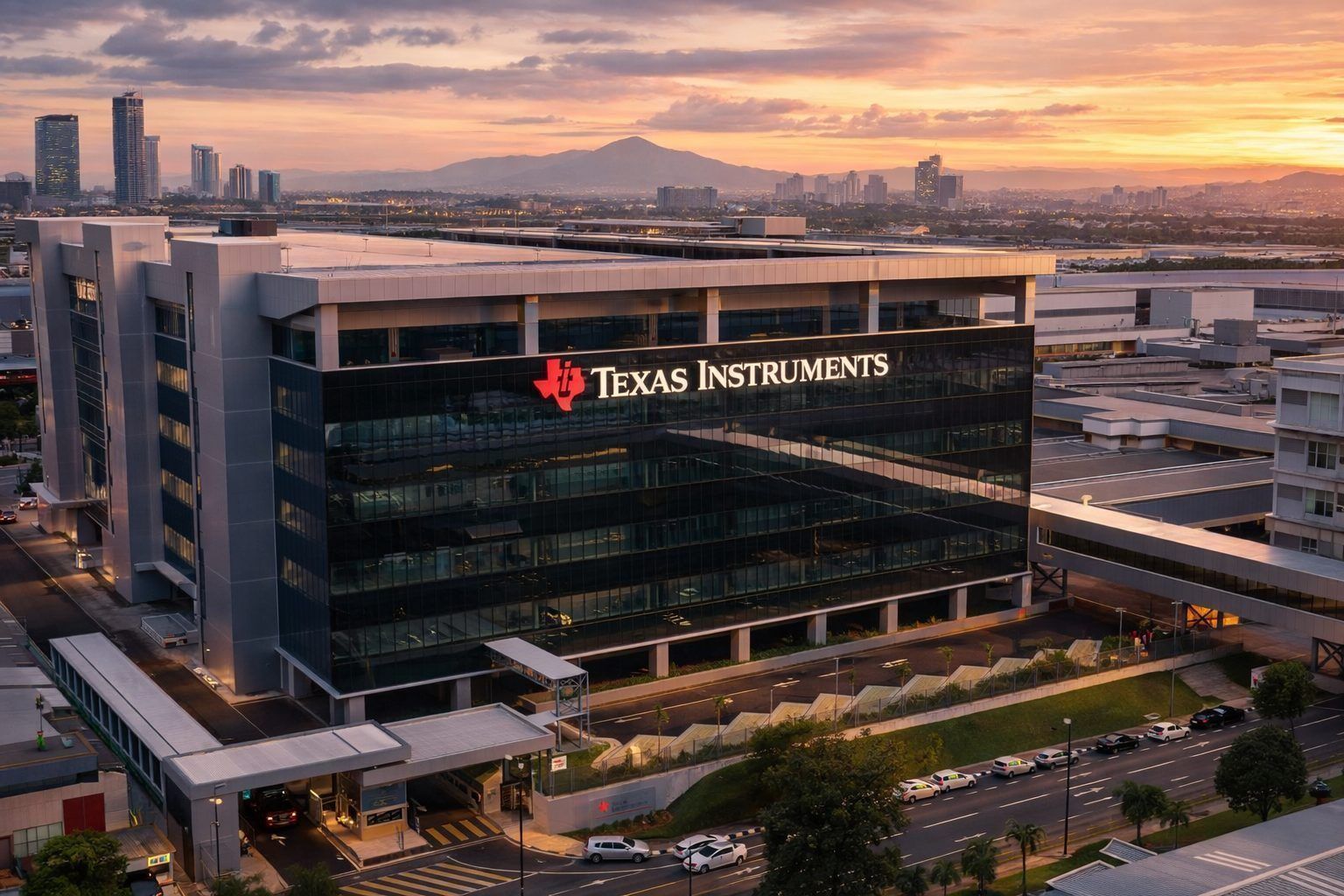
The biggest company-specific development on December 17 was Texas Instruments’ announcement that it has begun production at its newest 300mm semiconductor manufacturing facility in Sherman, Texas, known as SM1.
Key takeaways from TI’s announcement:
- SM1 began production just three and a half years after groundbreaking, according to the company.
- TI said the site will ramp based on customer demand and is ultimately designed to produce tens of millions of chips per day used across smartphones, automotive, medical devices, industrial applications, smart home, and data centers.
- TI emphasized that owning and controlling manufacturing, process technology, and packaging helps it maintain greater control of supply over time—language that speaks directly to resilience and long-cycle planning.
- TI also framed SM1 as part of a broader plan to invest more than $60 billion across seven U.S. semiconductor fabs in Texas and Utah.
In parallel coverage, CBS Texas described the Sherman site as a $40 billion factory expected to produce tens of millions of chips and support 3,000 new TI jobs plus additional indirect jobs—underscoring how central Sherman has become to both TI’s capacity plan and regional economic strategy.
Why the Sherman SM1 milestone matters for the stock narrative
1) Manufacturing scale is becoming part of TI’s “equity story”
Unlike many chipmakers that rely heavily on external foundries, TI repeatedly highlights its model of controlling manufacturing end-to-end. In today’s release, TI positioned that control as a way to support customers for decades and deliver foundational chips “in any environment.” Texas Instruments
2) Sherman isn’t just one fab—it’s a multi-fab “mega-site” plan
On its Sherman manufacturing overview, TI describes the Sherman site as a potential $40 billion investment with plans for up to four connected fabs (SM1–SM4), designed to meet customer demand for decades. The page also references 3,000 TI jobs and “hundreds of millions of chips” manufactured daily when scaled. Texas Instruments
For investors, that framing signals something important: TI is not pitching SM1 as a one-off capacity add—it’s pitching a long-duration manufacturing platform.
3) The first products out of Sherman: analog power
In a company blog post dated December 17, TI added color on what’s coming off the line first: analog power products. TI connected that product category to applications including battery management, automotive lighting, and the growing power demands of AI-era data centers.
That matters because it ties the Sherman ramp to end markets where power efficiency and reliability are critical—and where customers often value supply assurance.
But the “bull case” comes with a familiar debate: timing, utilization, and the cycle
Even as today’s manufacturing news reads as strategically positive, it lands in a market that has been actively debating TI’s positioning through the cycle—particularly around how quickly demand normalizes, how fast new capacity ramps, and what that means for margins and cash generation.
A notable backdrop this week: Goldman Sachs’ rare double downgrade of Texas Instruments to Sell from Buy with a $156 price target (published earlier in the week). The call argued TI could lag peers in the upturn, in part due to concerns tied to recent supply-chain and capacity choices.
That downgrade wasn’t “today’s” news—but it helps explain why a clearly bullish-sounding headline (new U.S. fab in production) can still coexist with fragile sentiment and quick-to-sell trading.
What this means heading into Thursday: expect the market to keep viewing TI through two lenses at the same time:
- Long-term advantage: U.S.-based, scaled 300mm manufacturing and supply reliability.
- Near-term scrutiny: how capex, depreciation, and utilization interact with demand recovery in industrial and automotive-heavy portfolios.
Wall Street forecasts tonight: Targets still cluster around the high-$100s, but conviction is mixed
While analyst views vary widely, several widely followed “consensus” snapshots still put TXN’s average target in roughly the same neighborhood:
- MarketWatch’s analyst-estimate snapshot showed an average target price around $189.71 (as of Dec. 17 updates visible on its quote coverage).
- MarketBeat’s consensus roundup (in a Dec. 17 post) cited a “Hold” consensus and an average price target of $190.58, based on its compiled analyst dataset. MarketBeat
Take those numbers for what they are: directional. They can lag real-time model changes and often reflect older notes. Still, they’re useful for understanding where “the middle” of Wall Street sits right now: roughly around $190, which is not far above where TXN traded today.
Next major catalyst: TXN’s late-January earnings window (still not officially confirmed)
For many investors, the next hard catalyst is earnings.
- Nasdaq currently lists TXN as estimated to report around January 22, 2026, noting the date is algorithm-derived and not necessarily confirmed by the company.
- Yahoo Finance’s earnings calendar lists TXN on January 20, 2026 (after close).
- Zacks’ calendar expects the next release around January 22, 2026, and shows an earnings estimate of about $1.28 per share for that report.
Because these are calendar estimates, not a company announcement, traders should treat the date as a window rather than a certainty—unless TI posts an official release date on its investor relations site.
What to watch before the market opens Thursday, Dec. 18
Here’s a practical pre-market checklist tailored to TXN:
1) The macro event risk is real: CPI + jobless claims + Philly Fed at 8:30 a.m. ET
Markets may be volatile early Thursday because multiple high-impact U.S. data points are scheduled for release.
- The BLS CPI schedule shows the November 2025 CPI release on Dec. 18, 2025 at 8:30 a.m. ET.
- The New York Fed’s national economic calendar also flags CPI and the Philadelphia Fed Manufacturing Survey on Dec. 18.
- MarketWatch’s economic calendar snippet for Thursday, Dec. 18 includes initial jobless claims in the morning lineup as well.
For TXN specifically, inflation and rates matter because semiconductors—especially high-quality, dividend-paying large caps—often trade with sensitivity to yield moves.
2) Watch Treasury yields after the data
On Wednesday, Investopedia noted the 10-year Treasury yield was around 4.15% late in the session. Investopedia
If CPI surprises, yields can move quickly—and that can spill over into semis and industrial tech.
3) Confirm whether the after-hours strength holds in premarket volume
After-hours quotes can be misleading if they print on low volume. The key question into the open isn’t “was TXN green after hours?”—it’s whether premarket participation broadens and holds above meaningful levels.
4) Key near-term price levels traders will likely reference
Based on Wednesday’s tape:
- Near-term support zone: around the day’s low (~$173.69).
- Near-term resistance zone: around the day’s high (~$179.64).
- Bigger-picture reference: the stock remains far below its 52-week high of $221.69, often cited in daily market recaps.
5) Track semiconductor peers and mega-cap tech sentiment
On Dec. 17, several large semiconductor names sold off sharply in the same session (as reflected in market recaps). MarketWatch
If Thursday brings a broad tech rebound (or another leg down), TXN often moves with the group—though its analog/industrial mix can behave differently than AI-levered names.
The setup for Thursday: A “good news” headline meets a macro-heavy morning
Texas Instruments delivered a headline it has been building toward for years: SM1 is in production, and Sherman is no longer just a construction story. Texas Instruments+1 That’s strategically significant, especially for long-cycle customers and investors who view manufacturing control as a differentiator.
But the near-term trading reality is that Thursday morning arrives with:
- a major inflation print (CPI) on deck, Bureau of Labor Statistics
- other key data releases, MarketWatch+1
- and an ongoing debate on whether TI’s cycle positioning will translate into outperformance soon.