
Texas Instruments Incorporated NASDAQ:TXN heads into the U.S. market open on Monday, December 22, 2025 with investors weighing two forces that can pull the stock in opposite directions: long-term manufacturing expansion (including a fresh U.S. production milestone in Sherman, Texas) and near-term caution around demand, margins, and analyst sentiment.
As of the latest available trade data, TXN was around $176.29 (last session range roughly $175.95–$178.19).
Below is what matters most for anyone watching Texas Instruments stock before the opening bell.
1) The biggest new headline: TI starts production at its newest Sherman, Texas 300mm fab (SM1)
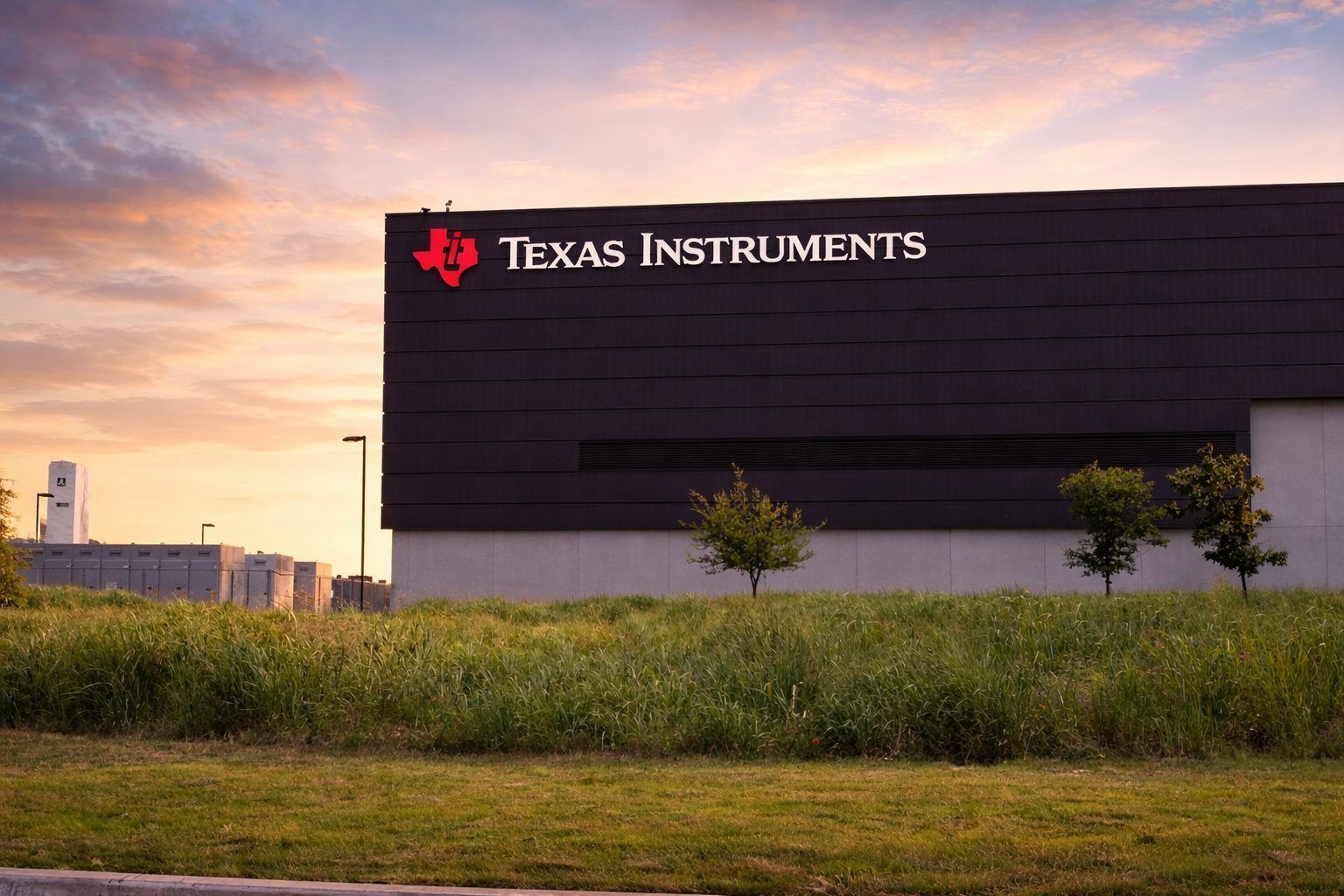
In a major operational milestone, Texas Instruments said it has begun production at its newest 300mm semiconductor manufacturing facility in Sherman, Texas (SM1). The company says the plant will ramp according to customer demand and can ultimately produce tens of millions of chips per day used across end markets from smartphones and autos to industrial systems and data centers.
This matters for TXN investors because TI’s strategy has been unusually consistent for years: control more of its own manufacturing to drive reliability, supply assurance, and (over time) cost advantages—especially as it shifts more output to 300mm wafers.
TI also framed Sherman as a multi-fab “mega-site,” with plans for up to four connected wafer fabs built and equipped in line with market demand, supporting as many as 3,000 direct jobs at the site. Texas Instruments
The market debate: manufacturing strength vs. near-term margin pressure
The bullish interpretation is straightforward: more internal capacity and modern 300mm scale can support higher durability of supply and potentially better economics over the long run.
The more cautious interpretation—one you’ll see repeatedly in recent sell-side commentary—is that expanding capacity during a choppy demand environment can bring higher depreciation and pressure margins if factory loadings aren’t strong.
That tension is central to today’s TXN story.
2) Why tariffs and trade policy are still a swing factor for TI’s outlook
One reason the “capacity build” conversation is so heated: tariffs and trade rules remain uncertain, and management has pointed to that uncertainty as a real-world factor shaping customer behavior.
In October, Reuters reported that TI forecast fourth-quarter revenue and profit below Wall Street expectations and highlighted a “moderate” recovery pace in analog, with customers—especially industrial—showing “wait-and-see” behavior on investment decisions amid unclear tariff rules. Reuters
The same Reuters report also noted President Donald Trump’s comments about imposing a tariff of about 100% on semiconductor imports, with a potential exemption for companies manufacturing in the U.S. or committed to doing so, though uncertainty remained about how policy would be implemented.
This is where TI’s U.S. buildout becomes strategically relevant. TI has repeatedly emphasized large-scale domestic manufacturing investment—positioning it as a supply-chain and policy hedge as well as an operations play.
3) The last earnings snapshot: Q3 strength, but guidance kept expectations in check
The most recent quarterly report (Q3 2025) showed solid top-line growth but also included items that kept investor focus on profitability and the cost of the company’s manufacturing transition.
From TI’s Q3 2025 release:
- Revenue:$4.74 billion
- Net income:$1.36 billion
- EPS:$1.48 (TI noted EPS included a $0.10 reduction not in its original guidance) Texas Instruments
- TI said revenue rose 7% sequentially and 14% year over year.
Forward-looking guidance that moved the conversation to “pace of recovery”
For Q4 2025, TI guided to:
- Revenue:$4.22 billion to $4.58 billion
- EPS:$1.13 to $1.39 Texas Instruments+1
Reuters reported that this outlook landed below what the market had been expecting at the time, reinforcing the view that the analog recovery was progressing—but not quickly.
Cash returns and investment levels remain central to the bull case
TI also emphasized shareholder returns and investment intensity over the trailing 12 months:
- $4.8 billion in capital expenditures (trailing 12 months)
- $6.6 billion returned to owners (trailing 12 months) Texas Instruments
And on cash generation, TI reported trailing 12-month free cash flow of $2.4 billion, noting its free cash flow definition includes proceeds from U.S. CHIPS Act incentives.
Inventory: the number many analysts keep coming back to
On the earnings call transcript, TI disclosed inventory at quarter end of roughly $4.8 billion, with inventory days at 215.
That inventory position (and what it implies for factory loadings, margin, and pricing discipline) is a key reason why analyst opinions have diverged so sharply.
4) Dividend watchers: the latest declared payout and what it implies for yield
TI declared a quarterly cash dividend of $1.42 per share, payable Nov. 12, 2025, to shareholders of record on Oct. 31, 2025.
Annualized, that’s $5.68 per share (4 × $1.42). Based on TXN near $176, that implies an indicative dividend yield around 3.2% (simple annualized yield calculation).
For income-oriented investors, TXN’s dividend policy remains a meaningful part of the investment narrative—especially when near-term growth expectations are debated.
5) Analyst forecasts and price targets: consensus “neutral,” but the range is wide
Street targets and ratings are notably mixed heading into the Dec. 22 open.
- A widely cited consensus view shows an average 12‑month price target around $189 with a “Neutral”-leaning consensus (based on a broad analyst set). Investing.com
- Another consensus snapshot places the average target around $191.49, implying mid‑single‑digit to high‑single‑digit upside from the current area.
But the headline calls that traders are reacting to are the recent changes:
Goldman Sachs: rare double downgrade
Barron’s reported Goldman Sachs issued a double downgrade (Buy → Sell) and cut its price target to $156 (from $200), arguing TI’s capacity and utilization decisions could leave it with high inventories and depreciation costs, potentially causing earnings growth to lag peers in a recovery.
Truist: target raised, but still “Hold”
MarketScreener/MT Newswires reported Truist raised its target to $195 (from $175) while maintaining a Hold rating.
Why the spread matters
With TXN around $176, the math underscores the split:
- Targets near $189–$191 imply roughly +7% to +9% upside.
- Goldman’s $156 target implies roughly -12% downside from current levels.
For investors, this target dispersion is less about “who’s right” tomorrow and more about what the market is pricing: confidence in a clean cyclical upturn vs. concern that the cost structure and inventory posture could mute upside.
6) Another headline risk: lawsuits tied to chips allegedly found in Russian weapons
Separately from the core fundamentals, TXN has been pulled into a sensitive legal and geopolitical narrative.
Local and national reporting in December described lawsuits filed on behalf of Ukrainian civilians against several firms—including Texas Instruments—alleging that chips ended up in Russian missiles or Iranian-made drones used in attacks.
Axios reported TI has said it stopped sales to Russia and Belarus in February 2022 and opposes the military use of its products.
For markets, this type of story tends to be a sentiment and headline-volatility factor first. Material financial impact typically depends on litigation outcomes, timelines, and whether any regulatory actions follow—none of which are clear at the outset.
7) The broader market setup for Dec. 22: holiday week, lighter liquidity, key data Tuesday
Even if you’re focused on Texas Instruments stock, the calendar matters this week because trading conditions can shift quickly into the Christmas holiday.
Investopedia notes Monday, Dec. 22 has no major scheduled economic releases, but Tuesday brings a cluster of reports including an initial estimate of Q3 GDP, durable goods orders, industrial production/capacity utilization, and consumer confidence—with jobless claims due Wednesday.
Trading hours also matter:
- Early close on Wednesday, Dec. 24, 2025 (1:00 p.m. ET) nyse.com+1
- Market closed Thursday, Dec. 25, 2025 Nasdaq+1
Holiday liquidity can amplify moves—especially for large-cap semiconductors that are sensitive to macro headlines and analyst notes.
Bottom line: what to watch in TXN at the Dec. 22 open
If you’re tracking Texas Instruments (TXN) before the bell on Dec. 22, 2025, the checklist looks like this:
- Manufacturing momentum: the SM1 start of production is a long-term strategic milestone, but investors will still debate near-term margin and utilization implications.
- Demand and guidance credibility: TXN’s Q4 revenue/EPS outlook remains the anchor for near-term expectations—and it’s been cautious versus what the Street wanted.
- Analyst sentiment: the Goldman double downgrade and a still-“Hold” tone from other firms highlight how controversial the inventory/capacity posture is. Barron’s+1
- Headline risk: litigation tied to supply-chain diversion allegations could create periodic volatility even if core fundamentals dominate longer-term valuation.
- Holiday tape: lighter trading conditions and a data-heavy Tuesday can move semis broadly, including TXN.
Practical takeaway: TXN is entering the week as a “quality compounder in debate”—supported by scale, dividends, and expanding internal capacity, but challenged by the market’s demand for clearer evidence that the analog recovery is accelerating and that the cost of capacity won’t dilute earnings power during the upturn.