
UPDATED: WARSAW, May 6, 2026, 14:02 (CEST)
- Polite prompts boosting ChatGPT answers? An old claim from TS2.Space, but it’s getting renewed attention now, with recent studies probing if changing tone actually alters AI responses.
- Evidence is split. Certain studies suggest moderate politeness helps, but more recent tests showed rude prompts topping the charts for narrow accuracy tasks.
- The safer approach, for both users and companies, skips clever tricks: spell out instructions, set the context, define constraints, and review what comes back.
An August 21, 2023, TS2.Space article, “The Power of Kindness: Being Nice to ChatGPT Yields Better Results,” pushed the notion that polite prompts—think “please” and a little context—might coax stronger answers from ChatGPT. The idea still circulates in 2026, though research has gotten both more tangled and more interesting since then. Worth noting: TS2.Space lists the bylined author, Igor Nowacki, as a fictional persona, so the article reads more like a conversation starter than definitive proof. TS2 Space
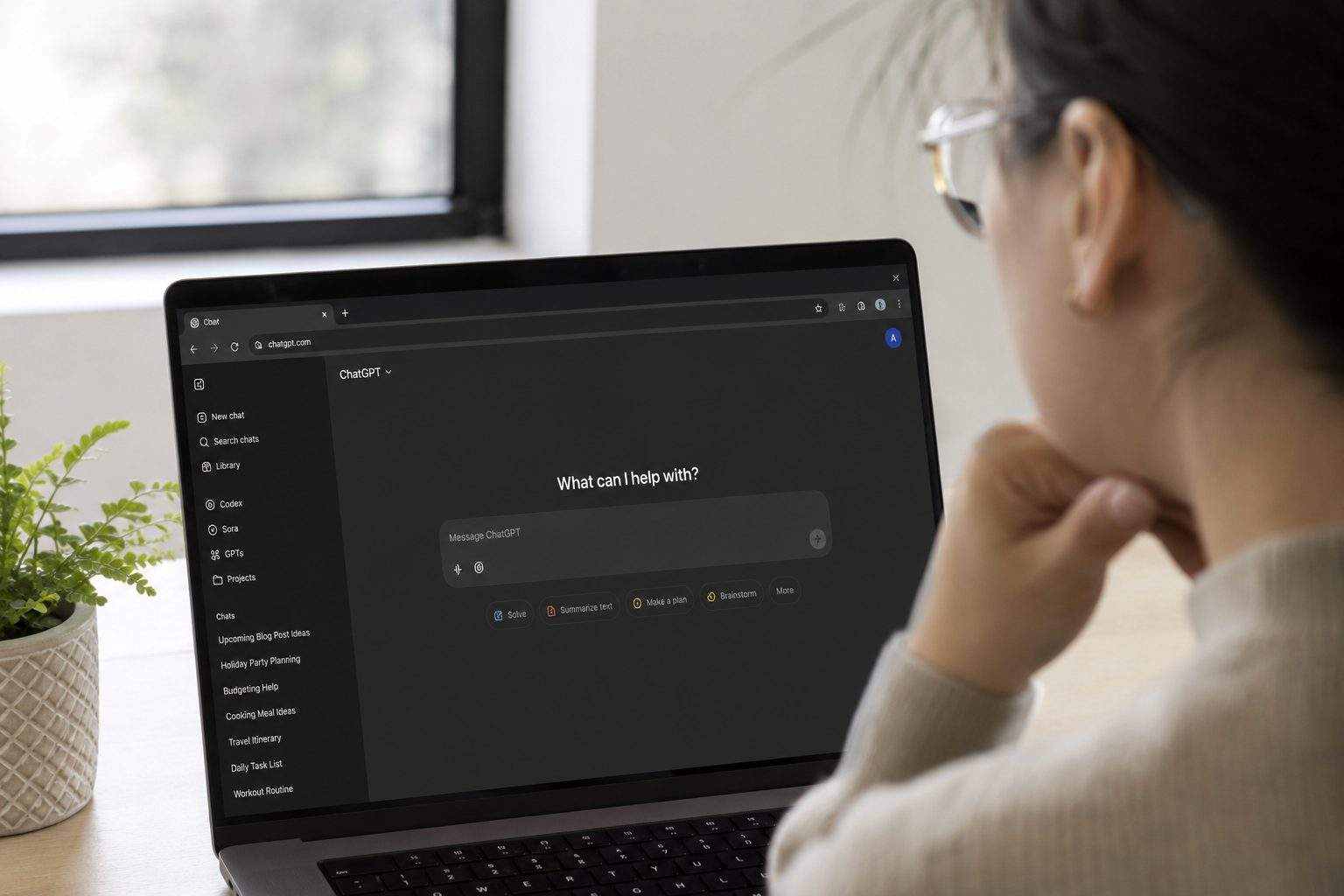
It’s no small thing anymore—ChatGPT has moved beyond being a quirky sidekick for office workers. According to Reuters in February, OpenAI’s chatbot now counts over 800 million weekly active users. Even a minor tweak in how people prompt the AI can ripple out, shifting productivity, costs, and entrenched workplace routines.
Prompt engineering—the art of crafting model inputs—has turned into table stakes for plenty of users. OpenAI’s guidance lays out that prompts need to be clear, specific, and provide enough context, and says users should tweak prompts after checking the results. Politeness, though, isn’t singled out as a solution on its own.
Microsoft isn’t letting tone slip off the radar. Kurtis Beavers, director on the Copilot design team, told Microsoft WorkLab that “using polite language sets a tone for the response,” and argued that basic etiquette nudges the AI toward “respectful, collaborative outputs.” Microsoft
OpenAI CEO Sam Altman tossed a cost perspective into the etiquette discussion. Someone on X pressed him about users typing “please” and “thank you”—wasn’t that juicing up the electricity bill? Altman replied, “tens of millions of dollars well spent–you never know.” Why does it add up? Every extra word gets counted as a token, which is how these models track prompts—and what users get billed for. X (formerly Twitter)
The research isn’t straightforward. In a 2024 study, Ziqi Yin, Hao Wang, Kaito Horio, Daisuke Kawahara, and Satoshi Sekine reported that “impolite prompts often result in poor performance,” but noted that simply using very polite language doesn’t necessarily improve outcomes. Politeness worked differently depending on the language. arXiv
But a 2025 study from Om Dobariya and Akhil Kumar flipped things around, testing ChatGPT-4o with 50 multiple-choice questions recast in five different tones. The model’s accuracy ran from 80.8% on very polite prompts to 84.8% for very rude ones. Not a huge gap, the authors said, but enough to poke at the easy manners thesis.
No clear pattern here. In their April 2026 preprint, Hitesh Mehta, Arjit Saxena, Garima Chhikara, and Rohit Kumar checked how politeness plays out across several languages and model types—OpenAI’s GPT-4o Mini, Google’s Gemini-Pro, Anthropic’s Claude 3.7 Sonnet all in the mix. They found the effects “neither consistent nor universal.” arXiv
Another angle: research has flagged that emotional phrasing can shift model results. Cheng Li’s 2023 study—dubbed EmotionPrompt—showed that layering in emotional cues boosted performance on a range of tasks, across models such as ChatGPT and GPT-4. But that’s not evidence that kindness itself is effective. What it does demonstrate: the way a prompt is worded can tweak outputs, sometimes in ways users don’t see coming.
The takeaway isn’t subtle: politeness might set the mood, and sometimes it smooths things over, but a well-mannered prompt won’t guarantee that ChatGPT gets things right. OpenAI has made it clear—ChatGPT’s training relied on massive troves of human-generated text, but accuracy, honesty, and reliability aren’t assured.
There’s a risk here: users might end up chasing prompt folklore. Sometimes a rude prompt tops a specific benchmark. Other times, the polite approach just smooths out the language. Both? Still capable of spitting out the wrong answer. In a business setting, it’s better to lay out the task, add context, specify the format, ask for sources if necessary, then double-check the result.
Saying please and thank you to ChatGPT is still decent manners. But when it comes to getting results, that’s not going to cut it.
Related articles: Artificial Intelligence