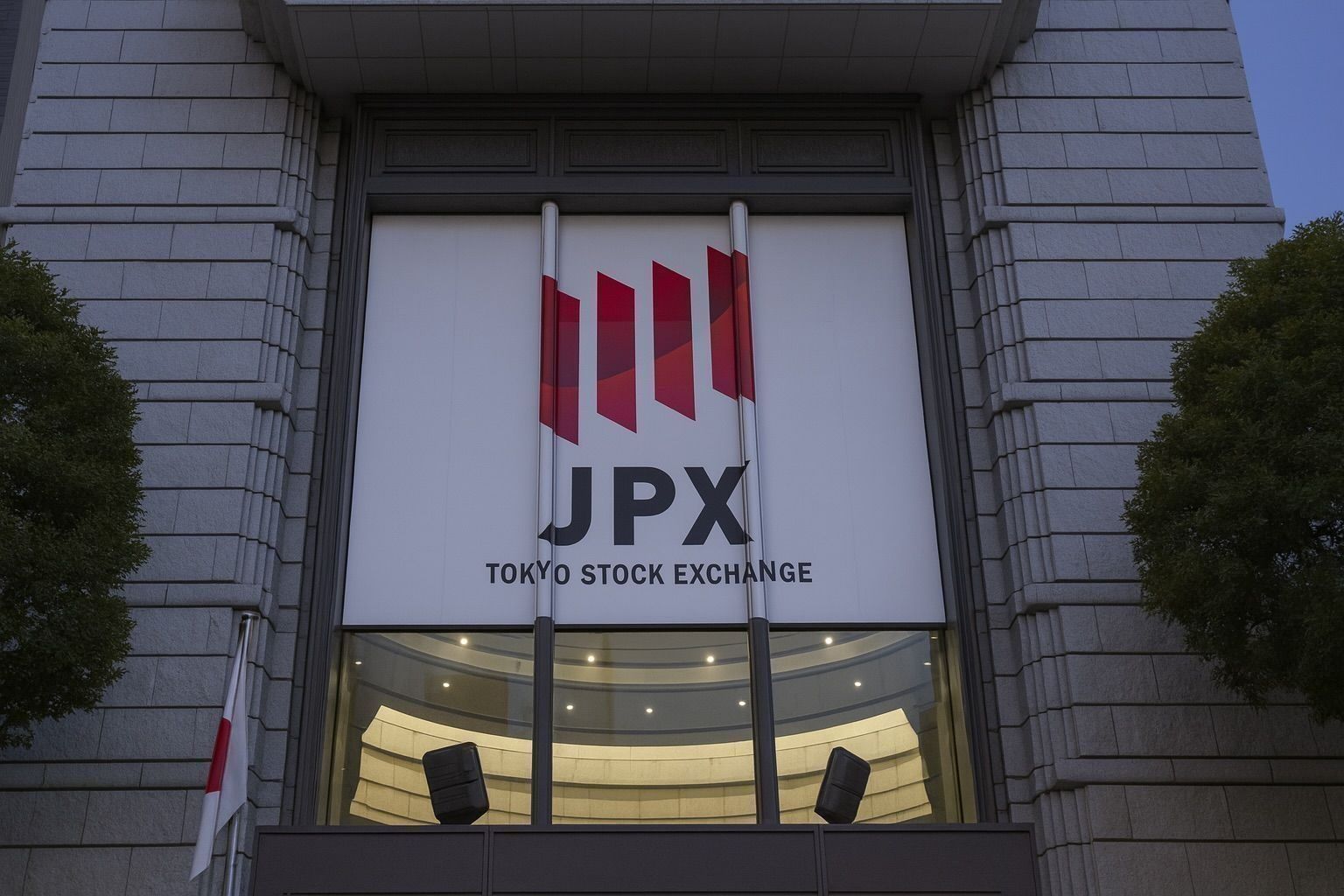
Tokyo stocks head into the new week on a fragile—but still constructive—footing: the broader Topix has just logged a record closing high, yet sentiment is being tugged in two directions by (1) growing conviction that the Bank of Japan (BOJ) will raise rates this week and (2) renewed anxiety that the global AI trade is running into a profitability “reality check.”
By Friday’s close (Dec. 12), the Nikkei 225 ended at 50,836.55 and the Topix finished at 3,423.83, a record closing highfor the broader index. TradingView
Now the Tokyo Stock Exchange (TSE) faces a classic “macro meets micro” setup: BOJ policy, inflation and wage data, bond-market stability and yen direction will drive index-level moves—while sector leadership could swing sharply between financials/materials and tech depending on how “hawkish” the week’s signals feel.
What moved Japan stocks last week (Dec 8–12): records, reversals, and rate nerves
The week began with caution. On Monday (Dec. 8), Japan’s market tone was weighed down by unease over “sky-high valuations” in AI-linked shares, a theme that kept resurfacing even as broader risk appetite improved at points. TradingView
On Tuesday (Dec. 9), chip- and semiconductor-related names helped the Nikkei recover, tracking an overnight lift in U.S. peers—an early hint of how sensitive Tokyo remains to U.S. tech momentum. TradingView
Then came the headline-grabbing milestone: on Wednesday (Dec. 10), the Topix touched an intraday record (3,408.99)before momentum cooled; it still managed a modest gain, while the Nikkei slipped slightly. TradingView
But Thursday reminded investors how quickly leadership can flip when the AI theme wobbles. A sharp drop in SoftBank—after Oracle’s results rattled confidence in near-term returns from heavy AI spending—helped pull the Nikkei down, and the Topix gave back ground after opening at a record high. TradingView+1
By Friday, Tokyo rebounded, led by “old economy” strength—particularly materials/metals—while tech remained mixed. The result: the Topix ended the week at a record close, while the Nikkei posted a third straight weekly advance. TradingView+1
The main event: BOJ meeting (Dec 18–19) and why Tokyo is so rate-sensitive right now
The BOJ’s December meeting is the focal point for Japanese assets—and increasingly, for global macro investors who had spent years treating Japan as the “low-rate anchor.”
Meeting dates are confirmed: the BOJ’s Monetary Policy Meeting is scheduled for Thursday–Friday, Dec. 18–19. Bank of Japan+1
What markets expect is no longer subtle:
- A Reuters poll shows 90% of economists anticipate the BOJ will lift the short-term policy rate from 0.50% to 0.75% at the Dec. 18–19 meeting, and a majority see rates reaching at least 1.0% by end-September 2026. Reuters
- Reuters reporting also suggests the BOJ is likely to signal continued hikes beyond December, stressing a gradual approach and arguing conditions would remain accommodative even after a move. Reuters
For the TSE, the “rate-hike question” is no longer simply “hike or no hike.” It’s shifting to:
- How far can rates go without destabilizing bonds (and equities)?
- Does the BOJ message push the yen stronger or keep it soft?
- Which sectors win if yields rise further—and which get de-rated?
That’s why the bond market has become a daily market narrative. Benchmark yields have surged to multi-year highs; Reuters reported the 10-year JGB yield reached 1.97% (an 18-year high) amid tightening expectations and fiscal concerns. Reuters
BOJ Governor Kazuo Ueda has publicly acknowledged the pace of the move, saying long-term rate increases have been “somewhat rapid,” while reiterating readiness to act in exceptional circumstances. Reuters
Yet, Reuters also reported the BOJ is reluctant to intervene unless a panic selloff pushes yields far away from fundamentals—partly because frequent intervention could conflict with the BOJ’s push toward normalization. Reuters
Foreign flows and the “sell Japan” fear: a bond-market stress test in progress
One underappreciated signal into this week is foreign positioning in Japan’s rates.
Ministry of Finance data cited by Reuters showed foreign investors sold 442.6 billion yen ($2.84 billion) of long-term Japanese debt in the week ended Dec. 6, reversing a large purchase the prior week—while still buying short-term bills. TradingView
That pattern matters for equities because:
- Rising yields can support bank earnings power (net interest margins), often boosting Japanese financials.
- But rising yields can also pressure valuations for long-duration growth stocks and create mark-to-market losses in bond-heavy balance sheets.
BlackRock’s Japan chief investment strategist warned that markets could be jolted if the BOJ ends up “behind the curve” on inflation, implying the risk is not just a hike—it’s the possibility of faster-than-expected tightening later if inflation stays sticky. Reuters
Meanwhile, MUFG’s global markets chief framed the stakes even more starkly, warning about the risk of a “negative spiral” if Japan fails to tighten enough amid persistent inflation and a weak yen—potentially worsening import-driven price pressures. Reuters
Inflation and wages: the data the BOJ is watching—right before the decision
If investors want to understand why the BOJ feels comfortable tightening (and why the market is so convinced), watch two pillars: inflation persistence and wage momentum.
1) CPI: expected to stay hot
A Reuters poll indicates Japan’s core inflation likely held at 3.0% year-on-year in November, well above the BOJ’s 2% target—another month in a multi-year run of above-target readings. Reuters
Just as important is timing. Japan’s official CPI release is due hours before the BOJ decision, with reporting noting a Dec. 19, 8:30 a.m. release time. MarketScreener
The Statistics Bureau’s CPI release schedule also points to Nov. data being released on Dec. 19, aligning with the “CPI-first, BOJ-after” sequencing that could amplify market volatility on Friday morning in Tokyo. Statistics Bureau of Japan
2) Wages: auto unions set the tone for “Shunto” expectations
In a key labor headline from the past week, Japan’s major auto union group (JAW) said it will seek a monthly base pay increase of at least 12,000 yen (about $77) for 2026 wage talks—matching its demand from this year. Reuters
The same report underscores why this matters: the auto sector is a bellwether for Japan’s labor market, and wage outcomes feed directly into the BOJ’s confidence about durable, demand-driven inflation. Reuters
Fiscal policy is back in focus: tax breaks, stimulus and the bond-supply shadow
The BOJ isn’t acting in a vacuum. Fiscal policy—and the bond issuance it implies—has become part of the market’s daily pricing.
Reuters reported Japan is considering new tax incentives to spur corporate investment, potentially including a tax credit up to 7% for capex or immediate depreciation of new assets, even as debt concerns intensify. Reuters
The same reporting points to a planned ¥18.3 trillion supplementary budget, largely financed by new debt—precisely the kind of policy mix that can keep upward pressure on long-term yields. Reuters
For Japanese equities, this is a two-sided story:
- Pro-growth incentives can support industrials, automation, AI infrastructure, and capex beneficiaries.
- But heavier issuance can steepen the curve and raise the discount rate—challenging valuation-sensitive sectors.
Corporate Japan in the background: M&A momentum builds into 2026
Beyond macro, deal-making and corporate restructuring remain an undercurrent that investors increasingly treat as structural support for Japanese equities.
Goldman Sachs told Reuters that “private finance structures” tapping long-term pools of private capital could help drive bumper Japan M&A into 2026, as large companies streamline portfolios and pursue growth investments. Reuters
That matters for the Tokyo Stock Exchange narrative because M&A and portfolio reshaping can:
- lift shareholder returns via asset sales and buybacks,
- re-rate undervalued subsidiaries, and
- create catalysts for sector rotation (financials, trading houses, industrial conglomerates).
(Separately, the Financial Times also highlighted expectations that an IPO involving a “bubble-era” Japanese bank could act as a trigger for further deals, reinforcing the idea that Japan’s deal cycle remains active.) Financial Times
Week Ahead calendar for Japan stocks (Dec 15–19): what to watch, day by day
Here are the specific events most likely to shape price action in Tokyo:
Monday, Dec. 15
- BOJ Tankan (Dec.) summary and outline scheduled for 8:50 a.m. Bank of Japan
A stronger Tankan backdrop would reinforce the BOJ’s confidence; a disappointment could shift debate from “hike” to “tone.”
Thursday–Friday, Dec. 18–19
- BOJ Monetary Policy Meeting (Dec. 18–19) Bank of Japan+1
Markets largely expect a hike; the surprise risk is the forward path—how explicitly the BOJ signals “more hikes to come.” Reuters+1
Friday, Dec. 19
- Japan CPI (Nov.) expected at 8:30 a.m., just ahead of the BOJ decision window. MarketScreener+1
Global cross-currents
- The Fed’s Dec. 9–10 meeting has already delivered a 25 bp cut (to 3.5%–3.75%), anchoring global risk appetite into this week. Reuters+1
- Markets are also watching other major central banks—particularly the Bank of England and the ECB—as part of the broader rates narrative that can move USD/JPY and global equity style rotation. Reuters
Sector playbook: where investors may rotate depending on BOJ tone and yen moves
With the Topix at record highs, the week ahead may hinge less on “up or down” and more on who leads.
If the BOJ hikes and sounds firmly on a gradual tightening path
- Potential winners: banks/insurers (up to a point), value cyclicals, selective domestic plays
- Potential losers: high-valuation growth, rate-sensitive real estate, leveraged balance sheets
- Market tell: sustained rise in JGB yields and a firmer yen
This scenario fits the market’s current logic: rates are going higher, but the BOJ wants to avoid a disorderly bond move. Reuters+1
If the BOJ hikes but delivers a “dovish hike” message
- Potential winners: exporters and global cyclicals if yen weakens; some tech could rebound
- Potential losers: banks may cool if the curve flattens
- Market tell: USD/JPY pushes higher, yields stabilize, equities lean risk-on
If inflation/wages surprise and markets start pricing a steeper hiking path
This is the “volatility” risk highlighted by major strategists: if inflation stays elevated and wages remain firm, the BOJ could be pushed into moving faster than investors are comfortable with. Reuters+1
The bottom line for the Tokyo Stock Exchange this week
Japan’s stock market enters the week with clear momentum—validated by the Topix’s record close—but with a tightening macro backdrop that can rapidly reshuffle leadership.
The central question for the Nikkei 225 and Topix isn’t simply whether the BOJ hikes. It’s whether Japan can normalize policy without unsettling the bond market—and how the yen reacts as Tokyo’s rate story diverges from (or converges with) the rest of the world.
Investors should expect the most intense market sensitivity in the Friday morning window (Dec. 19) when CPI hits first, followed by BOJ communication that will set the tone for Japanese assets into year-end. MarketScreener+2Reuters+2