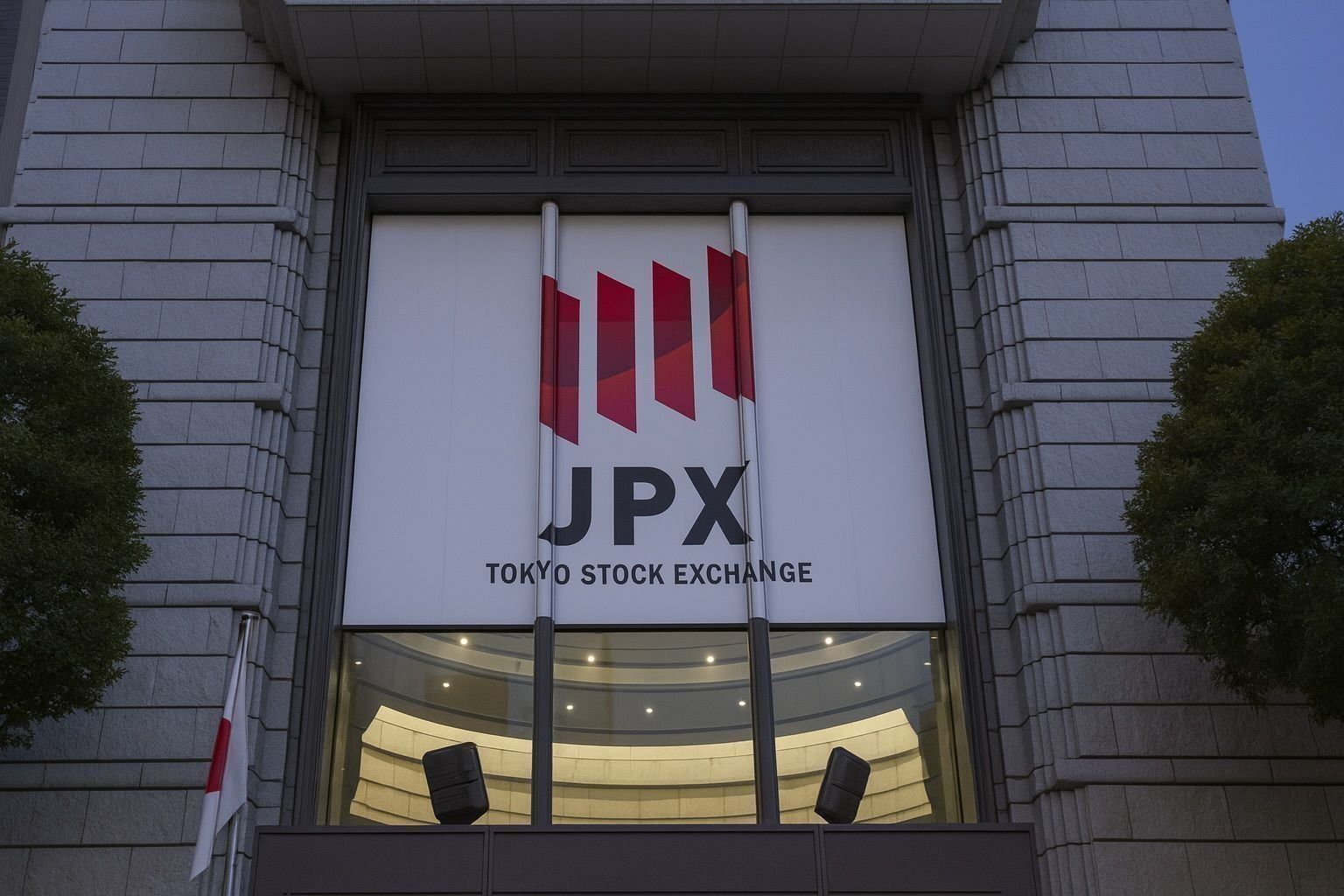
TOKYO, Dec. 12, 2025 — Japan’s stock market ended the week with a sharp rebound in Tokyo on Friday, as the Nikkei 225 rallied and the broader Topix notched a record closing high, powered by a surge in metals and a broad-based lift in cyclical sectors. The bounce followed a volatile stretch for global tech and AI-linked shares, with investors balancing Wall Street’s post-Fed optimism against renewed jitters around whether massive AI spending will translate into profits. The Economic Times+2Reuters+2
Tokyo market snapshot: Nikkei rebounds, Topix sets a new closing record
By the close in Tokyo:
- Nikkei 225 rose about 1.4% to 50,836.55, logging a third straight weekly advance and finishing the week up 0.7%. The Economic Times+1
- Topix climbed about 2.0% to 3,423.83, marking a record closing high. The Economic Times+1
Friday’s advance was also notably broad: on the Nikkei, advancers outnumbered decliners by 201 to 24, signaling that gains weren’t confined to a narrow handful of mega-caps. The Economic Times
What moved Tokyo stocks today: Fed relief, BOJ suspense, and a metals-led surge
1) Wall Street’s “less hawkish than feared” Fed message lifted risk appetite
Japanese equities drew support from the latest U.S. policy signal after the Federal Reserve’s rate cut and guidance that investors interpreted as less hawkish than expected. U.S. benchmark indexes closed at or near record highs (even as parts of tech wobbled), helping risk sentiment spill into Asia. The Economic Times+2Reuters+2
2) The market’s next big catalyst is the Bank of Japan — and traders are positioning early
Investors are now looking squarely at the Bank of Japan’s Dec. 18–19 meeting, widely expected to deliver another step in policy normalization. Markets have “almost fully priced in” a move to 0.75% from 0.5%, shifting attention to how clearly the BOJ signals the path beyond the next hike. Reuters+1
A key nuance from BOJ-watchers: policymakers are expected to keep the message that rates can rise further, but emphasize that the pace of additional hikes will depend on how the economy responds to each move—rather than anchoring guidance to any single “neutral rate” estimate. Reuters
3) Metals did the heavy lifting as copper excitement grew globally
The standout theme in Tokyo was strength in metals, arriving as industrial metals captured global attention—helped by record copper pricing in China and expectations of more Chinese stimulus. The Topix was boosted by a sharp rise in major miners, which helped offset weakness in parts of tech. Reuters+1
Winners and losers: Metals and cyclicals shine, while chip names lag
Top gainers in Tokyo’s session
- Sumitomo Metal Mining surged around 9%, a key driver behind the Topix move. The Economic Times+1
- Panasonic rose roughly 7%. The Economic Times+1
Notable laggards
The day wasn’t a straight-line rally for every growth theme. Several major chip/semiconductor names slipped:
- Tokyo Electron fell about 3.4%, the biggest drag on the Nikkei. The Economic Times+1
- Advantest dipped about 1.2%. The Economic Times
Why tech was mixed: AI “payoff” doubts resurfaced after Oracle
The Tokyo chip weakness came as global tech sentiment was rattled again by a sharp drop in Oracle, reviving the debate over the near-term returns on heavy AI and data-center investment. That concern was highlighted across global market coverage and weighed on AI-linked equities even as broader indexes advanced. Reuters+2Reuters+2
Currency watch: Yen steadies near mid-155s as rate expectations collide
The yen traded around the mid-155 level per U.S. dollar during Friday’s market action, reflecting an uneasy balance: the BOJ’s likely hike next week can support the yen, while shifting U.S. rate expectations and global risk sentiment can push the other way. AP News+1
For Tokyo stocks, that matters because:
- A stronger yen can pressure exporters’ earnings translations (often a headwind for autos and electronics).
- Higher domestic rates can be a tailwind for some financials, but a tightening cycle can also raise the bar for highly valued growth shares.
Forecasts and next-week setup: BOJ guidance, inflation data timing, and “51,000” as a key level
Strategists: Expect caution early next week, then BOJ headlines take over
Nomura strategist Maki Sawada said attention now turns to BOJ messaging next week and suggested market sentiment in the first half of the week may be cautious. Sawada also pointed to 51,000 as a potential resistance area if the Nikkei recovers toward that level. The Economic Times
Inflation preview adds pressure to the BOJ narrative
A Reuters poll published Friday projected Japan’s core CPI likely held at 3.0% year-on-year in November, remaining well above the BOJ’s 2% target. The timing is critical: the government is set to release the November CPI figure hours before the BOJ decision on Dec. 19 (Japan time). Reuters
That backdrop reinforces why traders are so focused not only on the near-certain hike, but on what comes after.
BOJ’s “neutral rate” debate: important, but not the whole story
The BOJ is expected to avoid using any single neutral-rate estimate as its main communication tool, given how imprecise such estimates can be. Instead, it may emphasize how each hike affects lending, corporate finance conditions, and broader activity. It may also stress that real borrowing costs remain deeply negative, supporting the case for continued gradual hikes. Reuters
Japan Inc. headlines shaping investor sentiment in Tokyo
Tokyo’s trading day also unfolded alongside several major Japan-specific developments that investors increasingly treat as part of the equity narrative—especially as Japan’s market rally has been supported by corporate actions, governance pressure, and capital allocation shifts.
1) Wage negotiations: autoworker unions signal another strong push
Japan’s automotive union group (JAW), representing workers at firms including Toyota and Honda, said it will seek base-pay increases of 12,000 yen per month or more for next year’s talks—matching this year’s demand. The outcome is watched closely because wage trends feed directly into the BOJ’s confidence about sustained inflation and demand. Reuters
2) Nippon Steel expansion plan underscores the overseas growth pivot
Nippon Steel said it aims to lift global crude steel capacity to at least 100 million tons by the mid‑2030s (from 82 million), backed by a 6 trillion yen five-year investment plan and a strategy focused on overseas growth markets following its U.S. Steel acquisition. Investors will weigh the long-term growth ambition against near-term cash-flow pressure, since the company also flagged expected negative free cash flow over the investment horizon. Reuters
3) M&A momentum: Goldman sees “bumper” deal flow into 2026
A Goldman Sachs executive said Japan’s M&A market is set to stay buoyant into 2026, supported by larger deal sizes and financing structures that blend traditional funding with private capital. The same commentary pointed to ongoing governance pressure and potential for more portfolio reshaping among Japanese blue chips—an important theme for Tokyo-listed conglomerates trading at “conglomerate discounts.” Reuters
The bottom line for Tokyo stocks today
Tokyo stocks finished Friday with a decisive risk-on tone: the Nikkei rebounded sharply and the Topix closed at a record, with metals and cyclicals outperforming even as chip names lagged under the weight of renewed AI-profitability doubts. The Economic Times+1
The market’s near-term direction now hinges on whether next week’s BOJ meeting delivers a “hike-and-hawkish-hold” message (reinforcing the tightening path) or a hike paired with extra caution (which could extend the equity rally but revive questions about inflation credibility). Either way, the next set of headlines—BOJ guidance, CPI timing, yen moves, and global tech sentiment—are positioned to drive Tokyo trading into year-end. Reuters+2Reuters+2