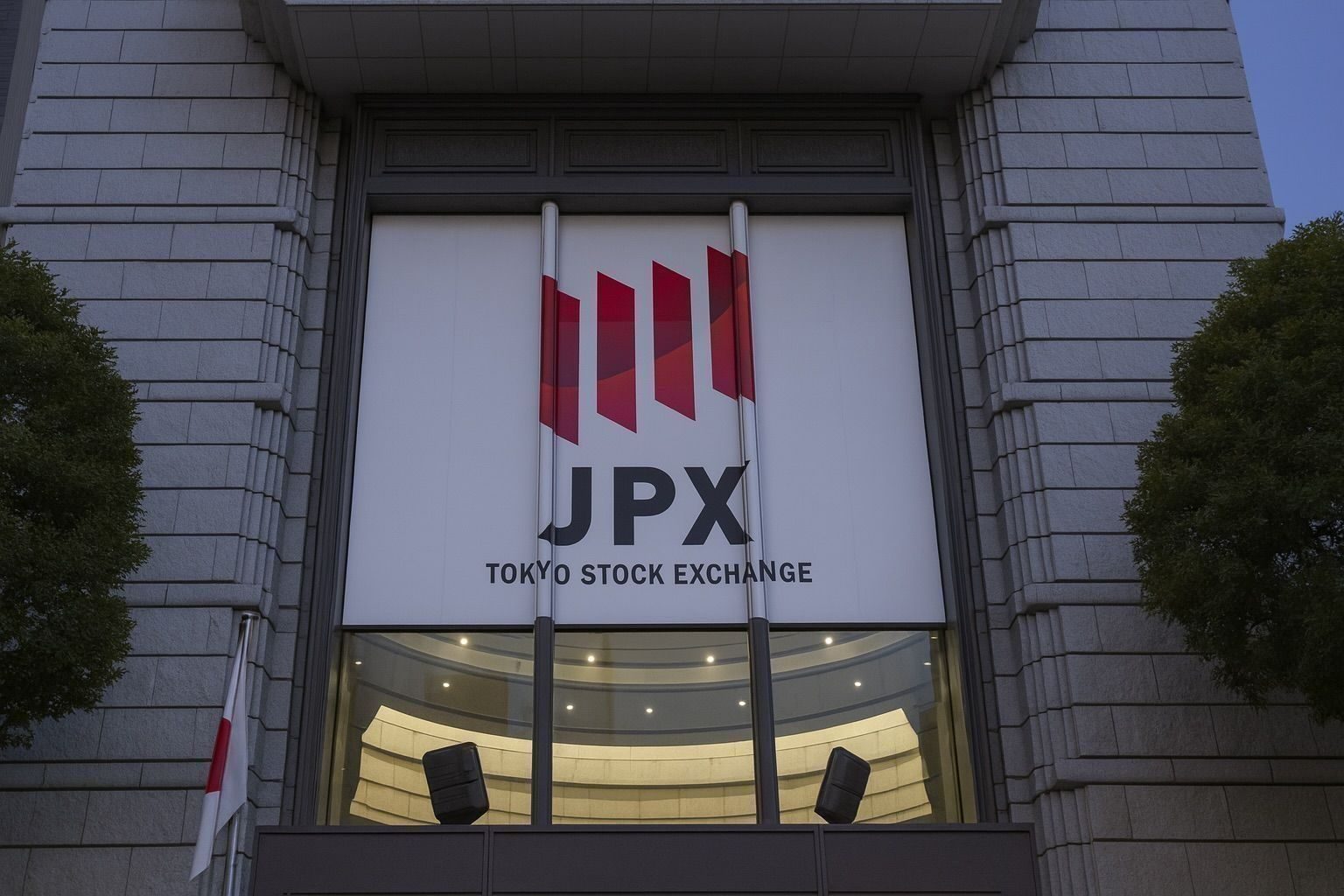

TOKYO — Japanese equities ended slightly lower on Wednesday, December 24, 2025, as a stronger yen and holiday-thinned trading capped risk appetite, even while heavyweight semiconductor-related shares extended gains in line with Wall Street’s tech momentum.
Tokyo Stock Exchange close: Nikkei 225 dips, TOPIX falls more
By the close in Tokyo:
- Nikkei 225 finished at 50,344.10, down 68.77 points (about -0.1%).
- TOPIX ended at 3,407.37, down 15.88 points (about -0.5%).
Market commentary across the session repeatedly pointed to a familiar late-December setup: thin global liquidity ahead of Christmas, fewer offshore participants, and price action that could swing quickly on FX moves rather than on fresh domestic fundamentals.
The yen was the day’s swing factor — and exporters felt it
A strengthening yen tends to pressure Japan’s exporter-heavy benchmark because overseas earnings translate back into fewer yen. That dynamic reasserted itself Wednesday as the dollar hovered in the mid-155s against the yen, with traders increasingly alert to the risk of Japanese authorities stepping in to curb sharp, “excessive” currency moves. Reuters+2Investing.com+2
Export-oriented bellwethers reflected that pressure:
- Toyota fell 1.8% and Subaru lost 1.2%.
- Sony declined 1.9% and Nintendo eased 0.8%.
Behind the currency move, the day’s FX narrative was reinforced by broader dollar weakness: Reuters reported the U.S. dollar was on track for its worst year since 2003, with markets still leaning toward additional Fed cuts in 2026—and strategists warning that year-end conditions can be a particularly “compelling backdrop” for intervention risk in yen trading. Reuters
Chips and semiconductors kept running, but couldn’t save the broader market
While exporters struggled, chip-related shares were a bright spot and helped explain why the Nikkei (price-weighted and tech-heavy) held up better than the broader TOPIX.
Key movers highlighted in the Tokyo close:
- Advantest rose 2.5%, adding a sizeable points contribution to the Nikkei.
- Tokyo Electron gained 0.7%.
- Screen Holdings surged about 10%, buoyed by a price-target raise from Morgan Stanley MUFG Securities, and was flagged as the Nikkei’s biggest percentage gainer.
The sector tailwind was tied to U.S. leads: the Philadelphia semiconductor index advanced again overnight and the S&P 500 set another record high, keeping the global “AI/tech bid” intact even into the holiday lull. mint+1
A strategist at Nomura Securities summed up the tone succinctly: chip names were lifting the index, but with many overseas markets heading into holiday mode, big moves in Japanese equities looked unlikely.
Financials cooled after last week’s BOJ rate hike — a sign of rotation, not panic
Another theme in Wednesday’s tape was pullback in financials after a strong run following the Bank of Japan’s recent hike (which lifted rates to the highest level in roughly three decades).
By Wednesday’s close:
- Insurers fell 1.6% as a group.
- Banks dropped about 1%.
This matters because higher rates can improve banks’ earnings power over time, but the market often “front-runs” that benefit—then consolidates. Wednesday’s move looked consistent with a giveback after a rate-driven rally, especially as investors watched the yen and considered how far the BOJ might go next. mint+1
BOJ minutes (released today) added nuance to the next-rate-hike debate
One of the most market-relevant Japan stories dated Dec. 24 was the publication of Bank of Japan minutes from the Oct. 29–30 meeting, which showed policymakers debating whether they should keep lifting rates toward a “neutral” level over time. Reuters
Two points in the minutes stood out for markets:
- Some members argued that gradually adjusting accommodation in line with improving conditions would help achieve long-run stability.
- Others warned that yen weakness could push inflation above expectations by raising import costs—tying FX volatility directly to the policy path.
Although the October meeting kept rates unchanged at that time, the minutes also underscored that conditions were already being viewed by many as “ripe” for a hike, with wage momentum and external uncertainty (including tariff-related risks) part of the calculus. Reuters
For Tokyo stocks, the translation is straightforward: BOJ tightening expectations can support the yen, which can weigh on exporters—while still leaving room for domestic-demand and rate-beneficiary themes to outperform. Wednesday’s split between semiconductors (global cycle) and exporters/financials (FX/rates) fits that framework.
Japan’s fiscal headlines landed on the same day — and they matter for both bonds and equities
Equity investors also had to process a fresh wave of fiscal news on Dec. 24, which helped keep bond yields and “Japan risk premium” in focus.
Reuters reported Japan is preparing a record-sized fiscal 2026 budget (around 122.3 trillion yen) and plans about 29.6 trillion yen in new bond issuance to fund it, according to a draft reviewed by the news agency.
The bond market reaction has been increasingly hard to ignore. Reuters noted that concerns about supply have pushed yields higher, with the 30-year JGB yield hitting a new record (reported at 3.45% on Wednesday).
In a separate Dec. 24 Reuters report, sources said Japan is likely to cut issuance of super-long government bonds next fiscal year to around 17 trillion yen, a 17-year low, in an apparent attempt to reduce pressure at the long end of the curve after a period of yield spikes.
Why this matters for the Tokyo stock market:
- Rising long-term yields can tighten financial conditions and raise the discount rate applied to equities (a headwind for high-multiple growth stocks).
- But higher yields can also support some financial firms’ profitability—making the market’s sector rotation especially sensitive to whether yields rise in an “orderly” way or through stress and supply fears. mint+2Reuters+2
“Santa rally” abroad, caution at home: Tokyo’s year-end setup
Globally, the tone into Christmas has been upbeat, with Reuters describing an AI-driven equity year and noting record highs in parts of Wall Street.
But Tokyo’s day-to-day drivers late in December are often more mechanical:
- Currency volatility (especially USD/JPY)
- Reduced participation as global desks thin out
- Position management into year-end book closes
- Headline sensitivity to policy signals (BOJ) and government financing plans Reuters+2mint+2
Notably, Japan’s cash market schedule remains active even as many Western markets pause: reporting around Wednesday’s close emphasized that Japanese markets are open Thursday and Friday as usual, potentially concentrating price discovery in Tokyo while other venues are quiet.
Outlook and forecasts: what analysts are watching from Dec. 24’s signals
Because today’s move was small on the surface but dense in cross-currents, the most practical “forecast” for Tokyo into the final sessions of 2025 is less about one-day direction and more about which variable dominates.
1) USD/JPY and intervention risk
Reuters’ FX coverage underscored that traders remain on alert for potential Japanese action to curb excessive yen moves, with thin year-end liquidity increasing the odds of abrupt swings.
Market implication: if the yen strengthens meaningfully, exporters can lag even if global equities stay firm.
2) The BOJ’s path toward “neutral”
The BOJ minutes reinforced that policymakers are thinking about the destination (neutral) and the risk that FX weakness feeds inflation—suggesting rates could keep rising if wage gains hold up.
Market implication: more tightening talk can favor domestic/financial themes over exporters.
3) Fiscal supply and long-end yields
The combination of record-budget planning and adjustments to super-long issuance signals that bonds—and the cost of funding Japan’s policy agenda—will remain a market conversation.
Market implication: equity multiples may be more sensitive to rate moves than they were in the ultra-low-rate era.
4) Semiconductors as Tokyo’s global “beta”
Wednesday showed again that chip equipment names can lift the Nikkei even when other sectors soften, as long as U.S. tech leadership holds.
Market implication: if U.S. tech remains strong, the Nikkei can outperform TOPIX; if tech momentum cools, leadership could broaden—or the index could lose a key pillar.
Big-picture analysis: why some strategists still see Japan staying resilient into 2026
A notable Dec. 24 analysis in The Wall Street Journal argued Japan’s equity strength has been supported by a shift toward reflation (wages and prices rising), ongoing corporate governance reforms, and Japan’s role in the AI-driven supply chain—factors that could keep the market supported into 2026 even with higher BOJ rates.
That constructive longer-term view exists alongside clear, near-term risks that were front-and-center today: currency volatility, rising yields, and uncertainty around fiscal expansion and its funding—all of which were embedded in the day’s Reuters reporting on FX, BOJ minutes, and the government’s borrowing plans.
Bottom line for Tokyo stocks on Dec. 24, 2025
Tokyo’s stock market didn’t deliver dramatic index-level moves on Christmas Eve, but it delivered a clear message about leadership and risk:
- Yen up → exporters down
- Chips up → Nikkei supported
- Rates/fiscal headlines → financials and the broader TOPIX more fragile
With liquidity thinning globally, the next decisive move for the Nikkei 225 and TOPIX may hinge less on earnings headlines and more on USD/JPY, BOJ signaling, and how smoothly Japan’s bond market digests the government’s fiscal plans.