NEW YORK, Dec. 28, 2025, 8:39 a.m. ET — Market closed
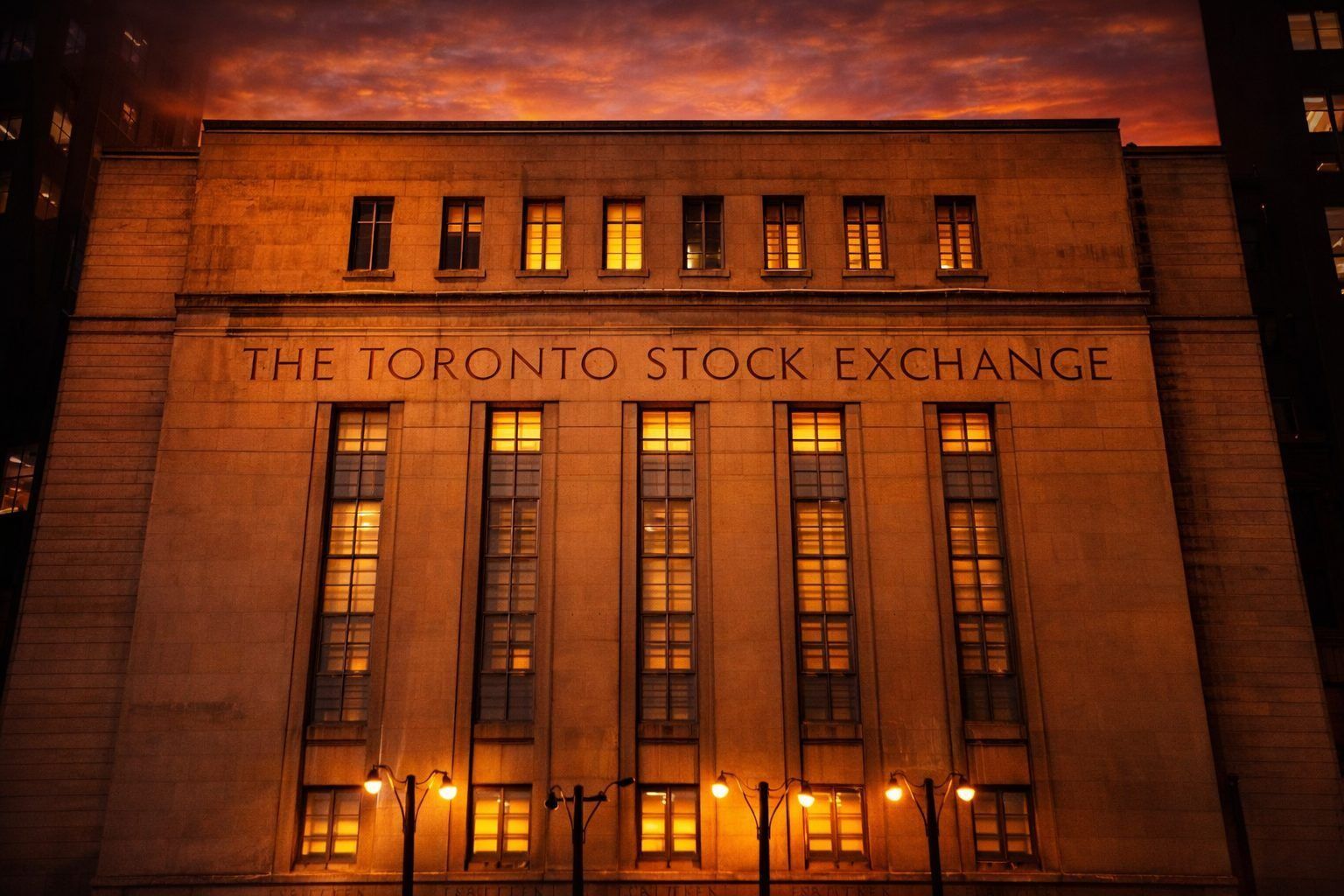
The Toronto Stock Exchange (TSX) heads into Monday’s reopening with a familiar late-December cocktail: thin liquidity, big commodity moves, and geopolitics that refuses to stay politely off the trading floor. After a holiday-interrupted stretch that left markets quiet but not calm, investors will be weighing whether the TSX’s 2025 leadership—powered by metals and financials—still has fuel, or whether energy’s headwinds and a firmer Canadian dollar start to bite.
The last TSX session—Christmas Eve’s shortened trade—ended with the S&P/TSX Composite down 0.2% at 31,999.76, as materials and energy dragged while volumes stayed light. Even with that dip, the index is up about 29.4% for 2025, putting it on pace for its biggest annual gain since 2009.
Why the market is quiet right now, and when trading resumes
The TSX is closed for the weekend, following a holiday schedule that included an early close on Christmas Eve and full closures for Christmas Day and Boxing Day.
When trading returns, TSX’s timetable matters because “pre-market” in Canada isn’t the same creature as U.S. premarket. On the TSX, the Pre-Open runs from 7:00 a.m. to 9:30 a.m. ET (orders can be entered, but not executed), followed by the opening auction and then Continuous Trading from 9:30 a.m. to 4:00 p.m. ET. TSX.com
With the next full session falling in the year-end window, traders should expect the tape to be more sensitive than usual to outsized orders, sudden headlines, and commodity spikes.
The big 48-hour driver for TSX: oil just took a hard step down
Energy is one of the TSX’s defining swing factors, and crude’s latest move is not subtle. On Friday, oil settled more than 2% lower: Brent closed at $60.64 a barrel and WTI at $56.74, as markets revisited the “looming supply glut” narrative while also watching developments tied to Russia-Ukraine diplomacy. Reuters
Reuters also flagged a key datapoint hanging over 2026 expectations: the International Energy Agency’s December oil market report projects that global supply next year will exceed demand by 3.84 million barrels per day. That kind of surplus doesn’t just pressure crude—it can seep into Canadian energy earnings expectations, capex plans, and the TSX’s sector-level leadership.
Analysts at Aegis Hedging summed up the mood sharply, warning that while geopolitical tensions can add near-term support, they “have not materially shifted the underlying oversupply narrative.” Reuters
The other big driver: precious metals are on a record run
If oil is the potential anchor, precious metals remain the rocket boosters—especially for a TSX that’s been heavily helped by miners in 2025.
In the latest leg higher, Reuters reported silver breaching the $77 level and gold hitting fresh records, buoyed by expectations of U.S. Federal Reserve easing and safe-haven demand in thin markets.
One notable year-end forecast came from Peter Grant, vice president and senior metals strategist at Zaner Metals, who said “$80 in silver is within reach by year-end,” and pointed to higher upside targets for gold into early 2026 (while also acknowledging profit-taking risk). Reuters
For TSX investors, that matters because the index’s commodity sensitivity isn’t theoretical—it’s structural. Metals strength can keep buoying mining-heavy pockets of the market even when broader global equities are merely drifting.
What Canadian fund managers are saying heading into 2026
A fresh Canadian Press report published Sunday adds a useful on-the-ground view of what professional allocators are watching as the TSX heads into the new year—especially whether gold can keep doing the heavy lifting.
Philip Petursson, chief investment strategist at IG Wealth Management, argued gold likely still has upside, but warned expectations should cool after a massive run; he also called TSX exposure “a fantastic hedge against an AI index like the S&P 500,” reflecting how differently Canada’s market is built compared with U.S. megacap tech dominance. CityNews Halifax
Brent Joyce, chief investment strategist at BMO Private Wealth, said leadership could broaden, highlighting energy and industrials as areas with potential catalysts—even as he acknowledged the “awash in oil” argument remains part of the debate. CityNews Halifax
And Brianne Gardner, senior wealth manager at Velocity Investment Partners at Raymond James, said she expects “moderate growth” on the TSX supported by materials and continued “solid performance” from Canadian banks, while flagging slower domestic growth and trade-related tariff risks as key headwinds. CityNews Halifax
Macro reality check: Canada’s economy just logged a bigger-than-expected October drop
Under the hood, Canada’s growth picture remains a constraint on how far valuations and earnings expectations can stretch.
Canada’s economy shrank 0.3% in October, the biggest monthly decline in almost three years, Reuters reported, with an initial estimate pointing to 0.1% growth in November.
That slowdown matters for TSX leadership groups like banks and cyclicals. It also feeds directly into the rate path debate. Stephen Brown, deputy chief North America economist at Capital Economics, said the data is “unlikely to materially change” the monetary policy outlook and warned markets may be getting ahead of themselves in pricing rate hikes for next year. Reuters
Separately, Michael Davenport, Senior Canada Economist at Oxford Economics, said weak underlying momentum could carry into the first half of 2026.
The Canadian dollar is firmer—and that can cut both ways for TSX
A stronger loonie can be a quiet but meaningful factor for Canadian equities: it can reduce imported inflation and help consumers, but it can also pressure exporters and Canadian companies earning U.S.-dollar revenue when translated back into CAD.
On the latest move, Reuters reported the Canadian dollar rising to its strongest level in nearly five months, with Scotiabank strategists Shaun Osborne and Eric Theoret attributing the support to a softer U.S. dollar backdrop, narrower U.S.-Canada yield spreads, relatively better Canadian data surprises, and commodity gains.
U.S. market tone: “catching our breath,” but the Santa Claus window is still in play
Even though this is a TSX story, U.S. risk appetite tends to leak across the border—especially when liquidity is thin.
On Friday, Wall Street finished nearly flat in light post-holiday trading, snapping a five-session rally but still logging weekly gains, Reuters reported.
Ryan Detrick, chief market strategist at Carson Group, described the session as markets “catching our breath” after the rally and said he expects “a little more upward bias” as the Santa Claus rally period continues. Reuters
If U.S. equities extend their year-end bid, TSX sentiment often benefits—though Canada’s index drivers (commodities, financials) can still diverge sharply from U.S. megacap tech.
Geopolitics: Ukraine headlines are back in the driver’s seat for energy risk
Geopolitical risk is doing what it does best: showing up uninvited and rearranging everyone’s assumptions.
Over the weekend, Reuters reported a major Russian drone-and-missile attack on Kyiv ahead of talks between Ukrainian President Volodymyr Zelenskiy and U.S. President Donald Trump, as diplomacy and security guarantees remain central sticking points. Reuters also detailed a draft 20-point framework expected to be central to those discussions.
Canada has been directly involved on the diplomatic side as well. Reuters reported Prime Minister Mark Carney announcing an additional $2.5 billion in economic aid for Ukraine.
For TSX investors, the immediate relevance isn’t just “headline risk”—it’s the way geopolitics can swing oil risk premiums and, in turn, Canadian energy earnings expectations.
What investors should know before Monday’s TSX open
With the market closed right now, the highest-value prep is less about predicting the opening tick and more about minimizing surprise.
Monitor these pressure points before the opening auction:
- Oil direction and the “glut vs. geopolitics” tug-of-war. Friday’s sharp drop put oversupply worries back in control. Reuters
- Precious metals momentum. Record levels in silver and gold have been reinforced by rate-cut expectations and thin liquidity—conditions that can amplify both upside surges and sudden pullbacks.
- CAD vs. USD. A firmer loonie can subtly reshape sector leadership, especially for exporters and commodity-linked names.
- Liquidity risk. Year-end trade can exaggerate moves; consider tighter risk controls and more deliberate order placement.
- Know the clock. TSX order entry begins at 7:00 a.m. ET in the Pre-Open, with continuous trading starting at 9:30 a.m. ET.
The setup in one sentence
The Toronto Stock Exchange enters Monday’s reopening with a strong 2025 tape behind it, but with oil weakening, precious metals blazing, and macro and geopolitics pulling in opposite directions—an environment where sector bets and execution discipline matter more than bravado.