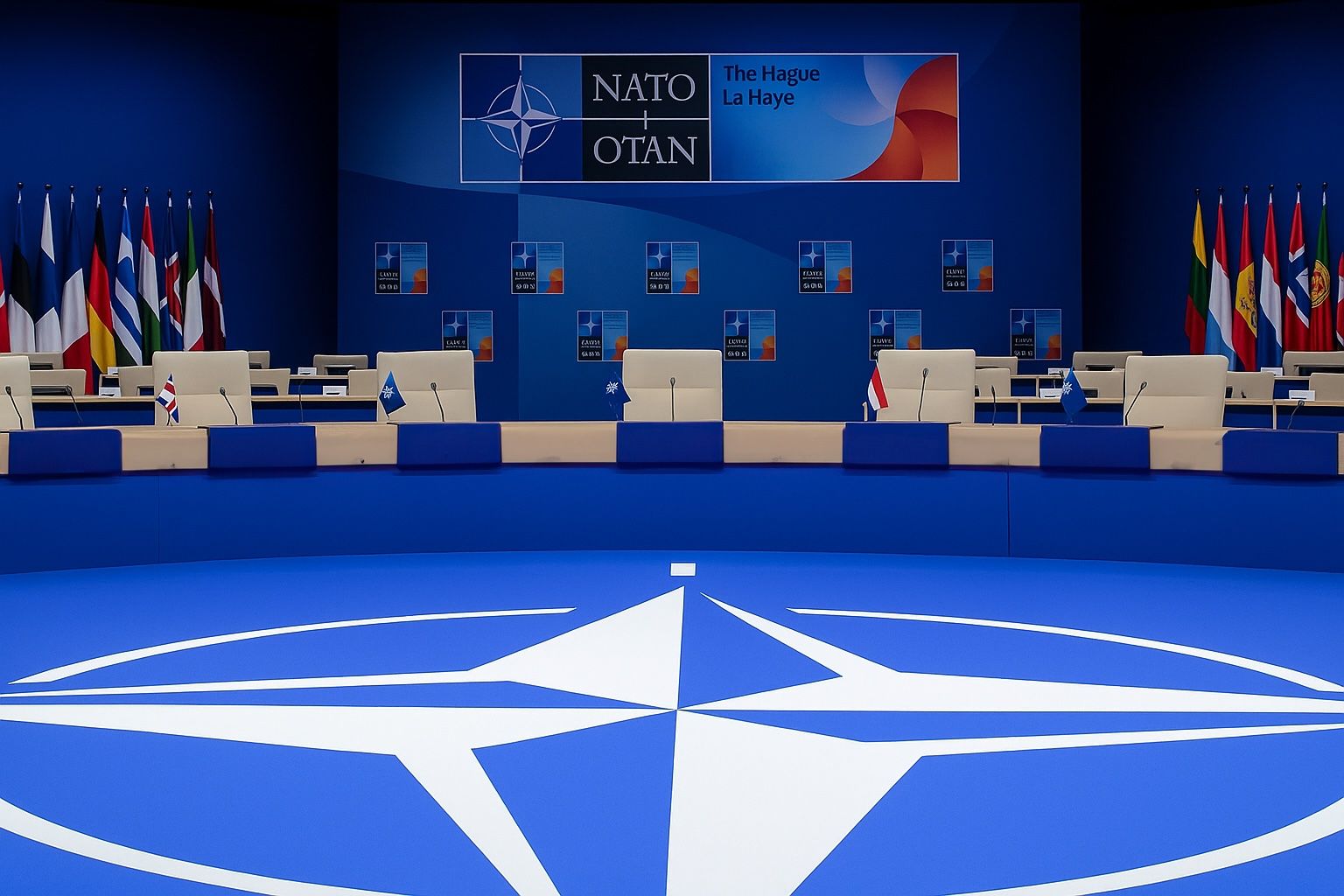

- On June 24, 2025, President Donald Trump arrived in The Hague demanding all 32 NATO allies commit 5% of their GDP to defense.
- Spain and Slovakia sought carve-outs, exposing cracks despite a one-page summit communiqué praised by NATO Secretary-General Mark Rutte.
- From Air Force One, Trump phoned Israeli Prime Minister Benjamin Netanyahu and Iranian intermediaries via Qatar to secure a cease-fire pledge minutes before landing.
- Trump ordered U.S. B-2 strikes on Iranian nuclear sites.
- Within hours, Iran and Israel fired new missiles, prompting Trump to lash out at Israel for unloading right after agreeing.
- U.S. refueling tankers and the carrier Nimitz remained on station in case the cease-fire collapsed.
- Crude futures fell nearly 6% as traders priced in an immediate supply shock.
- The House voted 344-79 to table Rep. Al Green’s abuse-of-power impeachment articles.
- The Supreme Court issued a 6-3 decision allowing rapid third-country removals, with a South-Sudan flight briefly grounded by Judge Brian Murphy before being overruled hours later.
- The Conference Board confidence index declined to 93, its lowest since mid-2020, partly due to tariff fears tied to the Big, Beautiful Bill.
At lightning speed on 24 June 2025, President Donald Trump upended foreign and domestic politics: he jetted into The Hague demanding a historic 5 %‑of‑GDP defense pledge from NATO, proclaimed (and then scolded) a shaky Israel‑Iran cease‑fire hours after ordering U.S. B‑2 strikes on Iranian nuclear sites, and watched Congress shelve an impeachment bid even as lawmakers advanced War‑Powers curbs. Oil prices whipsawed nearly 6 %, consumer confidence slid, immigration policy lurched after a Supreme Court ruling—and allies openly wondered whether Washington would still honor NATO’s Article 5. This report pieces together the day’s flood of developments and adds fresh reporting and expert insight to explain how a single news cycle put America’s alliances, the Middle East, and U.S. constitutional balance on a knife‑edge.
1. NATO Summit: 5 % or Bust?
1.1 Trump’s new red line
- Demand for a 5 % pledge. Trump arrived in the Netherlands insisting that all 32 allies “must do 5 %” or risk U.S. disengagement. apnews.comreuters.com
- Article 5 ambiguity. Asked if Washington would still come to Europe’s defense, he replied it “depends on your definition,” jolting diplomats. apnews.comreuters.com
1.2 Allies’ uneasy assent
NATO Secretary‑General Mark Rutte hailed Trump’s “decisive action” in Iran while urging unity, but Spain and Slovakia immediately sought carve‑outs, exposing cracks that summit planners had tried to paper over with a one‑page communiqué. theguardian.compolitico.com
1.3 Expert view
Kristine Berzina of the German Marshall Fund warns leaders will be “distracted by the rapidly developing crisis in the Middle East,” a dynamic she says “benefits neither Ukraine nor alliance cohesion.” politico.com
Richard Fontaine of CNAS counters that allied support for the U.S. strikes shows the alliance is “far from the 2003 Iraq divide.” politico.com
2. Israel‑Iran Cease‑Fire: Broker or Breaker‑in‑Chief?
2.1 How the deal unfolded
- Mid‑air diplomacy. From Air Force One, Trump phoned Israeli PM Benjamin Netanyahu and Iranian intermediaries via Qatar, extracting a cease‑fire pledge minutes before wheels‑down in Amsterdam.
- Violations within hours. Both Tehran and Jerusalem launched fresh missiles, prompting Trump to blast Israel for having “unloaded right after agreeing.” reuters.comapnews.com
2.2 Military and market fallout
U.S. refueling tankers and the carrier Nimitz remain on station “in case the deal collapses,” officials say. reuters.com Crude futures plunged almost 6 % as traders priced out an immediate supply shock. reuters.com
2.3 Regional reaction
Netanyahu claimed Israel’s goals were met and thanked Trump, while Iran denied its program had weapons intent. reuters.comapnews.com Al Jazeera notes Gulf states quietly welcomed the pause but doubt its durability given “rocket fire within three hours.” aljazeera.com
3. Washington in Turmoil
3.1 Impeachment effort stalls
The House voted 344‑79 to table Rep. Al Green’s abuse‑of‑power articles over the strikes—a rare moment of bipartisan fatigue with impeachment.
3.2 War‑Powers backlash
Rep. Jim Himes and Sen. Tim Kaine filed parallel resolutions to claw back authority, arguing Trump may be edging toward regime‑change war. reuters.comreuters.com
Leader Chuck Schumer blasted the administration for postponing a classified briefing, calling the dodge “outrageous and evasive.” apnews.comwashingtonpost.com
3.3 Supreme Court green‑lights fast deportations
A 6‑3 decision let the administration resume third‑country removals; Boston Judge Brian Murphy briefly grounded a South‑Sudan flight but was overruled hours later.
4. Economy & Homeland Security Signals
4.1 Consumer and market sentiment
The Conference Board confidence index slipped to 93—its lowest since mid‑2020—blamed partly on tariff fears tied to the “Big, Beautiful Bill” inching through Congress. apnews.com
4.2 DHS threat bulletin
Homeland Security warned of cyber‑reprisal plots from Iran even as no specific threats materialized, underscoring a “more volatile but less predictable” landscape, analysts said. apnews.compolitico.com
5. What Happens Next?
| Flashpoint | Short‑Term Risk | Medium‑Term Question |
|---|---|---|
| NATO 5 % Pledge | Summit communiqués could collapse if Spain, Belgium, or Slovakia balk. | Will Congress fund a proportionate U.S. buildup, or will allies outspend Washington for the first time in decades? |
| Israel‑Iran Cease‑Fire | Renewed rockets could trigger second‑wave U.S./Israeli strikes. | Does Trump pursue a broader Iran strategy or declare “mission accomplished”? |
| War‑Powers Resolutions | Possible Senate vote within days; House GOP leadership likely stalls. | If hostilities flare again, could a bipartisan coalition override a veto? |
| Supreme Court & Deportations | Immediate flights to South Sudan and elsewhere resume. | Could revived litigation force narrower due‑process safeguards? |
6. Expert Scorecard
| Expert | Institution | Takeaway Quote |
|---|---|---|
| Kristine Berzina | German Marshall Fund | “Leaders will be distracted by the rapid Middle‑East crisis—none of that benefits Ukraine.” politico.com |
| Richard Fontaine | CNAS | “This is not like 2003; allies are remarkably united behind limited strikes.” politico.com |
| Elisa Ewers | ex‑NSC (Middle East) | Outcome hinges on whether the U.S. “fully commits to regime change” or keeps goals limited. politico.com |
| Mark Rutte | NATO Secretary‑General | Trump remains “absolutely” committed to Article 5 despite the rhetoric. theguardian.com |
7. Bottom Line
One frenetic Tuesday showed how Trump’s second‑term playbook—maximum pressure abroad, headline‑grabbing demands on allies, and relentless tests of institutional guardrails at home—can redraw multiple fault lines at once. Whether the fragile cease‑fire, the 5 % NATO pledge, or the constitutional tussle over war powers endures will define the next phase of his presidency and, by extension, the post‑Cold‑War order. For allies, markets, and lawmakers alike, the message is clear: prepare for perpetual motion—and perpetual uncertainty.
Related articles: Stock Market