NEW YORK, Dec. 28, 2025, 4:36 p.m. ET — Market closed
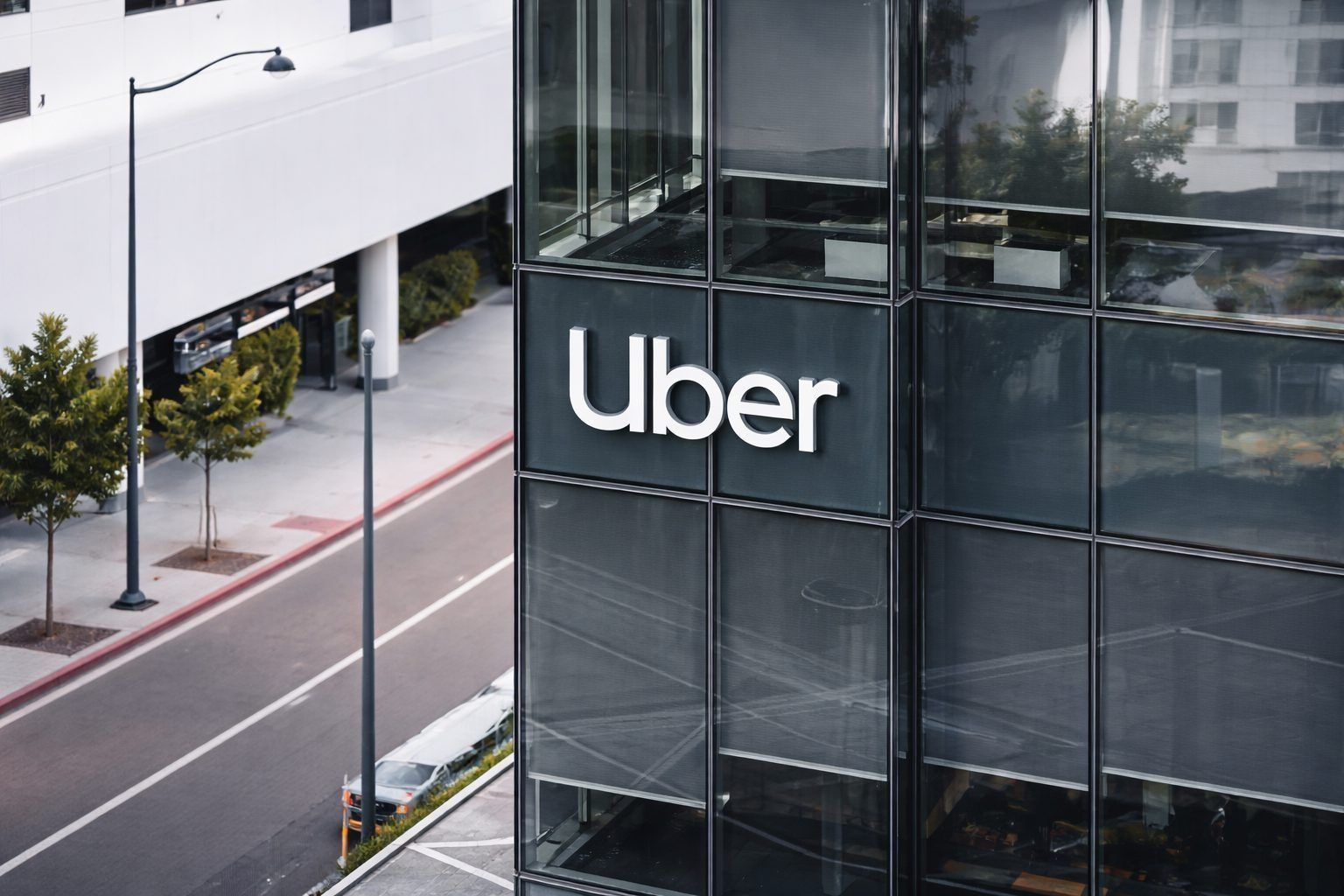
Uber Technologies, Inc. (NYSE: UBER) heads into the final full trading week of 2025 with investors balancing two powerful narratives: a long-term growth story tied to autonomy partnerships and global mobility demand, and a near-term legal overhang tied to Uber One subscription practices now under intensified federal and multistate scrutiny.
With U.S. stock exchanges closed for the Sunday weekend session, UBER’s latest available quote sits around $81.26, up about 0.12% versus the prior close, after trading between roughly $80.70 and $81.49 in the most recent session.
Where Uber stock stands heading into the next open
The bigger picture for Uber stock remains a tug-of-war between improving profitability metrics and “headline risk” from regulatory and litigation developments. At roughly the low-$80s, UBER is still well below its all-time high of $101.99 (Sept. 22, 2025), a level that many traders and long-term investors continue to treat as a psychological reference point. TradingView
As often happens late in December, the next few sessions can be shaped as much by year-end positioning and liquidity as by company-specific fundamentals—particularly for mega-cap names and widely held growth stocks like Uber.
Market backdrop: year-end rally, Fed focus, and what that can mean for UBER
The broader market tone remains constructive going into Monday’s open. A Reuters “Week Ahead” report highlighted that the S&P 500 is hovering within about 1% of 7,000, and that investors are watching whether the rally can finish 2025 strong—while also looking ahead to catalysts such as Federal Reserve minutes due Tuesday. Reuters
That same Reuters report cited several strategists flagging how quickly sentiment can shift into year-end:
- Paul Nolte (Murphy & Sylvest) warned investors not to “rest on their laurels” after a strong year. Reuters
- Michael Reynolds (Glenmede) noted markets are pricing in “multiple rate cuts” ahead. Reuters
- Anthony Saglimbene (Ameriprise) pointed to the risk that the market is “starting to price perfection.” Reuters
For Uber shareholders, this macro setup matters because UBER often trades like a growth-tilted, high-beta consumer/tech hybrid: optimism around risk assets can lift it, while any sudden repricing of rates or a risk-off shift can pressure multiples—especially when company-specific headlines are mixed.
48-hour news flow: what’s new, and what remains in focus
While there have been no blockbuster Uber earnings updates over the weekend, there has been fresh market-time content and filing-driven coverage in the past 24–48 hours that investors will likely see in Monday morning scans:
Institutional-position updates (filing-driven coverage)
MarketBeat reports published over the past two days spotlighted additional institutional-position disclosures, including:
- E. Ohman J or Asset Management AB disclosing a new stake of 83,500 shares (valued around $8.18 million) reported for Q3, and reiterating that institutional ownership is around 80%+ based on tracked filings. MarketBeat
- A separate MarketBeat item noting Carnegie Investment Counsel increased its Uber position to 514,301 shares (Q3 filing context). MarketBeat
These filing-based pieces rarely move the stock alone, but they can shape sentiment by reinforcing whether large holders appear to be accumulating—or trimming—into year-end.
Broader “week-ahead” market framing
Reuters’ Sunday “week ahead” positioning piece is also part of the last-24-hour news mix investors will bring into Monday’s open, especially around Fed expectations and the durability of the rally. Reuters
Robotaxis and autonomy: a longer-term growth lever that keeps getting louder
Uber’s autonomy strategy—largely built on partnerships rather than owning the full AV stack—continues to show up as a central theme in recent coverage, particularly as the robotaxi race globalizes.
UK robotaxi trials with Baidu (London focus)
Reuters reported that Uber and Lyft have partnered with China’s Baidu for UK robotaxi trials in 2026, using Baidu’s Apollo Go RT6 vehicles. The report also noted how the UK’s regulatory posture—supported by the Automated Vehicles Act 2024, which clarifies liability by placing responsibility on the vehicle’s operating entity rather than passengers—has helped attract trials in London. Reuters
The UK angle matters for investors because it speaks to Uber’s ability to expand autonomy-linked offerings in major global cities while leaning on partners for capital-intensive AV development.
Middle East rollouts via WeRide partnership
A separate Reuters overview of global robotaxi deployments described how WeRide and Uber have been moving toward more advanced operations in the region, including Level 4 driverless activity and expansion steps that could lead to broader commercial rollouts. Reuters
Investor takeaway: Autonomy news can cut both ways. Bulls see it as a route to better unit economics and new product layers; skeptics see it as long-dated, capital-intensive, and potentially disruptive to the ride-hailing take-rate model over time. The market’s reaction often hinges on whether news looks like near-term commercialization or far-off experimentation.
Uber One lawsuit overhang: FTC and states intensify pressure
The most material near-term risk narrative around Uber right now is legal and regulatory.
FTC + states amended complaint (civil penalties sought)
The U.S. Federal Trade Commission said it—along with 21 states and the District of Columbia—filed an amended complaint alleging Uber charged consumers for its Uber One subscription without consent, failed to deliver promised savings, and made cancellation difficult. The FTC said the amended complaint seeks civil penalties for alleged violations including the Restore Online Shoppers’ Confidence Act (ROSCA) and state laws. Federal Trade Commission
Reuters also covered the amended complaint and the focus on alleged deceptive billing and cancellation practices tied to Uber One. Reuters
State AGs sharpen the messaging (NY + DC + Michigan examples)
New York Attorney General Letitia James said New York joined a multistate coalition and alleged customers were “trapp[ed]…in recurring subscriptions” that were difficult to cancel—while describing Uber One pricing at $9.99/month or $96/year and alleging confusing cancellation flows. New York State Attorney General
Washington, D.C. Attorney General Brian Schwalb said more than 100,000 DC residents are Uber One subscribers and alleged users were enrolled without consent and then faced significant friction to cancel. DC Attorney General
Michigan Attorney General Dana Nessel announced Michigan’s participation in the coalition and noted the lawsuit is pending in the Northern District of California, with a trial currently scheduled for February 2027. Michigan.gov
Why this matters for UBER stock: Even if the litigation timeline is long, the headline risk can influence valuation because it adds uncertainty around (1) subscription growth/retention tactics, (2) possible changes to product flows, and (3) potential penalties or remedies if Uber were to lose or settle.
Fundamentals check: Uber’s profitability story is real—and still the bull case core
While the Uber One legal story dominates headlines, Uber’s underlying operating performance and cash generation remain the foundation of the bull thesis.
In its Q3 2025 results release, Uber reported:
- Trips up 22% year over year to 3.5 billion
- Gross Bookings up 21% to $49.7 billion
- Revenue up 20% to $13.5 billion
- Adjusted EBITDA up 33% to $2.3 billion
- Free cash flow of $2.2 billion Uber Investor Relations
CEO Dara Khosrowshahi said Uber was investing in customer relationships, local commerce, and “the transformative potential of AI and autonomy,” while CFO Prashanth Mahendra‑Rajah emphasized “record profitability” and a commitment to return capital while investing in growth. Uber Investor Relations
For Q4 2025, Uber guided to:
- Gross Bookings:$52.25B to $53.75B
- Adjusted EBITDA:$2.41B to $2.51B Uber Investor Relations
The company also said it intended to redeem its $1.2 billion Convertible Notes due December 2025 in Q4 2025. Uber Investor Relations
Context investors should keep in mind: Uber’s GAAP net income can be distorted by large one-time items (Uber flagged items like a major tax valuation release and equity investment revaluations in its Q3 release). Many analysts and institutional investors therefore lean more heavily on gross bookings growth, adjusted EBITDA, and free cash flow as the cleaner operating signals. Uber Investor Relations
Wall Street forecasts: price targets cluster above current levels, but dispersion is wide
Analyst outlook remains broadly constructive, with most aggregated services showing average targets well above the low-$80s—though the range of outcomes is wide.
- MarketBeat shows a “Moderate Buy” consensus and an average price target of $108.43, with a high of $135 and low of $78 (based on 41 analyst ratings). MarketBeat
- TipRanks lists an average target of $116.80 (high $150, low $105) based on 29 analysts offering 12-month targets in the last three months. TipRanks
- Fintel shows an average one-year price target around $113.76, with forecasts ranging from $78.78 to $157.50. Fintel
For event-watchers, TradingView lists Uber’s next earnings release date as Feb. 11, 2026. TradingView
Insider activity: what filings show heading into year-end
Two notable insider Form 4 filings from late 2025 that remain part of the investor narrative:
- Uber CFO Prashanth Mahendra‑Rajah reported a sale of 5,500 shares on Nov. 12, 2025 at a weighted average price of $94.4062 (range roughly $94.16–$94.77), leaving 20,330 shares owned directly after the transaction. SEC
- Uber executive Tony West reported RSU-related activity and shares withheld to cover tax obligations on Dec. 16, 2025, and also reported a sale of 3,125 shares on Dec. 18, 2025 at $80.36 pursuant to a Rule 10b5‑1 plan, leaving 175,423 shares owned directly. SEC
Insider sales don’t automatically imply bearish conviction—many are scheduled or diversification-related—but in a headline-sensitive tape, investors often track whether insider activity is mostly selling, mostly buying, or neutral.
What investors should know before Monday’s next session
With markets reopening Monday, Uber stock traders and long-term holders will typically focus on a short, practical checklist:
- Watch the macro tone at the open. Year-end trading can exaggerate moves. The market is also staring at key catalysts like Fed minutes this week, which can swing growth multiples. Reuters
- Track any new developments in the Uber One legal fight. The FTC and multistate actions are ongoing, and incremental updates—even procedural—can generate headlines that hit sentiment. Federal Trade Commission+2New York State A…
- Keep autonomy headlines in perspective. Robotaxi partnerships can be multi-year stories; investors will differentiate between “trial announcements” and clear steps toward monetization at scale. Reuters+1
- Know the key reference levels. Uber’s recent history includes an all-time high near $101.99, and many market participants will watch whether UBER can reclaim major moving averages into 2026 after its pullback from that peak. TradingView+1
- Be aware of positioning signals. Filing-driven coverage continues to point to heavy institutional ownership, which can matter for volatility when institutions rebalance near quarter- and year-end. MarketBeat
As Monday’s session approaches, Uber’s setup is straightforward: the company’s profitability and scale story remains intact, but the stock’s next leg will likely depend on whether investors see the legal overhang as containable—while keeping one eye on the broader market’s appetite for growth risk going into 2026.