
BRUSSELS, March 4, 2026, 13:33 (CET)
- The EU rolled out local-content requirements, linking certain subsidies and public contracts to “Made in EU” minimums.
- Ford points out its European supply chain relies on the UK and Turkey—both could be excluded, depending on how the final definitions shake out.
- The proposal remains up in the air, pending approval, and faces potential revisions with opposition from governments, automakers, and trade partners.
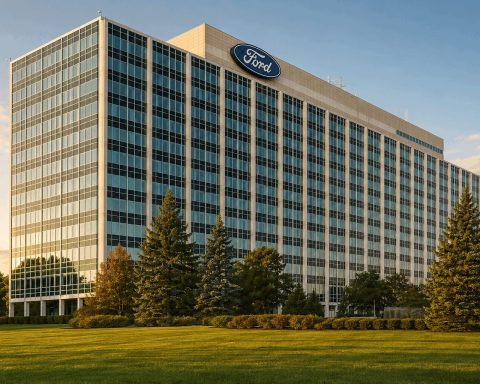
Wednesday saw the European Commission roll out its “Made in EU” industrial blueprint, a move that could leave Ford Motor Company reevaluating its European supply chain—particularly if strict definitions for “European” content become law. Reuters
Timing couldn’t be trickier for Ford. The U.S. automaker is working to keep its European car operations afloat during its shift to electric vehicles, but Brussels has started channeling public funds into regional supply chains—even as demand, pricing, and the competitive landscape are all in flux.
The Commission’s proposed Industrial Accelerator Act would require products benefiting from public procurement or manufacturing subsidies to meet local-content and low-carbon standards, spanning industries including steel, aluminium, and electric vehicles. The measure targets lower-cost imports—China, in particular, figures prominently in Brussels’ case.
The EU wants to steer public contracts toward European factories and suppliers. Under the plan, electric vehicles purchased by governments would have to be put together in the EU, with at least 70% of their components—battery not counted—sourced from Europe, starting six months after the law kicks in.
The definition itself is just as important as the percentage figure. Under the plan, all 27 EU member states are included, along with Iceland, Liechtenstein, and Norway. Brussels could also recognize certain non-EU partners as equivalents—though only if it determines those countries provide reciprocal market access.
Ford has plenty at stake depending on how Brussels decides to draw the lines. Jim Baumbick, Ford’s European president, has pointed out the company’s big reliance on both Britain and Turkey, stressing that “excluding them would weaken production inside the EU itself.” During the same discussion, Valeo’s CEO Christophe Perillat issued his own warning: without intervention, “there will be massive relocations.” Karoline Kampermann from VDA also flagged the risk of any moves “perceived as protectionist,” saying such steps could spark a backlash. Reuters
The policy hits an auto sector that doesn’t stick to tidy geographical lines. According to Reuters, teardown specialist A2MAC1 determined Volkswagen’s ID.3, assembled in the EU, comfortably passes local content requirements based on parts value. Renault’s upcoming Renault 5, though, is much more reliant on China-tied inputs—unless the battery is left out of the equation.
The plan isn’t finalized yet. Sign-off from the European Parliament and EU governments is still on the table, and the familiar rift that held things up before—France advocating stricter limits, Germany favoring wider participation, Britain included—looks set to resurface as talks go forward.
The Commission faces a parallel challenge on materials. According to a draft viewed by Reuters, the EU pulled a proposed steel emissions label from the package, citing internal worries about extra red tape while a separate product-labelling law is still in the works. Still, the draft maintains that at least 25% of steel used in public procurement must be low-carbon.
The steel fight is seeping into auto rules. The EU’s separate proposals would require carmakers to source low-carbon steel to hit 2035 goals—though “green steel” projects are running behind schedule and battling cost spikes thanks to pricey green hydrogen. Industry associations say they’re being forced to rely on things outside their grasp. Reuters
Ford isn’t the only one paying attention. Jaguar Land Rover and other automakers with significant non-EU operations have also been pushing on “Made in Europe” criteria, with Chinese EV brands ramping up their assault on the European market and legacy companies working to protect profit margins. Reuters
Ford and its rivals are still waiting to see how fast the EU spells out exactly what counts as “Made in EU”—and how soon those criteria become hard requirements. There’s also the question of which countries will land on the “trusted partner” roster. The outcome could push more manufacturing into Europe, or it could just drive up costs and risk tit-for-tat moves. Reuters
Related articles: NYSE:F