
London, May 8, 2026, 09:34 BST
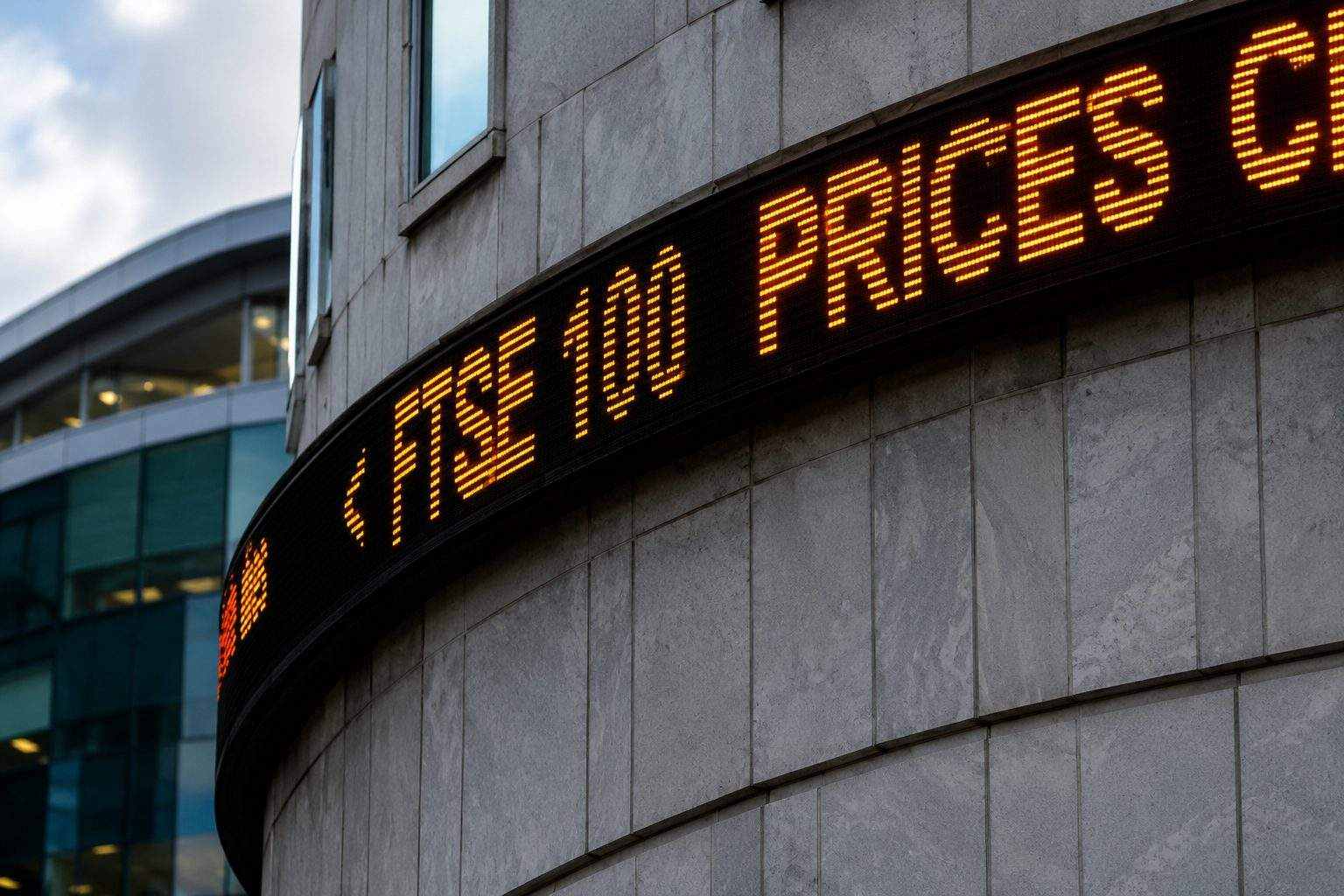
- FTSE 100 fell again, slipping 0.75% to 10,200.29 as of the most recent delayed data. That’s the second straight day of losses for the blue-chip index.
- Oil jumped past $100 a barrel again as U.S.-Iran tensions resurfaced, rattling airlines, stoking energy concerns, and adding to inflation pressures.
- Sterling and gilts stayed under pressure as Labour’s steep losses in the local elections injected a sharp dose of domestic politics into the sell-off.
London’s FTSE 100 slipped 0.75% to 10,200.29 in early Friday trading, according to delayed figures from Hargreaves Lansdown, as tensions flared again between the U.S. and Iran, sending oil prices up. Growing political uncertainty following UK election results also weighed on Britain’s blue-chip index, setting it up for a second consecutive day of losses.
The stakes just jumped: what started as a standard dip has become something else. Iran’s conflict is pushing up fuel prices, stirring inflation bets, and filtering into what companies are telling investors. Early local election numbers are also stirring doubts about Prime Minister Keir Starmer’s hold on power.
London’s FTSE 100 kicked off lower, shedding 86.06 points, or 0.8%, to 10,190.89. The more domestically-focused FTSE 250 also slipped at the open, down 0.6%, according to Alliance News. Brent crude moved higher in early London trade, last seen at $100.84 a barrel—up from $97.76 late Thursday.
The FTSE 100 slipped 1.6% Thursday, finishing at 10,276.95, according to Reuters, pressured by losses in Shell and BP alongside softer defence names. In contrast, the FTSE 250 ticked up 0.2% during the same stretch—a divided setup heading into Friday’s fresh geopolitical hit.
The slide hit Europe as well. By 0703 GMT, the pan-European STOXX 600 index slipped 0.8% to 611.69, with Germany’s DAX dropping 0.9% and London’s FTSE 100 off by 0.5%, according to Reuters. Jitters over Middle East developments have kept European stocks on edge, with worries that pricier energy could slow growth and pressure inflation.
Jim Reid at Deutsche Bank noted that “markets have slipped back” while investors weighed doubts over the durability of the U.S.-Iran ceasefire. Reid also pointed out that markets “still aren’t pricing in the worst-case scenario,” following President Donald Trump’s assurance that the ceasefire was intact, even after new clashes. Investing.com UK
Airlines felt it straight away. British Airways parent IAG cut its outlook for annual profit, free cash flow, and capacity, blaming a spike in jet fuel prices and supply snags caused by the Iran war. The group remains 70% hedged on fuel through 2026, and CEO Luis Gallego insisted there were “no issues with fuel availability” in IAG’s major markets. IAG now joins Air France-KLM and easyJet in spotlighting the squeeze from higher fuel costs. London South East
In London, BT climbed after JPMorgan lifted its price target and retained an “overweight” call. Vodafone inched higher on news of its share buyback. Defence stocks felt the pressure—Babcock, Rolls-Royce, and BAE Systems were all down at the open. Shell slipped; BP managed a slight gain. London South East
The pound climbed 0.21% to $1.3578 early Friday, with sterling gaining as local election tallies showed Labour suffering significant setbacks. Yields on 10-year gilts slipped 2.5 basis points to 4.92%—that’s a 0.025 percentage point move—according to Reuters. Gilts refer to UK government bonds.
Long-dated borrowing costs hovered around their three-decade highs. The 30-year gilt yield held steady at 5.632%. Derren Nathan, head of equity research at Hargreaves Lansdown, said a possible Labour change at the top was “undermining confidence in the UK’s fiscal health.” Reuters
But not everyone’s seeing it that way. Kallum Pickering, chief economist and deputy head of research at Peel Hunt, suggested Labour’s weak showing seemed “priced in.” He also pushed back on the market’s tilt toward more rate hikes, arguing the consensus is likely ignoring a potential hold-and-cut scenario later this year. London South East
Traders face the possibility that both shocks stick around longer than hoped. Oil ticking higher again spells trouble for airlines, retailers, and bonds sensitive to inflation. A drawn-out Labour leadership battle could drag UK assets lower too. Sure, a lasting ceasefire would take the biggest weight off, but Friday’s moves suggest markets aren’t betting on that outcome yet.