
Updated: December 22, 2025
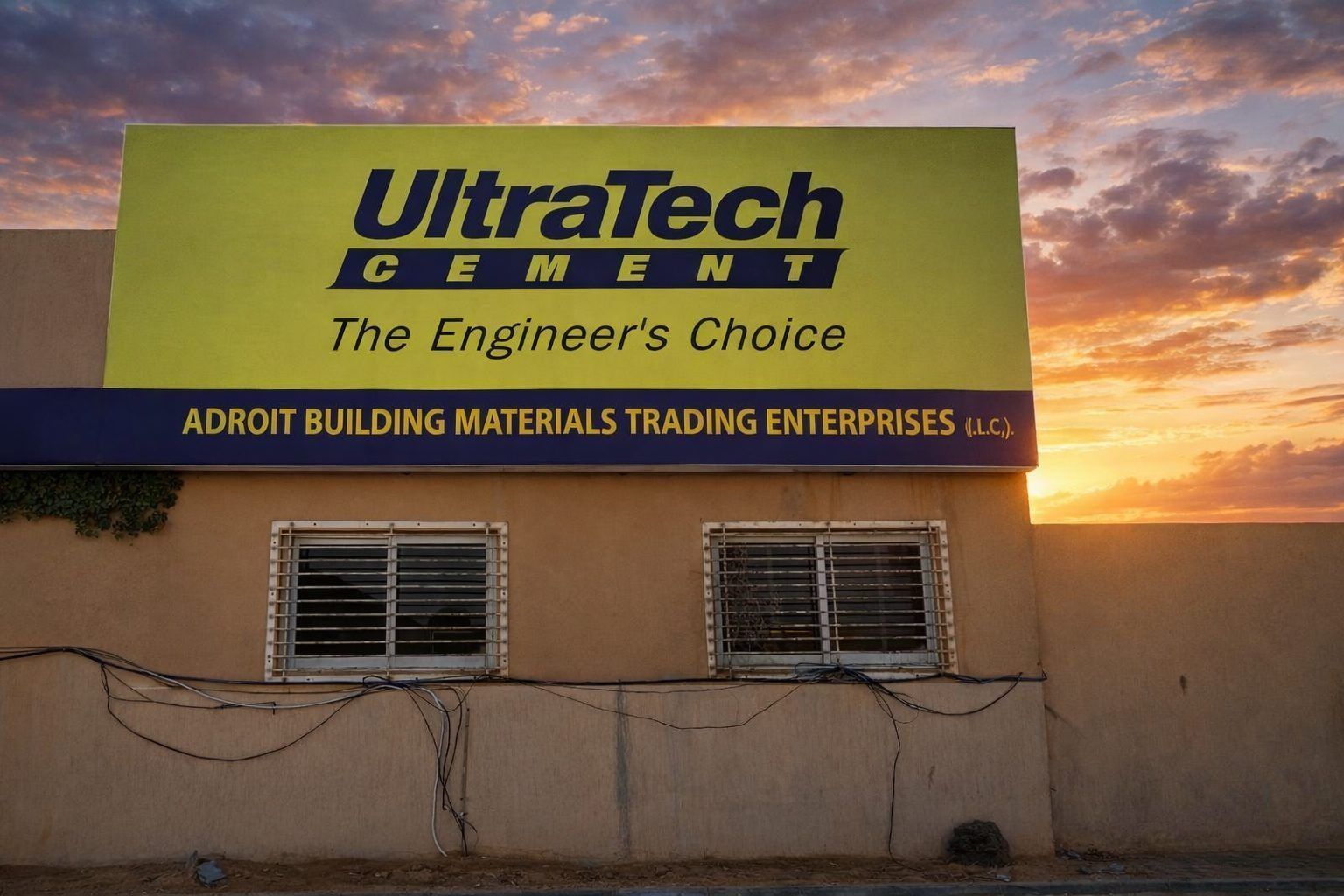
UltraTech Cement is back in the spotlight on December 22, 2025—this time for a regulatory overhang rather than an earnings beat. India’s largest cement maker has disclosed a GST demand notice totalling ₹782.2 crore, saying it is reviewing the order and plans to contest it.
Yet, even as the tax headline injects near-term uncertainty, the bigger market narrative remains intact: sell-side firms continue to publish “Buy” calls and double-digit upside targets, while sector analysts argue UltraTech—along with Adani’s cement platform—still holds structural advantages in costs, capacity ramp-up, and geographic reach. The Economic Times+2The Financial Express+2
Below is what’s driving the news today, what brokerages are saying, and why the UltraTech–Adani race is increasingly defining India’s cement cycle.
What happened on Dec 22: UltraTech receives a ₹782.2 crore GST demand notice
UltraTech Cement said it has received an order from GST authorities alleging issues such as short payment of GST and improper utilisation of Input Tax Credit (ITC) for the period FY2019 to FY2023 (2018–19 to 2022–23). The company stated that it is assessing legal options and will contest the demand before the appropriate forum.
Why the ₹782.2 crore number matters (and what’s inside it)
The headline figure can look startling, but the disclosed breakdown shows it is not just “tax due.” According to the details reported from the filing, the order upholds a tax liability of about ₹390.96 crore, plus a penalty of a similar amount, along with interest (including an additional interest component)—together aggregating to roughly ₹782.2 crore. Business Standard+1
UltraTech’s stance
UltraTech has said the order was passed without due consideration of its submissions, and it will pursue remedies through the available legal route.
Why investors track this closely: For large industrials, tax and regulatory disputes can influence sentiment in the short term—especially when the headline number is large. But markets typically focus on (1) the likelihood of a successful appeal, (2) the timing of cash outflows, and (3) whether the issue becomes recurring or remains a one-off dispute tied to past periods.
Market context: UltraTech’s price action and why traders are watching the ₹11,500 zone
UltraTech’s stock has been trading around the mid-₹11,000s in recent sessions, with market narratives swinging between near-term overhangs (like tax disputes) and long-cycle positives (demand, consolidation, and capacity ramp-up).
A key reference point for many market participants has been the mid-December trading band. On December 17, an Economic Times liveblog pegged UltraTech around ₹11,540 late in the session, while also noting weaker recent momentum over a three-month window even as longer-term returns remained strong.
Why this matters: Cement stocks often trade as a blend of (a) near-term pricing and cost trends and (b) multi-year capacity, logistics, and consolidation themes. Headlines like tax demands can trigger short bursts of volatility—but institutional conviction typically depends on whether the long-cycle thesis is still intact.
Brokerages double down: “Buy” calls and targets up to ₹15,210
Even before today’s GST headline, UltraTech had already been receiving supportive brokerage commentary—one reason it repeatedly shows up in “brokers’ call” and “top picks” columns.
1) Choice Equity Broking: Target ₹15,210 (about 32% upside cited)
In the December 17 market coverage, Choice Equity Broking was cited with a target price of ₹15,210, highlighting an upside potential of roughly 32% from the referenced price point.
2) ICICI Securities: Target ₹14,500 with a defined accumulation range
An ICICI Securities ideas list published on December 20 included UltraTech with a target of ₹14,500, suggesting accumulation in the ₹11,200–₹11,700 band and describing the setup as offering roughly 26% upside over a 12-month horizon.
3) Jefferies: Target ₹14,700; expects demand pickup and steadier fuel costs to help
Jefferies, in a sector note, put a ₹14,700 target on UltraTech and framed the bull case around scale, geographic diversification, and the ability to execute capacity expansion through varied regional cycles—while expecting a broader cement demand pickup later in the fiscal year and improved visibility on fuel costs.
Bottom line from the Street: While target prices vary, the common thread is that analysts continue to treat UltraTech as a “quality compounder” in Indian building materials—supported by scale, execution, and the ability to ride consolidation.
The bigger theme: UltraTech and Adani are separating from the pack in 2025
A key reason UltraTech remains a brokerage favourite is that many analysts see India’s cement market moving into a phase where scale, energy strategy, logistics efficiency, and fast capacity ramp-ups increasingly decide who wins.
A December 15 analysis focusing on sector leadership argued that UltraTech and Adani are outperforming because they are pushing ahead on:
- Lower-cost energy and efficiency
- Aggressive (and faster) capacity expansion
- Better plant location strategy and distribution reach Trade Brains
India’s cement demand is rising—but utilisation still isn’t tight
India remains the world’s second-largest cement producer, and production growth has been positive:
- FY25 cement production rose 6.3% year-on-year to 453 million tonnes India Brand Equity Foundation
- Rating agency commentary has projected cement volume growth of 6–7% in FY2026, driven by housing and infrastructure demand.
Despite this, overall sector utilisation has been described as hovering near the ~60% region in recent years—meaning the market is growing, but not always tight enough to give everyone strong pricing power at the same time.
Why leaders still win in a “not-tight” market: When pricing power is limited, the lowest-cost producers and best capital allocators tend to gain share and expand margins—especially when they can keep building through the cycle.
Cost advantage: energy, fuel, and efficiency are becoming the new battleground
Cement is a cost-heavy business where energy and freight can make or break profitability. The same analysis highlighted that power and fuel are roughly a third of production costs, making cheaper, controllable energy a major advantage.
It also argued that:
- Renewable power can be materially cheaper than grid power,
- Waste heat recovery can improve economics further, and
- The industry’s “green power” share has been rising and is expected to keep rising into FY27. Trade Brains
How this connects to UltraTech and Adani: Both groups have the balance sheet and execution bandwidth to invest in captive power, alternative fuels, logistics, and efficiency upgrades at scale—advantages that are harder for smaller regional players to replicate quickly.
Capacity and consolidation: UltraTech’s expansion engine keeps running
UltraTech’s strategic edge is not just its current scale—it’s the pace at which it is extending that lead.
An Economic Times report earlier in 2025 detailed UltraTech’s plan to add 29 MTPA of grey cement capacity over two years, targeting 212.2 MTPA domestic capacity by FY27, with a footprint spanning 82 locations across India once projects are commissioned.
This expansion-led playbook matters for three reasons:
- Market share capture in growth zones
Capacity additions across multiple regions reduce dependence on any single market’s pricing cycle. - Better utilisation and operating leverage
Higher utilisation typically improves unit economics—especially when demand accelerates seasonally or infrastructure spending ramps up. - Stronger distribution and logistics optimisation
Cement remains a regional business due to freight economics; broader footprints can mean better route planning and more resilient dispatch flexibility.
Adani’s cement platform: scale-up continues, with 155 MTPA ambition by FY28
On the Adani side, Reuters reported that Ambuja Cements (Adani Group) has raised its capacity target to 155 million tonnes per annum by FY2028, with current capacity around 107 MTPA, as the group keeps scaling its cement ambitions.
Why this matters for UltraTech investors: The competitive landscape is no longer fragmented. The sector is increasingly shaped by a handful of giants with the ability to buy assets, ramp capacity, and absorb cycles—raising the bar for mid-tier producers.
What investors will watch next after the GST notice
Here are the practical signposts that typically matter more than the headline amount:
1) Legal trajectory and disclosure cadence
- Whether UltraTech provides additional clarification on forum, timelines, or financial impact (e.g., provisioning approach) in future filings.
2) Cement pricing into the year-end and Q4 demand pulse
Jefferies has pointed to a demand pickup expected in Q4 and improving cost visibility as key supports for the sector’s outlook.
3) Fuel-cost trend and energy mix
With energy a major cost driver, investors will continue tracking petcoke/coal dynamics and the pace of efficiency/green energy adoption.
4) Capacity commissioning milestones
UltraTech’s FY26 and FY27 commissioning pipeline—and execution against it—remains central to the long-term thesis.
Takeaway: a short-term overhang meets a long-term leadership story
The ₹782.2 crore GST demand notice is a meaningful headline for December 22, 2025—especially because it can influence near-term sentiment and newsflow.
But the reason UltraTech continues to dominate brokerage “Buy” lists is that the company sits at the heart of India’s multi-year construction and infrastructure buildout, with analysts repeatedly citing scale, expansion execution, and cost advantages. The Economic Times+2The Financial Express+2
If India’s cement demand keeps climbing toward the next leg of growth—as industry data and rating-agency outlooks suggest—the market may increasingly reward the companies best positioned to convert volume into margins. Right now, that leadership conversation still starts with UltraTech and Adani.
Related articles: Stock Market