
Dubai, June 8, 2026, 22:01 GST
- Emirates is pulling back A380 operations on several June routes as higher fuel costs and Middle East airspace issues pressure airline schedules.
- IATA lowered its 2026 airline profit outlook to $23 billion, down from the earlier $41 billion estimate.
- IndiGo, Air India and Lufthansa are among more airlines scaling back capacity as the pressure moves past the Gulf carriers.
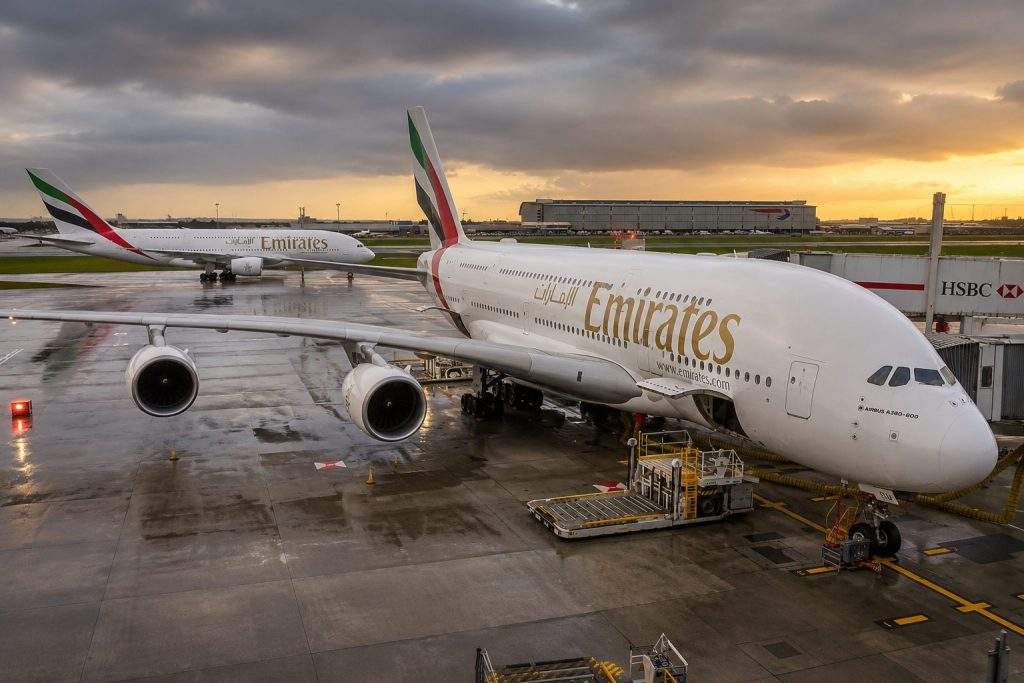
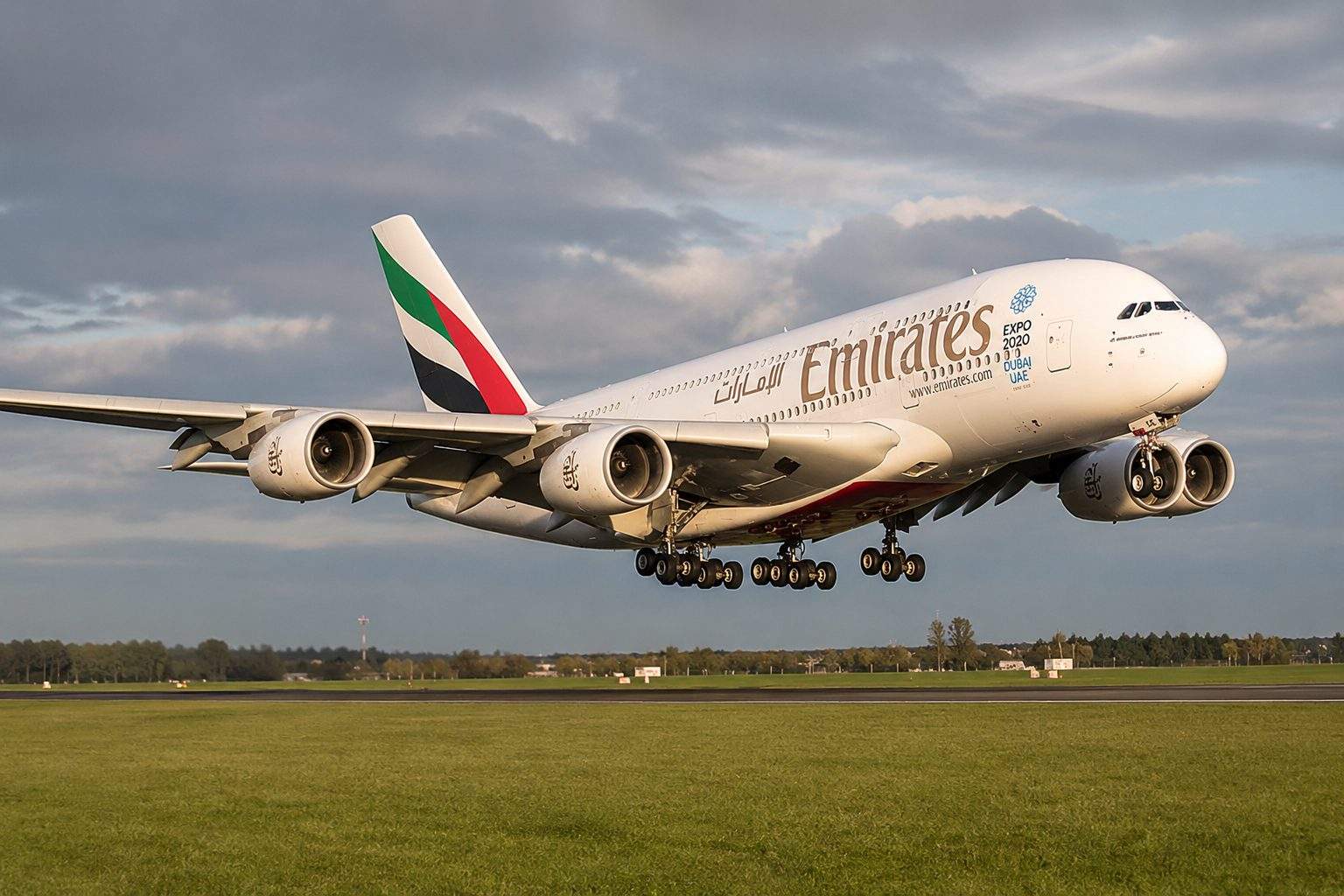
Emirates is dropping its Airbus A380 from a batch of June routes, scaling back as major airlines look to shield schedules from higher fuel prices, rerouted flights and Middle East airspace issues. According to AeroRoutes, the airline’s June 5 update pulled A380 service from 10 cities: Copenhagen, Düsseldorf, Frankfurt, Glasgow, London Gatwick, Manchester, Munich, Osaka Kansai, Perth and Washington Dulles.
Airlines head into the peak summer season with packed flights, few spare planes, and fuel costs that are harder to pass through to already-sold tickets. Timing is key. IATA on Sunday slashed its 2026 global airline net profit forecast to $23 billion, down from $41 billion projected earlier.
IATA says airlines will face fuel costs up almost 40% to $350 billion this year, with jet fuel now 31.4% of their expenses. That’s pushing them to cut seats or hike fares. “Airlines are bearing the brunt of the fuel price shock,” said Willie Walsh, IATA’s director general. IATA
Simple Flying called Emirates’ move an 11-route A380 suspension and noted the airline has around 25% fewer superjumbo flights for June. Emirates uses the A380, the world’s largest passenger jet, so swapping it out for smaller planes on a route can remove hundreds of seats even if flights keep running.
Emirates made more cuts to its June schedule, slashing it by as much as 16%, Gulf News said, citing an AGBI report that used Cirium data. That’s about 480,000 to 500,000 seats dropped for the month. “A season of disciplined consolidation, not growth,” Linus Benjamin Bauer, founder of BAA and Partners, told the paper. Emirates isn’t the only airline pulling back. Gulf News
Pressure has moved into India and Europe. IndiGo plans to halt flights to six overseas cities starting July 1, including Hong Kong and Shanghai, blaming higher costs and ongoing airspace restrictions. Reuters said last week that IndiGo dropped 7% to 10% of its scheduled domestic flights for June and July. Air India reduced domestic flights by 22% for the same months.
Air India is slashing some international routes between June and August, blaming airspace limits and jet fuel prices at record highs. But the carrier said it will still run over 1,200 international flights each month and aims to resume full service once it can.
Competition is patchy. Lufthansa, KLM and others have trimmed or halted some routes, Gulf News said. Some airlines are still expanding where demand is strong. Reuters, reporting from the Rio IATA meeting, said airlines are trying higher fares to balance out fuel bills, but want to avoid killing demand. “The market will respond and demand will soften and then you fly less,” Air New Zealand CEO Nikhil Ravishankar told reporters. Gulf News Reuters
Airline capacity is just the number of seats carriers can offer for sale. Lower capacity during peak travel means fewer options for passengers, making rebooking tougher and keeping ticket prices high. Walsh told Reuters fares will likely stay up if demand holds and capacity stays low.
Cuts aren’t set in stone yet. AeroRoutes reports Emirates’ June schedule could still change, with the second half of the month more uncertain. Airlines might bring back some flights if airspace improves, but if fuel or security gets tighter, further cuts are also possible.
Supply is about more than just fuel right now. At the IATA meeting Monday, airline bosses pushed engine makers about repair backlogs and grounded planes. United Airlines CEO Scott Kirby said the “biggest constraint” for the next five years or more is going to be engine shortages. IATA put the extra cost to airlines from supply-chain trouble at about $11 billion. Reuters
Related articles: Airlines