New York time check: It’s 2:17 p.m. ET on Friday, December 26, 2025, in New York.
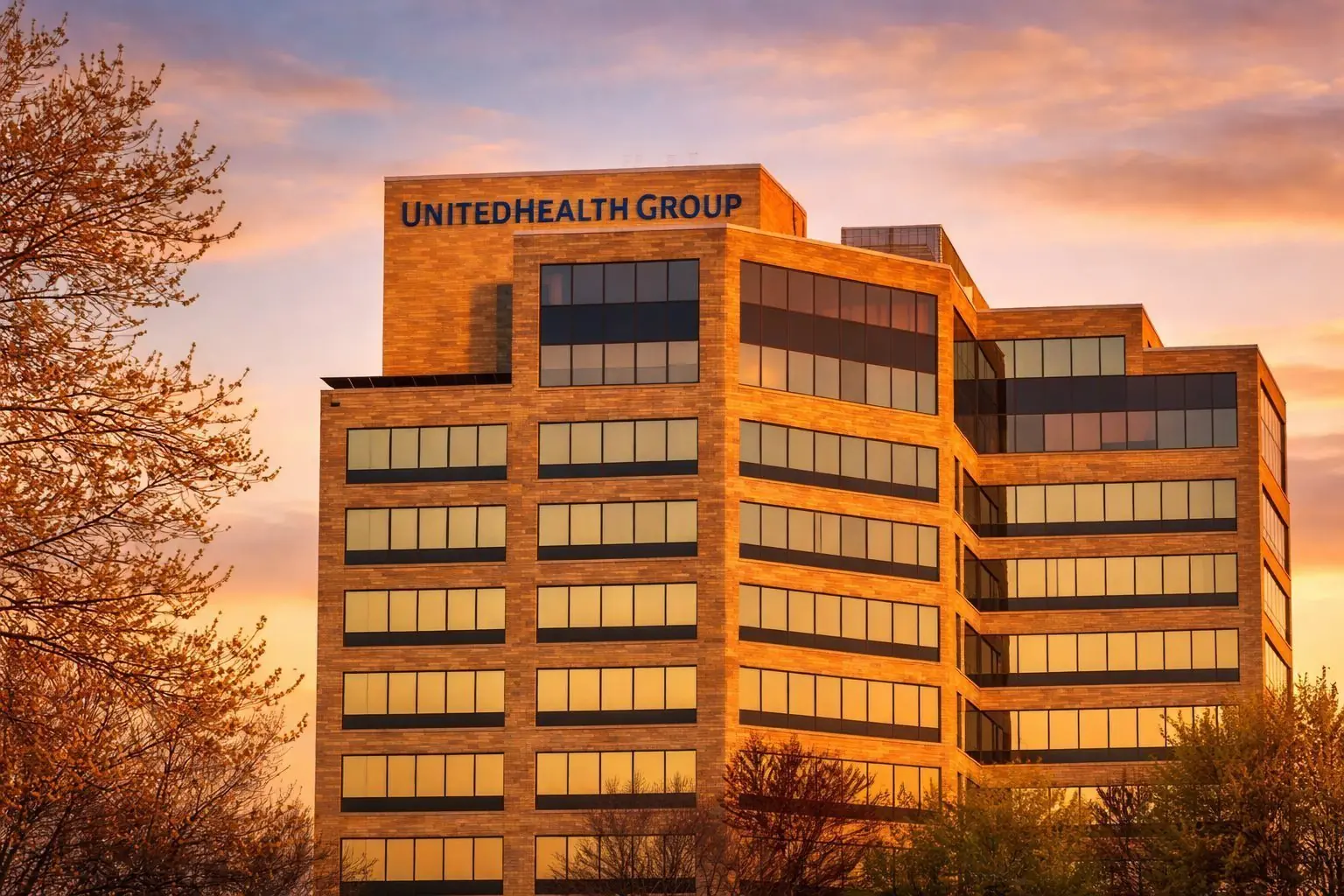
UnitedHealth Group Incorporated (NYSE: UNH) is trading in a quiet, post-Christmas U.S. session where stocks are hovering near record territory and volumes are lighter than normal. Against that backdrop, UNH shares were last at $330.09, up about 0.77% on the day, after trading between $326.44 and $330.94.
The broader tape is close to flat—SPY (S&P 500 proxy) is essentially unchanged, QQQ (Nasdaq-100 proxy) is slightly higher, and DIA (Dow proxy) is modestly lower—a setup consistent with thin, year-end trading. The Health Care sector ETF (XLV) is slightly down, meaning UNH is modestly outperforming its sector today.
Below is what’s driving sentiment around UnitedHealth stock right now—the latest news, policy headlines, and Wall Street outlook—plus what investors may want to have on their checklist before the next session.
UNH stock price today, in context of the current market session
Friday’s market tone is dominated by two realities:
- A holiday hangover: the first full session after Christmas tends to have lighter participation and choppier micro-moves. Reuters described U.S. indexes hovering near all-time highs in thin post-Christmas trading, and included a broader macro take from Brian Jacobsen, chief economist at Annex Wealth Management, who framed 2026 as a “prove-it” year where companies must translate investment (including AI) into productivity and margins. Reuters
- Seasonal tailwinds—but not guarantees: MarketWatch highlighted historical data from Bespoke Investment Group showing December 26 has often been one of the S&P 500’s strongest calendar days, tied to the “Santa Claus rally” window. MarketWatch
Reuters also noted the “Santa Claus rally” period began on Wednesday, Dec. 24 and runs through Jan. 5. Reuters
For UNH investors, the key takeaway is that today’s price action may be less about fresh company-specific fundamentals and more about positioning and liquidity into year-end—unless a headline hits.
The biggest UNH headlines investors are trading right now
1) UnitedHealth operational changes after external audits: “23 action plans” and a Q1 2026 disclosure target
One of the most consequential recent company-specific developments: UnitedHealth has signaled operational changes after outside consulting firms reviewed parts of its health services and pharmacy benefit units. Reuters reported the company expects more automation and standardization of internal processes after audits by FTI Consulting and Analysis Group.
In the Reuters report, CEO Stephen Hemsley said the work is underway and referenced 23 action plans, with more than half expected to be finalized by the end of 2025 and all by the end of Q1 2026.
A key phrase investors keep circling: the audits flagged that in some instances UnitedHealth lacked standardized documentation—including in HouseCalls, its in-home health assessment program tied to Medicare Advantage risk adjustment documentation—according to Reuters’ summary of FTI’s findings. Reuters also reported Hemsley said the company would share details of the HouseCalls visit review in the first quarter of 2026.
Why this matters for UNH stock:
- Documentation, coding, and risk adjustment are central to Medicare Advantage economics.
- A credible remediation plan can reduce headline risk, but a remediation plan also implicitly acknowledges process weaknesses that regulators or prosecutors may scrutinize.
Healthcare Dive’s reporting on the same set of reviews emphasized that the independent analyses did not find a “smoking gun,” but did identify improvement areas in Medicare Advantage risk assessment/coding, care review processes, and how Optum Rx passes discounts to clients. Healthcare Dive
STAT News added important nuance for investors: it noted that government audits and other independent analyses have at times been less favorable than the consultants’ tone, and highlighted that the consultants were not acting as attorneys evaluating legal compliance.
2) DOJ scrutiny: the company says it’s cooperating with criminal and civil requests
UnitedHealth has publicly addressed DOJ scrutiny. In a July 24, 2025 statement, the company said it proactively contacted the Department of Justice after media reports and that it began complying with formal criminal and civil requests.
The statement also said the company has “full confidence” in its practices and pointed to independent CMS audits and a court-appointed special master in a prior civil challenge, while cautioning it cannot predict outcomes of government investigations. UnitedHealth Group
Reuters later echoed that the company denied wrongdoing but is cooperating with DOJ investigations into Medicare Advantage billing practices.
Why this matters for UNH investors:
- DOJ scrutiny can translate into legal cost, operational constraints, reputational risk, and/or settlements.
- Even absent penalties, it can affect multiple expansion (valuation) if investors demand a higher risk premium.
3) Amedisys deal: court-approved DOJ settlement requires major divestitures
Another major overhang with real financial implications is the Amedisys acquisition process.
On December 10, 2025, the U.S. Department of Justice announced a federal court approved a settlement related to UnitedHealth’s $3.3 billion acquisition of Amedisys.
According to DOJ, the settlement requires:
- Divestiture of at least 164 home health and hospice locations across 19 states, described as the largest outpatient healthcare services divestiture (by number of facilities) to resolve a merger challenge; and
- A $1.1 million civil penalty tied to Amedisys’ certification issues under the Hart-Scott-Rodino process.
UnitedHealth’s own Q3 earnings release noted the company’s leverage metrics included the impact of closing the Amedisys transaction on August 14, 2025—meaning integration (and now divestitures) are part of the near-term story investors must model.
Why this matters for UNH stock:
- Divestitures can reduce expected synergies or revenue contribution, but they can also remove antitrust uncertainty by putting a clearer compliance path on the table.
4) Political risk is back in the spotlight: Trump calls for insurers to cut premiums
A sector-wide catalyst has been the renewed political focus on health insurance affordability.
Reuters reported that on December 19, 2025, President Donald Trump said he wants to meet health insurers in coming weeks and suggested they could cut prices substantially, in a context where Affordable Care Act subsidy changes could drive premium increases. Reuters
Barron’s covered the market reaction, noting health insurer stocks were “spooked” by the remarks and that UnitedHealth shares were volatile intraday that day. Barron’s
Why this matters for UNH:
- Even without immediate legislation, political rhetoric can move multiples in managed care, especially into an election cycle or policy negotiation window.
- UNH has additional sensitivity because of Medicare Advantage and Optum scale.
UnitedHealth earnings and guidance: the next major catalyst is January 27, 2026
UnitedHealth has explicitly told investors when the next big “information dump” arrives.
The company said it will report full-year 2025 results and provide 2026 guidance on Tuesday, January 27, 2026, before the market opens, followed by an 8:00 a.m. ET call.
This matters because investors are still calibrating whether 2026 becomes a “cleaner” year after 2025’s turbulence in reimbursement pressure, patient mix, and the operational issues now being addressed in audit-driven action plans. Reuters
What the last official earnings update said (Q3 2025)
In its October 28, 2025 release, UnitedHealth reported:
- Q3 2025 revenue of $113.2 billion (+12% YoY)
- Adjusted EPS of $2.92 (GAAP EPS $2.59)
- And it raised full-year 2025 outlook to at least $14.90 EPS and at least $16.25 adjusted EPS
Hemsley said the company was focused on strengthening performance and positioning for durable growth in 2026 and beyond.
UNH forecast: what Wall Street analysts are projecting (and why targets diverge)
Consensus targets point to upside—but dispersion is wide
Two widely followed aggregators show a similar message: analysts generally see upside, but they disagree on magnitude.
- MarketBeat lists an average 12‑month UNH price target around the mid-$380s (with a wide high/low range).
- TipRanks shows an average target around the low-$390s, also with a meaningful range.
Investors should interpret this not as a precise “destination,” but as a sign that the buy-side and sell-side are still debating the durability and timing of a recovery in profitability and reputational standing.
Recent notable calls: “recovery already priced in” vs. “still room to run”
A key bearish-ish framing came from Deutsche Bank, which downgraded UNH to Hold from Buy and raised its price target to $333, arguing valuation left “no wiggle room” without clearer evidence of the turnaround—particularly around Optum Health visibility. TipRanks
Barron’s summarized the same tension: UNH has rebounded significantly from 2025 lows, but skeptics argue further gains require sustained earnings upside amid cost and coding-transition risks. Barron’s
On the bullish side, part of the 2025 rebound narrative included Berkshire Hathaway’s purchase of 5 million shares reported by Reuters in August 2025, which helped reinforce the “recovery” camp. Reuters
The Medicare Advantage quality backdrop: why Star Ratings still matter for UNH
Medicare Advantage economics don’t hinge only on enrollment; quality scores affect bonus payments and benefit flexibility.
CMS’s 2026 Medicare Advantage and Part D Star Ratings Fact Sheet notes:
- The 2026 Star Ratings appeared on Medicare Plan Finder for 2026 open enrollment and will impact 2027 MA quality bonus payments.
- CMS reported that about 40% of MA‑PD contracts earned 4 stars or higher, and about 64% of MA‑PD enrollees are in contracts with 4+ stars (weighted by enrollment).
For UNH investors, the practical point is that Star Ratings are a lever that can influence 2027 revenue/benefit competitiveness, while audit and documentation processes influence the risk-adjustment side of the Medicare Advantage P&L.
What investors should know before the next session (and into the close today)
Is the stock exchange open right now?
Yes. The NYSE’s core trading session runs 9:30 a.m. to 4:00 p.m. ET, and today (Dec. 26) is a normal trading day (Christmas Day was the holiday closure; Christmas Eve had an early close).
With it currently 2:17 p.m. ET in New York, the market has roughly 1 hour and 43 minutes left in the core session.
A practical UNH checklist into the close
Because volume can be thin late in holiday weeks, headline sensitivity can be higher than usual. Here’s what to watch:
- Any fresh DOJ/regulatory headlines tied to Medicare Advantage billing, HouseCalls documentation, or Optum practices (these have been recurring drivers of multiple compression/expansion).
- Policy signals about ACA subsidies and premium pressure, after Trump’s comments about seeking insurer price cuts.
- Deal execution follow-through: updates or filings related to divestitures required under the DOJ settlement connected to Amedisys.
- Tape/sector rotation: UNH is slightly outperforming XLV today; if markets fade or defensives bid, large-cap managed care often becomes a liquidity destination.
Before the next session, keep these dates on your radar
- Jan. 27, 2026 (pre-market): UnitedHealth full-year 2025 earnings and 2026 guidance.
- Q1 2026: expected timing for additional HouseCalls review details per Reuters coverage of Hemsley’s stakeholder letter.
- Through March 31, 2026: timeframe mentioned in industry coverage for completing audit-linked action plans.
Bottom line for UnitedHealth stock (UNH) today
UNH is trading modestly higher in a thin, post-holiday market that’s hovering near record levels. But the real UNH narrative remains headline-driven and catalyst-heavy:
- Operational credibility after external audits and promised process fixes,
- Regulatory/legal uncertainty around Medicare Advantage billing scrutiny,
- Deal complexity and divestitures following the DOJ settlement tied to Amedisys,
- And policy pressure as Washington talks again about premiums and affordability.
None of these factors alone dictates where UNH trades next week—but together they help explain why analyst targets vary widely and why the next earnings/guidance update on Jan. 27 is likely to be a major volatility event for the stock.