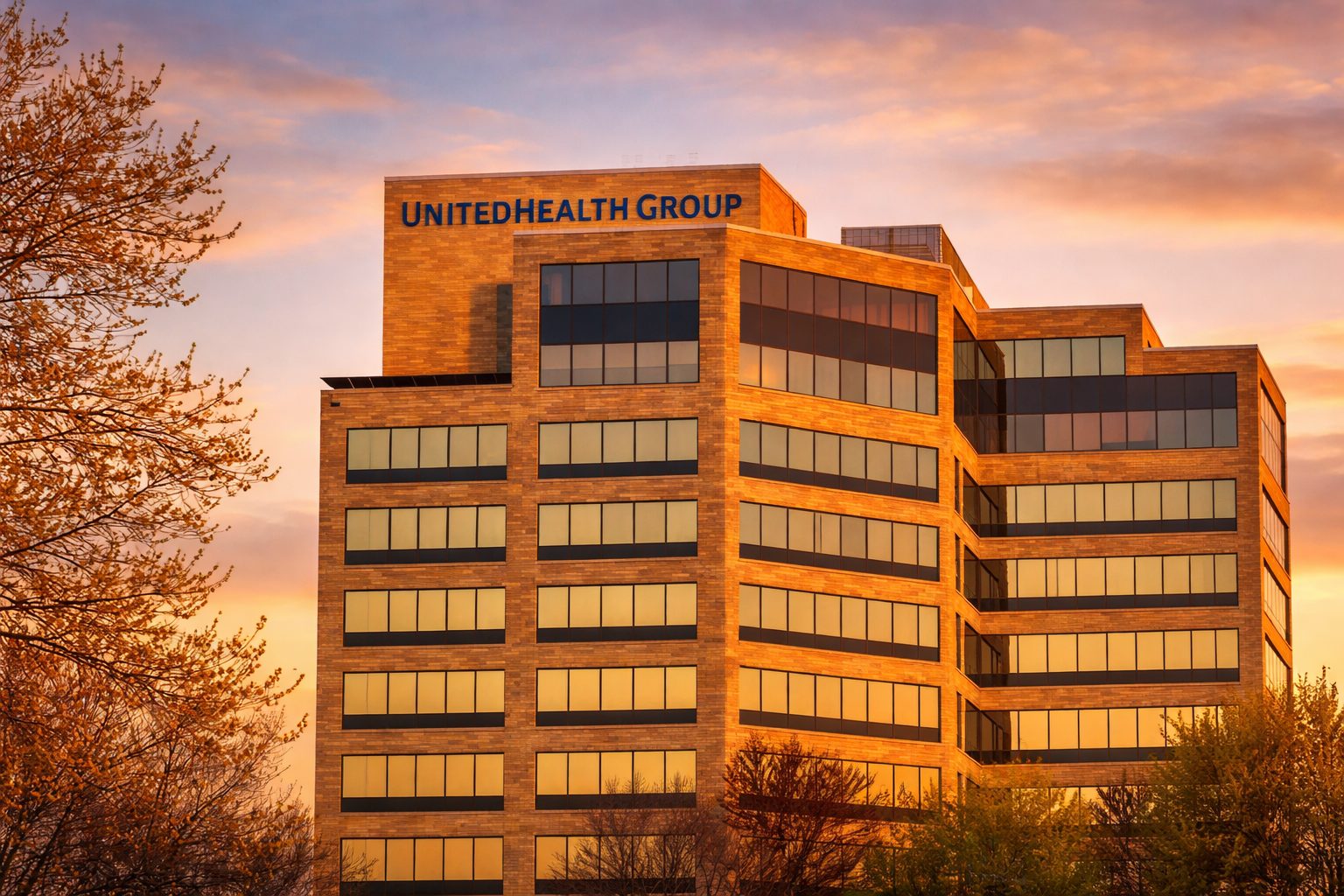
U.S. equities reopen on Friday, Dec. 26, 2025, after the Christmas holiday, and UnitedHealth Group Incorporated (NYSE: UNH) is heading into the session with a news-heavy backdrop that has moved the stock repeatedly this year: operational overhauls, federal scrutiny tied to Medicare billing practices, and shifting policy risk heading into 2026.
Here’s the most important news, forecasts, and analyst analysis to have on your radar before the bell.
Where UNH stands heading into the Dec. 26 open
Because the market was closed on Dec. 25 (Christmas Day) and had an early close on Dec. 24, the most recent official price action for UNH is from Wednesday, Dec. 24, 2025, when the stock last traded around $327.58.
This calendar detail matters for two reasons:
- Fresh price discovery: The first full session after a holiday can reprice stocks quickly if there’s headline risk.
- Liquidity and volatility: Post-holiday trading can be thinner, amplifying moves—especially in stocks exposed to regulatory and political news.
The headline investors are still digesting: UnitedHealth’s external audits and “23 action plans”
The most consequential late-December catalyst for UNH is the company’s disclosure that it will implement broad operational changes after external audits of key units, including Optum Health and Optum Rx (the pharmacy benefit manager).
What happened
Reuters reported that UnitedHealth said it will increase automation and standardize internal processes after reviews by outside consulting firms (including FTI Consulting and Analysis Group). The company described 23 action plans, with leadership indicating more than half would be finalized by the end of 2025 and 100% before the end of Q1 2026.
Why the “HouseCalls” detail matters
A key audit finding was that in some instances the company lacked standardized documentation, including in HouseCalls, its in-home health assessment program that helps support diagnosis submissions relevant to Medicare Advantage payments. Reuters reported UnitedHealth plans to share results of a HouseCalls visit review in Q1 2026.
Optum Rx is part of the narrative, too
UnitedHealth also published a separate set of next steps for Optum Rx around manufacturer discount administration, emphasizing further streamlining, escalation protocols, reporting clarity, and automation.
Why this can move the stock on Dec. 26: Investors are weighing whether these actions reduce headline and compliance risk (a potential positive), or underscore deeper execution issues that could pressure margins (a potential negative).
Federal scrutiny: DOJ inquiries remain a major overhang
UnitedHealth’s regulatory risk has not been a single headline—it has been a drumbeat.
The company has said it proactively reached out to the U.S. Department of Justice and has begun complying with formal criminal and civil requests related to investigations into aspects of its participation in the Medicare program, while stating it has confidence in its practices and intends to cooperate.
Reuters’ late-December reporting also tied the new audit-driven operational changes to this broader environment of scrutiny around Medicare Advantage billing practices.
What to watch next: Any incremental reporting—expanded scope, timelines, or enforcement posture—can reprice the stock quickly, especially in a low-liquidity holiday session.
Antitrust update: Amedisys settlement gets final court approval
Another major thread for UNH—especially for Optum’s care delivery footprint—is dealmaking under antitrust pressure.
In mid-December, the U.S. Department of Justice announced that a federal court entered final judgment approving a settlement tied to UnitedHealth’s $3.3 billion acquisition of Amedisys, requiring broad divestitures (including at least 164 home health and hospice locations) and imposing a $1.1 million civil penalty tied to a false certification issue.
Why investors care:
- The settlement reduces “will the deal be blocked?” uncertainty.
- But it also highlights the regulatory environment UNH is operating in—where scale and vertical integration can draw scrutiny.
Policy risk into 2026: Premium pressure, ACA subsidies, and political headlines
Trump’s insurer meeting comments rattled the group
One of the most market-moving December headlines wasn’t company-specific—it was political.
Reuters reported President Donald Trump said he wants to meet with health insurers in coming weeks to push for lower prices, suggesting insurers could cut prices substantially and noting the meeting could happen in Florida or Washington in the near term. UnitedHealth was named among the largest insurers referenced.
Barron’s reported that health-insurance stocks swung on those comments, with UnitedHealth briefly dropping sharply intraday before recovering.
ACA subsidy expiration is changing the 2026 setup
Separate from Medicare and Medicaid dynamics, the ACA marketplace is facing disruption as enhanced subsidies expire at the end of 2025.
Reuters reported ACA enrollment for 2026 coverage has declined and cited projections that average annual costs for subsidized plans could rise notably in 2026 as enhanced subsidies end.
KFF (Kaiser Family Foundation) analysis has also estimated that, if enhanced premium tax credits expire, average subsidized enrollee premium payments could more than double in 2026.
How this matters for UNH stock: Even if UnitedHealth’s exposure differs from peers across individual ACA exchanges, the broader takeaway for investors is that U.S. health insurance pricing and regulation are actively politicized heading into 2026—creating sentiment-driven volatility across the managed-care complex.
Earnings calendar: The next major UNH catalyst is already dated
UnitedHealth has confirmed it will report full-year 2025 results and provide 2026 guidance on Tuesday, Jan. 27, 2026, before the market opens, with an investor call at 8:00 a.m. ET.
Why Jan. 27 matters now (even on Dec. 26): The market often starts “positioning” weeks ahead of a guidance event, especially when a stock is already trading on uncertainty around cost trends, audits, and regulatory exposure.
The last big operating read-through: cost trends and profitability still define the debate
A key reason UNH has remained controversial in 2025 is that investors have been forced to reassess a long-running narrative: that UnitedHealth can consistently manage medical cost trends better than peers.
In October, Reuters reported the company raised its annual profit forecast and reiterated a return to growth ambitions for 2026, while also flagging that elevated costs remain an industry issue. Reuters also cited a third-quarter medical loss ratio around 89.9%, and reported Optum Health revenue was flat year-over-year in the quarter while Optum Rx revenue rose.
Bottom line: Going into the Dec. 26 open, UNH is still trading as a story about cost control + regulatory risk + operational execution.
Wall Street forecasts: What analysts are projecting for UNH stock
Analyst expectations have stabilized compared with the most turbulent periods of 2025, but forecasts still show a wide dispersion—typical for a stock facing both operational resets and government scrutiny.
Price targets (consensus snapshots)
- MarketBeat’s aggregation shows an average price target around the mid-$380s, implying roughly high-teens upside from recent trading levels, with a wide high/low range.
- Simply Wall St’s aggregation similarly shows an average target around the low-$390s with an upside estimate near ~20%, based on its displayed analyst set.
Valuation metrics investors are watching
Yahoo Finance’s key statistics list UNH valuation measures including trailing P/E and forward P/E in the high-teens range (as shown on its statistics page).
What this means in practice: The market is no longer valuing UNH like a “never-miss” compounder—but many forecasts still assume the company can rebuild earnings momentum once the 2025 cost and scrutiny cycle eases.
Dividend and shareholder returns: a stabilizer for long-term holders
UnitedHealth’s board authorized a quarterly cash dividend of $2.21 per share, paid Dec. 16, 2025, to shareholders of record as of Dec. 8, 2025.
For some investors, the dividend is part of the “hold through the storm” case—especially when combined with expectations that earnings growth could normalize after a reset year.
Credit and balance-sheet watch: rating outlook changes are part of the risk mosaic
Credit ratings aren’t usually the day-to-day driver of a mega-cap insurer’s stock. But in 2025, credit commentary became more relevant because it reflected stress from elevated costs and operational challenges.
S&P Global Ratings revised its outlook on UnitedHealth and key operating subsidiaries to negative from stable in June 2025.
Moody’s also affirmed its A2 issuer rating while changing the outlook to negative, citing adverse trends.
Why stock investors should care: A negative outlook doesn’t equal a downgrade, but it can matter at the margin for capital flexibility and sentiment—especially when paired with regulatory uncertainty.
A practical “before the open” checklist for Dec. 26
If you’re watching UNH into the Friday open, these are the swing factors most likely to matter:
- Any new DOJ-related headlines (scope, timeline, enforcement posture) following the company’s compliance statements and ongoing scrutiny.
- Follow-through from the audit/action-plan story—investors will react differently depending on whether updates sound like “clean-up and improve” or “deeper systemic risk.” Reuters
- Antitrust/deal execution updates around the Amedisys settlement and divestiture requirements.
- Policy headlines around premium pressure and the post-subsidy ACA environment heading into 2026—these can move the entire managed-care group even without company-specific news.
- Positioning into Jan. 27 earnings and 2026 guidance, which is the next clear, scheduled catalyst.
The takeaway for UNH stock before Dec. 26 trading begins
UnitedHealth enters the Dec. 26 session with a classic “two-track” setup:
- A fundamental recovery narrative: management is pushing operational fixes, aiming to stabilize cost trends, and preparing the market for 2026 guidance.
- A headline risk narrative: DOJ inquiries, audit scrutiny, and policy-driven premium rhetoric can override fundamentals in the short term—particularly in a low-liquidity holiday session.
If the market treats recent audit disclosures as credible risk reduction, UNH can trade like a battered quality name with rebuilding potential. If political and regulatory pressure dominates the tape, UNH can remain volatile regardless of valuation or longer-term forecasts.
This article is for informational purposes only and is not investment advice. Consider your risk tolerance and consult a licensed financial professional for personalized guidance.