December 25, 2025
On paper, the U.S. economy is finishing 2025 with the kind of headline numbers politicians love: strong growth, rising corporate profits, and a stock market that just hit fresh records heading into the holiday break.
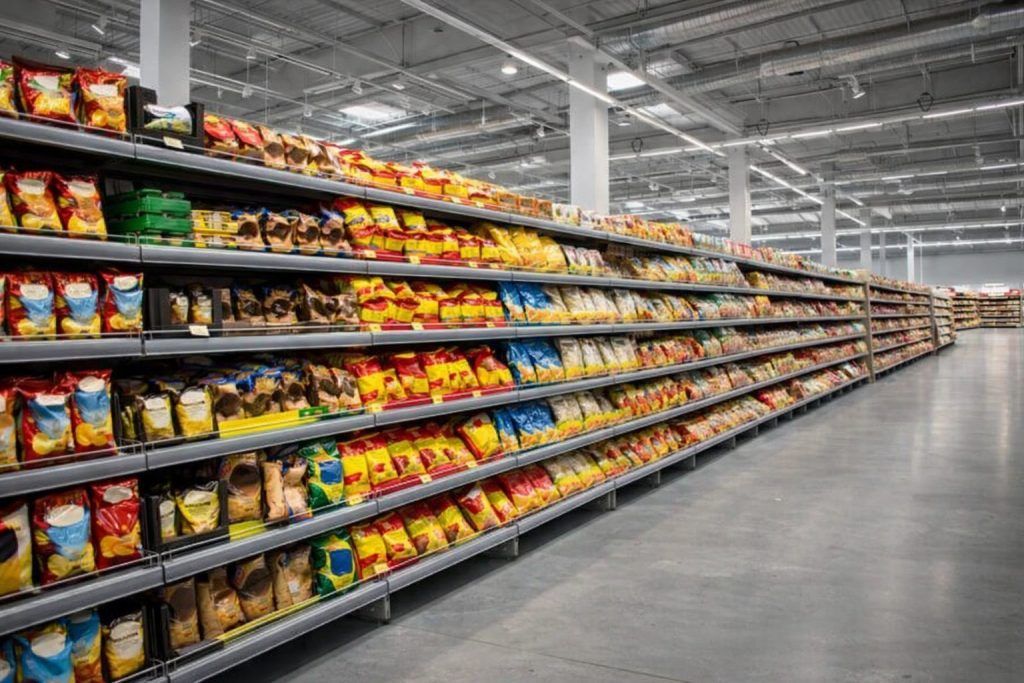
But on the ground—at grocery stores, on rent renewals, and in household budgets—many Americans are still asking the same question: If growth is booming, why does life feel so expensive?
A wave of late-December economic updates has sharpened that paradox. The government’s latest GDP snapshot points to fast expansion. Corporate profits are rising. Holiday spending remains resilient. And Wall Street has pushed the S&P 500 to a new intraday peak.
Yet consumer confidence is sliding, hiring is sluggish, and the affordability debate has become the defining storyline of the economy—one made more politically potent by President Donald Trump’s tariffs, trade posture, and cost-of-living promises. Reuters
What’s emerging is a split-screen economy: one that’s working exceptionally well for asset owners and large firms, while leaving many middle- and lower-income households stuck with persistent sticker shock.
The new GDP headline: 4.3% growth—plus hotter price pressures
The U.S. Bureau of Economic Analysis reported that real GDP rose at a 4.3% annual rate in the third quarter of 2025, up from 3.8% in the second quarter. The agency noted this release was unusual in timing and method because it had to replace earlier scheduled estimates due to delays tied to the recent government shutdown. Bureau of Economic Analysis
The topline growth was driven by:
- Consumer spending
- Exports
- Government spending
Partly offset by a decline in investment, with imports also falling (which mechanically boosts GDP because imports subtract from the calculation). Bureau of Economic Analysis
But the GDP report also carried a message that hits directly at the affordability debate: price measures accelerated in the third quarter. BEA reported:
- Gross domestic purchases price index: +3.4% (Q3) vs +2.0% (Q2)
- PCE price index: +2.8% vs +2.1%
- Core PCE (ex food and energy): +2.9% vs +2.6% Bureau of Economic Analysis
In other words: growth was stronger, but inflationary pressure wasn’t gone—an uncomfortable mix for households hoping 2025 would finally feel cheaper.
Corporate profits surged—fueling a “booming” narrative
One of the most striking details in the GDP release is the profit picture. BEA said profits from current production rose by $166.1 billion in the third quarter, a sharp jump from the prior quarter’s pace. Bureau of Economic Analysis
That helps explain why economic “scoreboards” look healthy even when voters say they’re stressed: corporate margins and asset values can rise even when consumers feel squeezed.
Reuters also reported that business investment—particularly in equipment and AI-related spending—continued to provide support, even as residential investment weighed on growth. Reuters
This is central to the “boom times” argument: the corporate economy is still strong—and it’s not evenly distributed.
The K-shaped economy problem: growth powered by the wealthy and big companies
A major theme in the late-December coverage is that activity is taking on what economists call a “K-shaped” pattern—where higher-income households and large corporations pull ahead while others lag.
Reuters described the dynamic bluntly: higher-income consumers and big companies are doing much of the heavy lifting, helped by the wealth effect from rising stock prices and still-high home values, while lower- and middle-income households have less flexibility when prices rise. Reuters
That pattern is politically explosive because it creates two different lived realities:
- If you own stocks, a home, or a business with pricing power, 2025 can look like a strong year.
- If your paycheck is your main asset, and your biggest expenses are groceries, rent, utilities, and childcare, the “boom” can feel invisible.
This is exactly the tension that’s now shaping the national economic conversation: growth exists—but not everyone gets to experience it.
Consumer confidence is falling even as GDP rises
Perhaps the clearest sign of that disconnect is the attitude data.
The Conference Board’s consumer confidence index fell to 89.1 in December, marking the fifth straight monthly decline, according to the Associated Press. AP noted the reading was nearing the level seen in April—around the time Trump rolled out major import taxes—highlighting how prices and policy uncertainty can weigh on sentiment even in a growing economy. AP News
Confidence measures aren’t perfect predictors, but they matter for two reasons:
- They influence how willing people are to spend.
- They show whether households believe their situation is improving.
Right now, the message from consumers is consistent: they’re anxious about the cost of living and what comes next.
Jobs: layoffs are low, but hiring is weak—“no hire, no fire”
The labor market is another place where the economy looks stable on the surface but complicated underneath.
On December 24 (released a day early because of the Christmas holiday), Reuters reported:
- Initial jobless claims fell to 214,000 (week ending Dec. 20)
- Continuing claims rose to 1.923 million (week ending Dec. 13) Reuters
Economists quoted by Reuters described the job market as “no hire, no fire”—meaning businesses aren’t aggressively laying people off, but they’re also not hiring much. Reuters
That matters for affordability because wage growth and job switching are often how households “outrun” higher prices. When hiring slows, workers lose leverage—even if layoffs remain muted.
Reuters also noted the unemployment rate reached 4.6% in November, the highest in four years, though it also referenced technical factors tied to the shutdown and data collection disruptions. Reuters
The Fed has cut rates—but isn’t promising quick relief
Monetary policy is supposed to be the pressure valve: when the labor market cools and inflation eases, rate cuts can reduce borrowing costs and support growth.
Reuters reported the Federal Reserve cut its benchmark rate by 25 basis points to 3.50%–3.75% this month, but signaled it’s not in a hurry to cut further without clearer evidence on inflation and jobs. Reuters
That cautious stance is one reason affordability can stay stubborn:
- Mortgage rates and long-term borrowing costs don’t always fall quickly.
- Households that already feel squeezed don’t instantly “feel” a quarter-point cut.
And for many Americans, affordability is less about the Fed funds rate and more about day-to-day prices.
Groceries as the political front line: beef prices and the limits of quick fixes
If there’s one category that has become a symbol of affordability, it’s food—especially meat.
A Reuters report published on Christmas Eve captured the risks of trying to force fast price relief through trade and enforcement actions. After Trump publicly targeted beef prices, his administration took steps including:
- Plans to increase low-tariff beef imports from Argentina
- Removing duties imposed on Brazilian beef imports
- Launching an investigation into meatpackers for alleged manipulation Reuters
The market reaction was swift: feeder cattle futures fell 21% over a little more than a month after an October peak, hurting ranchers’ income. But the retail price relief many consumers want has been slow to arrive. Reuters
Reuters cited government data showing that in November:
- Ground beef averaged $6.54 per pound, up 16% from a year earlier
- Boneless stew meat averaged $9.17 per pound, up 23% year over year Reuters
The episode highlights a stubborn reality: even when commodity prices move, grocery prices often lag, because costs and markups accumulate through processors, distributors, and retailers. Reuters
Housing costs are still a slow-burning affordability crisis
Even if inflation cools, Americans can remain stressed because the biggest expenses—housing, healthcare, education—tend to fall slowly, if at all.
Reuters reported earlier this month that while inflation may slow, the affordability debate persists and pointed to mortgage rates staying around 6.2% since September, limiting relief for buyers and renters in expensive markets. Reuters
For many households, that translates to:
- moving becoming harder,
- first-time homeownership staying out of reach,
- and rent remaining a high, non-negotiable monthly bill.
This is where GDP can be deeply misleading: it can rise while the cost of entering the middle class rises even faster.
Wall Street’s record highs help explain why the “boom” feels unequal
One reason the economy looks strong for the wealthy is straightforward: financial markets have been strong.
Reuters reported that on December 24 the S&P 500 hit an intraday record high of 6,920.88, fueled by renewed enthusiasm for AI stocks and expectations of more rate cuts in 2026. Reuters also reported broad 2025 gains:
- S&P 500: up more than 17%
- Nasdaq: up more than 21%
- Dow: up more than 13% Reuters
Rising markets don’t just boost portfolios—they can also support spending through the wealth effect, particularly for higher-income consumers who own the bulk of financial assets.
And that loops back into the K-shaped story: if the upper tier keeps spending, GDP can stay elevated even if large parts of the country are cutting back.
Tariffs are a defining policy variable—and they’re reshaping prices and trade
Trade policy has been one of the most visible levers of Trump’s second term, and it’s now a major part of how economists interpret both growth and affordability.
Reuters reported that Trump’s waves of tariffs helped lift the average tariff rate to nearly 17% from under 3% at the end of 2024, citing Yale Budget Lab. Reuters also said those levies are generating about $30 billion a month in revenue for the U.S. Treasury. Reuters
The same Reuters report described how multiple countries pursued frameworks or negotiations with the U.S., while a final agreement with China remained unresolved despite rounds of talks. Reuters
For consumers, tariffs can be hard to “see” directly—there’s no tariff line item on a receipt. But in aggregate, tariffs can:
- raise input costs for businesses,
- feed into prices for certain goods,
- and create uncertainty that affects hiring and investment decisions.
Supporters argue tariffs protect domestic industry; critics say they act like a broad consumption tax. Either way, tariffs are now part of the affordability debate—and part of the political identity of the current economy.
The tax-and-spending fight adds another layer to inequality concerns
Beyond tariffs, the next big economic policy battle is fiscal.
A Reuters analysis of Trump’s tax push describes a “Big Beautiful Bill” that would make key parts of the 2017 tax cuts permanent and includes provisions such as exempting overtime pay and some tip income and Social Security income from income taxes—while also raising questions about deficits and who benefits most. Reuters
Reuters also highlighted broader fiscal pressures:
- Persistent deficits (it described the deficit as large by historical standards)
- A national debt stockpile exceeding $36 trillion, around 120% of GDP
- Rising interest costs, and a credit-rating move by Moody’s (as cited in the Reuters graphic) Reuters
These debates matter for everyday affordability because they shape:
- how much support the government offers for healthcare, housing, and food,
- what gets cut or expanded,
- and whether tax policy amplifies or narrows the wealth gap.
Holiday spending is holding up—though “resilient” doesn’t mean “comfortable”
One more piece of the end-of-year picture: Americans are still spending through the holidays, even if the mood is sour.
Mastercard SpendingPulse reported that U.S. retail sales excluding automotive rose 3.9% year over year from Nov. 1 through Dec. 21 (not adjusted for inflation), pointing to continued holiday demand across online and in-store shopping. Mastercard
That resilience supports GDP—but it doesn’t automatically mean households feel secure. Spending can hold up because:
- wages are still coming in,
- people are prioritizing key moments (like holidays),
- or consumers are chasing discounts and shifting where they buy.
In other words, holiday spending can be strong even in an affordability crisis—especially if households are sacrificing in other areas to make it happen.
Why strong GDP doesn’t “fix” affordability—and what matters next
The late-December data and reporting add up to a clear conclusion:
The U.S. economy can be growing quickly while millions still feel financially squeezed.
That’s not a contradiction; it’s the result of how modern growth is distributed.
GDP is a powerful statistic, but it doesn’t tell you:
- whether paychecks are keeping up with grocery bills,
- whether housing is attainable,
- whether hiring is improving,
- or whether the benefits of growth are concentrated in profits and portfolios.
What to watch in early 2026
As the calendar turns, the biggest questions shaping the U.S. economy—and the politics around it—include:
- Will hiring pick up, or does “no hire, no fire” become the new normal? Reuters
- Can inflation cool further without stalling growth? Bureau of Economic Analysis
- Will tariffs stay at today’s levels, expand, or be negotiated down—and how will that affect prices? Reuters
- Does the Fed cut rates again in 2026, and will consumers feel it in mortgages and credit? Reuters
- Do food prices ease meaningfully—or do supply chains and market structure keep grocery bills high? Reuters
- How does tax policy reshape after the year-end deadlines tied to earlier cuts? Reuters
For now, the end-of-2025 picture is unmistakable: America’s economy is posting strong growth, but the country’s dominant economic emotion remains financial stress. And in the Trump era, that gap between the macro numbers and the kitchen-table reality may be the biggest story of all.