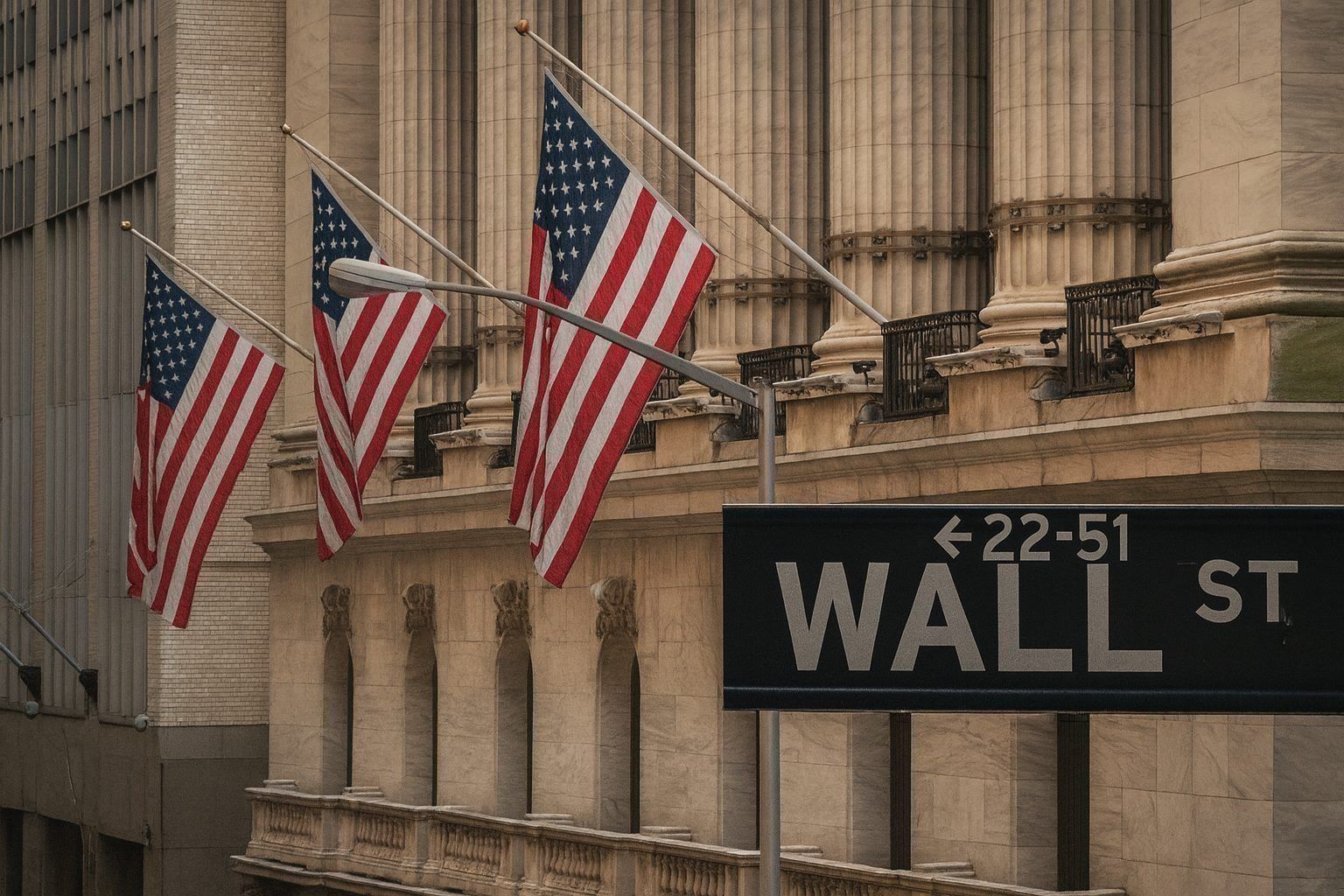
Wall Street heads into Monday, December 8, 2025 with the major U.S. indexes hovering near record highs, investors bracing for a highly contentious Federal Reserve meeting, and a fresh burst of political risk from President Trump’s tariff fight at the Supreme Court. At the same time, Monday’s U.S. economic calendar is relatively quiet, making the session largely about positioning for the rest of the week.
Here’s what you need to know before the U.S. stock market opens on Monday.
1. Where Wall Street Stands After Friday’s Close
U.S. stocks finished Friday, December 5, modestly higher after a softer‑than‑expected inflation reading reinforced expectations that the Fed will cut interest rates again this week. Investopedia
- Nasdaq Composite gained about 0.3%, up roughly 0.9% for the week.
- S&P 500 and Dow Jones Industrial Average each rose 0.2%, leaving them within about 1% of all‑time highs. Investopedia
- The Fed’s preferred inflation gauge, the PCE price index, climbed 2.9% year‑over‑year in September, with core PCE at 2.8%, slightly under economists’ expectations and still above the Fed’s 2% target. Investopedia+1
In bonds and commodities:
- The 10‑year U.S. Treasury yield ticked up to around 4.1–4.2%, its highest level in several weeks, as investors reassessed the pace of easing. Investopedia+1
- Gold is holding near multi‑week highs around $4,200/oz, supported by safe‑haven demand and expectations of lower real yields. Investopedia+1
- Oil prices (WTI) ended Friday near $60 per barrel, reflecting a cautious but not panicked view of global growth. Investopedia+1
Friday’s session also delivered one of the biggest corporate stories of the year: Netflix agreed to buy Warner Bros. Discovery’s studio and streaming assets in an ~$83 billion deal, cementing its dominance in streaming but inviting regulatory scrutiny. Netflix shares fell about 3%, Warner Bros. Discovery jumped more than 6%, and rival Paramount Skydance tumbled nearly 10% on the news. Investopedia
With stocks extended and volatility relatively muted, Monday’s trade is set up as the “calm before the storm” ahead of mid‑week policy and earnings catalysts.
2. Fed Week: Why Wednesday’s Decision Looms Over Monday Trading
The Federal Open Market Committee (FOMC) holds its final meeting of 2025 on Wednesday, December 10, and it’s set to be one of the most closely watched and divisive meetings in years. Reuters+1
Market expectations
- Futures markets are pricing roughly an 84–90% probability that the Fed cuts rates by 0.25 percentage points, taking the federal funds target range down to about 3.5%–3.75%. Schwab Brokerage+2Reuters+2
- It would be the third straight cut this year, even though inflation is still running above target. Investopedia+1
What makes this week unusual is how split the Fed appears to be:
- Reuters reports that five of the 12 voting FOMC members have publicly expressed skepticism about further easing, while three Fed governors have signaled support for another cut. Reuters
- A decision with multiple dissents would be rare and could send a powerful signal about internal divisions and about how long the easing cycle might last. Reuters+1
Data gaps after the shutdown
The Fed is also flying partially blind. The 43‑day U.S. government shutdown earlier this year delayed key releases, including some employment data. As a result: Reuters+1
- Policymakers don’t have the latest jobs report in hand.
- They’re relying heavily on inflation measures like PCE, jobless claims, and private data to gauge the labor market.
Investopedia’s weekly outlook notes that worries about a cooling labor market, combined with still‑elevated inflation, are pushing officials toward another cut even as debate intensifies about whether that’s the right move. Investopedia
Why this matters for Monday
With the Fed decision just two days away and little fresh U.S. data on Monday (more on that below), traders are likely to:
- Fine‑tune rate‑sensitive positions (banks, small‑caps, homebuilders, utilities).
- Watch Powell‑sensitive plays like long‑duration growth stocks and AI leaders, which have rebounded but remain volatile. Schwab Brokerage+1
- Stay alert to any leaks or Fed‑related headlines that could nudge probabilities for a “hawkish cut” (a cut paired with tough talk on future easing).
In short, Monday could feature subdued index moves but busy sector rotation as investors position for Wednesday.
3. Tariff Showdown at the Supreme Court: A New Market Wildcard
Beyond the Fed, the biggest macro story hanging over markets is President Trump’s sweeping tariff regime—and the possibility that the U.S. Supreme Court could strike down key portions of it.
Where tariffs stand now
- Since early 2025, the administration has imposed broad “reciprocal” tariffs using emergency powers under the International Emergency Economic Powers Act (IEEPA).
- Average U.S. tariff rates surged from about 2.5% to roughly 27% at the peak, and even after adjustments remain near 18%, the highest in modern history. Wikipedia
- Monthly tariff revenues have tripled versus 2024, topping $30 billion per month, putting significant extra costs on importers. Wikipedia+1
Corporate America is increasingly pushing back. A Moneycontrol analysis published Sunday highlights how manufacturers and retailers that rely on imported inputs are petitioning for exemptions, arguing that tariffs are driving up costs, squeezing margins, and feeding inflation rather than supporting domestic production. Moneycontrol
Supreme Court case and Trump’s warnings
The legal battle has now reached the Supreme Court, which is reviewing whether Trump’s global tariffs were lawfully imposed under IEEPA. Lower courts have already struck down portions of the regime, forcing the administration to appeal. Wolters Kluwer Legal Blogs+1
Over the weekend, Trump ramped up his rhetoric, warning that if the Court rules against him, the U.S. could face an “economic disaster” comparable to the Great Depression and implying that markets could crash. Nasdaq+1
Analysts are far more measured, but for markets this creates a tail‑risk scenario:
- A ruling upholding the tariffs would likely keep pressure on import‑heavy sectors (retail, autos, machinery) and maintain some upward pressure on prices.
- A ruling striking them down could:
- Ease cost pressures for many companies.
- Potentially trigger refunds of previously paid duties, as highlighted in coverage of cases like Costco’s tariff‑refund challenge. The Economic Times
- Create short‑term fiscal uncertainty as tariff revenues fall.
For Monday’s open, investors will be watching for:
- Any new Court signals or leaks.
- Comments from administration officials (for example, Treasury Secretary Scott Bessent has warned that losing the case would “hurt the American people,” reinforcing the political stakes). AOL+1
While the decision isn’t expected Monday, this headline risk could weigh on sentiment in globally exposed sectors even in a light data session.
4. Monday’s Economic Calendar: Quiet in the US, Busy Overseas
If you’re looking for major U.S. data on Monday, you won’t find much.
A December calendar from Scotiabank shows no significant U.S. economic releases scheduled for Monday, December 8, with activity picking up later in the week (Employment Cost Index and the Fed on Wednesday, trade data and jobless claims Thursday). Scotiabank
However, Monday is not data‑free globally, and overseas numbers can still sway U.S. futures:
- Japan:
- Labor cash earnings (wage growth) for October.
- Final Q3 GDP and GDP deflator figures.
- Current account and business sentiment gauges. ActionForex+1
- China:
- November trade balance, a key read on global demand and supply chain health. ActionForex+1
- Eurozone and Germany:
- German industrial production (October).
- Eurozone Sentix investor confidence (December). ActionForex+1
These releases feed into:
- The global growth narrative, particularly around manufacturing.
- Expectations for demand‑sensitive commodities (oil, copper, industrial metals).
- Currency moves in the yen, euro and yuan, which can spill over into U.S. equity futures before the opening bell.
Given the lack of fresh domestic data, any surprise in Asian or European prints overnight could disproportionately influence Monday’s tone in U.S. markets.
5. Earnings and Corporate Catalysts to Watch
While Monday’s U.S. macro calendar is quiet, there are company‑specific stories and upcoming earnings that traders will be watching closely.
Housing and healthcare on Monday’s radar
Investopedia’s weekly preview highlights two names for Monday, December 8: Investopedia
- Toll Brothers (TOL) – luxury homebuilder often treated as a leveraged bet on U.S. housing, mortgage rates and higher‑income consumer confidence.
- Phreesia (PHR) – healthcare software firm, offering another read on health‑tech demand and SaaS spending.
Some earnings calendars (such as Finlogix) also flag National Beverage alongside Toll Brothers for Monday. finlogix.com
Note that Toll Brothers’ actual earnings call is scheduled for Tuesday morning, but positioning often begins the day before as traders adjust exposure to housing and rate‑sensitive stocks. Investopedia
The real fireworks: mid‑week AI and retail earnings
The bigger earnings fireworks arrive mid‑week, and Monday’s trading will already be influenced by expectations for those reports: CMC Markets+1
- Wednesday, Dec. 10:
- Oracle (ORCL) – under scrutiny for heavy investment in AI infrastructure and cloud.
- Adobe (ADBE) – key for gauging demand for AI‑enhanced creative tools.
- Synopsys (SNPS) and Chewy (CHWY) also report.
- Thursday, Dec. 11:
- Broadcom (AVGO) – a bellwether for AI chip demand and hyperscale data‑center spending.
- Costco (COST) – gives insight into how tariffs and inflation are impacting U.S. consumers; the company is also involved in legal disputes over tariffs. Investopedia
- Ciena (CIEN) and Lululemon (LULU) round out the consumer and tech picture.
After a volatile November in mega‑cap tech and AI names, this cluster of reports will help answer whether the “AI trade” still has fundamental support or is morphing into a valuation bubble. Investopedia+1
For Monday, that means:
- Tech and AI leaders could see cautious buying or hedging as investors front‑run Oracle, Adobe and Broadcom results.
- Retailers and consumer‑facing names may trade on early speculation about what Costco and others will reveal about tariff pass‑through and holiday demand.
6. Netflix–Warner Bros. Discovery: A Deal That Will Echo Into Monday
Friday’s headline‑grabbing deal between Netflix and Warner Bros. Discovery will remain front‑of‑mind at Monday’s open. Investopedia+1
Key points:
- Netflix is acquiring Warner Bros. Discovery’s studio and streaming operations in a transaction valued near $83 billion.
- Warner Bros. plans to spin off its cable and TV channels, with Netflix taking over the film and streaming businesses, including HBO‑branded content.
- Regulators are almost certain to review the deal for its impact on streaming competition and media concentration.
Market reaction on Friday:
- WBD rallied more than 6%.
- Netflix fell around 3%, as investors weighed integration risk and the sheer size of the deal.
- Paramount Skydance slid nearly 10% after losing out in the bidding war. Investopedia
Why it matters for Monday:
- Expect continued repricing across the media and streaming complex – including Disney, Comcast, Paramount, and theater chains like AMC and Cinemark.
- The deal highlights how scale and content libraries remain central to the streaming arms race, even as investors scrutinize spending and profitability.
- It may also feed into antitrust and regulation headlines that could overlap with the broader political story around tariffs and big tech.
7. Cross‑Asset Signals: Yields, Gold, Crypto and Small Caps
Beyond individual stocks, investors will also be watching cross‑asset signals on Monday for clues about risk appetite.
Bonds and small caps
- The 10‑year Treasury yield has climbed to around 4.1–4.2%, on track for one of its strongest weekly gains in months as traders brace for the Fed decision and a wave of delayed data later in December. Investopedia+2Schwab Brokerage+2
- Despite higher yields, small‑cap stocks (Russell 2000) have outperformed in recent sessions, reflecting hopes that easing policy will particularly benefit more leveraged, domestically focused companies. Schwab Brokerage+1
Gold and the dollar
- Gold recently hit a six‑week high, supported by a softer U.S. dollar and bouts of risk‑off sentiment in equities and crypto. The Daily Star+1
- The U.S. dollar index has drifted lower from its recent peaks, as markets price in a near‑certain December rate cut and consider the possibility of further easing in 2026. The Daily Star+1
Crypto
- Bitcoin has bounced from recent lows but remains well below its all‑time high above $125,000, as speculative fervor cools and attention shifts back to macro drivers like Fed policy and tariffs. Investopedia+1
On Monday, the interplay between:
- Rising long‑term yields,
- A softening dollar, and
- High but stable gold prices
will help traders gauge whether we’re in a “goldilocks” soft‑landing narrative or tipping back toward stagflation fears if tariffs and data surprises worsen the outlook.
8. Three Things to Watch Before the Opening Bell on Monday, Dec. 8, 2025
To sum it up, here are the top three themes to monitor as U.S. equity markets get ready to open:
- Fed positioning and market odds
- Watch how rate‑sensitive sectors (banks, homebuilders, utilities, small caps) trade as investors fine‑tune exposure ahead of Wednesday’s decision and Powell’s press conference. Reuters+2Investopedia+2
- Tariff headlines and Supreme Court chatter
- Any news or leaks around the Court’s looming decision on Trump’s emergency tariffs could move import‑heavy sectors, global cyclicals, and consumer plays. Elevated rhetoric from the White House is raising the stakes, but analysts see a range of outcomes beyond the disaster scenario painted by the president. Wikipedia+3Moneycontrol+3Nasdaq+3
- Stock‑specific moves: Netflix–WBD, Toll Brothers, Phreesia and AI leaders
- Expect follow‑through in media and streaming names after the Netflix–Warner Bros. announcement.
- Watch positioning in Toll Brothers and Phreesia ahead of this week’s earnings, as well as early moves in AI bellwethers like Oracle, Adobe and Broadcom that report mid‑week. Investopedia+2Investopedia+2
With macro uncertainty elevated but the calendar light on Monday, the session is likely to be more about preparation than resolution—setting the stage for a potentially volatile mid‑week stretch as the Fed, tariffs and big‑ticket earnings collide.
This article is for informational purposes only and does not constitute investment advice. Always do your own research or consult a qualified financial adviser before making trading or investment decisions.