Wall Street finished higher on Wednesday, December 10, 2025, after the Federal Reserve delivered a widely expected quarter‑point rate cut and signaled it may now pause, sending the Dow more than 500 points higher and lifting both the S&P 500 and Nasdaq into the green by the closing bell.Reuters+1
Below is a full after‑the‑bell recap of the US stock market, with the key news, Fed takeaways, corporate earnings, and 2026 forecasts that hit on December 10, 2025.
How Wall Street Closed on December 10, 2025
According to preliminary closing data:Reuters
- Dow Jones Industrial Average: 48,061.32, up about 501 points (+1.05%)
- S&P 500: 6,886.26, up 0.67%
- Nasdaq Composite: 23,654.40, up 0.33%
The industrials sector led the S&P 500, helped by a sharp rally in GE Vernova, while tech lagged slightly after a choppy day around the Fed decision.Reuters+1
Small‑caps also continued to participate in the upswing. Earlier commentary noted the Russell 2000 had been setting fresh records this week as investors rotated into more cyclical, domestically focused names that benefit from lower rates and improved liquidity.Interactive Brokers+1
Inside the Fed’s December Rate Cut
At its final meeting of 2025, the Federal Reserve:
- Cut the federal funds rate by 25 basis points, to a new target range of 3.50%–3.75%.Federal Reserve+1
- Marked its third cut of 2025 and sixth since September 2024.Bankrate
- Voted 9–3, with one policymaker preferring a larger 50 bp cut and two wanting no change at all.Federal Reserve+1
In its FOMC statement, the Fed described economic activity as growing at a “moderate” pace but highlighted slower job gains, a higher unemployment rate, and inflation that “remains somewhat elevated.” That mix of softer labor data and sticky prices was cited as the main reason for today’s cut.Federal Reserve
Crucially, the Fed also shifted its balance‑sheet policy, judging that reserves in the banking system have fallen to “ample” levels and announcing it will start purchasing shorter‑term Treasury securities (T‑bills) as needed to maintain ample reserves.Federal Reserve+1
That’s not a full‑blown quantitative easing program, but analysts at Interactive Brokers noted that reversing some of the prior balance‑sheet runoff and adding T‑bill purchases is “kind of like QE” and helps ease funding stress and support risk assets.Interactive Brokers
A “Hawkish Cut”: What the Fed’s Projections Signal
Markets got the rate cut they expected, but the tone of the outlook was more cautious than the headline move might suggest.
From the Fed’s Summary of Economic Projections (SEP) and post‑meeting commentary:The Real Economy Blog+1
- Policymakers now project 2026 GDP growth of about 2.3%, up from 1.8% in the September projections.
- The unemployment rate is expected to hover around 4.4% next year, essentially unchanged from prior estimates.
- The Fed expects inflation (PCE) to cool gradually but not return to the 2% target until around 2028.
- The “dot plot” shows a median forecast of just one more 25 bp cut in 2026, implying a much shallower cutting cycle than many investors had hoped.
Economists at RSM described this as a “hawkish cut”, arguing that the improved growth outlook and limited projected cuts “raise the bar” for any further easing at the January meeting and beyond.The Real Economy Blog
In other words: the Fed is easing, but carefully—and it’s trying to convince markets that this is not the start of an aggressive rate‑cutting campaign.
Why Stocks Still Rallied
So why did stocks cheer what many see as a cautious Fed?
- Rate cuts + no imminent recession
Historically, Wall Street tends to welcome an environment where policy is getting easier but the economy isn’t sliding into a downturn. Strategists quoted by Reuters noted that a backdrop of modest growth and gradual disinflation, paired with lower rates, is generally positive for equities.Reuters - “QE‑lite” boost to liquidity
Interactive Brokers’ macro team emphasized that the Fed’s decision to resume T‑bill purchases—after shrinking its balance sheet by more than $2.4 trillion since 2022—effectively injects new liquidity into the system and eases funding stress, helping risk assets and more speculative pockets of the market.Interactive Brokers - Yield curve “bull steepening”
Following the announcement, US Treasury yields fell at the front end and the curve steepened—an environment that tends to help financials, cyclicals and other rate‑sensitive sectors.Interactive Brokers+1 - Q3 earnings are still strong
Barchart noted that with 495 of the S&P 500 companies having reported, roughly 83% beat earnings forecasts, and Q3 earnings growth is tracking around +14.6% year‑on‑year, more than double the early consensus.Nasdaq
Put together, markets saw better‑than‑feared Fed guidance, healthy corporate earnings, and fresh liquidity support—a potent mix for an end‑of‑year rally.
Sector and Stock Movers: Industrials, AI Infrastructure, and More
Industrials lead as GE Vernova surges
The industrials sector topped the S&P 500 leaderboard, powered in large part by GE Vernova (GEV). The company:
- Raised its longer‑term revenue outlook to about $52 billion by 2028, up from $45 billion previously.
- Doubled its dividend and expanded its share buyback authorization to $10 billion.Schwab Brokerage+2Nasdaq+2
Investors read this as a strong vote of confidence in demand for grid, renewables and AI‑related energy infrastructure, and the stock jumped roughly 9–10%, making it one of the day’s standout winners.Reuters+1
Photronics rockets on chip‑tool strength
Another big winner was Photronics (PLAB), which soared over 40% after reporting Q4 adjusted EPS of $0.60, comfortably beating expectations, and issuing strong guidance for the current quarter.Nasdaq
The move underlined investors’ enthusiasm for “picks and shovels” plays in the semiconductor and AI ecosystem, where chip‑tool and design‑related companies are leveraged to long‑term demand rather than just short‑term gadget cycles.
Amazon’s grocery ambitions hit delivery stocks
Delivery and gig‑economy names were under pressure after Amazon expanded same‑day delivery for perishable groceries to more than 2,300 US cities and towns, with broader rollout expected in 2026.Nasdaq
- Maplebear (Instacart / CART) fell more than 6%.
- Uber (UBER) and DoorDash (DASH) slid over 4%.Nasdaq+1
The concern: Amazon’s growing footprint could squeeze margins and market share in already competitive delivery businesses.
Crypto and speculative names wobble
With Bitcoin down roughly 1% on the day, crypto‑linked stocks like Marathon Digital, Riot Platforms, Galaxy Digital, MicroStrategy and Coinbase traded lower, giving up some of their recent gains.Nasdaq
Meanwhile GameStop (GME) fell more than 6% after reporting a 4.6% year‑on‑year drop in Q3 net sales, reminding traders that meme‑stock narratives still ultimately collide with fundamentals.Nasdaq
Earnings Spotlight: Oracle, Adobe, Synopsys and Chewy
This was also a busy earnings day, especially for companies tied to cloud computing, AI and digital infrastructure.
Oracle: Cloud momentum and AI spending
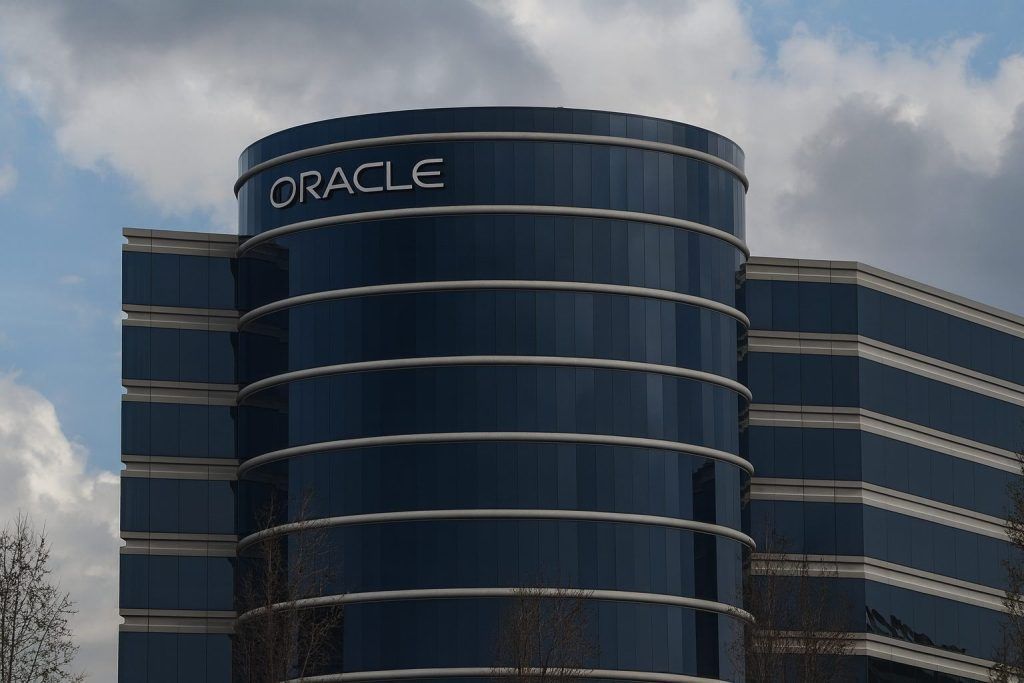
Oracle (ORCL) released Q2 FY2026 results, showing:Oracle Investor Relations
- Total revenue of about $16.1 billion, up 14% year‑on‑year.
- Cloud revenue of nearly $8.0 billion, up about 34% from a year earlier.
- GAAP diluted EPS of roughly $2.10, almost double the prior‑year quarter.
The numbers highlight how Oracle’s cloud and AI‑related workloads are increasingly central to its growth story, even as the company absorbs heavy infrastructure spending and integrates past acquisitions. Investors will now focus on how management guides 2026 AI capex and cloud margins.
Adobe: Record revenue and an AI‑centric future
After the closing bell, Adobe (ADBE) reported record Q4 and full‑year FY2025 results:MarketBeat+3Business Wire+3Business Wire+3
- Q4 revenue of about $6.19 billion, up 10% year‑on‑year.
- FY2025 revenue of roughly $23.77 billion, up 11%.
- GAAP diluted EPS of around $4.45 for Q4 and $16.70 for the full year.
- Annualized recurring revenue (ARR) exiting the year at $25.2 billion, up about 11.5%.
Analysts noted that the quarter unfolded against intense scrutiny over how generative AI tools—such as Adobe Firefly—are driving incremental subscription growth rather than just boosting usage. A post‑earnings analysis at Simply Wall St pointed out that bullish forecasts now assume Adobe can grow revenue to ~$29–31 billion and meaningfully expand earnings by 2028, largely on the back of AI features and the planned Semrush acquisition to bolster marketing and “generative engine optimization” tools.Simply Wall St
In early extended trading, Adobe shares were up several percentage points as investors digested the results and guidance.MarketBeat
Synopsys: Strong quarter and ambitious 2026 guidance
Synopsys (SNPS), a key design‑automation and chip‑tool name, also reported Q4 FY2025 numbers:PR Newswire+2Synopsys Investor Relations+2
- Record full‑year revenue of about $7.05 billion.
- Q4 revenue of roughly $2.26 billion, ahead of guidance.
- Non‑GAAP EPS beat expectations, with one report citing about $2.90 vs. $2.78 consensus.
- The company guided fiscal 2026 revenue to about $9.61 billion, including the planned ANSYS acquisition, even after factoring in divestitures.
That guidance reinforces the idea that AI chip design, verification tools and EDA software remain structural growth areas well into the second half of the decade.
Chewy: Solid growth, cautious guidance
In the consumer space, Chewy (CHWY) reported Q3 2025 results showing:Yahoo Finance+3Chewy Investor Relations+3I…
- Net sales of about $3.12 billion, up just over 8% year‑on‑year and slightly ahead of forecasts.
- Adjusted EPS around $0.32, topping expectations.
- A fourth consecutive quarter of customer growth, with active users above 21 million.
Guidance for the next quarter was a bit softer than Wall Street hoped, but analysts largely framed 2025 as an “investment year” ahead of anticipated margin expansion in 2026, and the stock ended up modestly higher on the day.
What Today’s Fed Move Means for Rates, Bonds and Consumers
While stocks focused on the growth‑plus‑liquidity story, the Fed decision also rippled through bonds and borrowing costs:
- The 10‑year Treasury yield ended the day near 4.17%, down a couple of basis points after briefly touching a three‑month high earlier in the session.Nasdaq+1
- Analysts described the move as a “bull steepening” of the yield curve, as short‑term yields fell more than long‑term ones amid rate‑cut optimism.Interactive Brokers
For households, Bankrate noted that six cuts since late 2024 have only gradually started to feed through to mortgages, auto loans and HELOCs. A single quarter‑point move doesn’t transform budgets, but a 1.75‑percentage‑point decline from the prior peak now means:Bankrate
- A new $500,000 mortgage costs hundreds of dollars less per month than at the 2023 rate peak.
- HELOC borrowers are seeing savings that can reach around $100/month on typical balances.
- Auto and personal‑loan costs have eased only modestly so far.
Even with the cuts, the Fed’s benchmark rate is still high by pre‑pandemic standards, and policymakers themselves project only one more cut in 2026, underscoring that borrowing costs are likely to remain elevated relative to the 2010s.Bankrate+1
2026 Market Outlook: Cautious Optimism, AI in the Spotlight
Several major institutions pushed out fresh 2026 outlooks and commentary tied to today’s decision.
- Fed SEP: projects above‑trend GDP growth (~2.3%) next year, unemployment edging down toward 4.2% over the medium term, and inflation gradually easing but not back at 2% until 2028.The Real Economy Blog+1
- RSM: warns that the Fed’s projections and “hawkish cut” raise doubts about additional near‑term easing, arguing that stronger growth and expansionary fiscal policy might actually warrant a higher “terminal” rate than the Fed’s 3%.The Real Economy Blog
- Interactive Brokers: suggests the shift from QT to T‑bill purchases effectively “paves the way for a Santa Claus rally,” with the S&P 500 potentially clearing the 7,000 mark in the coming weeks if liquidity and sentiment stay supportive.Interactive Brokers
- Charles Schwab: in its 2026 stock‑market outlook, emphasizes a year dominated by inflation, tariffs, affordability and potentially rising unemployment, and expects ongoing sector rotations with AI remaining central but facing scrutiny over “circular” funding and capex sustainability.Schwab Brokerage
The common thread:
- Macro risks (inflation not fully tamed, a “K‑shaped” economy, policy uncertainty) are still front‑and‑center.The Real Economy Blog
- Corporate earnings, especially in AI, cloud, and infrastructure, are expected to carry much of the load for returns.Interactive Brokers+2Simply Wall St+2
- Valuations in some AI‑linked names are already rich, which could leave 2026 returns more dependent on stock selection and sector rotation than on another big wave of multiple expansion.
What Investors Might Watch Next
Without giving individual investment advice, a few themes stand out from today’s action and the latest research:
- Fed path vs. data
- Markets are now priced for very limited further easing, so hot inflation prints or stronger‑than‑expected growth could quickly push yields higher again.
- Conversely, if the labor market weakens faster than expected, pressure for additional cuts could return.Federal Reserve+1
- Breadth and small‑cap participation
- Recent strength in small caps and cyclicals suggests a healthier, more broad‑based rally than a narrow, mega‑cap‑only market. Investors may keep an eye on whether that persists into year‑end.Interactive Brokers+1
- AI and infrastructure earnings
- Results from Adobe, Oracle, Synopsys and others show that AI‑linked spending remains robust—but expectations are high. Future earnings seasons will have to keep justifying AI‑driven capex and M&A.PR Newswire+3Oracle Investor Relations+3Bu…
- Consumer resilience
- Companies like Chewy, PepsiCo and travel‑related names offer clues about how higher‑for‑longer borrowing costs and lingering inflation are affecting everyday spending.Nasdaq+2Chewy Investor Relations+2
- Risk management in a “high but falling” rate world
- Commentators at Bankrate and elsewhere stress basics: keep an eye on debt costs, maintain diversification, and avoid letting near‑term rate headlines drive impulsive decisions.Bankrate
Bottom Line
December 10, 2025 will likely go down as the day the Fed cut again but tried hard not to sound dovish, while quietly turning the dial back toward balance‑sheet expansion. For now, equity investors are choosing to focus on:
- Slower but steady growth
- Gradually falling inflation
- Fresh liquidity support
- Solid corporate earnings, particularly in AI and infrastructure
That combination was enough to send the Dow up 500 points and keep the S&P 500 within striking distance of the 7,000 mark, even as questions linger about 2026 and beyond.Reuters+2Interactive Brokers+2
As always, this article is for informational purposes only and does not constitute financial or investment advice. Markets can move quickly, and anyone making investment decisions should consider their own goals, risk tolerance and, if needed, consult a qualified professional.