NEW YORK, March 20, 2026, 05:28 EDT
Stock futures in the U.S. ticked up ahead of Friday’s bell, with S&P 500 and Nasdaq contracts both gaining roughly 0.1%. Oil prices retreated—Brent dropped around 1.6%, U.S. crude slipped close to 2%. That eased some nerves, but worries lingered after Wall Street’s recent slide. Reuters
This shift signals traders now see the Middle East war less as a remote geopolitical event and more as a source of inflation risk—one that could keep borrowing costs elevated just as equities start to flag. On March 18, the Federal Reserve kept its benchmark rate at 3.50%-3.75%, noting uncertainty from Middle East developments. Fresh projections show the median policy rate landing at 3.4% by end-2026, about a quarter-point below the current midpoint. Federal Reserve
Stocks took a hit Thursday as pressure spilled across the board. The Dow dropped 203.72 points, closing at 46,021.43. The S&P 500 slid 18.21 to 6,606.49, and the Nasdaq was down 61.73 at 22,090.69. That pushed the S&P under its 200-day moving average—a line it hadn’t crossed below since May 9. The Russell 2000, for its part, sank briefly more than 10% from its Jan. 22 record finish. “It’s become fairly binary,” said Michael Arone, chief investment strategist at State Street Investment Management. If oil and inflation expectations shoot higher, risk assets get sold off; when crude calms down, stocks recover. Reuters
Oil prices eased as European nations and Japan pledged support for keeping shipping lanes open at the Strait of Hormuz, and the U.S. weighed extra emergency stockpile releases along with possible leniency for Iranian crude stuck on ships. Phillip Nova’s Priyanka Sachdeva noted the “war premium” in prices was fading, though she cautioned that any new disruptions to tanker routes or export facilities could ignite another sharp rally. Reuters
Hence, stagflation chatter—sluggish growth, stubborn inflation—has resurfaced fast. Charu Chanana, chief investment strategist at Saxo, called the conflict a blow to “the plumbing of the global energy system.” Fed Chair Powell, for his part, flagged that rising energy costs will feed near-term inflation, even if the longer-term impact on growth isn’t obvious yet. Reuters
Bonds were quick to react. The two-year Treasury yield—which closely follows where traders think the Fed is headed—spiked over 20 basis points at one point on Thursday. Come Friday, markets saw the Fed as the lone major central bank not set to hike rates this year, despite the sharp drop-off in U.S. rate-cut wagers. Reuters
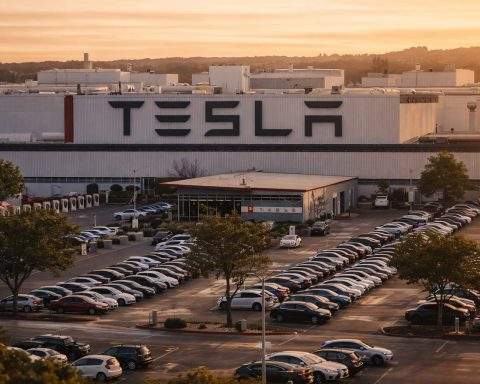
Chip names took another hit. Shares of Micron—a key high-bandwidth memory supplier for AI, along with Samsung and SK Hynix—tumbled 3.8% after its plan to boost 2026 capex by $5 billion grabbed the spotlight. U.S. memory players Western Digital and Sandisk also slid. Nvidia slipped 1%, while Tesla dropped 3.2% as risk aversion bled into tech. Reuters
FedEx jumped 9% in after-hours trading—shares reacting to a raised full-year profit outlook. CEO Raj Subramaniam noted demand for the first half of March tracked to expectations, war notwithstanding. Evercore ISI’s Jonathan Chappell described the quarter as “a very surprising beat.” Reuters
Dip-buyers aren’t backing down. According to Bank of America, $62.2 billion moved into equities over the latest week, with U.S. equity funds absorbing $47.1 billion—the strongest influx since December. Investors also stashed $23.5 billion in cash. Cautious, but still stepping in to buy the pullbacks. Reuters
Friday’s calm could well prove fleeting. Analysts at Goldman Sachs flagged that upside risks for crude prices tilt higher not just short term, but through 2027. The IMF, for its part, cautioned that a sustained jump in energy costs threatens to push inflation up and put pressure on global growth. Any renewed strikes on export routes or processing plants, and the respite on Wall Street could disappear fast. Reuters