
NEW YORK, April 28, 2026, 13:03 EDT
- Nasdaq trailed both the S&P 500 and Dow, as shares tied to AI dropped following reports that OpenAI failed to hit internal goals.
- Big Tech’s earnings season is ramping up, and this time, investors are zeroing in on AI budgets and cloud performance.
- Crude prices held above $110 a barrel, while traders eyed this week’s Federal Reserve decision, leaving risk sentiment on edge.
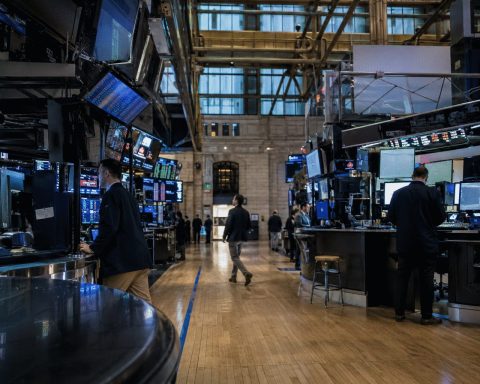
Nasdaq Composite slumped Tuesday morning, pulling major U.S. equity benchmarks into the red after renewed worries about artificial intelligence demand rattled chipmakers and names tied to the cloud. By 11:49 a.m. ET, Nasdaq had dropped 1.44%. The S&P 500 was off 0.78%, while the Dow managed a slim 0.12% gain, according to Reuters.
The shift grabbed attention, given how much the latest Wall Street rally has ridden the AI wave. A Wall Street Journal piece said OpenAI fell short of some internal milestones for weekly users and revenue, sparking fresh doubt among investors about whether the billions sunk into high-powered chips and sprawling data centers will deliver profits on schedule.
Oracle slid 4.1%. Nvidia shed 3.5%. AMD tumbled 5%. The declines zeroed in on AI names, not the entire market. S&P 500 information tech stocks lost 2.2% and the Philadelphia SE Semiconductor Index was off 4.7%, marking a sharp move for big chipmakers.
Dennis Follmer, chief investment officer at Montis Financial, said in a note that if a big tech name stumbles on AI demand or capital spending when it reports this week, the market could start to question the rally. Results from Alphabet, Microsoft, Meta, and Amazon all land Wednesday. Investors are zeroing in on whether AI investments are actually moving the needle for cloud and ad growth.
Reuters has also reported the four companies are poised to lay out around $600 billion on AI this year. Joe Maginot, large-cap portfolio manager with Madison Investments, said investors are focused on what kind of return that level of capex—long-term spending on things like data centers and chips—will deliver.
It wasn’t just tech weighing on sentiment. Brent crude, the international oil benchmark, climbed back above $110 a barrel—first time in three weeks—as worries over the Strait of Hormuz kept inflation concerns firmly on the table. Oil’s spike remained a second drag.
Capital Economics chief markets economist Jonas Goltermann put it plainly: “If the diplomatic and military stalemate between the U.S. and Iran continues,” the crisis won’t be easy for policymakers or markets to ignore. That’s the sticking point—fuel prices keep climbing, and that hits consumers, companies, and the Fed all at once. Reuters
Bulls got a nudge from fresh economic numbers, though the market didn’t quite find its footing. The Conference Board’s consumer confidence index ticked up to 92.8 in April, compared with a revised 92.2 in March, easily clearing economists’ call for a slide to 89.0.
Dana Peterson, chief economist at the Conference Board, pointed out that consumers remained downbeat, flagging prices, oil, gas, and war more often in their comments. That tone stopped the data from signaling an all-clear for risk assets.
Earnings season turned up a mixed bag. Coca-Cola shares gained after the company hiked its annual adjusted profit outlook. UPS dropped, posting a steep decline in quarterly adjusted profit. General Motors nudged lower, even though it raised its full-year earnings forecast.
Coca-Cola CFO John Murphy told Reuters the company is addressing the Middle East fallout with its bottling partners. CEO Henrique Braun noted that inflation and ongoing uncertainty are still weighing on some consumers. Over at GM, CEO Mary Barra flagged the Iranian conflict as the main concern for the automaker, particularly for commodity and logistics costs.
Investors head into the Federal Reserve’s April 28-29 meeting betting rates won’t budge. The target range sits at 3.50% to 3.75%. According to Reuters, officials are still open to rate cuts, though that’s likely to hinge on whether the Iran conflict or elevated oil prices persist.
If Big Tech’s earnings don’t deliver more convincing returns on AI investment, or if oil prices remain elevated, the selloff could easily widen. Bank of America economists said the Fed is likely to “stay firmly on hold” at the April meeting, flagging ongoing inflation risks tied to the Iran war. Reuters
Related articles: NASDAQ:META