
WASHINGTON, March 20, 2026, 18:53 (UTC-04:00) House Oversight Committee
The U.S. Postal Service told Congress it’s staring down a cash crunch that could halt mail deliveries within a year, unless it gets authority to borrow more, hike prices, and overhaul its financial rules. Postmaster General David Steiner said the agency could run out of money as soon as October or November if it continues sending mandatory retirement and related payments to the government.
The old USPS red ink story just got sharper: now it’s about whether national mail service to over 170 million addresses can actually continue. The agency relies on its own postage and package income, skipping annual government subsidies, and the Government Accountability Office has warned Congress that USPS is approaching a tipping point. Billions in new retiree health obligations are set to land, likely by 2031.
USPS’s balance sheet keeps sliding. For fiscal 2025, the agency logged a $9.0 billion loss under standard accounting rules, and it posted another $1.259 billion in red ink for the quarter ending Dec. 31, 2025. “We’re in a crisis,” Steiner told lawmakers. Chief Financial Officer Luke Grossmann pointed to a “continued decline in volume” and said management’s hands are tied on much of the cost structure. USPS
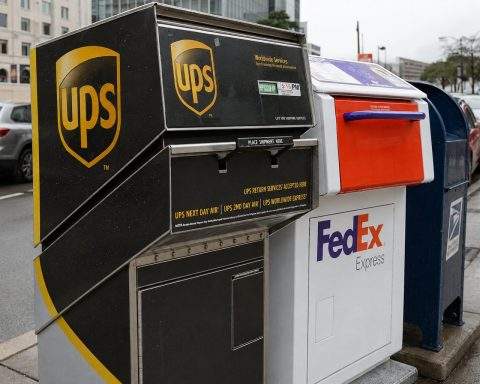
First-class mail, long the Postal Service’s profit engine, has suffered the sharpest blow. According to Steiner, volume plunged from 213 billion pieces in 2006 down to 109 billion projected for 2025. That’s about $81 billion in lost revenue at today’s stamp rates. He also pointed out that most delivery routes—71%—and 58% of post offices are running at a loss. In his view, not even UPS or FedEx could handle a hit on that scale.
Steiner tossed out a list of unappealing choices. He’s pushing for Congress to raise the $15 billion borrowing ceiling, a limit that hasn’t budged since 1992 and, according to USPS, is already maxed out. Tougher pills to swallow: moving to five-day delivery, shuttering smaller post offices, and hiking the price of a first-class stamp—think $1 or more, up from the current 78 cents. USPS figures scrapping a delivery day could trim $2.9 billion to $3.5 billion annually, while shutting down small branches might cut $840 million.
Congress essentially locked in the current service model with the Postal Service Reform Act of 2022, which mandated six-day delivery and handed over roughly $57 billion in noncash relief—an accounting fix, not new money for operations. So, any major service reductions would need fresh approval from lawmakers. House subcommittee Chair Pete Sessions warned of “tough decisions” ahead but drew the line at raising stamp prices. Representative Kweisi Mfume, for his part, argued Congress couldn’t just “do nothing and watch the Titanic sink.” House Oversight Committee
The squeeze on the package front isn’t letting up. This week, a source told Reuters Amazon is gearing up for a steep cut in parcels routed through USPS ahead of their current agreement’s Sept. 30 expiration. In recent years, Amazon says it has shelled out more than $5 billion a year with the Postal Service, and although the company’s been pushing for over a year to renew, it still hopes to salvage the partnership—even if activity drops. Steiner, for his part, said he couldn’t predict the outcome of those negotiations.
David Marroni, director of physical infrastructure at the GAO, called it a “fundamental tension”—Congress demands a certain level of service, but the USPS can only bring in so much revenue. According to GAO, first-class mail’s on-time rate slipped to roughly 86% in fiscal 2025, down from 91% in 2022, despite the fact that delivery standards were relaxed from a 1-to-3-day timeframe out to 1-to-5 days. Watchdogs have flagged concerns for rural customers as a result. House Oversight Committee
Still, taking on more debt or hiking stamp prices again would only kick the can down the road—it won’t solve the underlying issues. Raising rates risks pushing more mailers out, and trimming to five-day delivery would disproportionately hurt people in rural regions. If Amazon pulls back, USPS stands to lose a major chunk of its package load, shrinking the base over which it can spread fixed costs. USPS is also waiting for scenario analysis from Alvarez & Marsal, the consulting firm brought in, according to Steiner, to map out every possible outcome.
For the moment, Steiner’s warning zeroes in on the cash crunch rather than some sweeping transformation down the road. In testimony on March 17, he told lawmakers the Postal Service could run out of money to deliver the mail in less than a year if nothing changes. That leaves Congress facing a choice: raise the borrowing cap, allow more pricing flexibility, or cut a service they had previously mandated USPS maintain.