
NEW YORK, May 30, 2026, 16:02 (EDT)
- Verizon ended Friday at $47.81, dropping for the third session in a row and finishing the holiday-shortened week lower.
- The move went the other way as Wall Street set records on strength in tech stocks, even as communications services lost ground.
- Investors look toward next week with focus on U.S. jobs numbers, bond yields, and Verizon’s performance under CEO Dan Schulman.
Verizon Communications Inc. stock lost ground over the holiday-shortened week. The shares trailed the broader U.S. market, which hit new highs, as tech and AI names drew more interest and left the telecom group largely out of favor.
Verizon shares last changed hands on Friday, with U.S. markets shut for the weekend. The stock closed at $47.81, off 0.42% for the session on volume of around 40.4 million shares, market data show. Verizon’s market cap sits near $201.3 billion.
Verizon is now seen as a turnaround bet instead of just a defensive pick. The S&P 500 edged up 0.22% Friday, the Nasdaq climbed 0.21%, and the Dow finished 0.72% higher. All three closed at record highs. The S&P 500 booked a ninth weekly advance, according to Reuters.
Wireless stocks dropped this week, with Verizon down about 1.1% from its May 22 close of $48.35 to $47.81 on Friday. AT&T ended the week off about 1.8%, and T-Mobile US fell around 2.1%. All three trailed the wider market. The moves didn’t suggest any Verizon-specific shock.
Short week for markets with the NYSE closed for Memorial Day on Monday, May 25. Trading got started again Tuesday.
Sector conditions stayed rough. The Communication Services Select Sector SPDR ETF inched 0.2% higher for the week but lost 0.84% Friday. The ETF tracks big communication-services stocks, not just telecom, but it shows these shares missed out on the tech rally.
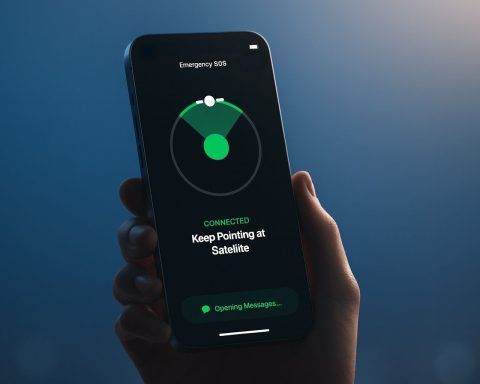
No new Verizon earnings out in the last 48 hours. The latest updates on the company’s investor news site are the May 21 annual-meeting voting results, a May 20 announcement to redeem $1.295 billion in debt on June 20, and a May 14 announcement about a satellite-connectivity project with AT&T and T-Mobile. Redeeming debt means Verizon will pay back bonds ahead of schedule.
Verizon shares traded after the company’s first-quarter results. Verizon reported on April 27 it saw its first positive Q1 postpaid phone net adds since 2013—these are monthly contract customers gained, minus those lost. CEO Dan Schulman called the result a “turnaround” that is “gaining momentum.” Verizon lifted its 2026 adjusted earnings-per-share guidance, now targeting $4.95 to $4.99. Verizon
Schulman is pushing to position the company as more than just a network owner. At a MoffettNathanson investor event this month, he told analyst Craig Moffett that Verizon has to “play to win” and do “hundreds of things” right, Fierce Network said. Roger Entner, founder of Recon Analytics, commented that Verizon’s focus on more specific customer segmentation “just points out that you can very finely segment the customer base.” Fierce Network
Competitive pressure is still high. AT&T keeps pushing bundles for fiber and wireless. T-Mobile is still focused on perks and network claims. Verizon is going with its own broadband offer, using fixed wireless access—broadband to the home over a mobile network and not through cable or fiber. Schulman said at the same conference that satellite is “a really good complementary service,” but not meant to fully replace terrestrial wireless in cities and suburbs. Broadband Breakfast
Market sentiment could keep steering Verizon more than sector headlines next week. Reuters reported investors are watching the June 5 U.S. payrolls print, with its poll calling for 85,000 new jobs in May and a 4.3% jobless rate. Liz Ann Sonders, chief investment strategist at Schwab Center for Financial Research, said a strong jobs figure with higher inflation could affect what the Fed does next.
Verizon faces risks here. Higher yields tend to put pressure on dividend stocks like telecoms as bonds look better, and push up concerns over debt costs for companies carrying big debt. Verizon had $142.5 billion in total unsecured debt at the end of Q1. The company said it plans to repay nearly all Frontier debt by year-end.
Verizon’s upside doesn’t look complicated: steady subscriber growth, better churn, paying down debt and less spent on promotions could mean free cash flow stays front and center. Downside risks are easy to name too. A strong jobs report, stubborn inflation, heavier price competition from AT&T or T-Mobile, or problems tying in Frontier could leave shares parked around $48 as investors chase stocks with faster growth.
Related articles: NYSE:VZ